
Jungle Scout's Q1 2023 Consumer Trends Report explores generational differences in consumer behavior and how inflation and other economic factors impact spending.
AUSTIN, TX / ACCESSWIRE / March 21, 2023 / Today, Jungle Scout, the leading all-in-one platform for ecommerce sellers, released its Q1 2023 Consumer Trends Report, a quarterly study of U.S. consumers that explores spending and ecommerce trends. The report shows Gen Z consumers are the least likely to report that inflation has impacted their spending, and they are most reluctant to reduce spending compared to other generations.
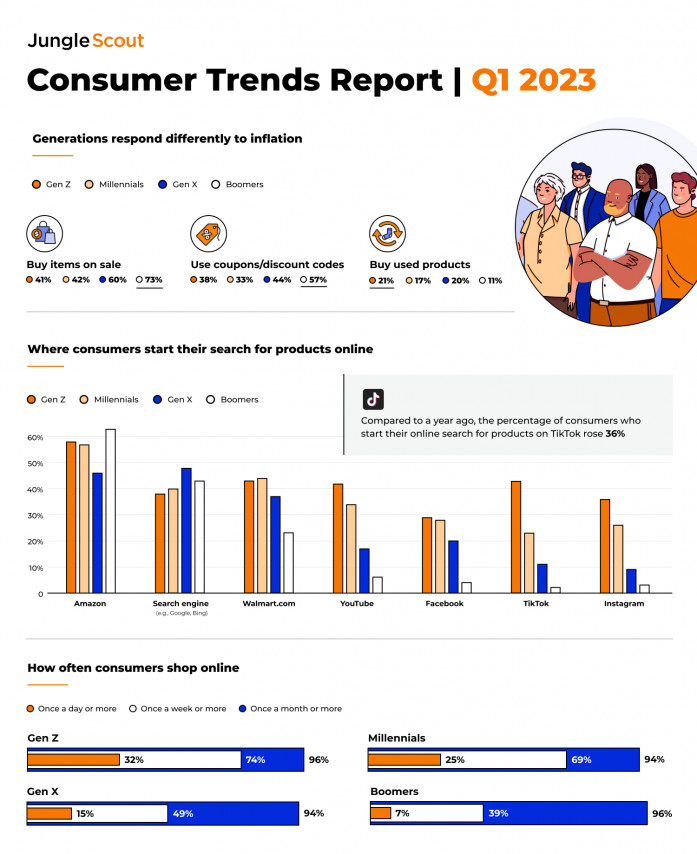
Key findings from Jungle Scout's Q1 2023 Consumer Trends Report
Key insights from the report include:
Gen Z consumers are setting a new standard for ecommerce.
- 43% of Gen Z consumers start their online product searches on TikTok, a higher number than those who start on Google.
- Despite inflation, 32% of Gen Z consumers shop online at least once daily compared to 25% of Millennials, 15% of Gen X, and 7% of Baby Boomers.
- Gen Z consumers are the most likely to shop secondhand online to save money, with 42% purchasing a pre-owned item online in the past year.
Consumer behavior and attitude toward inflation differ greatly by generation.
- Millennials are more worried about their finances than any other generation and are nearly twice as likely to have an unstable household income compared to Baby Boomers.
- Baby Boomers are 78% more likely than Gen Z to purchase items on sale and are more likely than any other generation to use credit cards with money-saving perks.
- 56% of Gen X and 43% of Millennials are cutting back on fun/impulse purchases to save money, compared to only 37% of Gen Z consumers.
"In the world of ecommerce, one size does not fit all," says Michael Scheschuk, President of Small & Medium Business at Jungle Scout. "Businesses must understand each generation's unique values, preferences, and behaviors to create tailored strategies. As the youngest and newest cohort of shoppers, Gen Z offers invaluable insights into the current and future trends shaping retail."
See the full report to learn where consumers are shopping, what they're buying, how much they're spending in Q1 2023, and more.
About Jungle Scout
Jungle Scout is the leading all-in-one platform for ecommerce sellers, supporting more than $50 billion in annual Amazon revenue. Founded in 2015 as the first Amazon product research tool, Jungle Scout today features a full suite of best-in-class business management solutions and powerful market intelligence resources to help entrepreneurs, up to the world's largest brands, manage their ecommerce businesses. Jungle Scout is headquartered in Austin, Texas, and supports 10 global Amazon marketplaces.
Contact Information
Cathryn Hurdle
Public Relations Strategist
press@junglescout.com
(613) 639 9067
SOURCE: Jungle Scout
https://www.accesswire.com/744658/Report-Gen-Z-Consumers-Least-Likely-to-Reduce-Spending-Amidst-Inflation-32-Shop-Online-at-Least-Daily
