
"By reopening the Northeast Canyons and Seamounts to commercial fishing, fairness, transparency, and science-based governance has been restored to the affected fisheries." -- Bob Vanasse, Executive Director of Saving Seafood
WASHINGTON, D.C. / ACCESS Newswire / February 6, 2026 / Statement from Bob Vanasse, Executive Director of Saving Seafood, on President Trump's Action to Restore Commercial Fishing Access to the Northeast Canyons and Seamounts Marine National Monument:
This afternoon, President Trump revoked President Biden's Proclamation 10287 and removed the restrictions on commercial fishing within the Northeast Canyons and Seamounts Marine National Monument.
This decision reflects a clear understanding of a simple truth: commercial fishing in the United States is already governed by the most comprehensive, science-based, and publicly accountable regulatory system in the world. Under the Magnuson-Stevens Act, fishing activities in federal waters must meet strict sustainability standards, undergo rigorous scientific review, and follow a transparent process that includes stakeholder input and council oversight. Restoring access to the monument area under this framework reaffirms-not undermines-our commitment to conservation.
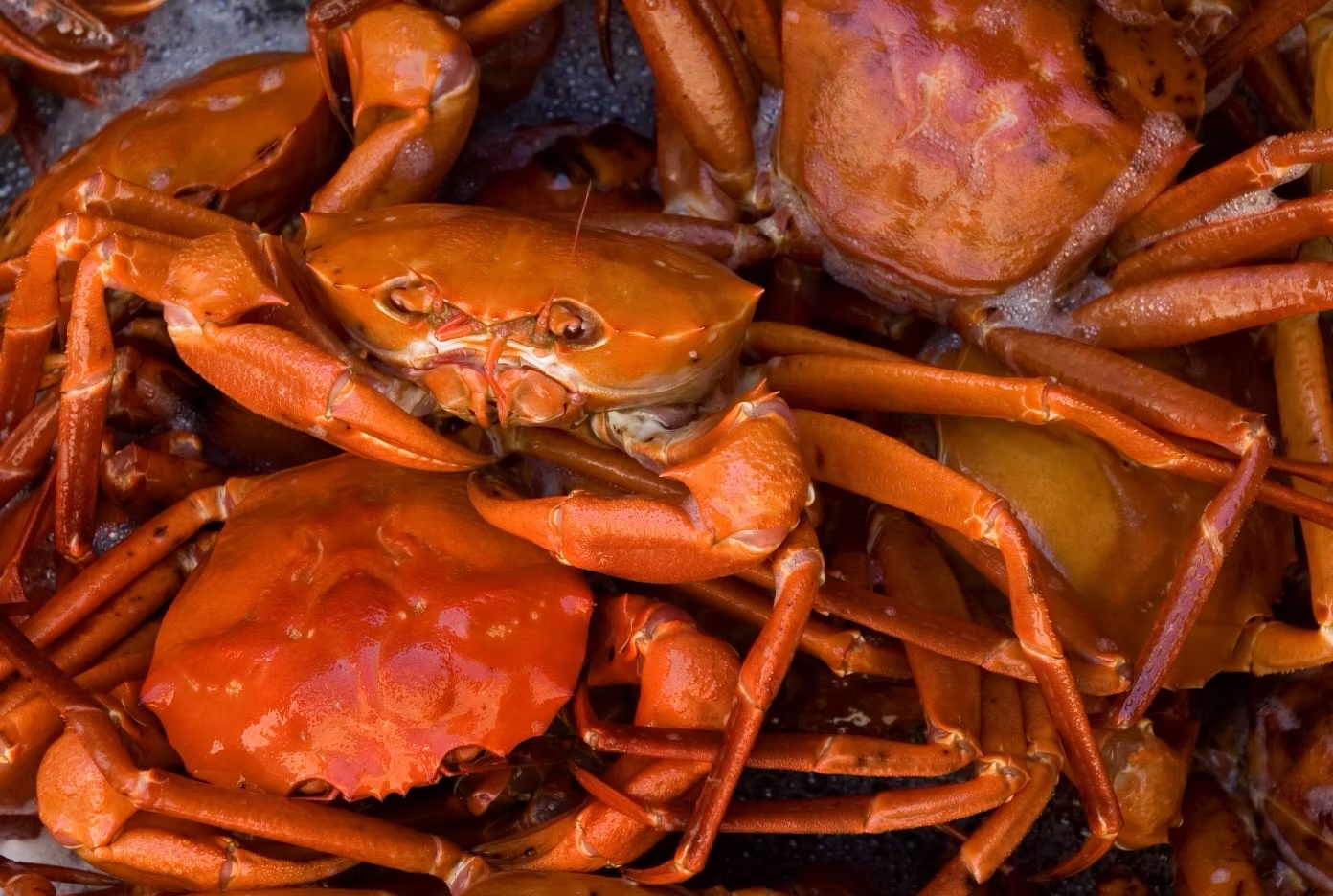
The Atlantic deep-sea red crab, once an underutilized species, is today recognized as a "smart seafood choice" by NOAA Fisheries, and became the first Marine Stewardship Council (MSC) certified sustainable crab fishery in North America in 2009. It was the most harvested species from the Northeast Canyons and Seamounts National Monument until access was cut off by President Biden in 2021. It is landed in New Bedford, Massachusetts - the nation's most economically-valuable fishing port.
In stark contrast, President Obama's 2016 designation of the monument excluded commercial fishermen from a region they had sustainably fished for generations. It was imposed unilaterally through executive order-without public hearings, without a cost-benefit analysis, and without input from those whose livelihoods were affected. It was a top-down decision that ignored the proven success of the fishery management system already in place. And in a striking display of hypocrisy, while working fishermen were forced out, the uber-wealthy with yachts large enough for spearfishing adventures 130 miles offshore were not banned.
President Trump restored the rights of fishermen once before in 2020. This followed both Interior Secretary Ryan Zinke and Interior Secretary David Bernhardt agreeing to meet with fishing groups in Boston, in meetings I had the honor to chair.
Unfortunately, President Biden repeated the undemocratic actions of President Obama in 2021, reimposing the ban on commercial fishing with no meaningful engagement. Our industry reached out to Interior Secretary Deb Haaland in good faith-we wrote letters, made phone calls, and requested meetings. We received no response.
All eight regional fishery management councils formally opposed the Biden administration's reimposition of the ban. President Biden and Interior Secretary Deb Haaland actively disregarded the voices of the very councils and communities entrusted with managing our marine resources. Their closed-door approach and lack of transparency sent a message: facts and stakeholders were not welcome in their decision-making process. This is not how democratic governance or environmental policy should be conducted. But it is not surprising, as there is a history of monument creation via secretive alliance between certain environmentalists and sympathetic Administration staff, as described in this 2015 E&E News story.
We fully expect the usual environmental advocacy groups to respond as they did in 2020, with misleading rhetoric and predictions of catastrophic overfishing. So let's be absolutely clear: any fishing that resumes in the monument will remain subject to the full force of the Magnuson-Stevens Act, a law these same groups routinely hail as a global benchmark for sustainable fishery management.
Their objection is not about protecting the ocean-it is about controlling American commercial fishermen and pushing a broader, extremist agenda that seeks to deny citizens the ability to responsibly use our resources, regardless of science or sustainability.
The truth is that America's commercial fishermen are among the world's most responsible ocean stewards. Their work is tightly regulated, environmentally conscious, and vital to the economies and food security of coastal communities. When managed through the regional fishery management councils and NOAA Fisheries, commercial fishing supports biodiversity and conservation while feeding the nation.
About Saving Seafood
Saving Seafood conducts media and public relations outreach on behalf of the seafood industry, as well as communications to keep industry members aware of issues and events of concern.
Saving Seafood works with owners, captains, fishermen, seafood processors and brokers across the United States who are committed to the preservation of the resource that has provided their livelihood, and that of their American forebears, for generations.
Saving Seafood is committed to:
Working closely with scholars to develop and disseminate quality scientific information
Communicating with media and the public on matters of interest to the industry
Fostering cooperation and communication among members of the fishing community
Cooperating with lawmakers to implement the stated intent of our fisheries management law that requires "taking into account the social and economic needs of the States." [Magnuson-Stevens Act (2)(b)(5), Public Law 101-627]
Press Contact
Saving Seafood
(202) 595-1212
info@savingseafood.org
SOURCE: Saving Seafood
View the original press release on ACCESS Newswire:
https://www.accessnewswire.com/newsroom/en/business-and-professional-services/trump-restores-commercial-fishing-access-to-northeast-canyons-an-1134597
