
SAN FRANCISCO, Feb. 25, 2026 (GLOBE NEWSWIRE) -- A neuroimaging study from NYU shows that the same type of brain training found to reduce dementia risk in the recent ACTIVE Study can also repair white matter damaged by brain injury. The brain training used in both studies are exercises found in the BrainHQ app from Posit Science.
For decades, the medical consensus has been that a brain eroded by time or damaged by injury could, at best, be taught to "cope" with its limitations. But back-to-back studies this month expose a new reality: the brain's physical wiring is far more "repairable" than we ever dared imagine. By pushing participants' limits with speed-of-processing training-a high-intensity digital exercise-researchers have shown that we can not only slash the 20-year risk of dementia by 25%, but also physically remodel neural connectivity of a brain scarred by traumatic injury.
"Together, these findings signal a historic shift from compensatory therapy to restorative medicine, proving that whether you are a senior citizen fending off decline or a survivor recovering from brain trauma, the secret to a resilient brain may lie in how fast you can train your brain to operate," observed Dr. Henry Mahncke, CEO of Posit Science.
Earlier this month, the NIH-funded, 2800-person, ACTIVE Study garnered headlines around the globe when it found a modest amount (less than 23 hours spread over 36 months) of speed-of-processing brain training resulted in a 25 percent reduction in participants being diagnosed with Alzheimer's or other dementias over 20 years, as compared to the control group.
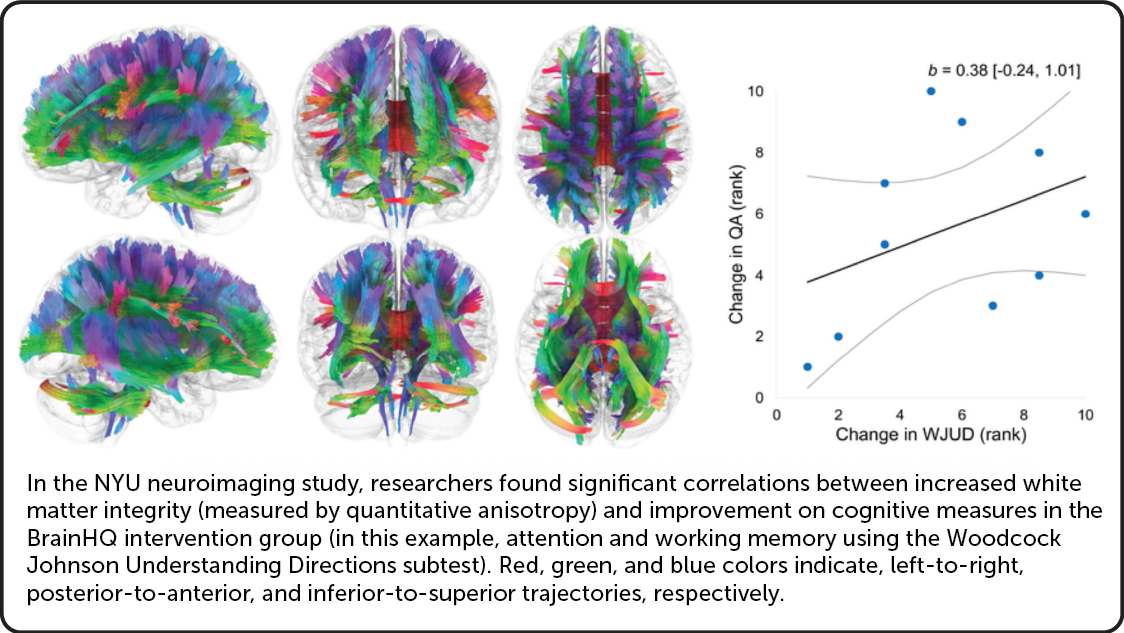
Now, a new neuroimaging study from researchers at NYU illustrates that speed-of-processing training from BrainHQ is more than a preventive tool. It helped participants with long-term issues from brain injuries by repairing white matter-the insulation that wraps the nerve fibers that function as the high-speed "wiring" connecting different brain regions. This "re-wiring" was not just a biological change; it translated into gains in cognitive performance, including processing speed, attention, working memory, and everyday cognitive functioning. Using an imaging technique called correlational tractography, the study showed the exercises improved density and organization of the brain's pathways, directly linking physical repair of the brain's wiring to recovery of lost mental sharpness.
"This study demonstrates changes in the brain's white matter and shows that computerized cognitive remediation in adults with chronic brain injury can induce neuroplasticity. It builds on our earlier studies showing how these computer games can improve cognition as well as change the connections between brain regions and the structure of the pathways that connect the brain regions," said Gerald Voelbel, associate professor at NYU.
"What ties the studies together is how they induce brain plasticity-the brain's ability to change, chemically, structurally, and functionally," Dr. Mahncke observed. "The speed-of-processing exercises customize to each user and progressively challenge the brain to engage plasticity - whether we are looking at prevention, recovery, or even improving peak performance."
Another headline-grabbing neuroimaging study in October, from researchers at McGill University (the INHANCE Study), showed BrainHQ exercises upregulated the production of acetylcholine (the "pay attention" chemical) known to downregulate with normal aging and to plummet with dementia. It is the first intervention ever shown to do so.
"We'll look back at research from the past six months as a 'sea change' in how we address chronic and seemingly intractable neurological issues," Dr. Mahncke added. "Those of us on the front lines of neuroplasticity research have long maintained these types of gains were possible. Now, advances in imaging -and in our understanding of the power of plasticity-can drive progress at unprecedented speed."
BrainHQ has shown benefits in more than 300 studies. Such benefits include gains in cognition (attention, speed, memory, decision-making), in quality of life (depressive symptoms, confidence and control, health-related quality of life) and in real-world activities (health outcomes, balance, driving, workplace activities). BrainHQ is used by leading health plans, medical centers, clinics, and communities, and by elite athletes, the military, and other organizations focused on peak performance. Consumers can try a BrainHQ exercise for free daily at https://www.brainhq.com.
A photo accompanying this announcement is available at https://www.globenewswire.com/NewsRoom/AttachmentNg/a4e8ecd6-c34d-42f4-aea1-b58a633ed6bf

Contact: media@brainhq.com
