
TORONTO, April 23, 2026 (GLOBE NEWSWIRE) -- Nobel Resources Corp. (TSX - V: NBLC) (the "Company" or "Nobel") provides the following update of the initial drill results and planned follow-up work on its Cuprita (the "Cuprita Project") and Pampa Austral ("Pampa Austral Project", collectively, the "Projects") projects located in northern Chile. Exploration surveys over the past year by Nobel's Chilean technical team identified key geological and geophysical characteristics, typically associated with mineralized porphyry copper systems in this region at Cuprita, and commenced a diamond drill campaign in January (see the Company's news release dated March 9, 2026 for further details).
Nobel also announces that Larry Guy, interim Chief Executive Officer and director of Nobel, and Damian Lopez, Nobel's corporate secretary, have resigned from their roles, effective immediately. Mr. Guy will be replaced as Chief Executive Officer by Vernon Arseneau, Nobel's Chief Operating Officer, and Mr. Lopez will be replaced as Corporate Secretary by Wanda Roque. Ms. Roque is an experienced law clerk in Ontario and has served as corporate secretary to a number of public companies since 2007.
Nobel has also appointed Denis Archambault to its board of directors, effective immediately. Mr. Archambault holds a Bachelor of Business (Finance) from the University of Ottawa and previously held for 25 years, a multitude of professional designations in the Real Estate and Finance Industry, (CRF, ACoM, Fri) granted by the Real Estate Institute of Canada REIC and Institute of Real Estate Management IREM. Mr. Archambault currently serves on the Finance and Investment Committee of two pension funds and also serves on the board of directors of a publicly traded tech company based in Ottawa. He also currently serves on the board of a privately held hotel and multi-use property in Miami, Florida.
CUPRITA PROJECT
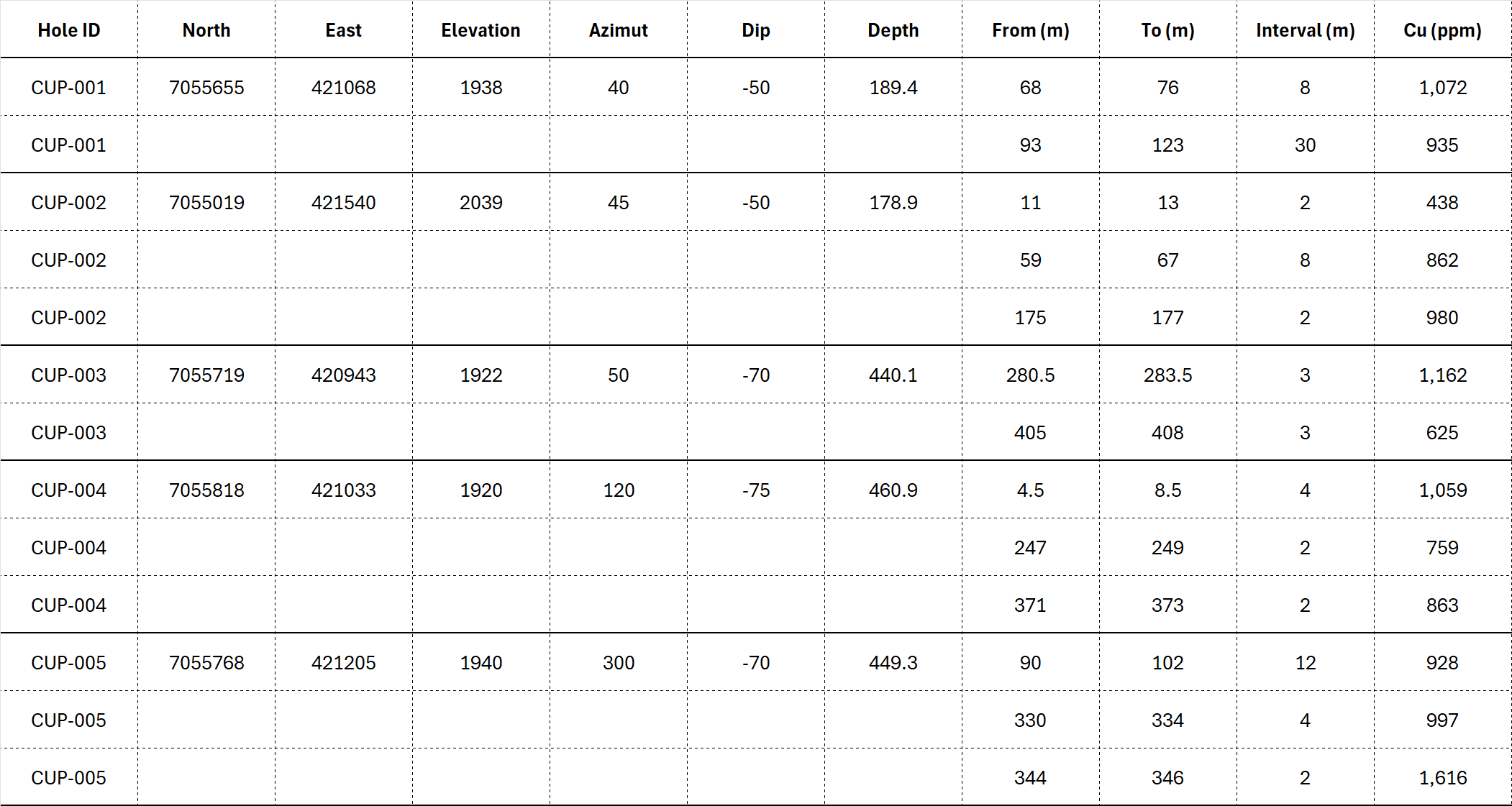
The initial drilling at the Cuprita Project intersected a wide section of mineralized and altered porphyry in holes 3, 4 and 5. Assay results from holes 4 and 5 returned anomalous values of copper in the 0.1% to 0.2% range from mineralized veins and veinlets stockwork with mainly pyrite. The Company believes that drilling to date has intersected a pyrite shell which is typical of the edges of most copper-mineralized porphyry systems.
According to Vernon Arseneau, Nobel's Chief Operating Officer and incoming Chief Executive Officer, "This is the first drill campaign of any kind to test this newly identified large porphyry system. Drilling has confirmed that this is a large, bona fide mineralized porphyry system. We have not yet identified a high-grade copper zone within it, but the geological components strongly support conducting further work on the system. We have commenced with additional geophysical and alteration studies to better target the next phase of drilling."
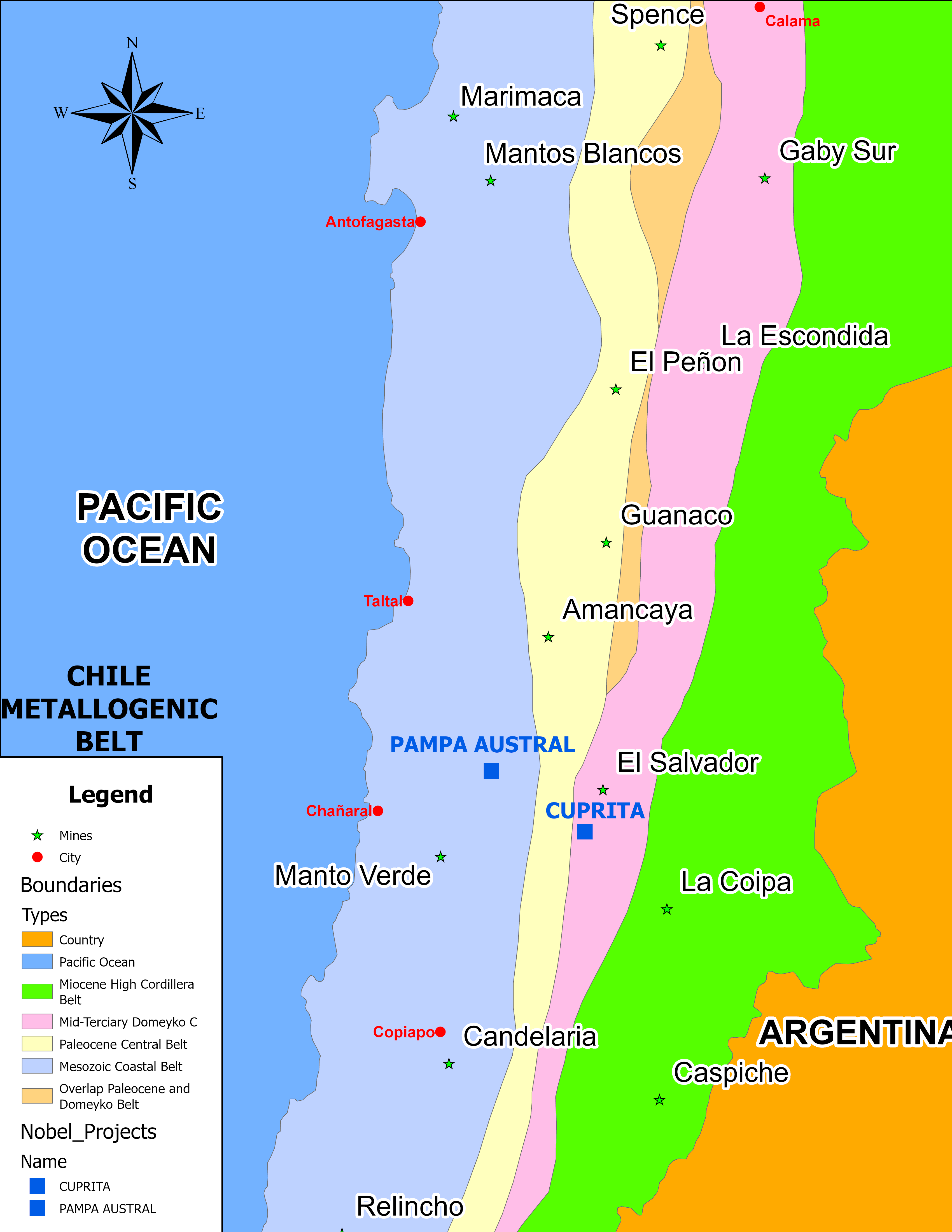
Figure 1: Location of the Cuprita and Pampa Austral Projects relative to copper deposits in the region. Mineralization on adjacent properties is not necessarily indicative of mineralization on the Projects.
Please note information regarding adjacent properties is provided for context only and is not necessarily indicative of the mineralization, grade, continuity or potential of the Cuprita Project or Pampa Austral Project. Readers are cautioned not to place undue reliance on statements about adjacent properties.
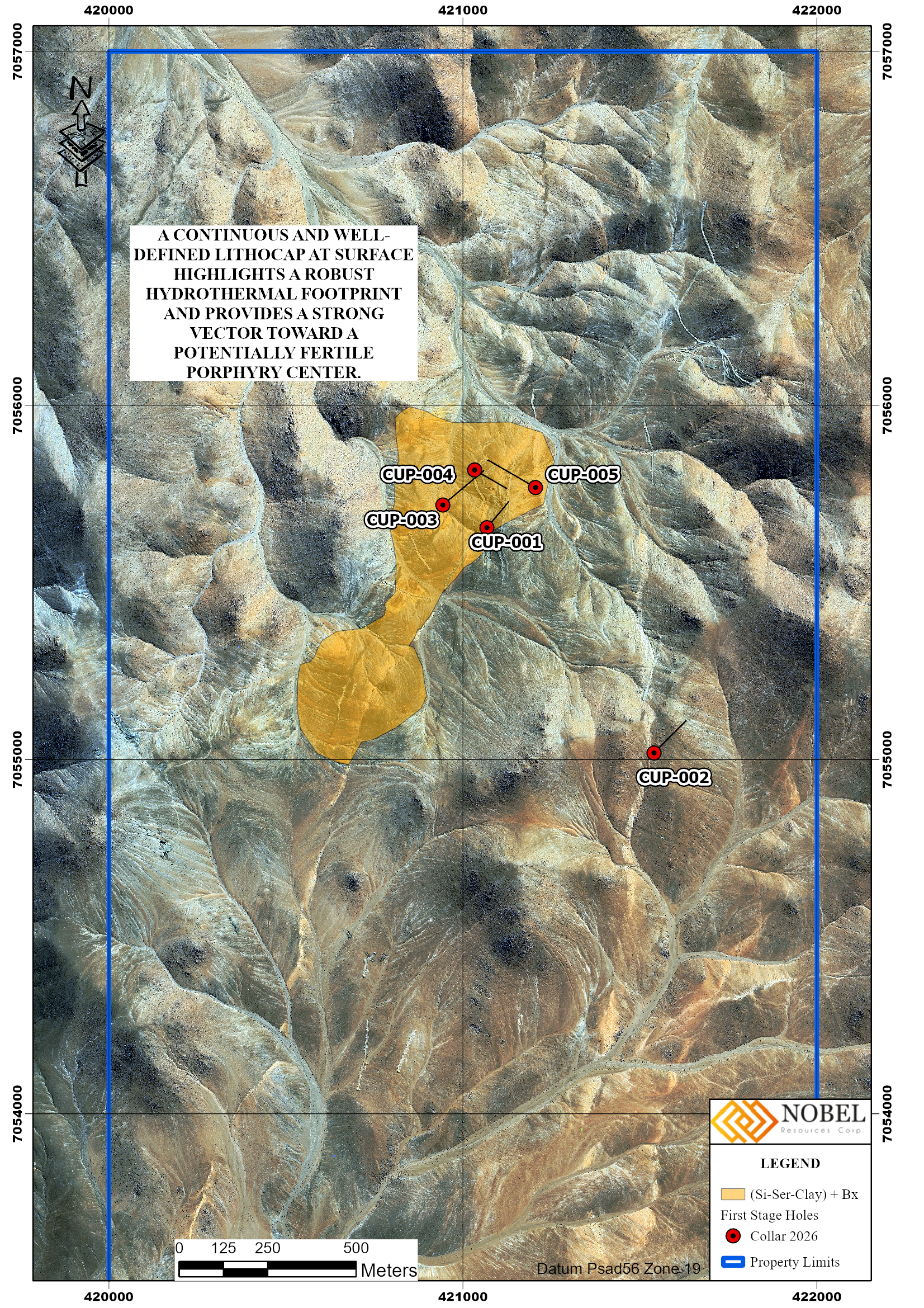
Figure 2: Location of the first-stage drill holes completed during the current campaign at the Cuprita Project, targeting the northern sector of the lithocap. Drilling results confirm a continuous and well-developed lithocap, providing key geological vectors toward a potentially more fertile porphyry center. CUP002 tested shallow trench targets unrelated to the deeper IP anomaly below the lithocap.
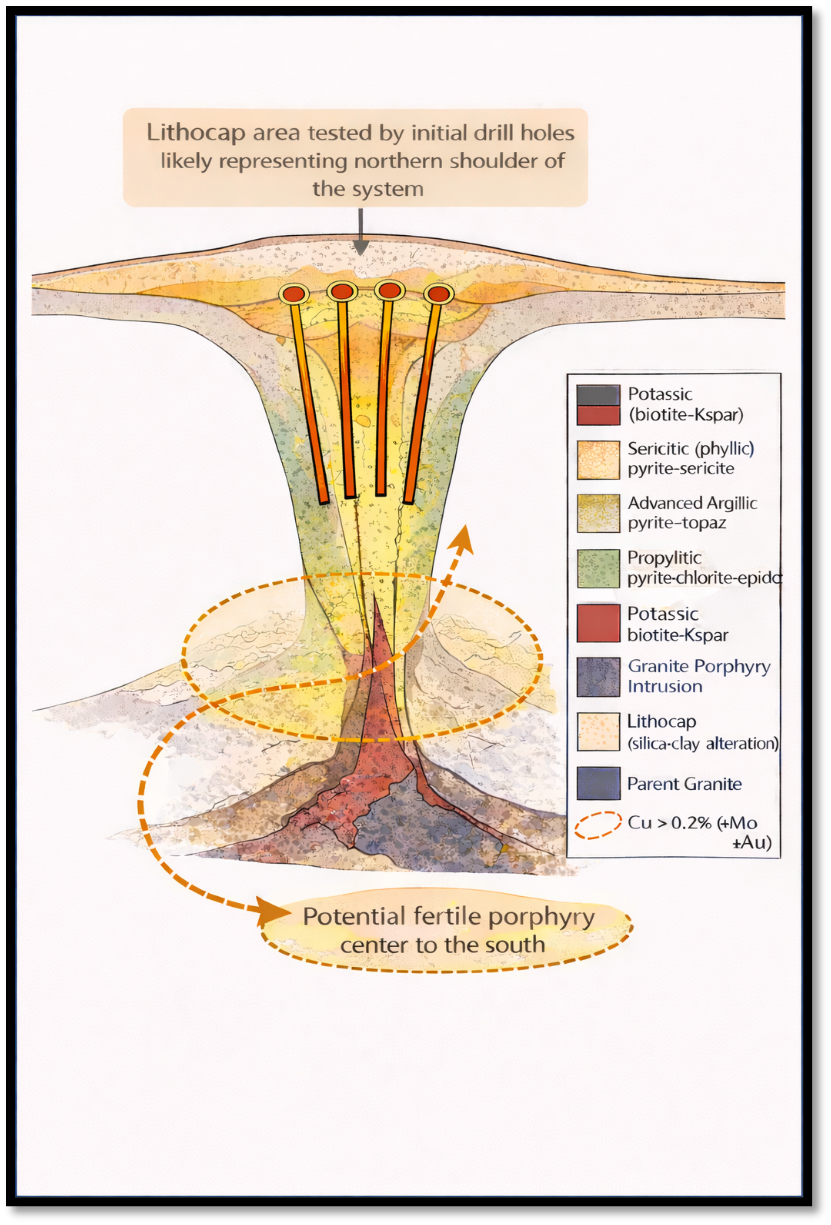
Figure 3: This figure represents a schematic conceptual illustration of the interpreted porphyry copper system at Cuprita (modified after Halley et al., 2015). It is not to scale and is intended to illustrate the current geological interpretation based on available drilling, geological mapping, and geophysical data, including the relative position of the lithocap, alteration zones, and the potential location of a more fertile porphyry center.
The Company's drill program at the Cuprita Project is targeting an area centered on an extensive lithocap that was identified by Nobel geologists by surface mapping on the property during 2025. The lithocap is interpreted to have developed above a porphyry related hydrothermal system. The presence of a lithocap is a key signature of mineralized porphyries in this region. At Cuprita, it is characterized by strongly silicified rock forming a resistant silica-rich matrix with abundant cavities due to leaching of minerals and pyrite boxwork textures. The lithocap is oriented along a well-defined structural corridor trending approximately N10°-20°E. Access road construction for the drill program has created new outcrop exposures of the lithocap. The actual extent is not known but extends at least 2 km X 1km under overburden cover. The lithocap is located within a broader soil anomaly zone defined by Cu values ??above 200 ppm reaching a maximum of 9,000 ppm Cu in soils.
Table 1. Drill hole data for initial diamond drill campaign at the Cuprita Project. The area is anomalous in copper, however geologically, drilling appears to be within a pyritic shell, which commonly marks the edge of mineralized porphyry systems. All drill holes used HQ core recovery equipment.
Key geological and geophysical parameters guiding the drill targeting at Cuprita include:
- Located within the Paleocene porphyry copper belt
- Widespread copper mineralization in outcrops (including small scale mines) and extensive copper geochemistry anomaly
- Presence of an extensive leach cap such as commonly associated with porphyry copper deposits in this region
- Extensive development of tourmaline breccia zones, a common pathfinder for porphyry copper projects in the region
- IP anomaly and magnetic low associated with the target area similar to low-pyrite porphyry copper deposits in the region
- Structural setting similar to major deposits including El Salvador, Cerro Colorado, Spence, Sierra Gorda, Fortuna - northeast structural corridor crosscut by northwest secondary faults
- Drill holes CUP-003 and CUP-004 confirm a clear vertical alteration zoning beneath the lithocap, transitioning from argillic to phyllic and propylitic alteration, a characteristic feature of large porphyry copper hydrothermal systems.
Drill Core Sampling Protocol
Diamond drilling was conducted, using HQ size drill equipment. Sampling protocol is conducted in a manner that will allow reasonable averaging and statistical analysis of the data for resource estimation. Standards, blanks and duplicate samples, are used to maintain quality control and to verify laboratory procedures. Samples were collected using a standard 0.5m to 1m sample length in the main mineralized zones and a 1m to 2m length in the surrounding rocks or in other minor intervals of alteration and/or mineralization. Shorter sample lengths were avoided whenever possible. Core samples were split along the core axis using an electric rock saw, by the Company's trained technicians, prior to sampling the core is logged and a high-resolution photographic record was taken for the files. One standard sample was inserted for each 20 core samples and one coarse blank, one fine blank and one internal duplicate sample were included each 50 core samples for QA/QC control. In order to meet NI 43-101 security standards in Canada, the samples were placed in rice bags and sealed with numbered security tags on site and then shipped to the laboratory facilities by truck by Company personnel. The custody and transfer of samples was always the responsibility of Company personnel. Laboratory Analysis All analyses of the samples were carried out by ALS Limited, an independent laboratory with all regulatory documents and certifications approved and up to date. The sample prep facilities are based in Copiapo, Chile. The analysis package chosen, for Au, Cu and Co, and a multielements, trace level method are as follows: ALS CODE Lower Limit Detection Upper limit Detection Description INSTRUMENT Au-AA23: 0.005 ppm 10 ppm Fire Assay Atomic Absorption Spectroscopy Cu-AA62 0.001 % 40 % Four Acid Atomic Absorption Spectroscopy Co-AA62 0.001 % 20 % Four Acid Atomic Absorption Spectroscopy ME-ICP61 Four Acid Atomic Emission Spectroscope.
IP and Remote Sensing Survey Details
Following the completion of the initial phase of drilling at Cuprita, Nobel has contracted Quantec Geoscience Limited of Toronto, Canada to carry out a total of 23 line km of Pole-Dipole IP survey on the project. This survey is intended to better define shape and orientation of the hydrothermal cell under the lithocap at depth and provide valuable information for targeting in the next round of drilling.
Survey parameters are as follows:
The primary objective of this program is to identify, delineate, and characterize subsurface features associated with Cu-Mo porphyry mineralization, through an integrated DCIP 2D and 3D approach.
Specific objectives of the program include:
- Identification of lithological contrasts and hydrothermal alteration zones
- Detection of chargeability anomalies related to disseminated sulfides
- Delineation of structural controls and intrusive centers
- Development of a robust 3D geophysical model to support exploration targeting
- Reduction of geological uncertainty and optimization of drilling programs
A key expected outcome of this program is the generation of a fully integrated 3D inversion model, combining newly acquired data with existing geophysical datasets, significantly enhancing interpretation reliability and subsurface resolution.
Survey Specifications
- Method: Time-Domain Induced Polarization (DCIP) - Pole-Dipole
- Dipole spacing: 200 m
- n levels: 10
- Total coverage: 23 km (9 lines)
- Estimated duration: ~17 days
- Depth of investigation: 550-650 m
Instrumentation
- IRIS VIP 5000 transmitter (5 kW) or equivalent
- IRIS ELREC-PRO multichannel receiver (10 channels)
- Full electrode arrays, cables, and communication systems
- GPS positioning systems
- Backup equipment and spare components
- On-site computing systems for QC and preliminary processing
DCIP 3D Inversion Approach
The 3D inversion workflow is expected to follow industry best practices below:
- Data Conditioning
- Noise filtering and validation
- Normalization of legacy and new datasets
- Model Construction
- Creation of a unified 3D mesh
- Incorporation of topography and survey geometry
- Joint Inversion
- Simultaneous inversion of resistivity and chargeability
- Integration of historical data to improve depth resolution
- Regularization Strategy
- Smoothness-constrained inversion
- Structural constraints where geological data is available
- Output
- 3D resistivity and chargeability volumes
- Depth slices and isosurfaces
- Target anomaly definition
Quality Control and Field Procedures
- Repeated measurements for data consistency
- Continuous QC monitoring in real time
- Immediate correction of acquisition issues
- Standardized procedures to ensure data reliability
In parallel with the geophysical survey, Nobel has contracted PHOTOSAT of Vancouver, Canada to carry out an alteration study of the Cuprita Project. The objective of this study is to identify the areas within the extensive alteration system that are characterized by alteration mineral assemblages related to highest heat-flow at the time the porphyry system was developing. This is typically the area where highest copper concentrations occur. The study will consist of the following:
- PhotoSat will process 50 cm resolution WorldView-3 archive multispectral satellite imagery with multiple bands in the visible and near-infrared and shortwave (VNIR-SWIR) range. Processing integrates deep learning techniques (CNN) and additionally spectral calibration with hyperspectral data, optimizing correction to surface reflectance and improving the accuracy of the results.
- The method allows the detection of up to 13 key minerals, with reproducible results and reduced false positives. Below is the list of minerals that can be detected and delivered at a resolution of 2.0m:
- Clorite/Epidote
- Alunite
- Kaolinite
- Montmorillonite
- Sericite
- Babingtonite
- Hematite
- Goethite
- Jarosite
- Iron Oxide Gossans Pyrophyllite
- In addition, the package includes Silica detection at a resolution of 75 m, processing ASTER images.
- PhotoSat provides alteration mineral mapping products for regional or proprietary scale exploration projects. High-resolution property-scale alteration mapping occurs using 16-band VNIR/SWIR data from WorldView-3 at 2 m resolution. Regional-scale alteration mapping is also available that combines a variety of medium-resolution datasets such as ASTER and Sentinel-2 at 10 m and 12.5 m resolution and hyperspectral imagery.
PAMPA AUSTRAL
The Pampa Austral project lies within a well-known IOCG belt of Chile and is located approximately 35km north of the town of Diego de Almagro. It is easily accessible via a well-developed network of paved and dirt roads. Several producing medium and large scale mines are located within the district. Historical data from the Pampa Austral Project indicates that a hole drilled by Farwest Mining in 2004 returned 70m grading 0.7% Cu (including 14m at 2.1% Cu and 0,1 g/t Au) from a specular hematite-rich stockwork zone (based on Farwest news release from 2004).
According to historical data, Farwest Mining drilled this hole to test a regional Falcon (AGG) survey that detected a strong anomaly over the target. More recent IP work carried out by the vendors confirmed the presence of a strong IP chargeability anomaly close to the area where the Falcon anomaly is interpreted to lie. Other IP anomalies are also present on the property and will be evaluated as the project progresses.
Nobel is currently reviewing all historical data in order to design a drill program to evaluate this target in the coming weeks. The Company has submitted the required documentation to Sernagiomin in order to secure the drill permit at Pampa Austral.
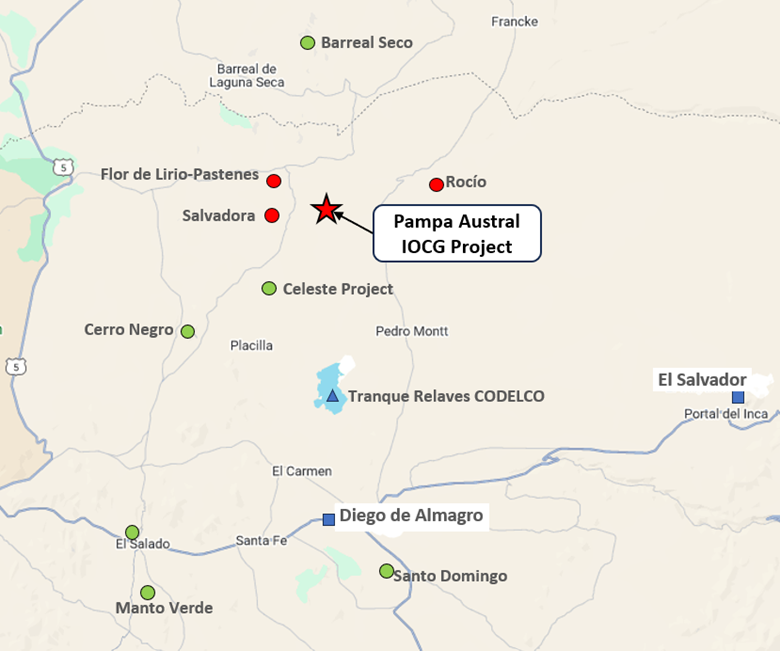
Figure 4: Location of the Pampa Austral property and some of the more important deposits in the surrounding district.
Quality Assurance and Quality Control (QA/QC)
Sampling is conducted in a manner designed to allow appropriate averaging and statistical analysis of the data for exploration evaluation and potential future resource estimation. Industry-standard QA/QC procedures are implemented throughout the sampling and analytical process, including the systematic insertion of certified reference materials, blanks and duplicate samples to monitor laboratory performance and analytical accuracy. Drill core samples are typically collected over intervals ranging from 1 to 2 metres, depending on geological boundaries. Shorter sample intervals are avoided whenever possible to maintain consistency and representativity of the sampled material. Prior to sampling, the drill core is geologically logged and photographed to create a high-resolution photographic record. Core samples are then split along the core axis using an electric rock saw by trained company technicians. One half of the core is sent for analysis while the remaining half is retained on site for reference and verification.
As part of the QA/QC program, one certified reference standard is inserted every 20 core samples. Additionally, one coarse blank, one fine blank and one internal duplicate sample are inserted approximately every 50 core samples to monitor contamination, analytical precision and laboratory performance.
To ensure sample security and compliance with NI 43-101 chain-of-custody standards, samples are placed in sealed rice bags with numbered security tags at the project site. Samples are then transported by company personnel via truck to the analytical laboratory. Custody and transfer of the samples always remain under the responsibility of company personnel. Sample preparation and analytical work are carried out by Andes Analytical Assays, an independent certified laboratory.
Qualified Person
The scientific and technical information in this news release has been reviewed and approved by Mr. David Gower, P.Geo., as defined by National Instrument 43-101 of the Canadian Securities Administrators. Mr. Gower is a consultant of Nobel and is not considered independent of the Company.
About Nobel
Nobel Resources is a Canadian resource company focused on identifying and developing prospective mineral projects. The Company has a team with a strong background of exploration success.
For further information, please contact:
Vernon Arseneau
Chief Executive Officer
+1 647-276-0533
Vincent Chen
Investor Relations
vchen@nobel-resources.com
www.nobel-resources.com
Cautionary Note Regarding Forward-looking Information
This press release contains "forward-looking information" within the meaning of applicable Canadian securities legislation. Forward-looking information includes, without limitation, the mineralization and prospectivity of the Projects, the Company's ability to explore and develop the Projects, changes to the Company's management team and board and impacts thereof, the Company's ability to obtain adequate financing and the Company's future plans. Generally, forward-looking information can be identified by the use of forward-looking terminology such as "plans", "expects" or "does not expect", "is expected", "budget", "scheduled", "estimates", "forecasts", "intends", "anticipates" or "does not anticipate", or "believes", or variations of such words and phrases or state that certain actions, events or results "may", "could", "would", "might" or "will be taken", "occur" or "be achieved". Forward- looking information is subject to known and unknown risks, uncertainties and other factors that may cause the actual results, level of activity, performance or achievements of Nobel, as the case may be, to be materially different from those expressed or implied by such forward-looking information, including but not limited to: general business, economic, competitive, geopolitical and social uncertainties; the actual results of current exploration activities; risks associated with operation in foreign jurisdictions; ability to successfully integrate the purchased properties; foreign operations risks; and other risks inherent in the mining industry. Although Nobel has attempted to identify important factors that could cause actual results to differ materially from those contained in forward-looking information, there may be other factors that cause results not to be as anticipated, estimated or intended. There can be no assurance that such information will prove to be accurate, as actual results and future events could differ materially from those anticipated in such statements. Accordingly, readers should not place undue reliance on forward-looking information. Nobel does not undertake to update any forward-looking information, except in accordance with applicable securities laws.
NEITHER TSX VENTURE EXCHANGE NOR ITS REGULATION SERVICES PROVIDER (AS THAT TERM IS DEFINED IN THE POLICIES OF THE TSX VENTURE EXCHANGE) ACCEPTS RESPONSIBILITY FOR THE ADEQUACY OR ACCURACY OF THIS RELEASE.
Photos accompanying this announcement are available at:
https://www.globenewswire.com/NewsRoom/AttachmentNg/9c163667-2134-4dc4-97a6-60645f9352c9
https://www.globenewswire.com/NewsRoom/AttachmentNg/a8855a8a-d036-4fbc-bb92-00eece26e044
https://www.globenewswire.com/NewsRoom/AttachmentNg/faebae5d-dbd3-4f6f-b8ba-d8240c0e941a
https://www.globenewswire.com/NewsRoom/AttachmentNg/c7490270-6ce9-47b8-8b43-61cb2dedaf8c
https://www.globenewswire.com/NewsRoom/AttachmentNg/22224716-d47b-455b-8b78-77a331a0412c

