
Boston, Massachusetts and Oslo, Norway--(Newsfile Corp. - June 15, 2026) - A new study from game-based training company Attensi finds that 54% of U.S. hospitality workers aged 25 - 34 would choose better workplace training over a 5% salary increase. At the root is a desire for more confidence on the job, as stress from busy shifts and fear of failure weighs on young workers: 52% of the Gen Z and Millennial group said the primary reason they try to improve their skills is to feel more confident and capable, not to earn more or be promoted.
The findings come from Attensi's Motivation and Skill Mastery in the Workplace 2026 study, a survey of 505 workers challenging foundational assumptions about what drives employee performance in the age of AI-powered training programs.
The research suggests that employees at large are not unmotivated, but under-practiced, due to poorly designed training:
- 86% of respondents report being motivated in their current role, yet two-thirds say most workplace training focuses on delivering information rather than enabling practice for real world challenges - and that information-only training doesn't fully prepare them to perform on the job.
- 77% say training that genuinely built their confidence would meaningfully change their day-to-day experience at work.
Better feedback and coaching (29%) and more realistic practice scenarios (27%) were the top requests, something Trond Aas, CEO at Attensi argues employers today can remedy without asking more from managers: "Companies often design workplaces around extrinsic rewards because they are easy to measure. But a large number of employees are telling us that becoming genuinely good at their job is more motivating than a slightly bigger paycheck. They understand the value of building competence and confidence - it's worth more to them than a short-term pay rise."
The data points to a self-reinforcing cycle that appears when training is designed well: practice leads to progress, progress builds confidence, and confidence drives motivation for more practice. When that cycle breaks down - due to training that is too passive, too rushed, or too disconnected from real job conditions - the result is stagnation.
Attensi argues that employee confidence, a metric most training programs are not equipped to track, should become a standard measure of training effectiveness. Aas says that requires employers to design training that makes progress visible. "Employees who can see themselves improving are more likely to keep practicing, and that sense of forward momentum is what converts effort into lasting confidence and better performance. Confidence is the result of tangible progress. It's what tells you the training is actually working."
See the full report here.
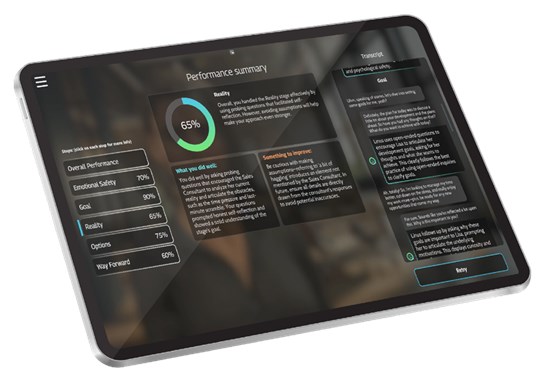
Attensi training feedback
To view an enhanced version of this graphic, please visit:
https://images.newsfilecorp.com/files/11538/301542_attensi%20tablet_550.jpg
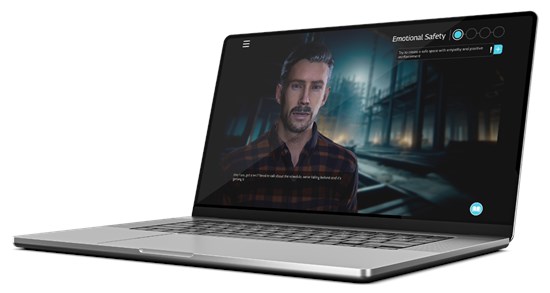
Attensi RealTalk
To view an enhanced version of this graphic, please visit:
https://images.newsfilecorp.com/files/11538/301542_attensi%20pc%20side.jpg

Attensi hospitality training
To view an enhanced version of this graphic, please visit:
https://images.newsfilecorp.com/files/11538/301542_attensi%20hospitality%20training%20attensi.jpg
About Attensi:
Since 2012, Attensi game-based simulations and training solutions have empowered organizations around the world to develop their workforce through engaging, interactive training experiences that have real impact. With a focus on innovation and cutting-edge AI technology, Attensi is shaping the future of learning and development, helping people and organizations grow to become exceptional.
In 2025 Attensi was recognized by Fast Company's World's Most Innovative Companies and TIME Magazine's World's Top EdTech Companies, as well as being named a Strategic Challenger in the Fosway 9-Grid for Digital Learning.
Contact Information:
Siobhan Lipnicki
siobhan.lipnicki@attensi.com
To view the source version of this press release, please visit https://www.newsfilecorp.com/release/301542
Source: Attensi
