
A community cancelled their contract with Flock Safety almost every single day last month. While Flock is getting the most press and community blowback, it's far from the only company assisting U.S. law enforcement with surveillance technology.
NORTHAMPTON, MA / ACCESS Newswire / August 20, 2026 / by Tina Casey
Previously published by TriplePundit
A bipartisan wave of opposition to the security technology startup Flock Safety is growing across the United States. Critics say the Georgia-based company's vast network of automated license plate readers, or ALPRs, collect personal data in violation of the Fourth Amendment. Flock says what it does improves public safety and is perfectly legal, but the system has proven ripe for error and abuse.
Though its name is seemingly everywhere right now, Flock is just one part of a growing disconnect between the expectation of constitutional protections and the reality of life in the 21st century.
Flock cameras are already active in thousands of U.S. communities
Surveillance cameras in public places are not a new phenomenon, but the rise of artificial intelligence provides Flock and companies like it with new and infinitely more powerful tools that have raised alarms among civil rights advocates.
Flock has approximately 120,000 ALPRs operating in 7,000 communities across the U.S. The cameras capture license plates and details like paint colors, bumper stickers and visible damage to recognize vehicles and allow for law enforcement tracking. The latest Flock devices can also focus on and follow pedestrians.
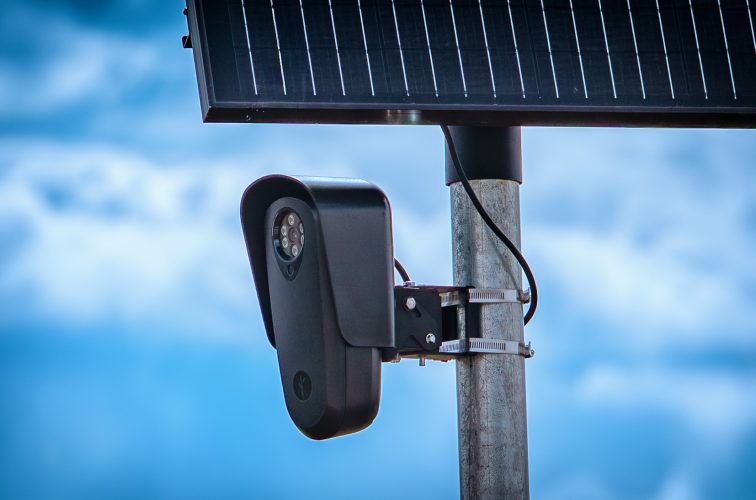
Flock's automated readers capture license plates and details like paint colors, bumper stickers and visible damage. (Image: Tony Webster/Flickr)
Though it indiscriminately records millions of people's daily movements, Flock says it does not violate the Fourth Amendment. Part of the Bill of Rights, the Fourth Amendment prohibits the U.S. government from conducting searches, including the use of digital footprints such as cell phone location data, without a warrant.
As a private company, Flock is not subject to the same legal framework that applies to the government. Regardless of its position on this heavily debated topic, though, the company's core business is built around contracting with law enforcement. That's where the model collides with civil rights, including putting lives at risk.
License plate reader errors create dangerous community encounters
Increased use of automated license plate readers is followed by a worrying pattern of dangerous roadside encounters and wrongful detainments of innocent people.
Last week, a Wisconsin woman was stopped on a busy interstate and surrounded by police with their guns drawn after Flock's system wrongfully linked her car to a homicide. She told local reporters it was the second time she'd been stopped at gunpoint in less than two weeks.
"I haven't been asleep since this has happened," she said, holding back tears. "Every time I close my eyes, all I can see is guns."
Fox6 Milwaukee
A few weeks before, automotive journalist Joel Feder of The Drive said he and his wife were surrounded by armed officers while test-driving a Range Rover in Minnesota, which Flock's system had erroneously reported stolen. "Flock isn't just at the center of a national debate, it hit at the center of my life," Feder wrote.
In a July analysis of 24 traffic stops linked to license reader errors, the Institute of Justice found that officers drew and pointed their guns at innocent people in two-thirds of them. "Every one of those stops is a high-risk encounter where a wrong move, a misunderstanding, or a moment of fear can turn deadly," Michael Soyfer, an Institute of Justice attorney, said in a statement. "No one should have to prove their innocence on the side of the road because a camera couldn't tell a zero from an O."
Law enforcement traffic stops are dangerous regardless of why the person was pulled over. More than 800 people died in the course of traffic stops between 2017 and 2025, according to the American Civil Liberties Union. "Despite representing only 12 percent of the population, Black people make up more than a quarter of those killed in these encounters," the organization notes.
In one particularly horrifying incident earlier this year, a Black driver in Ohio feared for his life when an erroneous Flock alert led police to pull him over. Exiting the car at gunpoint, he was attacked by a police dog and suffered life-changing injuries. He was then jailed for hours before being released.
Though Flock's marketing materials boast a 93 percent accuracy rate, the company's camera network reads more than 20 billion license plates every month, adding up to over a billion inaccurate readings.
Overall outcomes can also mask more substantial shortcomings in individual jurisdictions. In Roseville, California, for example, a customized Flock system generated 1,427 alerts regarding stolen or felony-linked vehicles from 2023 to 2024. More than 70 percent of the alerts were later found to be erroneous. Flock reportedly attributed the problem to the deployment of older equipment in a configuration requested by Roseville officials.
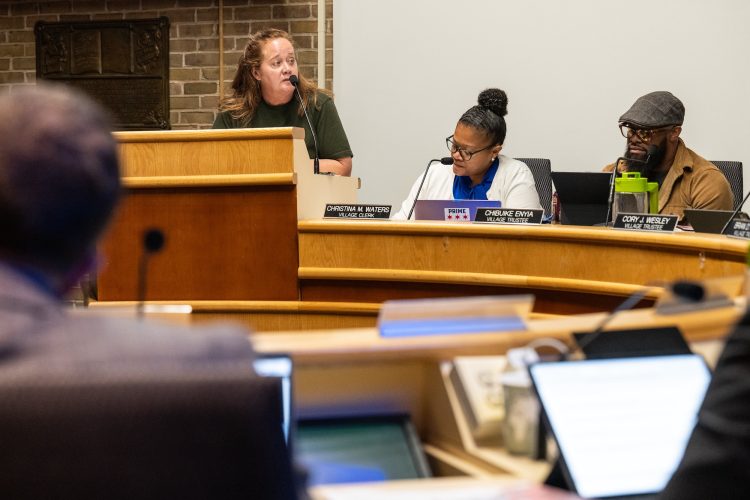
Residents share their concerns about Flock Safety cameras at a town board meeting in Oak Park, Illinois, last year. The trustees ultimately voted 5-2 to cancel the town's contract with Flock. (Image: Paul Goyette/Flickr)
Police misuse of Flock systems is the last straw for many communities
Beyond mistakes and equipment failures, Flock's data is also vulnerable to intentional abuse by law enforcement officers. Recent cases in Georgia jurisdictions alone include a former police officer charged with accessing the system multiple times for non-enforcement reasons, three sheriff's employees who resigned after an audit of Flock usage, the arrest of a former deputy charged with tracking a person known to him, three officers fired after an audit revealed unauthorized searches, and more.
This spurt of arrests, charges, and terminations follows the rollout of a new auditing tool from Flock. Effective as the tool may be, it can only catch abuse after the damage is done. Combined with terrifying cases of mistaken identity, publicity over intentional misuse of the system created mounting backlash in communities.
More than 100 municipalities have cancelled their contracts with Flock since 2021, according to the civic engagement organization Deflock. More than half of them cancelled this year, with over a quarter in July alone. The ACLU also posted an advocacy toolkit to help concerned residents press for action against ALPRs.
Flock is getting the most press and community blowback, but it's far from the only company assisting law enforcement with surveillance technology. Vigilant Solutions and Rekor Systems also operate broad ALPR networks in the U.S., while the drone surveillance company Skydio partners with more than 1,200 government and law enforcement agencies across the country.
Whatever happened to the Bill of Rights?
Adding to the fraught environment is the specter of U.S. President Donald Trump's immigration policy and the wanton abuse of constitutional protections by federal immigration agents. Though Flock claims it does not work with immigration agencies, local law enforcement has been documented sharing ALPR data with agents.
Other vulnerable populations are also at risk of persecution through surveillance tracking. In 2022, for example, women were warned to delete popular menstrual tracking apps after advocates raised the potential for law enforcement to use the data in abortion cases. More recently, a sheriff's deputy in Texas searched more than 83,000 Flock cameras across the country in an effort to find a woman suspected of having an abortion.
People seeking gender-affirming care are also increasingly vulnerable to interstate data collection and sharing, civil rights advocates say.
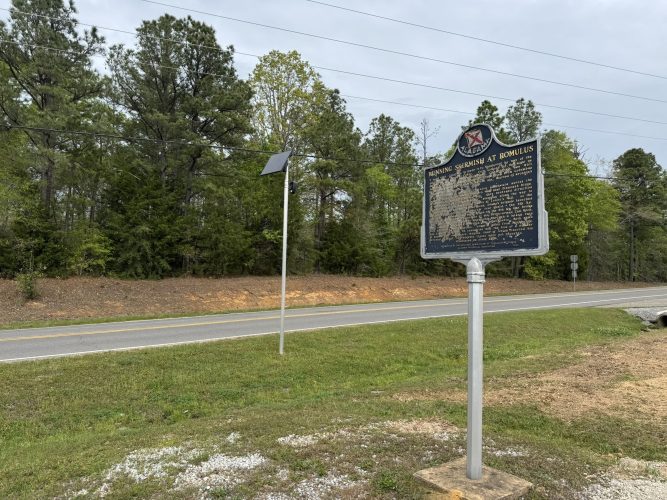
A Flock license plate reader in rural Romulus, Alabama. (Image: Wikimedia Commons)
Surveillance companies like Flock Safety, Skydio, and others operate in a legal grey area as legislators and the courts are slow to keep pace with rapidly advancing technology. Though the Supreme Court has ruled there are few reasonable expectations of privacy in public, some legal experts say mass AI-powered surveillance networks go beyond security camera feeds to provide a searchable account of a person's daily movements before there is any probable cause of a crime.
"While companies can manipulate you, they cannot put you in jail. But the U.S. government can, and it now purchases massive quantities of your information from commercial data brokers," Anne Toomey McKenna, an affiliated faculty member of the Institute for Computational and Data Sciences at Penn State University, wrote in The Conversation.
Far beyond ALPRs, McKenna describes a lifestyle of continuous personal data collection that includes Ring cameras, smart phones, automotive sensors, and more.
While ordinary people can reduce some of the risks, completely disconnecting from the modern world is virtually impossible. It will take continued public pressure, and aggressive legislative and judicial action, to rein in the growing threat of surveillance data abuse.
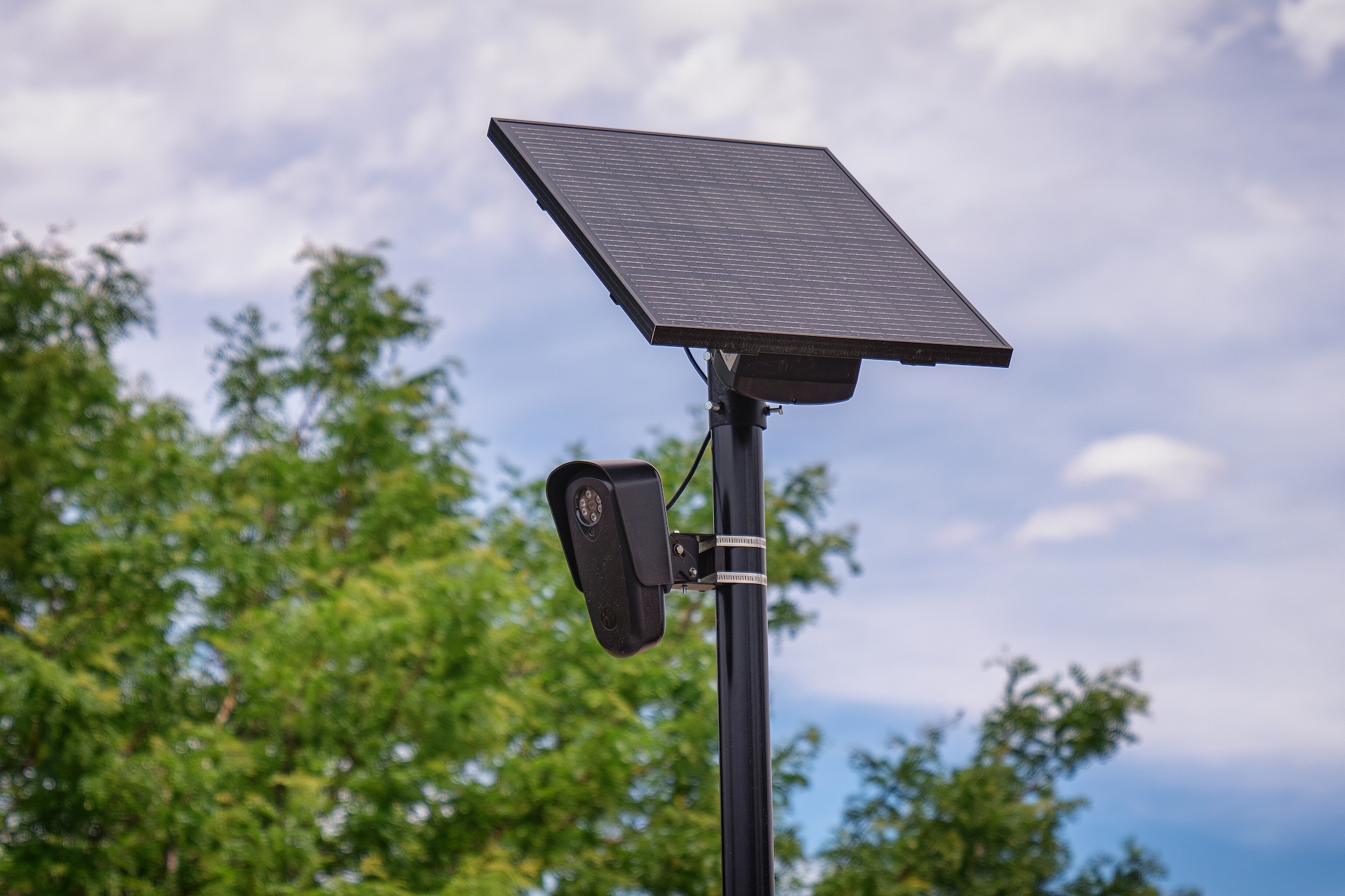
A Flock Safety automated license plate reader (ALPR) camera outside a retail store in Aurora, Colorado. (Image: Tony Webster/Wikimedia Commons)
Find more stories and multimedia from TriplePundit at 3blmedia.com.
Contact Info:
Spokesperson: TriplePundit
Website: https://www.3blmedia.com/profiles/triplepundit
Email: info@3blmedia.com
SOURCE: TriplePundit
View the original press release on ACCESS Newswire:
https://www.accessnewswire.com/newsroom/en/publishing-and-media/flock-safety-is-under-fire-but-its-only-a-part-of-modern-mass-surveillance-1210074
