
By Megan Amrich
SCARBOROUGH, ME / ACCESS Newswire / August 25, 2026 / Originally published on TriplePundit
With so much information in the news and online about nutrition, it's easy for caregivers to feel confused and overwhelmed about making the best choices for their kids. Fortunately, clear, evidence-based resources like the Guiding Stars nutrition guidance program are available to help.
Lunch is a critical part of a child's healthy diet, supporting physical growth, brain development and immunity. But with so much information in the news and online about nutrition, it's easy for caregivers to feel confused and overwhelmed about making the best choices for their kids. Fortunately, clear, evidence-based resources - such as the science-backed Guiding Stars nutrition guidance program found in more than 2,000 U.S. grocery stores - are available to help families check "nutrition" off their busy list of back-to-school tasks.
School lunch: Buy or bring?
The National School Lunch Program provides 22 million free or reduced-price lunches to students across the United States every single day. The school lunch program is a lifeline for the millions of U.S. families facing food insecurity and one of the largest food and nutrition assistance programs in the nation. Along with federal assistance, nine U.S. states offer free breakfast and lunch to all students regardless of their family's ability to pay.
School-provided meals are shaped by consistent guidelines, and research shows they're the most nutritious food source for American kids. By law, all public school meals must adhere to the U.S. Department of Agriculture's school nutrition standards, which are based on the federal dietary guidelines updated every five years. The most recent update, for example, focused on reducing added sugars and sodium while promoting whole grains, produce and proteins.
These standards make school meals a reliable and affordable source of nutritious food, Lunches brought from home, however, can vary widely.
It may surprise some parents to learn that home-packed lunches have lower nutritional quality on average when compared to what's provided at school, according to a 2024 meta-analysis of more than a dozen studies published over two decades. While studies like these are helpful reminders for families, the big decision to buy or bring comes down to a number of factors, from medical considerations and personal preferences to cost and access.
"Ultimately, the decision about whether to bring lunch or eat the school lunch is a family decision," dietitian Kitty Broihier, a member of the Guiding Stars scientific advisory panel, assures caregivers. "And there are no right or wrong answers."
Evidence-based guidance helps families take the stress out of shopping
Many families find that combining homemade and school-made lunches strikes the right balance for them. "When my children were in public school, we reviewed the school menus together," Broihier shares. "They'd decide which two or three days to eat school lunch and which days to bring lunch from home. This allowed them some autonomy in food selections. It also encouraged them to learn to eat food someone else had prepared."
Children involved in selecting and preparing their own food are building skills that support their health over the long term. Research including a widely cited 2018 literature review of 15 studies finds a positive association between getting kids involved with home meal prep and a greater consumption of fruits and vegetables, along with "higher self-efficacy" for cooking and choosing foods that support a healthy diet.
Still, knowing what to purchase and pack in a school lunch can easily start to feel overwhelming. Fortunately for busy families, some of the top grocers in the United States make evidence-based nutrition guidance available right on the shelf.
Celebrating 20 years in 2026, Guiding Stars is the longest-running on-shelf rating program in the U.S., leveraging the latest nutrition science to rate tens of thousands of products in a consumer-friendly system that helps shoppers make informed choices that support good health.
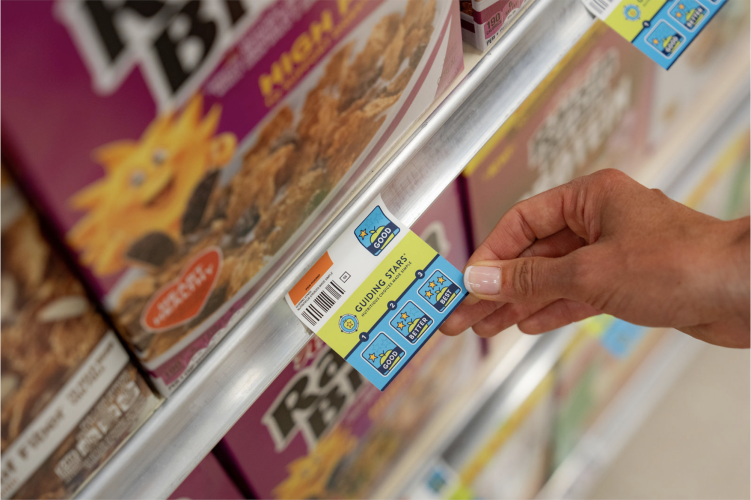
Guiding Stars uses credible, evidence-based nutrition science and standards from leading national and international health organizations. Products that meet transparent nutrition criteria earn one, two or three stars, indicating "good," "better" or "best" nutritional value.
Guiding Stars uses credible, evidence-based nutrition science and standards from leading national and international health organizations. The system's patented algorithms calculate nutrient density across ingredients to score food and beverage products based on attributes to encourage (such as fiber, whole grains and Omega-3 fatty acids) and attributes to limit (such as added sugars, chemical preservatives and artificial colors). The findings are overseen by an independent scientific advisory panel, including Broihier and her colleagues, and are updated regularly to reflect the latest standards.
You may have seen Guiding Stars icons in your local grocery store aisles. The apple icons with highlighted stars above are found on price tags, star-earning store brand product packaging and online. Products that meet transparent nutrition criteria earn one, two or three stars, indicating "good," "better" or "best" nutritional value.
Research in both the U.S. and Canada has shown that featuring this type of one- to three-star nutritional guidance program at the point of purchase can effectively shift consumer behavior toward making more nutritious food choices.
That's largely because the system helps consumers make more informed choices in a single glance, ideal for busy families making a quick grocery stop between after-school activities.
Guiding Stars is also one of the few nutrition guidance programs accessible in multiple places - not only on grocery store shelves, but also on product packaging, on the Guiding Stars website, and in the Guiding Stars app - making it even more accessible to simplify everyday food decisions based on the latest dietary guidelines.
As Broihier reminds overwhelmed audiences: "We are bombarded with more information, more messages, and a wider variety of opinions than ever before. So no wonder it feels next to impossible to sort through it all! But take heart, because you can simplify the role of nutrition in your life. It really is possible to eat well without too much stress, time, or mental energy."
Click here to read more on TriplePundit
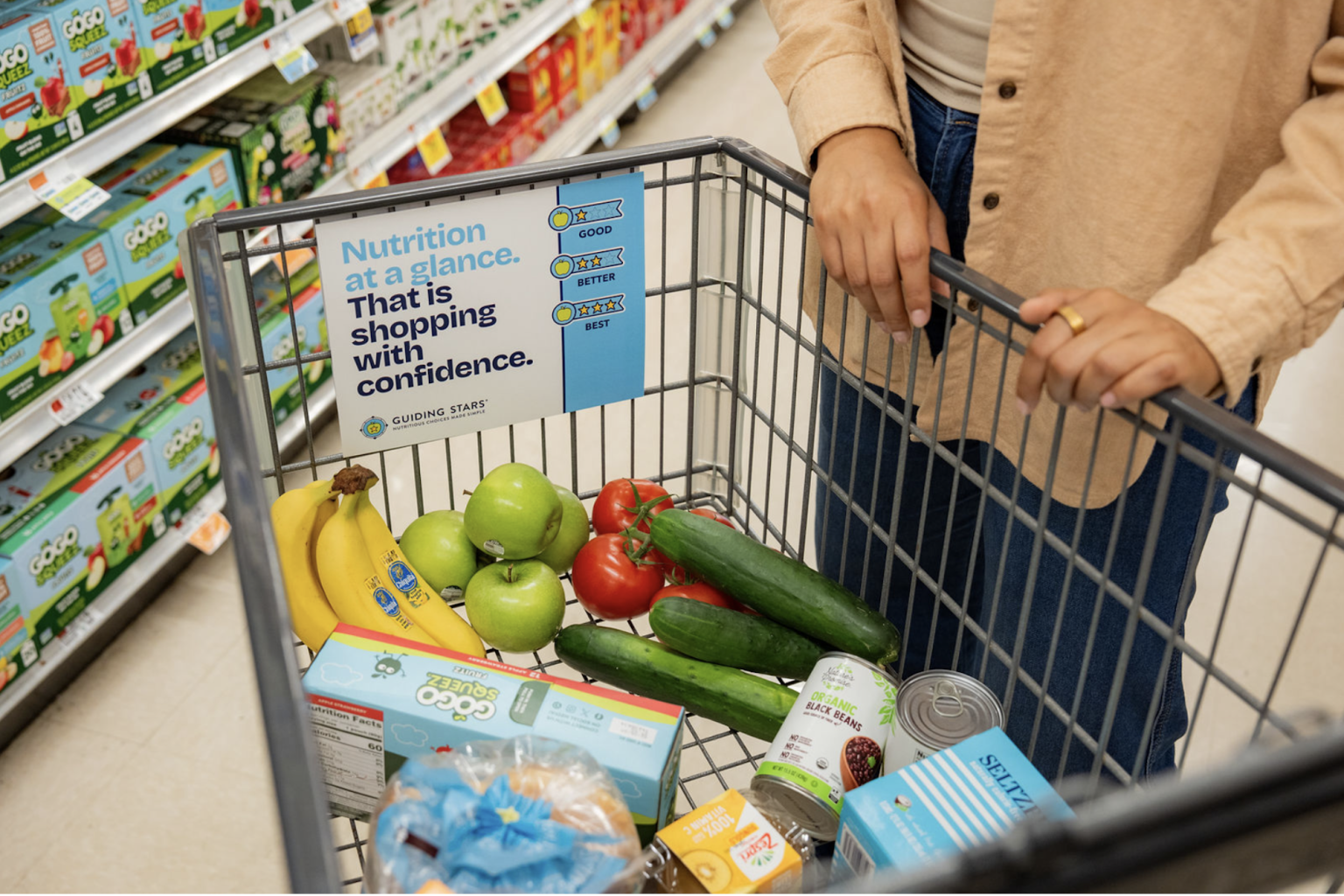
The science-backed Guiding Stars nutrition guidance program is available in more than 2,000 U.S. grocery stores.
Find more stories and multimedia from Guiding Stars Licensing Company LLC at 3blmedia.com.
Contact Info:
Spokesperson: Guiding Stars Licensing Company LLC
Website: https://www.3blmedia.com/profiles/guiding-stars-licensing-company-llc
Email: info@3blmedia.com
SOURCE: Guiding Stars Licensing Company LLC
View the original press release on ACCESS Newswire:
https://www.accessnewswire.com/newsroom/en/business-and-professional-services/take-the-guesswork-out-of-back-to-school-food-shopping-1211821
