Leading Cannabis Law Firm Harris Sliwoski attorney says operators should proceed "very carefully" and warns agreements may have to stop immediately if the federal rescheduling order is overturned.
WASHINGTON, DC / ACCESS Newswire / September 14, 2026 / MMJ International Holdings, Inc., together with MMJ BioPharma Cultivation, Inc. and MMJ BioPharma Labs, Inc. (collectively, "MMJ"), says a new analysis from a prominent cannabis attorney underscores what the marijuana industry may be overlooking following this week's D.C. Circuit ruling:
The court denied an emergency stay. It did not decide whether the federal Schedule III order is lawful.
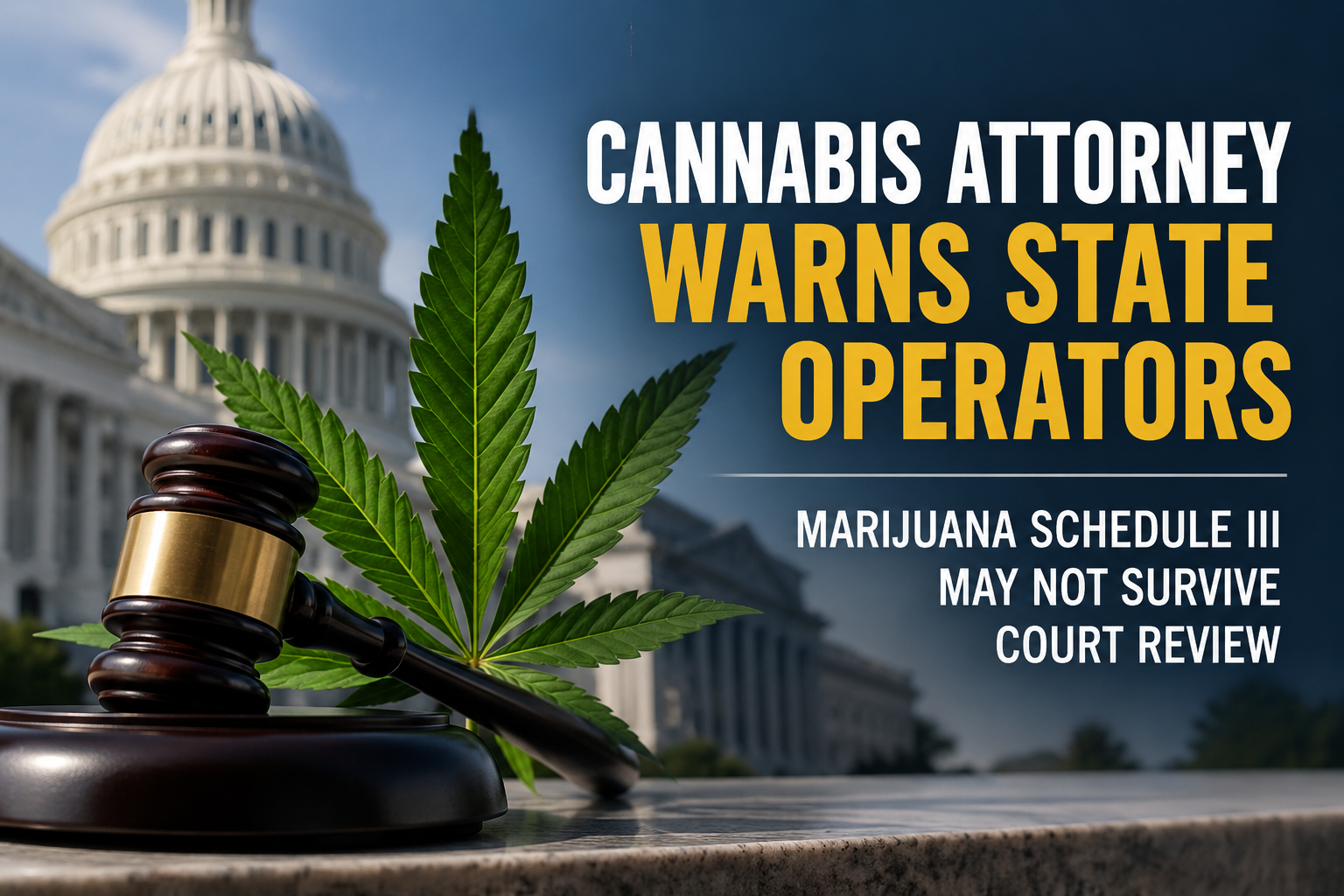
And a cannabis attorney is now warning state marijuana operators to plan accordingly.
Jason Adelstone, an attorney with Harris Sliwoski, published an analysis September 11 titled Medical Marijuana in Schedule III Survives Its First Major Challenge.
But beyond the headline is a warning that may be considerably more important for marijuana businesses.
Adelstone writes that the D.C. Circuit's September 9 denial of the stay merely maintains the status quo and "does not mean that medical marijuana will ultimately survive the litigation."
More significantly, Adelstone says he continues to believe that if the petitioners establish Article III standing, the Attorney General's Schedule III final order will ultimately be overturned. He points specifically to his reading of 21 U.S.C. § 811(d)(1) and what he characterizes as drafting problems in the final order.
That is an important distinction for an industry already making business decisions based on Schedule III.
The Stay Was Denied. The Merits Were Not Decided.
On September 9, the U.S. Court of Appeals for the D.C. Circuit denied the emergency request by opponents of the Schedule III order to halt implementation while judicial review proceeds.
The denial does not constitute a final ruling on the underlying statutory challenges.
Adelstone describes the ruling as significant for state marijuana operators because a stay would have immediately disrupted implementation. But he expressly cautions that the litigation remains alive and that standing may determine whether the court ever reaches the central statutory challenge.
That distinction matters.
Winning the stay motion was not winning the case.
Cannabis Companies Were Also Denied Intervention
The September 9 order contained another development with potentially significant implications for state operators.
MedPharm Iowa and Tri-Mountain Pure sought to intervene directly in the litigation, arguing that the Attorney General could not adequately represent their business interests.
The D.C. Circuit denied their request to intervene, although it permitted them to participate as amici curiae and present arguments for the court's consideration.
That means the companies benefiting directly from the new federal framework were not granted party status in the litigation challenging it.
They may present arguments.
But they are not intervening parties.
The Warning to State Operators
Adelstone's most consequential observation may concern what happens while the litigation continues.
DEA implementation could potentially move faster than final judicial review.
That creates an unusual situation: businesses may begin structuring transactions, contracts and operations around a federal regulatory framework that remains subject to a pending legal challenge.
Adelstone therefore warns state medical marijuana licensees to be "very careful" about how they proceed and what they put into their contracts.
His concern is straightforward.
If the final Schedule III order is ultimately overturned, agreements involving interstate or international commerce under the new framework could be disrupted and potentially have to cease.
Conversely, if the government's order survives judicial review, businesses entering the system early could obtain a first-mover advantage.
That is not regulatory certainty.
It is regulatory risk.
Standing May Be the Gatekeeper
Adelstone identifies standing as potentially decisive.
The challengers include organizations, states, individuals and MMJ International Holdings entities attacking different aspects of the Attorney General's final Schedule III framework.
The D.C. Circuit has not yet resolved the ultimate standing questions.
If the court determines that none of the petitioners has Article III standing, it may never reach some or all of the substantive challenges.
If standing is established, however, the statutory questions move to center stage.
And Adelstone's assessment becomes particularly significant: despite the denial of emergency relief, he says that if petitioners have standing, he does not see how the final order survives based on his reading of the governing statute.
MMJ Says That Is Why This Case Is Far From Over
MMJ International Holdings has consistently maintained that the federal government's treatment of marijuana cannot be evaluated merely by asking whether Schedule III is politically or commercially desirable.
The question before the courts is whether the federal government acted within the authority Congress actually provided.
That is a fundamentally different inquiry.
"The marijuana industry should read beyond the headline," said Duane Boise, CEO of MMJ International Holdings. "The court denied an emergency stay. It did not uphold the Schedule III order on the merits. Now a cannabis attorney is warning state operators to protect themselves contractually because the order could still be overturned. That tells you exactly where this case stands: it is not over."
Boise added:
"MMJ has spent years operating through the federal FDA and DEA systems. We believe the ultimate question is not whether Schedule III is good business for somebody. It is whether the government followed the law Congress enacted. If the court reaches that question, the government will have to defend the statutory foundation of what it created."
The Industry Now Faces Two Very Different Outcomes
If the Schedule III order survives judicial review, qualifying state medical marijuana operators could continue moving into the new federal registration framework, potentially gaining substantial commercial advantages.
If the order is vacated, businesses that relied on it could confront significant regulatory and contractual disruption.
That is precisely why Adelstone's warning deserves attention.
The September 9 decision was an important procedural victory for the government and supporters of the new framework.
But it was not a final judicial endorsement of Schedule III.
The state operators were denied intervention.
Standing remains an important threshold issue.
The statutory challenges remain unresolved.
And even an attorney representing cannabis businesses is warning operators to prepare for the possibility that the final order may not survive.
The Show Is Not Over
For an industry eager to treat Schedule III as settled federal law, the message from the litigation is considerably less comfortable:
The stay is gone.
The lawsuit is not.
The merits have not been decided.
And state operators are now being warned to plan for both outcomes.
CONTACT:
Madison Hisey
MHisey@mmjih.com
203-231-8583
Source
Jason Adelstone, Harris Sliwoski - "Medical Marijuana in Schedule III Survives Its First Major Challenge," September 11, 2026
Cautionary Statement
This release discusses pending federal litigation and commentary by a third-party attorney. Adelstone's assessment that the Schedule III order may ultimately be overturned if standing is established is his legal opinion and is not a judicial determination. The D.C. Circuit's September 9 order denied emergency stay relief but did not finally adjudicate the merits of the consolidated challenges. MMJ does not predict the outcome of the pending judicial proceedings.
SOURCE: MMJ International Holdings
View the original press release on ACCESS Newswire:
https://www.accessnewswire.com/newsroom/en/healthcare-and-pharmaceutical/cannabis-attorney-warns-state-operators-marijuana-schedule-iii-may-no-1220182