
A Grain of Rice, a Window into China: 'Chinese Bridge' Contestants Explore the Story of Xiaozhan Rice
Tianjin, China--(Newsfile Corp. - September 21, 2026) - 'Chinese Bridge' announces that participants in the global finals of the 19th "Chinese Bridge" Chinese Proficiency Competition for Foreign Secondary School Students visited the Xiaozhan rice growing area in Tianjin on Thursday, exploring the history, cultivation process and cultural significance of one of China's traditional rice varieties.
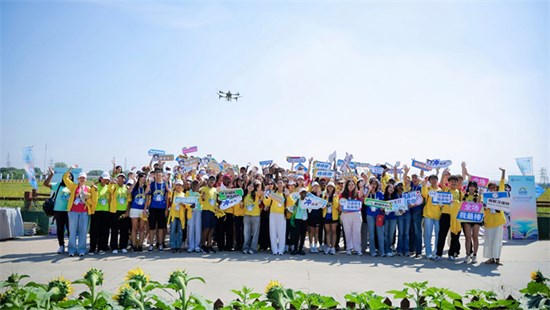
Contestants from around the world visited Huiguan Village, Xiaozhan Town, the core growing area of Xiaozhan rice in north China's Tianjin Municipality. Through field activities and demonstrations, participants learned about rice harvesting, processing, traditional agricultural practices and the relationship between farming and Chinese culture.
Known as one of the birthplaces of Xiaozhan rice, the area provided participants with an opportunity to experience different stages of rice production, from cultivation in the fields to processing after harvest. The visit also introduced an agricultural model that combines rice cultivation with aquatic farming.
A grain of rice and a Chinese character
Under the September sun, contestants entered the rice fields, where mature ears of rice bent under the weight of their grains. Their first activity connected the agricultural landscape with Chinese language learning.
Holding rice stalks in their hands, participants learned about the Chinese character "禾" (grain). The ancient oracle-bone form of the character resembles a mature stalk of grain bending under the weight of its ear, reflecting the historical connection between Chinese characters and observations of nature.
Participants then joined an interactive activity focused on Chinese characters containing the "禾" radical. Examples included "稻" (rice), "秧" (rice seedling), "稼" (farming) and "穗" (ear of grain).
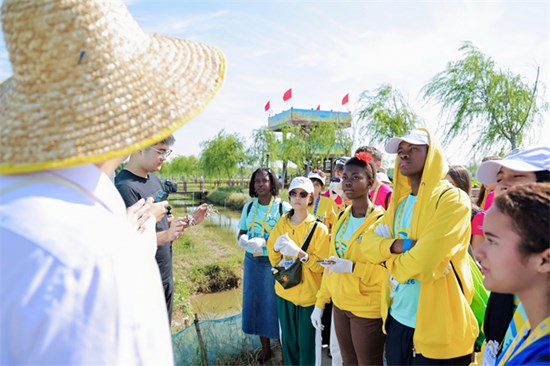
The activity introduced participants to the way Chinese characters can preserve information about traditional lifestyles, agricultural practices and people's relationship with the natural environment.
The contestants also learned about the importance of rice in Chinese history and daily life. As one of the country's major agricultural products, rice has long been connected with farming traditions, seasonal cycles and cultural expressions.
From paddy to rice
The contestants continued their visit at the threshing and milling area, where they observed the transformation of freshly harvested paddy into processed rice.
With guidance from agricultural professionals, participants learned about the equipment used in rice production and observed the different steps involved in removing husks and preparing rice for consumption.
During the demonstration, contestants took turns operating agricultural equipment and experiencing the process firsthand. The activity allowed participants to better understand the stages between rice cultivation in the fields and the finished product found on dining tables.
The visit highlighted the agricultural knowledge and labor involved in rice production, including planting, cultivation, harvesting and processing.
For many participants, the experience provided a direct connection between traditional agricultural practices and modern farming methods. Through hands-on activities, they gained a broader understanding of how agricultural production has developed while remaining connected to long-standing traditions.
Rice and crabs: an ecological partnership
The visit then continued at the rice-crab farming area, where contestants learned about an agricultural model based on the interaction between rice plants and aquatic life.
Agricultural professionals explained how rice and crab farming can form a mutually beneficial ecosystem. Rice fields provide a habitat for crabs, while crab activity can contribute to field conditions and agricultural management.
The model reflects an approach in which water resources and farmland can support multiple types of production within the same agricultural system.
Participants observed the rice fields and learned how traditional farming knowledge can be combined with ecological practices. The visit introduced them to the diversity of agricultural methods used in different regions of China.
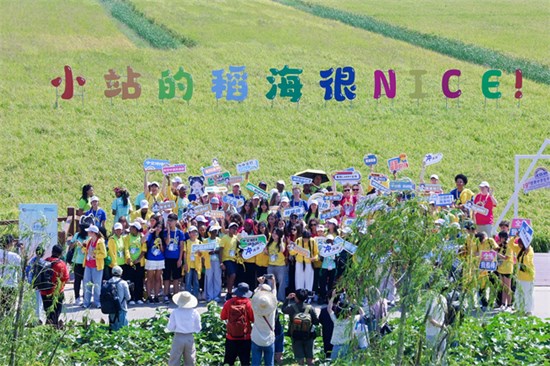
From an observation platform, contestants viewed large-scale patterns created by different varieties and colors of rice planted across the fields. The landscape demonstrated the connection between agricultural production, rural scenery and cultural expression.
A journey through a sea of rice
The final stop of the visit was a sightseeing train ride through the expansive rice fields. As the train moved through the paddies, contestants photographed and recorded the surrounding landscape.
The journey allowed participants to observe the scale of rice cultivation in the region and experience the agricultural environment beyond the classroom.
Throughout the visit, contestants from different countries explored Chinese agriculture through direct observation and participation. The activities connected Chinese language learning with cultural experiences, allowing participants to discover how everyday elements such as rice can reflect history, technology and traditions.
The "Chinese Bridge" program provides opportunities for young people from different countries to learn about China through language and cultural exchange. Through activities such as this visit to the Xiaozhan rice fields, participants continue to explore connections between language, culture and shared human experiences.
Chinese Bridge
Ms. Zheng
chinesebridge@chinese.cn
http://bridge.chinese.cn
To view the source version of this press release, please visit https://www.newsfilecorp.com/release/315095
