
Cascale's Lee Green reflects on the Cascale Annual Meeting 2026 in Athens: who pays, who profits, and what changes.
NORTHAMPTON, MA / ACCESS Newswire / September 24, 2026 / We went to Athens with a question instead of a position. Who Pays, Who Profits, and What Changes? We chose this theme for Annual Meeting 2026 because it is the question members keep raising privately and the industry keeps deferring publicly. Over three days in September, 600 attendees and 75 speakers took it on across the Main Stage, the Impact Stage, the Worldly Stage, the Collaboration Stage, and a full slate of closed-door rooms.
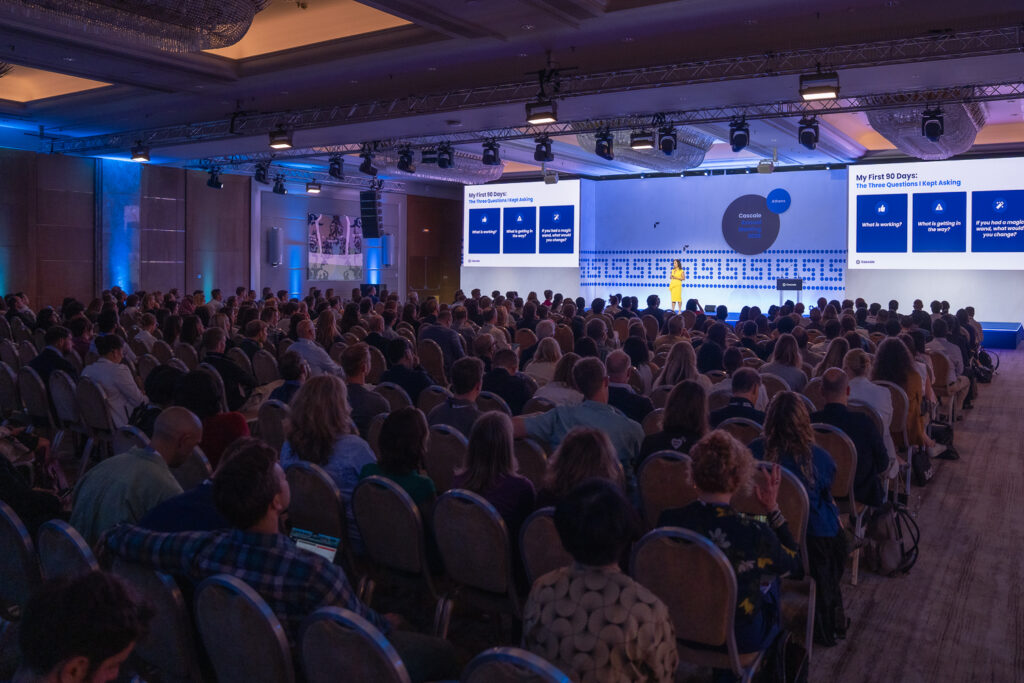
What came back was more useful than consensus. It was a diagnosis.
Event emcee Isabelle Kumar put it plainly as she opened the meeting: "The question is no longer whether transformation happens. The question is how - how responsibility is shared, how investment is aligned, how value is created across the chain." Nothing in the following three days contradicted her. The goals the industry set itself have not changed. Decarbonization, decent work, resilient supply chains; nobody in Athens argued for retreat from any of them. What has changed is the environment in which they have to be delivered: tariffs, trade fragmentation, thinner consumer wallets, regulation arriving faster than the systems built to answer it, and a macro climate that has made capital cautious.
The instinct in that environment is to assume the barrier is money. Athens suggested otherwise. On the finance panel, Kurt Kipka of the Apparel Impact Institute (Aii) framed the constraint as coordination rather than capital: projects stall when the business case is solid for a brand's CFO but not yet a win for the manufacturer or at the scale a bank needs. Clair Smith of HSBC was direct about what banks actually require - a plain business case, cash-flow visibility, workable risk-sharing. Manufacturers spend now and see returns later, and buyer signals matter because banks assess cash flow. Asif Khan of Mondetta made the same point from the other end of the chain: "If you have season-to-season buying, that doesn't build confidence. If you have a long-term partnership, that gives you confidence to invest."
That is not a financing problem. It is a misalignment between how long transformation takes to pay back and how short our commercial relationships are.
The heat-stress sessions took the argument further, and for me they were the sharpest hours of the meeting. Dr. Vidhura Ralapanawe of Epic Group showed how far the technical foundations have fallen behind: the meteorological data underpinning factory design in India dates from 2007 to 2011, and the standard assumed a peak of 39°C where 2024 reached 45°C. We are designing buildings for a climate that no longer exists. The commercial bind is just as real - heat now peaks in the same months that back-to-school and holiday orders do, and as Brian La Plante of YKK put it, manufacturers are rated on on-time supply while the breaks that protect workers can cut output by as much as a quarter.
Priydarshini Gouthi of Shahi Exports then dismantled the assumption underneath most of our climate adaptation conversations happening on the factory floor. Alleged productivity "gains" from heat remediation only recover output already lost to heat. "That's why the premise that there's a business case for addressing heat stress doesn't inherently exist. That's why we need shared responsibility," she said.
Adaptation is a shared cost to carry. Treating it as a return-on-investment play sets manufacturers up to fail. That is an uncomfortable finding, and it is the most honest thing the meeting produced.
Underneath all of this sat a question about our own work: what the data is actually for. Logan Duran, who leads ESG and sustainability at Tapestry, gave the most concrete answer I heard. Tapestry uses the Higg Facility Environmental Module (Higg FEM) as the foundation for performance conversations with its manufacturing partners, and has put social and environmental metrics into the manufacturer scorecard. The weighting is small, but it moves allocation decisions. And weak environmental and social scores, he said, tend to track with weak delivery and quality. That is the Higg Index doing what it was built for: informing a commercial decision rather than filling a report. The next step in that work was on the Impact Stage, where the team set out the Foundational Environmental Performance Module - a question set drawn entirely from existing Higg FEM Level 1 questions, shaped with 80 stakeholders across more than 30 organizations, with a technical paper and member dashboard now available. As Ying put it on the Main Stage, the next chapter is about "turning measurement into insights, insights into investment, action, and measurable results."
Honesty was something of a through-line. John Morrison, in conversation with Cascale's Rachel Lincoln Sarnoff, argued that the backlash against sustainability is partly self-inflicted - a movement that overextended, worked in silos, and leaned on awareness over delivery, opening a gap between claim and reality that opponents have been happy to exploit. Sandrine Dixson-Declève, whose keynote opened this year's Annual Meeting, held the tension without resolving it too neatly: "There is too much bad news to justify complacency, but there's too much good news to justify despair."
And Greece's Deputy Minister of Foreign Affairs, Harry Theoharis, gave the policy version of the same thought. "Competitiveness and sustainability can no longer be treated as separate agendas," he told the room. The work, as he put it, is making sustainability investable, measurable, and economically viable.
If there is a single organizing idea to take from Athens, it came from Rick Ridgeway in his closing plenary, borrowing Morrison's line: what our organizations need is not a chief sustainability officer but a chief systems officer. Sean Cady of VF supplied the discipline that goes with it - if you cannot articulate the value an activity creates, reconsider whether it belongs on your list at all, and expect that the biggest wins will cost money rather than save it.
This was also Ying McGuire's first Annual Meeting as our CEO, and she chose not to arrive with a finished strategy. Members were instead invited into a systems-mapping process - a revisit of the map this industry first drew in 2014 - that will inform Cascale's ten-year vision and 2027 priorities, with the work concluding in December. "Cascale does not belong to a few," she told the Main Stage. "It belongs to the community."
Which brings me to Bangkok. The Cascale Annual Meeting 2027 will be held in Thailand, and from January at least half of the program will be shaped by members themselves through an open request-for-proposal process, with a host committee of senior leaders from companies operating in Thailand and the region. Taking the meeting to a major manufacturing region, with the agenda partly in the hands of members, is a reasonable test of the argument Athens made. If the costs and the decisions genuinely need to be shared, then the program should be too.
Ying's closing line was the right one to leave with: "Between now and then we are going to execute. We're not just going to talk about it."
Thank you to everyone who made Athens what it was. We'll see you in Bangkok.
Lee Green is vice president of marketing, communications and public affairs at Cascale.
Find more stories and multimedia from Cascale at 3blmedia.com.
Contact Info:
Spokesperson: Cascale
Website: https://www.3blmedia.com/profiles/cascale
Email: info@3blmedia.com
SOURCE: Cascale
View the original press release on ACCESS Newswire:
https://www.accessnewswire.com/newsroom/en/business-and-professional-services/reflections-from-athens-what-the-cascale-annual-meeting-told-us-1226815
