
The double board-certified facial plastic surgeon explains why he treats lost volume and loosening skin as one problem rather than two, and how biostimulant injectables fit into that approach.
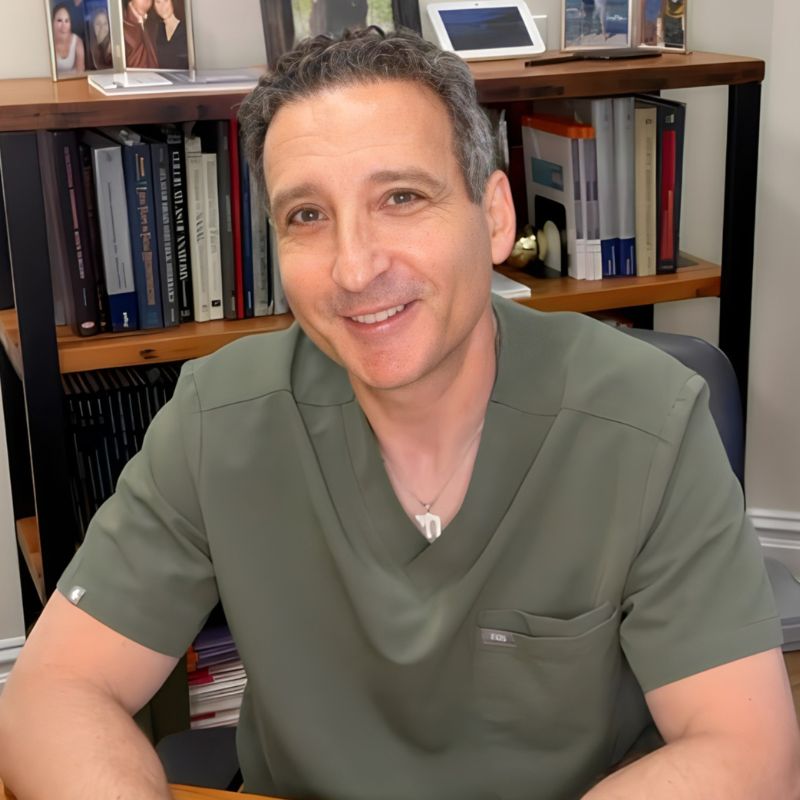
NEWBURGH, NY / ACCESS Newswire / October 8, 2026 / Patients who ask about facial aging often frame the question as a choice: should they add volume, or should they tighten skin? Dr. Ran Rubinstein, a double board-certified facial plastic surgeon at Laser & Cosmetic Surgery Specialists in Newburgh, NY, says that for most people the answer is not one or the other. In a series of recent educational videos, he has been describing how he treats volume loss and skin laxity at the same time, and why he believes that combination produces the most natural and durable results.
Volume Loss Is the Aging Change People Miss
Dr. Rubinstein describes facial volume loss as the earliest sign of aging, and the one that tends to go unnoticed until it becomes obvious. "This begins in our early 30s and makes us look tired, no matter how much sleep we get," he says. He explains that a trained eye can often estimate age from a profile view alone, based on how light lands on the face. Fuller contours catch highlights. Deflated areas cast shadows.
Those early changes are not primarily about skin. They come from the gradual loss of fat, bone, and soft tissue support beneath the surface. The good news, according to Dr. Rubinstein, is that this kind of change can be restored with fillers, biostimulants, or fat injections when it is addressed thoughtfully.
Why He Treats Volume and Skin Quality as One Problem
The question Dr. Rubinstein hears most is whether a patient should fill or treat laxity. His answer is that rejuvenation usually calls for both. "We're looking for some kind of rejuvenation by restoring lost volume, especially in the outer face where the ligaments live," he says. "You can get a lifting effect, but we also want to restore some form of skin elasticity."
The outer face matters because that is where the retaining ligaments anchor the skin and soft tissue to the underlying structure. When volume is placed strategically in that region, the surrounding tissue is supported and the face appears lifted rather than simply fuller. Restoring elasticity at the same time helps the skin sit better on that renewed foundation. "Believe it or not, you can do that at the same time with some products," Dr. Rubinstein says.
How Biostimulants Work in His Practice
The products he refers to are biostimulants, a category of injectables that prompt the body to produce its own collagen and elastin rather than adding volume directly. Results build gradually over weeks and months as new collagen forms, which is why Dr. Rubinstein often reaches for them when a patient needs both structure and better skin quality.
Two products are central to this approach. Sculptra, made from poly-L-lactic acid, is used to restore facial volume in areas such as the cheeks, temples, and jawline while improving skin texture. Hyperdilute Radiesse, a calcium hydroxylapatite product diluted with saline and anesthetic, is placed more superficially to improve skin tone and elasticity in areas like the lower face, jawline, and neck. Used together, they address volume restoration and collagen production in a single treatment plan. "You can combine them and get natural volume restoration, collagen production, improved elasticity gradually over time, which will be long-lasting and natural," Dr. Rubinstein says.
Because these treatments depend on the body's own response, they are typically performed as a short series rather than a single visit, with maintenance sessions spaced out over the following year or two.
Addressing Common Concerns About Fillers and Sculptra
Dr. Rubinstein also uses his videos to respond to worries he hears in consultation. One is that hyaluronic acid fillers inevitably lead to a puffy, overfilled appearance or that the product will migrate. He attributes that outcome to product selection and technique rather than the filler itself. "When you use the proper type of filler, proper placement, and also follow your patients out to see how and where they need touch-up and when not to do it, you can get really natural results that are long-lasting," he says.
A second concern is that Sculptra creates scar tissue that complicates later surgery. As a surgeon who performs deep plane facelifts on patients who have previously had Sculptra, he disputes this. "The surgery is not more challenging and the results are beautiful," he says, adding that biopsy studies show the product stimulates collagen rather than scar.
Fighting Gravity on Three Fronts
In another video, Dr. Rubinstein outlines what he calls the three ways to counter gravity in the aging face. The first is neuromodulator treatment such as Botox, placed in the muscles that pull the face downward so the lifting muscles work unopposed, which he says can give a subtle lift along the jawline, cheeks, and neck. The second is replacing lost volume in the cheeks, jawline, and ligament areas with hyaluronic acid fillers or biostimulants. The third is maintaining collagen and elastin in the skin itself through resurfacing and biostimulant treatments.
That framework mirrors how he approaches consultations: assess where support has been lost, decide which layers need attention, and select the combination of treatments that addresses each one. For patients with more advanced laxity, that conversation may also include surgical options.
A Teaching Perspective
Beyond his clinical practice, Dr. Rubinstein trains injectors nationally through Rubinstein Aesthetic Training Specialists in Montvale, NJ, and serves on the education faculty for the makers of Botox, Juvederm, Restylane, and Sculptra. That teaching role shapes how he explains treatment to patients, with an emphasis on anatomy, product choice, and realistic timelines rather than quick fixes.
Patients who want to learn more about his approach can contact the practice to schedule a consultation or follow his educational videos on Instagram.
About Laser & Cosmetic Surgery Specialists, PC
Laser & Cosmetic Surgery Specialists, PC is located in Newburgh, NY, and serves patients throughout Orange County and the Hudson Valley. Founded by Dr. Ran Rubinstein, the practice offers facial plastic surgery, body procedure, injectables, laser treatments, and med spa services, with an on-site Joint Commission-certified surgical suite. Additional information is available at yourfacemd.com.
Contact Information
Dr. Ran Rubinstein
Laser & Cosmetic Surgery Specialists, PC
200 Stony Brook Court Newburgh, NY 12550
845-280-5003
yourfacemd.com
Rubinstein Plastic Surgery Center, LLC
160 Summit Ave, Suite 201
Montvale, NJ 07645
Phone: (201) 754-5101
rubinsteinplasticsurgerycenter.com
SOURCE: Laser & Cosmetic Surgery Specialists
View the original press release on ACCESS Newswire:
https://www.accessnewswire.com/newsroom/en/healthcare-and-pharmaceutical/dr.-ran-rubinstein-shares-his-approach-to-treating-facial-volume-loss-1233835
