
WASHINGTON, D.C. / ACCESS Newswire / October 8, 2026 / Steve Atkinson, chairman of the Virginia Saltwater Sportfishing Association, argues in his September 15 Virginian-Pilot column ("Reduced menhaden fishing will help protect the bay") for additional menhaden fishing restrictions. But his interpretation of the stock science is contradicted by the Atlantic States Marine Fisheries Commission (ASMFC), and his proposal gives inadequate attention to the people whose livelihoods depend on the fishery.
Atkinson says scientists recently "admitted" the coastwide menhaden stock had been "overstated by a whopping 37%." In its FAQ, under "Has the menhaden population really declined by 37% between 2021 and 2024?," the Atlantic States Marine Fisheries Commission (ASMFC) explains that the stock has not decreased by 37%; rather, a new model estimated lower biomass because of a revised estimate of natural mortality, and says total menhaden biomass has actually increased since 2021. In fact, adult Atlantic menhaden biomass is nearly twice the size it was in the early 1970s, while landings are now precautionarily regulated at less than half their historical levels.
Atkinson is wrong to claim that the coastwide menhaden assessment has "nothing to do with the Chesapeake Bay."
Atlantic menhaden are migratory, and the ASMFC has been clear and consistent: its 2010 assessment, 2017 stock assessment update, and 2019 benchmark stock assessment all concluded that Atlantic menhaden are a single stock or population. They move through coastal and estuarine waters, including the Chesapeake Bay, and are assessed and managed as a coastwide stock. The absence of a Bay-specific abundance estimate does not transform that migratory stock into an isolated Chesapeake population. In short, there is no such species as a Chesapeake Bay menhaden.
Maryland's October 2025 young-of-year survey reported that Atlantic menhaden and bay anchovies were widespread in the Bay for the third consecutive year. Those observations concern juvenile fish, not a Bay-wide estimate of adult menhaden abundance.
Atkinson also says "leaving more menhaden in the water would help the recovery of striped bass." Yet the best available Bay-wide condition-factor analysis does not show starving striped bass. An April 2025 ASMFC Work Group report evaluated Fulton's Condition Factor-a length-to-weight measure of body condition-for 298,232 Chesapeake Bay striped bass across eight datasets from Maryland DNR, the Potomac River Fisheries Commission and the Virginia Marine Resources Commission. Annual values remained above the 0.8 stress threshold. The Work Group concluded that the sampled fish "are not starving and would be considered healthy." Body condition does not independently measure prey availability at every location or season.
The ASMFC's November 2025 Atlantic Menhaden FAQ is equally clear: even if all menhaden fishing suddenly stopped, that alone would not rebuild striped bass to their biomass target. The Commission identifies sustainable recreational and commercial striped bass fishing as the important management factor.
Recreational fishing accounted for the overwhelming majority of striped bass removals in the 2022-2023 assessment period: 49% from recreational harvest and another 40% from recreational release mortality-89% combined. Atkinson's proposed remedy does not address this documented source of striped bass fishing mortality.
The ASMFC has also expressly weighed economic consequences when deciding whether to restrict striped bass fishing. In October 2025, its Striped Bass Management Board declined a proposed 12% reduction in fishery removals and retained existing recreational measures and commercial quotas. It cited the severe economic consequences of the reduction, low 2024 fishing mortality and preliminary evidence of lower 2025 catches. The economic effects on menhaden workers warrant equally serious consideration.
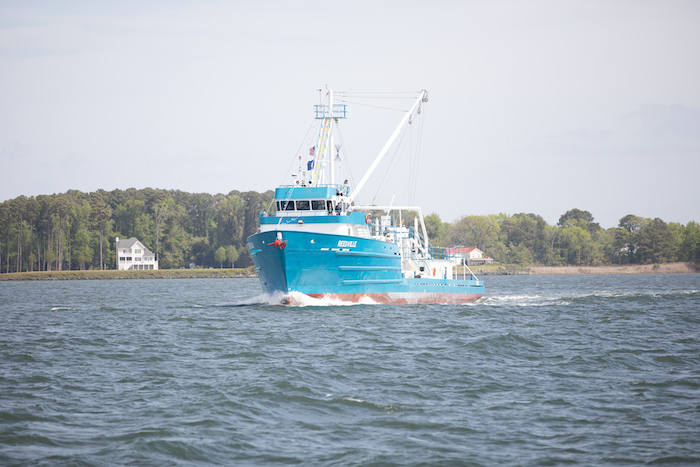
The Reedville fishery supports a blue-collar, unionized workforce in rural Northumberland County, including African American workers and multigenerational fishing families. Vessel crews, plant employees, mechanics, electricians and other skilled workers depend on the fishery.
The Southern Christian Leadership Conference raised those concerns, urging policymakers to consider African American workers, union families and rural communities that could be disproportionately affected by additional restrictions. SCLC called for policy guided by "balance, sound science, environmental stewardship, economic justice, and a recognition of the workers and families whose lives may be directly affected."
The Chesapeake Bay is a shared resource. Recreational advocates can argue for their preferred policies, but commercial fishermen and their families also deserve serious consideration of what restrictions would mean for jobs, wages, benefits and rural communities.
Recreational fishing matters and supports businesses, but there is a difference. Recreation is discretionary. For commercial fishermen, the Bay and surrounding waters are where they earn their living and support their families.
As one former union leader put it, "It's their playground, but it's our workplace."
The Chesapeake Bay has long supported both recreational and commercial users. Reedville families should not have their livelihoods treated as expendable so another constituency can claim a greater share of the resource. One group's desire for greater recreational access should not outweigh blue-collar working families. Our goal has always been to "Share the Bay"-it shouldn't only be for one user group.
To learn more about the people and jobs supported by Virginia's commercial menhaden fishery, visit the YouTube page of United Food and Commercial Workers Union Local 400.
About the American Small Pelagics Network
The American Small Pelagics Network represents fishermen, processors, suppliers, and coastal communities connected to fisheries such as menhaden, mackerel, herring, squid, and butterfish. ASPN supports sustainable fisheries management that supports critical fish species, while maintaining economic opportunities for fishermen and fishing communities.
Press Contact
Stove Boat Communications
(202) 595-1212
contact@smallpelagics.com
SOURCE: American Small Pelagics Network
View the original press release on ACCESS Newswire:
https://www.accessnewswire.com/newsroom/en/industrial-and-manufacturing/steve-atkinson-overlooks-the-science-and-the-workers-behind-virginias-1234497
