
NORTHAMPTON, MA / ACCESS Newswire / October 27, 2026 / by Jack Noonan
The average Australian spends over 74 years of their lives indoors. We take about 12 breaths a minute, breathing in roughly 11,000 liters of air every day. And yet the quality of the air inside our schools, workplaces, and public spaces has historically gone unmeasured and unregulated. While we have strict legal standards guaranteeing the safety of the water coming out of our taps and the food on our plates, indoor air has long remained a regulatory blind spot.
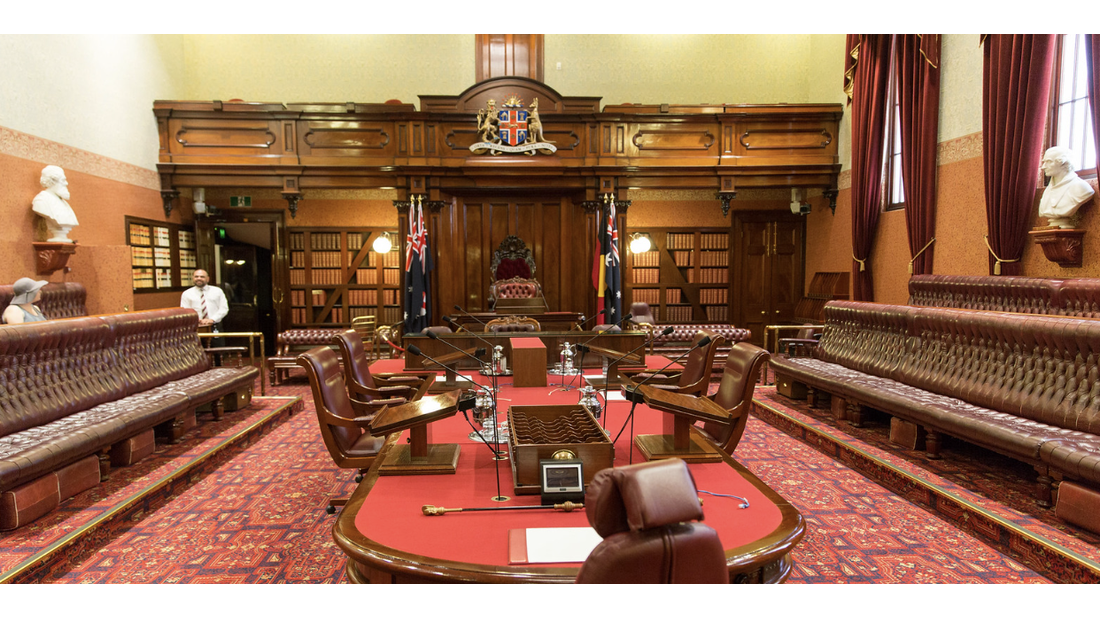
The publication of the New South Wales Legislative Council Health Committee's landmark inquiry report, Report 69: Clean indoor air, signals that this dynamic is about to change.
I had the privilege to participate in this inquiry, through a formal submission and testimony before Parliament, with a simple, urgent message: we have the tools to create change. The science is settled, monitoring technologies are accessible and the market framework to deliver healthy indoor air exists.
Our Recommendations
When I represented IWBI before the parliamentary committee, our primary recommendation was clear: rather than creating a fragmented, state-specific set of voluntary guidelines, the NSW Government should look to proven, market-tested benchmarks; specifically the air quality thresholds embedded within the WELL Building Standard.
The committee directly highlighted this evidence in the final report, underscoring WELL's established performance thresholds across key parameters:
- Fine particulate matter (PM 2.5)
- Carbon dioxide (CO2)
- Carbon monoxide (CO)
- Nitrogen dioxide (NO2)
- Ozone (O3)
- Volatile organic compounds (VOCs)
- Formaldehyde
Crucially, the report validated what our community has demonstrated for years: healthy indoor environments are commercially viable and scalable today. With over 600 buildings across Australia already certified or registered under WELL, the committee recognized that the infrastructure, sensor deployments, and ongoing performance verification protocols are already active and proven across our cities. Leading public health researchers and advocates, including Distinguished Professor Lidia Morawska and founder of the Safer Air Project Plum Stone, Co-Chairs of the Global Commission on Healthy Indoor Air, reinforced this during the hearings, pointing to frameworks like WELL as clear evidence that the industry has the practical know-how to deliver continuous indoor air monitoring right now.
What the Report Recommends
The committee's findings reflect a decisive shift from design-stage checklist compliance toward actual, operational exposure outcomes. Among the 38 recommendations handed down by the inquiry, several directly mirror the pathways IWBI advocated for:
- Enforceable, Health-Based Performance Standards: Recommendation 1 calls on New South Wales to lead national advocacy for consistent, enforceable indoor air quality performance standards, while Recommendation 10 urges the alignment of building codes, workplace health and safety (WHS) laws, and accessibility legislation with these benchmarks.
- A Dedicated NSW IAQ Strategy and Governance: The report recommends establishing a comprehensive state strategy driven by a lead minister, supported by an independent, multi-disciplinary advisory council (Recommendations 3, 4, and 5). Importantly, the council's immediate first task will be advising on a state-based system of indoor air quality monitoring for public buildings.
- National Construction Code (NCC) Modernisation: In line with our call to shift away from purely prescriptive models, Recommendation 11 urges the Australian Building Codes Board to expand mechanical ventilation and filtration requirements and embrace exposure outcome assessments.
- Targeted Public Sector Retrofits: The committee called for targeted upgrades to prioritise buildings where vulnerable populations gather, mandating low cost air sensors and mechanical ventilation across public school classrooms, routine monitoring in public hospitals, and comprehensive moisture audits in social housing (Recommendations 8, 12, 13, 22, and 30).
What's Next
This report marks an essential step in moving indoor air quality from a voluntary sustainability aspiration to essential public health infrastructure.
This local momentum also reflects a wider global shift. With the launch of the Global Framework for Action: Advancing Healthy Indoor Air through Societal Engagement and Market Transformation, developed by over 200 Commissioners from the Global Commission on Healthy Indoor Air, we are in lockstep to drive recommendations and implement strategies nationally and globally. This landmark roadmap features nearly 180 recommendations designed to elevate healthy indoor air as a public health imperative and an everyday expectation in buildings worldwide.
Healthy air is not a luxury or an afterthought; it is a fundamental pillar of human health, equity and productivity. The policy blueprint is now on the table, and the onus is on industry leaders and policymakers alike to ensure that every building protects the health of the people inside it.
View original content here.
Find more stories and multimedia from International WELL Building Institute (IWBI) at 3blmedia.com.
Contact Info:
Spokesperson: International WELL Building Institute (IWBI)
Website: https://www.3blmedia.com/profiles/international-well-building-institute
Email: info@3blmedia.com
SOURCE: International WELL Building Institute (IWBI)
View the original press release on ACCESS Newswire:
https://www.accessnewswire.com/newsroom/en/business-and-professional-services/from-best-practice-to-policy-why-the-new-south-wales-healthy-ind-1242912
