
Voice large models have turned accurate recognition and lifelike speech synthesis into universal capabilities. As metrics including recognition accuracy, synthetic naturalness and response latency converge across the industry, a clear consensus has emerged: the first half of Voice AI competition centres on model iteration, while the second half hinges on business scenario delivery. On 27 October 2026, Bairong AI (06608.HK, "Bairong") held its brand and product launch event "From Answers To Actions" in Shanghai, unveiling a full Voice AI product suite built on the unified VoxOne foundational platform. Far more than a routine product launch, the event marks a landmark case for the second-half competition: when foundation models become universally accessible, what truly creates a sustainable competitive moat? The Truth of Enterprise-grade Deployment: Speech Recognition Is Easy, Delivering Business Outcomes Is Challenging The real bottleneck is never model performance, but real-world business operations. Voice interaction follows a fundamentally different logic from text communication. Every spoken line carries both semantics and emotion; pauses, tone and rhythm all convey subtext. Traditional telephone calls use narrowband sampling, capturing far less acoustic data than internet audio, resulting in compromised performance when generic models are applied directly. Most critically, voice interaction is continuous and dynamic: users interrupt, revise requests, vent frustration or request a human agent transfer at any moment. Bairong breaks enterprise Voice AI deployment down into three key stages: capturing user requirements, sustaining natural dialogue, and delivering tangible business outcomes. The first two rely on core model performance, yet the third separates winners from the pack. Failed interactions in consumer scenarios allow simple retries, yet operational missteps in enterprise contact centers often trigger customer complaints. This explains why off-the-shelf generic AI solutions consistently underperform in complex corporate environments.
VoxOne Foundation + RaaS Model: Delivery Forms the Core Moat Bairong's solution unifies all technical capabilities on one foundational platform and builds standardized end-to-end delivery systems. Positioned as production-ready enterprise-grade Voice AI, the VoxOne platform is powered by a self-developed dual-model matrix. It delivers end-to-end latency under 500 milliseconds, with a word error rate as low as 2.30% in independent tests. Its most irreplicable competitive moat lies in proprietary data. Bairong has accumulated 2.6 billion real business call records that cannot be synthesised or obtained publicly - the most valuable fuel for iterating vertical models. Three product lines sit on top of the VoxOne platform to cover diverse client needs: Baifu provides silicon-based workforce for small, mid-sized and large enterprises; Baiying focuses on intelligent outbound sales; Baiyu offers voice interaction capabilities to ecosystem partners. All products run on the Results-as-a-Service (RaaS) pricing model, with charges directly tied to delivery performance: completed work orders, deployment scale, and revenue share from converted business leads. Deployment capability is what truly separates industry players. Bairong maintains a dedicated team of field implementation engineers. The team embeds with clients to integrate systems, streamline workflows and turn manual operations into AI-driven processes - covering the critical "first 99 miles" of rollout. Only with solid system integration, workflow adaptation and compliance governance can AI capabilities deliver real value in the "last mile" of business scenarios. In the first half of 2026, Bairong's AICC business posted revenue of RMB166 million, up 52% year-on-year. Revenue from emerging verticals such as logistics and securities surged 195% YoY. In logistics scenarios, daily call volumes handled by silicon-based workforce jumped from under 1,000 on launch to 15,000. Leading brokerages expanded their silicon-based workforce headcount from 30 at the start of the year to 300. Clients expanding deployments with real capital outlay serve as the most robust proof of Bairong's scenario delivery strength. It is worth clarifying that Bairong does not compete head-on with general-purpose large models. Generic models deliver universal speech-to-text and text-to-speech functions, while Bairong focuses on enabling AI to deliver business outcomes for enterprises. The two are complementary rather than mutually exclusive. Instead of just licensing AI tools, Bairong takes over end-to-end workflows originally handled by human agents, freeing staff to focus on high-complexity, human-touch customer services. From Product Iteration to Vertical Rollout: Bairong's Long-Term AI Roll-up Strategy The second half of the competition will extend beyond product upgrades to full industrial consolidation. The AI Roll-up strategy is already well-established across North America: players acquire client bases and business workflows via capital investments, optimise processes with AI, and finally capture value through superior cost and service quality. The underlying logic is straightforward: annual labour expenditure far outweighs software spending by dozens of times. Sustainable profitability rarely comes from software licensing alone; it comes from efficiency gains after AI is embedded into day-to-day workflows. Bairong has rolled out a two-pronged strategic roadmap. First, it pursues AI+BPO collaboration with Shanghai Integrity Bankcall Network Technology. Routine tasks are automated by AI, while complex cases remain with human agents, greatly expanding the scope of deployable AI use cases. Second, Bairong has set up a RMB500 million AI industrial fund alongside CICC Capital. The fund targets computing power, hardware and technology firms across the AICC value chain. Unlike pure financial investment, the fund stays tightly aligned with Bairong's core business: it targets upstream assets that can be integrated into Bairong's delivery pipeline, rather than short-term financial returns. Felix Zhang, Founder, Chairman and CEO of Bairong, has laid out a clear path: "Validate first, then replicate, then scale up." The product launch fully embodies this roadmap. Replicable business models have already been proven out in logistics and securities. The speed of expansion into high-volume verticals including airlines, banking and telecoms will define how strongly Bairong positions itself in this industry shift. Yet the market still largely views Bairong purely as a traditional fintech player, and has not yet fully priced in its fast-growing second growth curve. As Voice AI competition shifts from tuning model parameters to industrial-scale implementation, only players with deep vertical insights, reliable delivery execution and robust integration capacity will secure a seat in the second half of the competition.
30/10/2026 Dissemination of a Financial Press Release, transmitted by EQS News. |
Aktien»Nachrichten»BAIRONG AI AKTIE»EQS Newswire: BAIRONG AI-W: Scenario Delivery to Decide the Second Half of Voice AI: Bairong Intelligence (06608.HK) Builds Long-Term Value
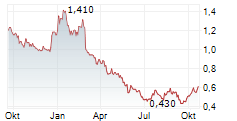
1-Jahres-Chart
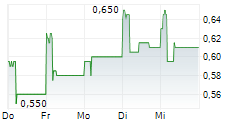
5-Tage-Chart
| Realtime | Geld | Brief | Zeit |
|---|---|---|---|
| 0,630 | 0,710 | 12:07 |
EQS Newswire: BAIRONG AI-W: Scenario Delivery to Decide the Second Half of Voice AI: Bairong Intelligence (06608.HK) Builds Long-Term Value
© 2026 EQS Group

| Zeit | Aktuelle Nachrichten | ||
|---|---|---|---|
| 10:51 | EQS Newswire: BAIRONG AI-W: Scenario Delivery to Decide the Second Half of Voice AI: Bairong Intelligence (06608.HK) Builds Long-Term Value | EQS Newswire / 30/10/2026 / 17:48 UTC+8
Voice large models have turned accurate recognition and lifelike speech synthesis into universal capabilities. As metrics including recognition accuracy... ► Artikel lesen | |
| Do | BAIRONG AI-W (06608): FORM OF PROXY FOR USE AT THE EXTRAORDINARY GENERAL MEETING TO BE HELD ON TUESDAY, NOVEMBER 17, 2026 | ||
| Do | BAIRONG AI-W (06608): NOTICE OF EXTRAORDINARY GENERAL MEETING | ||
| Do | BAIRONG AI-W (06608): (1) PROPOSED GRANT OF SHARE AWARDS AND (2) NOTICE OF EXTRAORDINARY GENERAL MEETING | ||
| Mi | BAIRONG AI-W (06608): NEXT DAY DISCLOSURE RETURN |
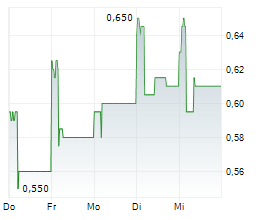
Sie erhalten auf FinanzNachrichten.de kostenlose Realtime-Aktienkurse von und sowie Kurse und Daten von ARIVA.DE AG.
Werbehinweise: Die Billigung des Basisprospekts durch die BaFin ist nicht als ihre Befürwortung der angebotenen Wertpapiere zu verstehen.
Wir empfehlen Interessenten und potenziellen Anlegern den Basisprospekt und die Endgültigen Bedingungen zu lesen,
bevor sie eine Anlageentscheidung treffen, um sich möglichst umfassend zu informieren, insbesondere über die potenziellen
Risiken und Chancen des Wertpapiers. Sie sind im Begriff, ein Produkt zu erwerben, das nicht einfach ist und schwer zu
verstehen sein kann.