KENILWORTH (NJ) (dpa-AFX) - Every great tale has a beginning, but not every beginning offers a glimpse of the greatness that may lie ahead. Some journeys begin with an uncertain future only to unfold into extraordinary stories.
Merck & Co. Inc.'s (MRK) blockbuster drug Keytruda (Pembrolizumab) is one such story.
From 2023 through 2025, this immunotherapy drug maintained its top-seller status. But beyond its coveted Number 1 title, Keytruda has also made a meaningful difference in the lives of many cancer patients.
One name that is most often cited as an example of someone for whom the drug Keytruda played a role in remarkable recovery is former U.S. President Jimmy Carter. Carter was diagnosed with melanoma in his brain and liver in August 2015 and is said to have received at least four rounds of Keytruda. In December 2015, he announced that an MRI scan of his brain had revealed no signs of the original cancer lesions or any new ones. He went on to live for nearly another nine years, passing away on December 29, 2024, at the age of 100.
The Making of a Blockbuster: Keytruda's Journey
Keytruda is an immune checkpoint inhibitor, specifically an anti-programmed death receptor-1 (PD-1) monoclonal antibody, which received its first FDA approval in September 2014 for the indication of advanced melanoma. Since then, the drug's label has been expanded to include various cancer types.
Keytruda, formerly known by the laboratory code ORG 307488-0, was discovered by scientists at Organon, a Dutch pharmaceutical company. Little did its discoverers then know that this early-stage molecule would one day rise to become a cornerstone of cancer care.
In 2007, Organon was acquired by Schering-Plough, which was in turn acquired by Merck & Co. in 2009, bringing Keytruda, still at the preclinical stage then, into Merck's fold.
From Near Out-Licensing to an Oncology Crown Jewel
With immunotherapies in oncology failing to make a mark in clinical trials at the time, Merck was in limbo over the development plans for Keytruda and had reportedly even placed the drug on its outlicensing list.
But with Bristol Myers Squibb's first-in-human study of Nivolumab demonstrating evidence of antitumor activity, and Ipilimumab demonstrating improved overall survival in patients with previously treated metastatic melanoma in a late-stage trial in 2010, Merck had reason enough to give Keytruda another chance. Nivolumab (Opdivo), Ipilimumab (Yervoy), and Keytruda all belong to the class of immune checkpoint inhibitors but act on different immune checkpoint receptors. While Opdivo and Keytruda target PD-1, Yervoy targets CTLA-4.
Ever since the initiation of the Phase 1 KEYNOTE-001 first-in-human study of Keytruda in advanced solid tumors in January 2011, there has been no looking back for this drug.
Based on the results of the Phase 1 KEYNOTE-001 trial, Merck secured accelerated FDA approval for Keytruda in September 2014 for the treatment of patients with unresectable or metastatic melanoma whose disease had progressed following treatment with Ipilimumab and, if BRAF V600 mutation positive, a BRAF inhibitor. That was the first approved indication of Keytruda.
Today, the drug is approved in over 45 indications in the U.S., including 19 tumour types and 2 tumour-agnostic indications, according to the company's latest quarterly filing.
Climbing the Global Drug Sales Ladder
Launched in the U.S. in September 2014, the drug crossed the $1 billion mark in 2016.
YEAR | SALES |
|---|---|
2014 | $55 Mln |
2015 | $566 Mln |
2016 | $1.402 Bln |
2017 | $3.809 Bln |
2018 | $7.171 Bln |
2019 | $11.084 Bln |
2020 | $14.380 Bln |
2021 | $17.186 Bln |
2022 | $20.937 Bln |
2023 | $25.011 Bln |
2024 | $29.482 Bln |
2025 | $31.641 Bln |
Keytruda, which contains the active ingredient pembrolizumab, is administered into a vein through an intravenous (IV) line. Each treatment takes about 30 minutes and is usually given at a doctor's office or an infusion clinic.
In September 2025, the FDA approved Keytruda QLEX, which combines pembrolizumab with berahyaluronidase alfa. Unlike the original formulation, QLEX is given as a subcutaneous injection - just under the skin - by a healthcare provider. The injection takes about one minute every three weeks or two minutes every six weeks and can be administered in the abdomen or thigh.
Note: Sales figures represent Keytruda only and exclude Keytruda QLEX revenue.
The Battle for the Crown
As new indications were added to its label and its reach extended to more patients, Keytruda's fortunes continued to rise, eventually claiming the coveted No. 1 spot on the global drug sales leaderboard in 2023.
Year | Rank 1 | Rank 2 | Rank 3 |
|---|---|---|---|
2022 | Pfizer's Comirnaty - $55.91 Bln | AbbVie's Humira - $21.24 Bln | Merck's Keytruda - $20.94 Bln |
2023 | Merck's Keytruda - $25.01 Bln | AbbVie's Humira - $14.40 Bln | Novo Nordisk's Ozempic - $13.89 Bln |
2024 | Merck's Keytruda - $29.48 Bln | Bristol Myers Squibb / Pfizer's Eliquis - $20.70 Bln | Novo Nordisk's Ozempic - $17.45 Bln |
2025 | Merck's Keytruda - $31.64 Bln | Lilly's Mounjaro - $22.97 Bln | Novo Nordisk's Ozempic - $19.21 Bln |
However, Keytruda lost its No.1 ranking to Eli Lilly's Mounjaro in the first quarter of 2026 as surging demand for GLP-1 drugs reshaped the global drug sales rankings.
Rank | Drug | 9-month Sales in 2026 |
|---|---|---|
1 | Lilly's Mounjaro | $29.33 Bln |
2 | Merck's Keytruda | $23.58 Bln |
3 | Sanofi / Regeneron's Dupixent | $17.42 Bln |
Facing the Biggest Test Yet
According to Merck, Keytruda's key patent protection is set to expire in 2028 in the United States and China, followed by 2031 in the European Union and 2032-2033 in Japan, potentially opening the gates to biosimilar competition across these markets.
Keytruda accounts for a major chunk of Merck's total revenue. In the first nine months of 2026, Keytruda accounted for 46% of the company's total global sales. Therefore, with nearly half of Merck's revenue riding on Keytruda, the impending loss of the drug's market exclusivity could leave a gaping hole in the company's revenue base.
Several companies are developing biosimilars to Keytruda. According to a report by Pharmint, Formycon/Zydus Lifesciences' FYB206, Samsung Bioepis' SB27, and Celltrion's CT-P51 are among the most advanced biosimilars in development, with FYB206 leading the pack, having reached the regulatory review stage in the U.S.
The Biologics License Application for FYB206 was accepted for review by the FDA last month, with a decision expected in the third quarter of 2027. This marks the first publicly announced acceptance by the U.S. FDA of an application for a proposed Keytruda biosimilar. Formycon has also submitted the regulatory dossier for FYB206 to Health Canada.
[A biosimilar is a biologic medication. It is highly similar to a biologic medication already approved by the FDA - the original biologic (also called the reference product). Source: FDA]
Conclusion
To sustain growth beyond Keytruda's loss-of-exclusivity (LOE) period, Merck is actively transforming its portfolio through new product launches, major acquisitions and licensing agreements. The company is targeting over $70 billion from new growth drivers alone by the mid-2030s.
Whether Merck's efforts to fill the void left by Keytruda will succeed remains to be seen - and the answer may well shape the company's next chapter. But for now, investors have little cause for lament, as Merck shares trade near their all-time high.
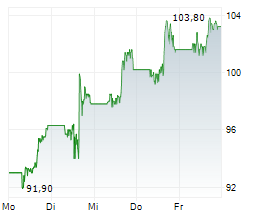
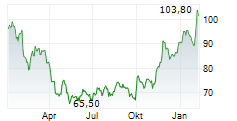
In the last 1 year, MRK has traded in a range of $82.01 to $156.92. The stock closed Friday's (Oct.30, 2026) trading at $149.52, up 2.18%.
Copyright(c) 2026 RTTNews.com. All Rights Reserved
Copyright RTT News/dpa-AFX
© 2026 AFX News