
White paper traces the adoption gap to how agricultural technology was designed, and finds the divide is widest in livestock and satellite data.
SAUSALITO, CA / ACCESS Newswire / November 4, 2026 / The share of US farms using precision agriculture fell from 27% to 22% between 2023 and 2025, even as the technology improved and its cost kept falling, according to USDA data analyzed in a new white paper from FarmBot Tech and Diverse AI Solutions. The decline came as Chapter 12 farm bankruptcy filings rose 46% in 2025, to 315, according to the American Farm Bureau Federation.
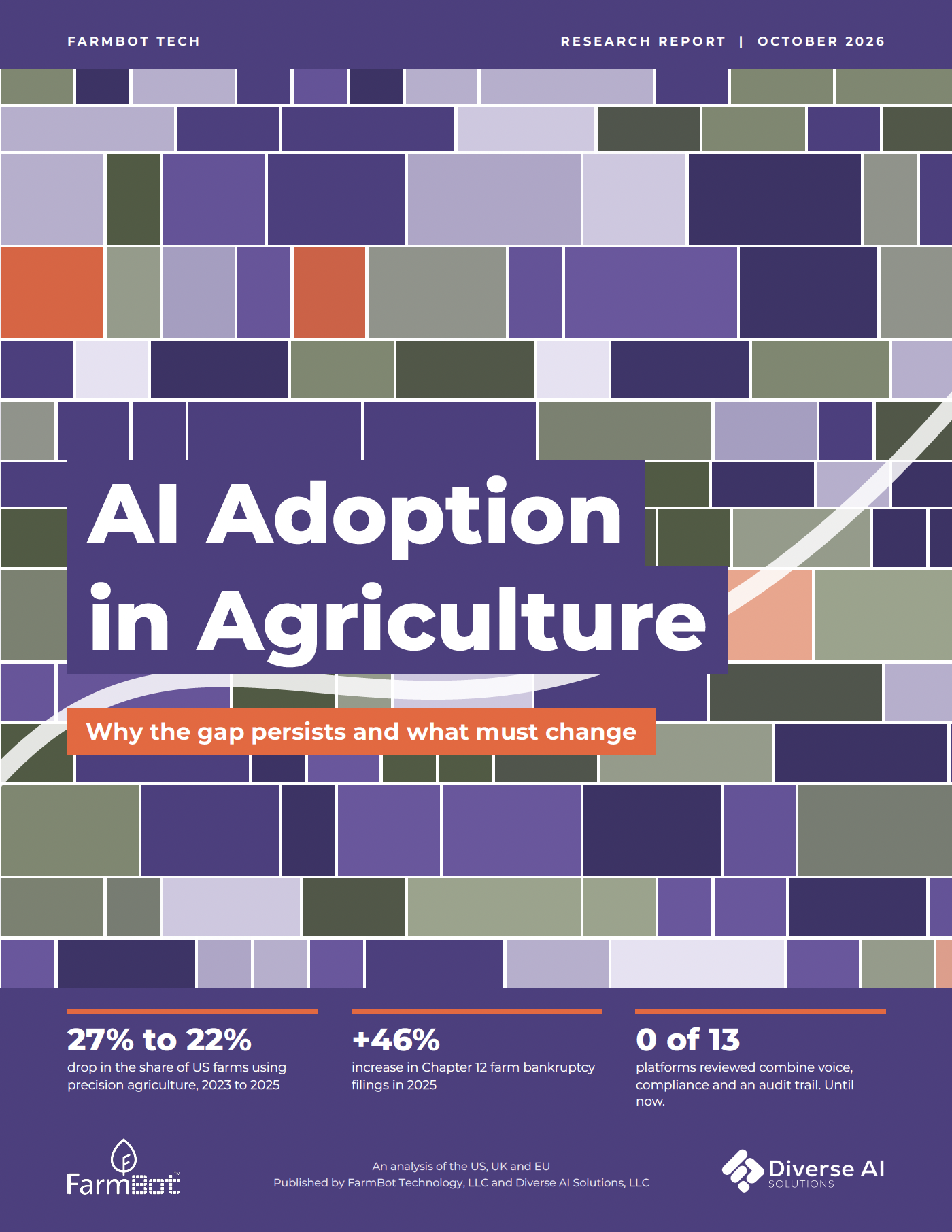
The white paper, "AI Adoption in Agriculture: Why the Gap Persists and What Must Change," published by FarmBot Tech and Diverse AI Solutions, examines the United States, the European Union and the United Kingdom. It draws on research from USDA, the EU Joint Research Centre, the UK's Department for Environment, Food and Rural Affairs, the US Government Accountability Office, foundational and current peer-reviewed literature, industry surveys and market intelligence compiled between 2020 and 2026.
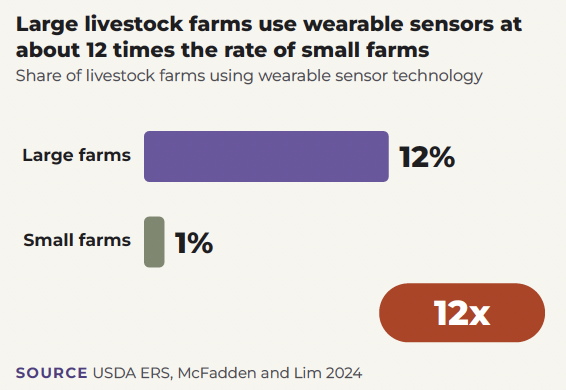
The divide is widest in livestock and satellite data. Wearable sensors are used on 12% of large US livestock farms and 1% of small ones, according to USDA Economic Research Service analysis. Dealers surveyed by Purdue University estimate that satellite and aerial imagery use fell from 31% to 22% of acres between 2022 and 2025. The paper finds that the layer that turns satellite observations into farm-level guidance was built for the agencies and insurers that verify claims about the land, and not for the farmer.
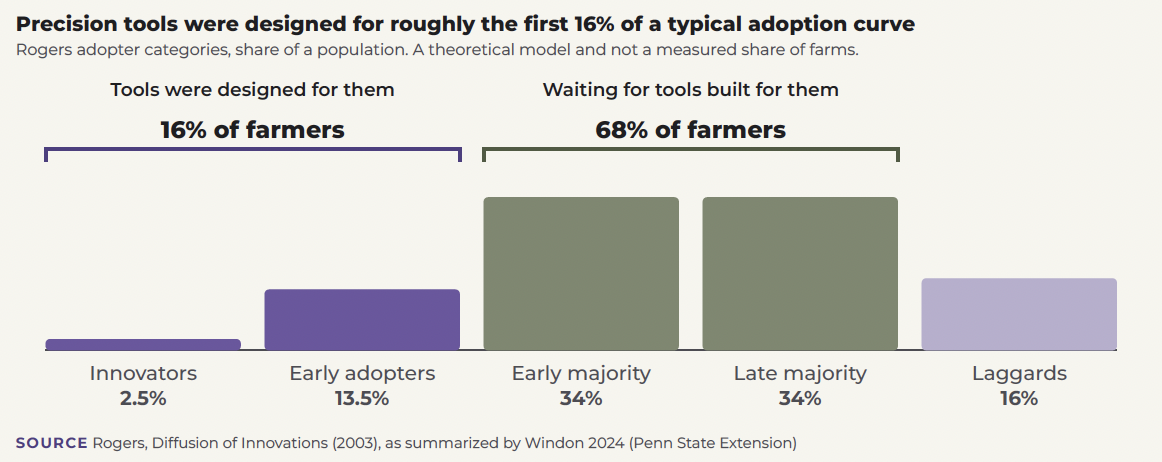
The research does not support the view that farmers resist new technology. In a 2026 Bushel survey, 81% of farmers described themselves as proactive experimenters or logical adopters, and only 3.3% said they avoid new technology until it is the absolute last resort. Large farms use precision tools at more than five times the rate of small farms, 68% against 13%. The barriers farmers and dealers name most often are cost, complexity, data interpretation and integration, which the paper treats as product design issues.
Voice is the access mechanism the paper identifies for reaching farmers where they work. There are 8.4 billion voice assistants in use worldwide, 82% of US farms have smartphones, and eMarketer projects 168 million US voice assistant users by 2029, up from 140 million in 2022. A review of 13 commercial agricultural platforms in the US, UK and EU found that none combines voice-first interaction, integrated compliance guidance and a verifiable audit trail.
Compliance is the use case the paper calls most urgent. More than 230,000 US farming operations were unknowingly exposed to federal felony-level penalties under the Corporate Transparency Act, and fewer than 11% of eligible businesses had filed when the American Farm Bureau Federation issued its alert in October 2024. Under the FDA's Foreign Supplier Verification Program, 43.8% of inspected importers still had no supplier verification program in fiscal year 2024, down from 85% in fiscal year 2022.
"We build tech to bridge the gap between traditional wisdom and modern demands, putting the future of ag directly into farmers' hands," said Detria Williamson, co-founder and CEO of FarmBot Tech.
"This research was about bringing evidence to a question that ultimately affects farmers' livelihoods, not just market projections," said Ana Petras, founder of Diverse AI Solutions.
FarmBot Tech's first applications are livestock and satellite data, delivered through a voice-first interface, with compliance as the primary use case. For livestock, the platform combines satellite data with the daily entries farmers make in animal logbooks to build a roadmap for each animal and for the herd. For land, it builds with Pixxel Space, whose Firefly satellites capture more than 150 contiguous spectral bands at about 5 meter resolution, and translates that data into plain-language guidance.
FarmBot Tech and Diverse AI Solutions are conducting ongoing qualitative research with farmers across crop, livestock and textile sectors, with results planned for a subsequent report.
The full white paper is available for download at FarmBotTech.com.
About FarmBot Tech:
FarmBot Tech is an agricultural technology company developing an AI-powered platform to make emerging technologies more accessible and actionable for farmers. Through a radically inclusive approach to product development, FarmBot Tech co-creates solutions with farmers and brings together artificial intelligence, voice technology, connected agricultural data and satellite intelligence. Its mission is to close the agtech adoption gap, strengthen rural resilience and accelerate the adoption of regenerative agricultural practices globally.
About Diverse AI Solutions:
Diverse AI Solutions (DAIS) specializes in human-led, AI-assisted research that combines human expertise, critical thinking, and AI capabilities to deliver credible, actionable insights. Through evidence-based research, white papers, and thought leadership, DAIS helps shape business decisions, industry innovation, and policy discussions. Our approach is simple: AI accelerates research. Humans ensure its integrity, relevance, and impact.
Media Contact:
FarmBot Tech
Media@FarmBotTech.com
SOURCE: FarmBot Tech
Related Documents:
- FarmBot Tech and Diverse AI Solutions AI Adoption in Agriculture WhitePaper
View the original press release on ACCESS Newswire:
https://www.accessnewswire.com/newsroom/en/agriculture/new-farmbot-tech-research-finds-us-precision-agriculture-use-fell-from-27-to-22-as-farm-1246343
