

Medtronic LINQ insertable cardiac monitors track animal heart activity worldwide, revealing insights into stress, survival, and what "normal" means across species.
NORTHAMPTON, MA / ACCESS Newswire / November 9, 2026 / On a winter day in northern Minnesota, a black bear does something that would terrify a human cardiologist: she settles into hibernation.
Her breathing slows, her body cools, and then, for stretches long enough to feel like silence, her heart nearly stops. Twenty seconds in between heartbeats. Thirty.
In a human's body, that kind of pause between beats would likely end in collapse. But in a hibernating bear, it's by design to preserve energy through winter.
For a long time, the extent to which a bear's heart during hibernation differed from a human's was poorly understood.
But now, thanks to the research led by Dr. Tim Laske, vice president of research for Cardiac Ablation Solutions at Medtronic, researchers now know a lot more about the hearts of black bears and other species around the world. And they're also gaining insights to better understand the human heart.
How cardiac monitors reveal the hidden lives of wild animals
Laske has traveled the globe to deploy Medtronic Reveal LINQ and LINQ II insertable cardiac monitors (ICMs) in wildlife species to help advance conservation efforts. The devices - donated by the company - track heart rate and heart rate variability, which is a means of measuring stress.
"Understanding the normal states for animals is incredibly important to not only better manage them in the wild, but to know what type of conditions would be ideal for adaptation," Laske said. "For captive animals, this helps us to understand how to give them the best quality of life."
In humans, these devices are placed just underneath the skin on the chest where they monitor patients' heartbeats continuously for up to several years. The devices can detect irregular heart rhythms that may come and go intermittently, recording consequential moments like a skipped beat in the middle of the night, or an unexplained fainting spell. The LINQ ICM provides a way for physicians to assess those instances through heart rhythm data, which can help inform care.
Across forests and research reserves, inside zoo enclosures and protected habitats, the LINQ ICM has enabled animal researchers like Laske the opportunity to ask new questions. What does stress look like in a giant anteater, even when they don't show it? What does "normal" mean for Asian elephants in Thailand?
The answers are often surprising.
A bear that appears calm as a drone passes overhead may experience a sudden spike in heart rate. Wolves monitored over years begin to reveal patterns of activity and rest, fluctuations in stress that no snapshot could capture. A rescued giant anteater released back into the wild leaves behind not only tracks, but a continuous record of adaptation.
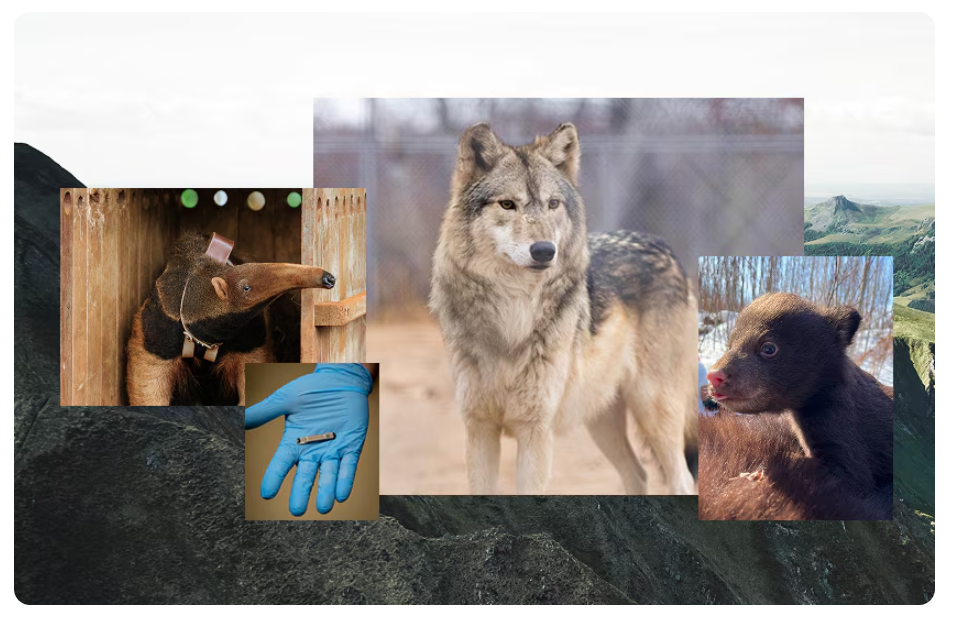
The scale of Laske's work has grown. Within the last year, Laske and his global collaborators have supported 62 new LINQ ICM implants across nine species, spanning North and South America and parts of Africa. The tally now reaches 28 species in total, primarily mammals, but with caimans, a reptile, recently joining the list of the studied.
For decades, wildlife research has relied heavily on movement - tracking things like migration patterns, habitat range, and spatial behavior. With the LINQ ICM, researchers have a more interior view of each individual animal's physiology, including what causes an animal stress and what factors appear to improve their survival and quality of life.
"This data, in addition to helping us understand how to better manage these species, provides knowledge, and a curiosity for us as humans to understand what's happening with our wild, co-habitants on this planet," Laske said.
"What are their lives like? What's normal, and what isn't? The answers don't just reshape how scientists care for animals, they deepen our understanding of the heart itself," Laske said.
Interested in learning more? Read about this work with giant anteaters.

Find more stories and multimedia from Medtronic at 3blmedia.com.
Contact Info:
Spokesperson: Medtronic
Website: https://www.3blmedia.com/profiles/medtronic
Email: info@3blmedia.com
SOURCE: Medtronic
View the original press release on ACCESS Newswire:
https://www.accessnewswire.com/newsroom/en/healthcare-and-pharmaceutical/what-wild-hearts-reveal-1249112
