
Statements from Across the Supply Chain
NORTHAMPTON, MA / ACCESS Newswire / November 18, 2026 / For many banana farmers, today's prices no longer reflect the reality of producing one of America's most popular fruits. Across major banana-growing regions in Latin America, farmers have faced sharp increases in the cost of labor, fertilizers, agrochemicals, transportation, energy, packaging, and compliance with growing environmental and human rights requirements. Yet retail banana prices have remained remarkably low, creating intense pressure throughout the supply chain. Recognizing these challenges, Fairtrade recently increased its Minimum Price for bananas, acknowledging that farmers cannot continue absorbing rising production costs while maintaining sustainable livelihoods and investing in the future of their farms.
American retailers have a critical role to play in addressing this imbalance. Bananas are often used by retailers as a benchmark product for low grocery prices, with shelf prices kept artificially low to attract shoppers. While this strategy may benefit retailers, it leaves farmers and workers struggling to absorb rising production costs and can put them in danger of slipping into poverty.
Modest increases at retail can help generate the additional value needed to support fairer prices for farmers, strengthen farm resilience, improve working conditions, and enable investments in climate adaptation and environmental protection. As costs continue to rise and climate-related risks intensify, stakeholders across the banana sector are increasingly calling for higher prices that better reflect the true cost of sustainable banana production and help ensure a viable future for farmers and workers.
Farmers and Farming Associations
"Today, debates in the banana sector go beyond production costs. The bigger question is who bears the cost when new developments continue to drive costs upwards? Producers have absorbed the weight of this volatility for too long.
"In Colombia, I would count five pressures hitting us simultaneously.
"First, the exchange-rate volatility. It is one of Colombia's most critical economic factors right now. For an agricultural exporter, currency movements can translate almost immediately into a significant loss of cash flow.
"Second, climate change and excess rainfall. Earlier this year, more than 1,200 hectares were flooded. We are seeing climate variability play out daily, and its impact is direct: productivity falls, we produce fewer boxes, while most of our costs remain unchanged.
"Third, rising labor costs. Last year, Colombia's government increased the minimum wage by nearly 23%. Colombia's agro-industry is highly formalized and unionized, with a long tradition of collective bargaining. This a social strength that we believe must be preserved, but that stability comes at a cost. And the market needs to recognize and account for it.
"Fourth, rising sustainability requirements. Environmental, social and labor standards are rightly becoming more demanding. We support this progress. But the cost of advancing sustainability cannot continue to be financed by producers alone.
"Finally, phytosanitary risk. Fusarium Tropical Race 4 is now present across Latin America, requiring sustained investment in biosecurity.
"The challenge is that every one of these risks reaches the farm. But not every one of them reaches the price."
-- Emerson Aguirre, President, Augura Colombia
"All these factors create what feels like a perfect storm. The challenges may change each year, but the need for price and value recognition remains the same.
"And it relates to a deeper structural issue. Over the past 15 years, bananas have lost around 20% of their value in the wider fruit market, while other products have gained value. One reason is that supermarkets use bananas as a hook product, keeping prices low to attract consumers and compete on the price of other products.
"Some retailers argue that they absorb part of these costs themselves. But that is not sustainable. When the value of bananas is squeezed year after year, the loss compounds over time, and ultimately, producers feel that pressure every day."
-- Jose Antonio Hidalgo, Executive President, AEBE Ecuador
"In recent weeks, due to the weather and the ongoing conflict in the Middle East, fertilizer costs have increased due to oil prices, so they have risen approximately 25 to 30%. This causes costs to rise a bit for the producers, but we still have to keep working. We have no other option. We spend more, but we still have to keep applying fertilizers to be able to produce.
"My message to Americans and Canadians is to buy more Fairtrade bananas. Because by purchasing them, you are helping small producers and the workers and children of our workers to get ahead."
--Milton Justavino, Farmer, AsoGuabo Ecuador
Industry Experts
"Americans tend to think of bananas as one of the simplest and most dependable foods in the produce department. But producing a banana that can be harvested, packed, shipped thousands of miles and arrive in a U.S. supermarket at an affordable price requires an extraordinarily complex agricultural and supply-chain system. That system is under growing pressure.
"The developing 2026 El Niño is adding a significant layer of uncertainty. El Niño is producing sharply different conditions across Latin America, including excessive rainfall and flooding in some areas and drought and water shortages in others. Growers are battling increasing disease pressures, facing higher costs in prevention, detection, and containment."
--Tom Stenzel, Managing Director, Banana Association of North America
"Banana producers are at the beginning of a supply chain that is increasingly exposed to global shocks, yet they often have the least ability to absorb additional costs," said Silvia Campos, Senior Advisor, Banana, Fairtrade International. "Fair and sustainable supply chains require shared responsibility. That starts with prices that reflect the real costs of sustainable production, alongside long-term sourcing and collaboration to build resilience."
--Silvia Campos, Sr. Advisor for Bananas, Fairtrade International
"North American retailers need to recognize their role in sharing the costs and risks associated with sustainable production. Everyone - farmers, buyers, and consumers - will benefit from more resilient produce supply chains, but everyone must share responsibility with farmers in bringing them into reality. Investing in growers and their farms today can help reduce disruptions to produce availability, quality, and prices in the future."
-- Rob Desson, Sr. Business Partnerships Manager for Fresh Produce, Fairtrade America
Private Sector Partners
"The pressures growers are facing are affecting supply, but not the prices consumers pay. And that's a problem. In 1981, bananas in the US sold for about 34¢/lb. Adjusted for inflation, that would be about $1.38/lb. today, yet they sell for about 65¢/lb. Retailers treat it as a golden rule that the price of bananas can't go up, because they believe it sets how shoppers judge prices across the whole store. Bananas aren't magically immune to inflation. When rising costs aren't reflected on the shelf, they get pushed back onto growers and workers. We estimate retailers would need to charge about 20¢/lb. more. With Americans eating about 27 lbs. of bananas a year each, that works out to $5.40 per person per year, less than 50 cents a month.
"There is no other way to say it: the whole banana supply is at stake. In the mainstream business model, growers carry the cost of coping with these shocks themselves. That means we're asking the most vulnerable link in the supply chain to absorb the impact of a global problem we all contributed to. If farmers can't afford to invest in things like biosecurity against TR4, climate adaptation and soil health, the risks are lost livelihoods, farms abandoned to disease, and a threat to food security worldwide. We're already seeing banana plantations empty out as workers leave long hours of backbreaking work for poverty wages. We so strongly believe that fair pay is how you protect the industry and how you allow farmers and their communities to build resilience. As we say at Equifruit, farmers gotta get paid."
-- Jennie Coleman, Co-owner and CEO, Equifruit
"Retailers across multiple regions offer our fairtrade bananas from 79 cents up to $1.79. Those retailers compete against mass merchandisers selling bananas more cheaply - yet the banana sales of these independent grocers has increased. This implies that shoppers aren't price sensitive when it comes to fruit this affordable. The 99 cent ceiling for a pound of bananas is a thing of the past. Paying a bit more is essential to sustain growers and the supply chain links that bring their fruit to our stores."
-- Jessie Myszka, National Sales Manager, Equal Exchange
"The threat of disease, a severe El Niño, and ongoing increases in costs such as fuel are all major threats to banana farmers. Mitigating these risks takes time and money. If there's one thing I've learned from visiting farmers, it's that they possess invaluable expertise for which they've never been properly compensated. For decades, growers have taken on all the risk in the banana industry. If we want to keep buying Cavendish bananas, we need to take on some of that risk."
-- Kayla Nilson, International Supply Chain Manager, Equal Exchange
"Bananas are often expected to remain one of the most affordable items in retail produce departments, even as the cost and risk of growing them continue to rise. Farmers are contending with more volatile weather, persistent plant-disease threats, and higher costs for fertilizer, crop protection, labor, packaging and transportation. When growers cannot adequately invest in infrastructure, prevention or recover from a disruption, the consequences extend beyond one harvest, and may affect farm viability, rural jobs and communities, investments in sustainable farming, and the long-term reliability of banana supply.
"Dole has seen these pressures reduce yields and create periodic supply tightness in particular growing regions, while adding costs throughout the supply chain. Resilience cannot rest on farmers' shoulders alone, which is why Fairtrade and committed, long-term collaboration are so important."
-- Dole
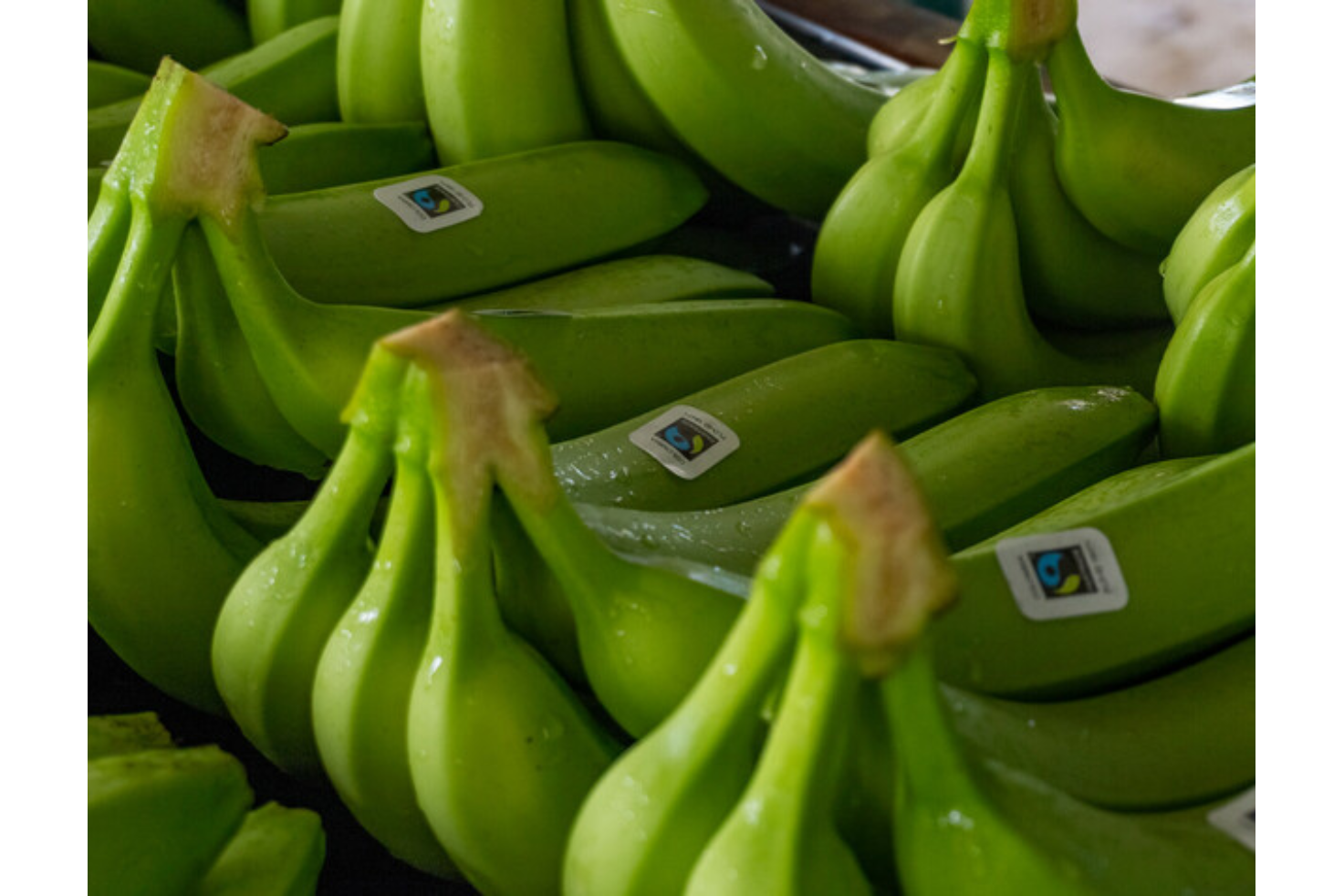
Bananas from Colombia
Find more stories and multimedia from Fairtrade America at 3blmedia.com.
Contact Info:
Spokesperson: Fairtrade America
Website: https://www.3blmedia.com/profiles/fairtrade-america
Email: info@3blmedia.com
SOURCE: Fairtrade America
View the original press release on ACCESS Newswire:
https://www.accessnewswire.com/newsroom/en/business-and-professional-services/bananas-are-too-cheap-and-farmers-are-paying-the-price-1253455