
BOSTON, MA / ACCESSWIRE / March 11, 2022 / Herring fishermen from New England and the Mid-Atlantic won a crucial decision last week when a federal judge in Boston ruled in their favor against an exclusion zone in Northeast U.S. waters. The court ruled that a National Marine Fisheries Service (NMFS) measure excluding the mid-water trawl fleet from productive inshore fishing grounds violated the Magnuson-Stevens Act, the nation's premier fisheries law. The lawsuit was brought by the Sustainable Fisheries Coalition (SFC), a trade group representing herring and mackerel fishing companies.
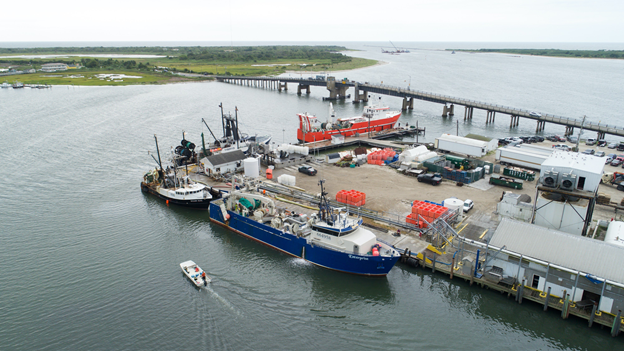
Lund's Fisheries, owner of the F/V Enterprise, pictured here, applauded last week's federal court ruling.
Mid-water trawler vessels account for upwards of 70 percent of the annual herring catch. The NMFS measure would have prevented them from operating within 12 miles of shore from Long Island to the Canadian border, with an even larger buffer around Cape Cod. Analysis by the New England Fishery Management Council, the body that developed the exclusion zone, estimated that the trawlers could lose up to a third of their annual revenue.
Gerry O'Neill, owner of two mid-water trawlers and a herring processing plant in Gloucester, Mass., said that finding underestimated the area's value.
"In recent years, we've relied on this area for most of our catch," he said. "This was an existential threat to our livelihood. This decision is a huge relief."
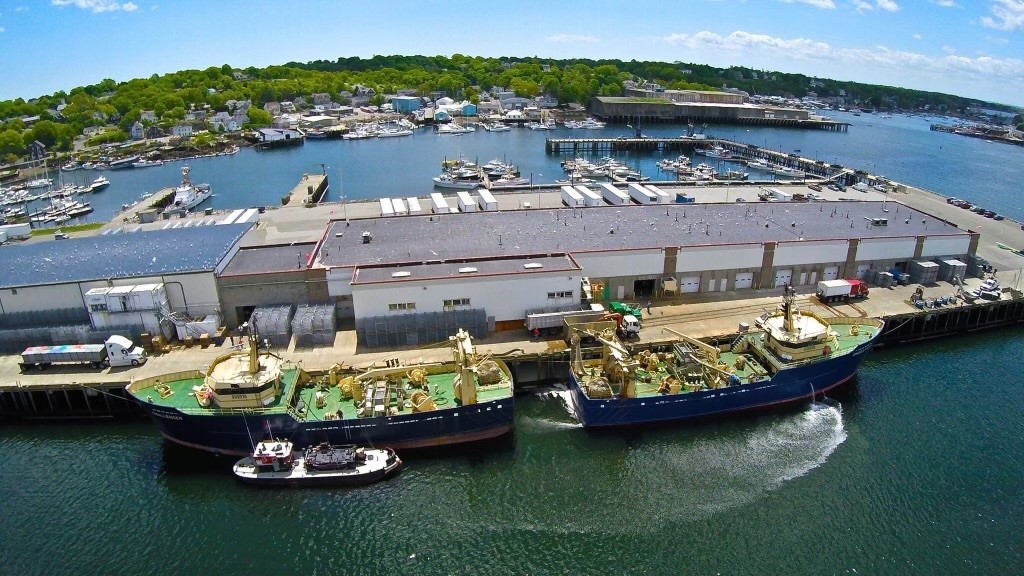
Thanks to the court ruling, Cape Seafoods' F/V Endeavour and F/V Challenger, pictured here, can return to traditional inshore fishing grounds, significantly reducing their fuel costs and carbon footprint.
The New England Council recommended the exclusion zone in response to persistent complaints and advocacy by inshore fishermen, environmental groups, sport fishers, and others. They claimed that herring fishing caused "localized depletion," a vague concept the court found not to have been meaningfully defined by the agency.
In fact, the Council's scientific advisors were able to detect no adverse impacts from the herring mid-water trawl fishery on other marine uses. The court agreed with the SFC that the rule lacked both a scientific and conservation justification.
NMFS and the Council pushed this measure without a science basis, SFC argued, because its advocates were both persistent and politically influential. The court, by contrast, decided the matter on the grounds that the exclusion zone allocated all inshore fishing privileges to these other user groups without promoting conservation.
"The law is the only protection a small fishing sector has against a well-represented majority," said Shaun Gehan, an attorney for the SFC. "We are pleased the judge recognized this measure lacked a meaningful conservation benefit, not to mention fairness and equity, as the law demands."
Wayne Reichle, president of Lund's Fisheries in Cape May, New Jersey, said that the decision "restored his faith in the law" and that he "believed all along the closures would be reversed." Additionally, he is confident that "localized depletion" has no scientific basis, but remains disappointed that this provocative term was used to justify the original measure.
Under law, federal fisheries management must prevent overfishing. Herring and mackerel, which serve as forage for other fish and marine mammals, are managed more conservatively than other stocks of fish. Once catch levels are set, the Secretary of Commerce is responsible for providing the fishery reasonable opportunities to harvest its allocation.
"The main problem with the process was that it was couched as addressing so-called 'localized depletion,' which scientists were unable to identify," he said. "This is an issue of user conflicts and should be addressed as such."
He also noted that any solution to this concern must equitably balance all user group interests and not place undue burdens on fisheries' ability to harvest sustainable herring quotas.
PRESS CONTACT
Robert Vanasse
202-333-2628
bob@savingseafood.org
SOURCE: Sustainable Fisheries Coalition
View source version on accesswire.com:
https://www.accesswire.com/692776/Mid-Water-Herring-Trawlers-to-Return-to-Inshore-Waters-Court-Overturns-Exclusion-Zone-off-Long-Island-Cape-Cod
