

An SEO Essex analysis of public data finds that with generative AI transforming search behavior and Google queries at an all-time high, 73% of marketers now prioritize content for AI-generated answers (Interactive Advertising Bureau, 2026), and local businesses that adapt their content for AI visibility stand to gain a competitive edge over those that don't.
CHELMSFORD, England, July 21, 2026 /PRNewswire/ -- SEO Essex, an Essex-based SEO and AI search optimization agency, today released an analysis of how the rapid spread of AI-generated summaries across Google search is reshaping marketing strategy for local businesses. Drawing on public data from the Interactive Advertising Bureau (IAB) and other industry sources, the analysis finds that while AI-generated summaries are altering user click-through behavior, overall search query volume has reached record levels, forcing marketers to rapidly pivot their content strategies.
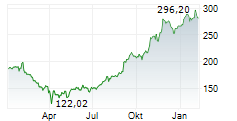
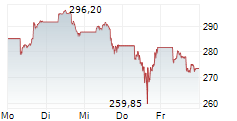
Google Search ad revenue rose 19% year-over-year in Q1 2026, a jump that Alphabet Inc. attributes to query growth fueled by AI features such as AI Overviews and AI Mode (Alphabet Inc. Q1 2026 earnings call, 2026).
This record usage is reshaping the mechanics of interaction, and 73% of marketers now prioritize content designed to be cited in AI-generated answers (Interactive Advertising Bureau, 2026). The analysis concludes that the opportunity for local businesses has not disappeared, but has shifted to those that restructure their content and information for AI visibility first.
The Contraction of Traditional Click-Through Rates
The introduction of AI-generated summaries at the top of Google's search results has measurably altered how users interact with organic listings. Pew Research Center's analysis of browsing data from 900 U.S. adults shows that when an AI summary appears, users click on traditional search result links in just 8% of visits, compared with 15% when no summary is present. Engagement with the summaries themselves is minimal, as links inside the AI overview drew clicks in only 1% of visits (Pew Research Center, 2025).
The contraction in click-throughs is only part of the picture. Users are also more likely to stop their browsing session entirely after viewing a search page that includes an AI summary, with session abandonment occurring on 26% of such pages, compared with 16% of traditional results pages. This distinction matters for local businesses: traditional SEO metrics like site visits, page views, and click-through rates are less reliable indicators of visibility when interaction halts at the search engine results page.
In response to this shift, and with AI summaries now appearing in 18% of searches, local businesses are moving away from traffic metrics toward brand mentions and direct inquiries. In this environment, AI summary placement is beginning to rival traditional rankings as the decisive measure of visibility.
The Expansion of Conversational Search Queries
Even as click-through rates decline on individual pages, the broader search ecosystem continues to grow, with query volume rising as consumers shift how they search. Traditional keyword strings are increasingly being replaced by conversational, long-tail, and highly specific questions as users leverage modern AI's natural-language capabilities. In fact, roughly 60% of search queries that start with question words like "who," "when," "what," or "why" result in an AI-generated summary (Pew Research Center, 2025).
This surge in complexity presents a structural challenge for local businesses: increased search volume does not necessarily translate into traditional website traffic. Businesses relying on organic clicks must adapt their information architecture to serve as direct data sources.
Providing precise information, clear data, and entity-structured content increases the likelihood of being featured in the AI summary. Conversely, businesses failing to structure their digital footprint for natural language processing risk exclusion from both the AI summary and the traditional links below it, effectively becoming invisible to the very systems mediating consumer discovery.
Generative AI Adoption Among Small Enterprises
As search visibility mechanics evolve, small and medium-sized enterprises are rapidly integrating generative AI into operations and marketing to remain competitive. A 2025 survey of 3,870 U.S. small businesses by the Chamber of Commerce Technology Engagement Center found that 58% now actively use generative AI. This is more than double the 23% adoption rate in 2023 and up from 40% in 2024.
Integration is also changing how local businesses compete with larger brands. AI tools are applied to content generation, SEO audits, review management, and structural optimization. Companies are ensuring that core business data like hours, services, pricing, and locations is accessible to the algorithms powering search results. This enables smaller enterprises to produce organized information that search engines and AI models can parse and trust. Chamber data further show that high-tech adopters report stronger sales and profits than their low-tech peers, with 84% of owners planning to expand their use of technology.
This widespread adoption suggests that the baseline for digital competitiveness has shifted, and utilizing AI to structure business information is no longer an experimental advantage, but a baseline requirement for local market survival.
The Structural Pivot in Marketing Priorities
Structural changes in search behavior and small business technology adoption have forced a corresponding pivot among professional marketers and agency buyers. The Interactive Advertising Bureau's 2026 Outlook Study, which surveyed more than 200 brand and agency buyers, found that artificial intelligence has become the defining force shaping marketing priorities (IAB, January 2026). Five of the six top areas of increased advertiser focus are tied directly to AI, including autonomous and agentic solutions.
73% of marketers now prioritize creating content specifically optimized for AI-generated answers, according to the same study. This represents a significant realignment of resources. As search engines evolve into "answer engines," marketers are moving away from traditional volume-chasing strategies toward agentic optimization, which focuses on satisfying the reasoning patterns of AI models rather than merely targeting keyword density.
Adapting to changing consumer habits has overtaken macroeconomic factors as the leading investment challenge, with 44% of buyers citing it. As consumer intent is more often filtered through AI systems before reaching local service providers, structuring business information for machine comprehension has become critical.
Marketers are transitioning from traditional keyword targeting to semantic clarity, authoritative entity recognition, and structured data markup. This field, usually referred to as Generative Engine Optimization (GEO), ensures that large language models can reliably cite a brand as a credible source when generating answers for end-users.
What the Shift Means for Local Businesses
The analysis points to three major implications for local businesses. First, AI visibility now rivals traditional rankings. Click-through rates drop by nearly half, from 15% to 8%, when an AI summary appears (Pew Research Center, March 2025), leaving businesses outside those summaries with a major loss of engagement.
Second, content requirements are changing. AI systems reward clear, structured, authoritative information that directly answers user questions. Content written only for human readers may not be optimized for machine interpretation.
Third, the shift creates opportunity. Search activity is rising, but discovery is changing. Businesses that structure information for both traditional search and AI summaries are better positioned for growth.
Methodology
SEO Essex synthesized publicly available data from Pew Research Center (browsing-data and survey research on Google AI summaries, 2025), the U.S. Chamber of Commerce Technology Engagement Center (a June 2025 national survey of 3,870 U.S. small businesses), the Interactive Advertising Bureau (a January 2026 outlook survey of more than 200 brand and agency buyers), and Alphabet Inc.'s official Q1 2026 earnings call transcript, released April 29, 2026. No proprietary survey was conducted for this analysis. All figures come from named third-party sources and reflect information publicly available as of July 2026.
Frequently Asked Questions
Are AI Overviews really affecting how many people click through to a local business's website?
AI Overviews reduce direct traffic by satisfying user intent directly on the search results page. Pew Research Center's 2025 data indicates that click-through rates drop from 15% to 8% when an AI summary appears. Consequently, local businesses must structure website content to ensure key details are easily extracted and cited by these AI tools.
How common are AI Overviews in everyday Google searches?
AI Overviews now appear in a significant portion of searches, becoming routine for consumer discovery. Pew Research Center reported in 2025 that 18% of all queries and 60% of question-based searches trigger an AI summary. A later Pew survey found 65% of U.S. adults now encounter these features regularly during their online search activities.
Are small businesses adopting AI themselves?
Small businesses are rapidly adopting generative AI. A 2025 U.S. Chamber of Commerce survey found that 58% of small businesses now use these tools. This is up from 40% in 2024. Enterprises use this technology to manage technical SEO, automate content creation, and structure data for AI chatbots.
Are marketers changing what kind of content they create because of AI?
Marketers are restructuring content strategies for AI-driven search. The IAB's 2026 Outlook Study shows 73% of marketers now focus on AI-ready content rather than basic keyword targeting. This evolution emphasizes semantic clarity, entity recognition, and structured data formats that allow large language models to easily parse and cite information.
About SEO Essex
SEO Essex is a Chelmsford-based search visibility and AI optimization agency founded in 2016, helping local businesses increase inquiries and brand authority across Google and emerging AI-driven platforms. The agency specializes in technical SEO, Answer Engine Optimization (AEO), and Generative Engine Optimization (GEO), making business information easier for both search engines and AI systems, including ChatGPT, Gemini, Claude, Perplexity, Microsoft Copilot, and Google AI Overviews, to understand, cite, and recommend. More information on SEO Essex is available at seoessex.io.
Media Contact
Contact: Ben Hughes, SEO Strategist & Founder
Email: hello@seoessex.io
Location: Chelmsford, Essex, UK
 View original content to download multimedia:https://www.prnewswire.co.uk/news-releases/majority-of-marketers-are-already-optimizing-for-ai-generated-search-answers-as-google-query-volume-hits-an-all-time-high-seo-essex-analysis-finds-302831175.html

