

NORTHAMPTON, MA / ACCESS Newswire / August 18, 2026 / Patrick O'Connell, CFA | Director-Responsible Investing Portfolio Solutions and Research
Sammy Suzuki, CFA | Head-Emerging Markets Equities; Deputy Head-Equities
Christian DiClementi | Head-Emerging Market Debt
Teresa Keane | Managing Director-Equities
The energy transition is powering EM, but not all countries and companies will benefit equally.
Emerging markets (EM) are using low-cost renewables to cut fuel imports, stabilize power costs and improve energy security-positioning EM as the growth engine of the energy transition. Countries and companies that leverage their dominance in critical minerals and green technology could pull ahead, creating dispersion in potential outcomes for investors.
After more than a decade of stagnation, demand for electricity is surging globally on the strength of artificial intelligence and its associated infrastructure buildout. Across many regions, per capita electricity consumption is expected to reach record highs by 2030. And with their population growth rates exceeding those of the developed world, emerging economies are a primary source of increased electricity demand.
Energy production is also evolving, with renewables making up a growing share of global capacity. Across the developing world, renewable energy is expected to comprise the majority of power capacity additions in the coming decades, with solar and wind leading the way. In our view, this isn't a fleeting trend; it's a structural change driven by population growth, urbanization and expanding electrification needs.
For EM, Renewables Enable Economic Growth and Energy Security
Thanks to supportive grids and regulatory policies, deployment of renewables is expanding in EM. Moreover, renewable power is cheaper to build and operate in most major EM than in developed markets, supporting cost competitiveness and industrial strength (Display)
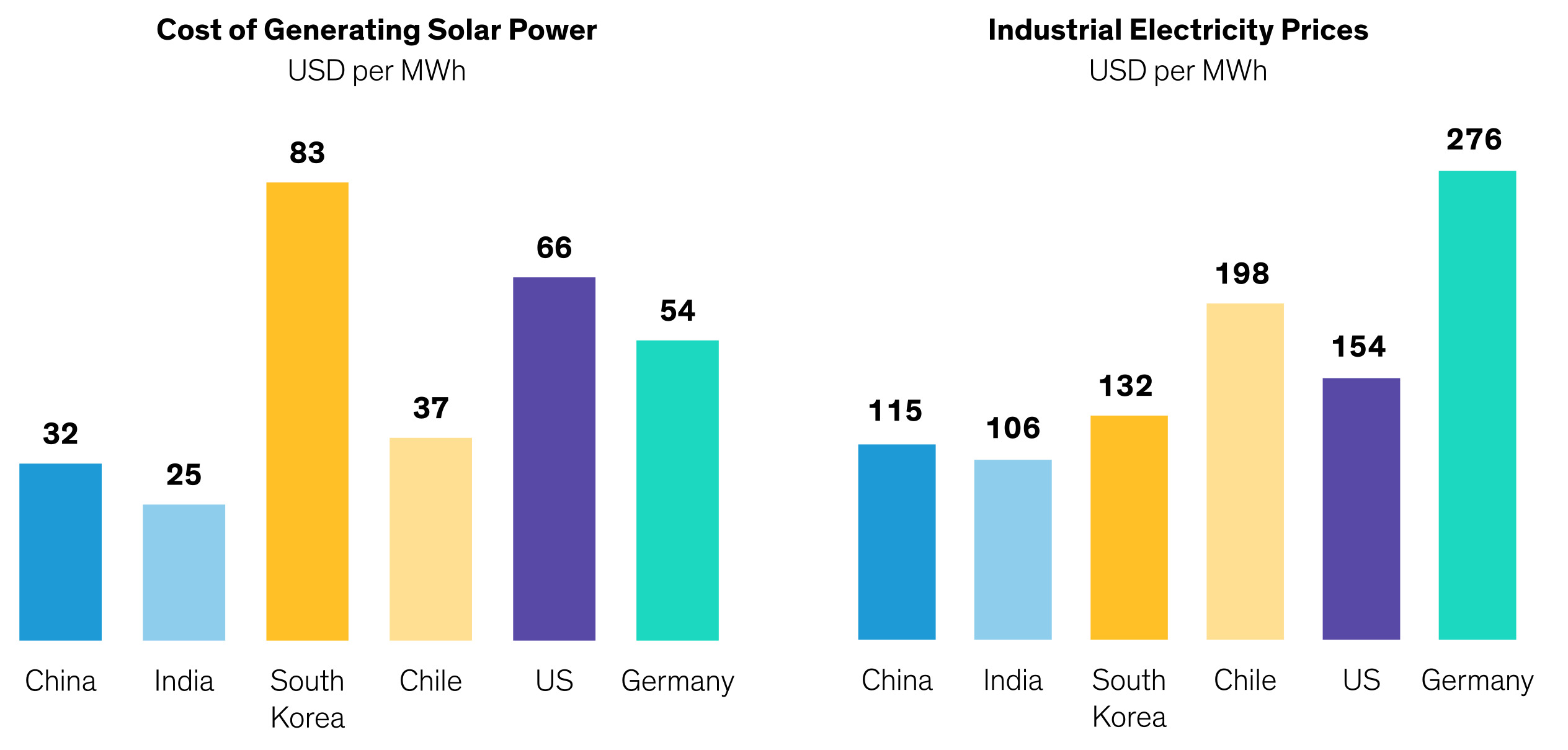
The combination of resource control-most critical minerals are concentrated in EM-and cost stabilization is helping to fuel EM's role as the growth engine for the energy transition, allowing for broad-based economic resilience. For years, EM economies have been reducing reliance on energy imports, and recent geopolitical events are acting as a catalyst. The Middle East conflict is also creating renewed momentum for EM green bonds as governments look to mitigate energy-price volatility by funding renewable energy projects.
Value Creation Is Uneven, Creating Dispersion
But these advantages only go so far. Critical minerals must be mined, transported and processed for the clean-energy supply chain. And here the results have been uneven. Some countries have found success by scaling the production of critical minerals, with a small number dominating this part of the value chain (Display).
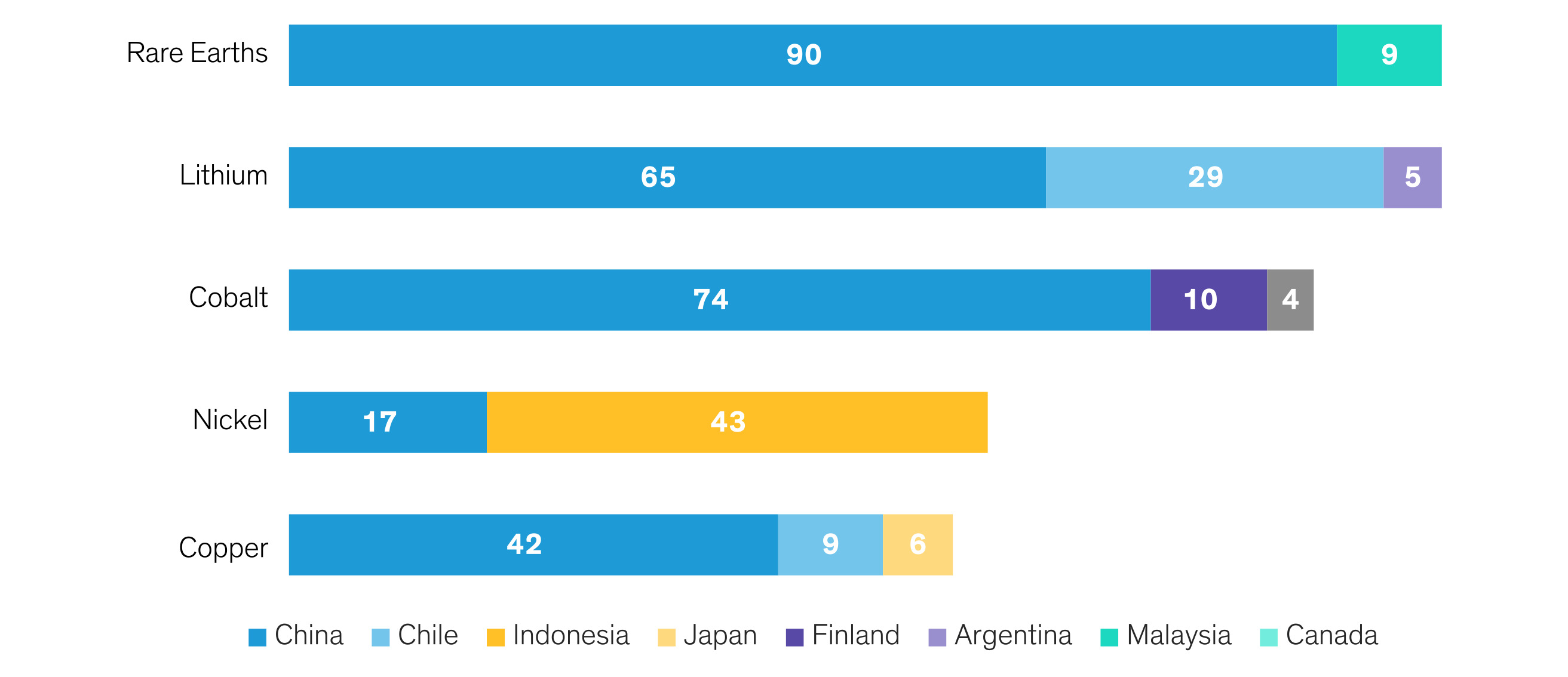
For the leaders, the result is geopolitical leverage, energy security and economic resilience, while the laggards are left with supply chain risk and limited economic benefits. In our view, the growing chasm between the haves and is creating dispersion in potential outcomes, increasing the importance of country and security selection.
Scaling Energy Production Is Key to Moving Up the Value Chain
Examples of scalable green-energy initiatives can be found in China and Southeast Asia.
China Hongqiao is one of the world's largest producers of aluminium, which is among the most energy and carbon intensive industrial materials. Historically, much of aluminium's production was powered by coal, resulting in high emissions. After years of operating in Shandong province, China Hongqiao moved production to Yunnan province, where the availability of water, wind and solar power make production cleaner.
This transition has been supported by significant capital investment, including RMB¥ 2-3 billion annually in grid maintenance and RMB¥ 6 billion in solar deployment. As a result, China Hongqiao has improved cost stability, mitigated carbon border risks and strengthened its long term positioning in a carbon constrained global market.
Elsewhere in China, companies have been able to scale renewables to increase volume while shoring up margins. For example, solar manufacturer Sungrow has combined the manufacture of solar and energy storage systems-both required for major utility projects-into a rising revenue base. Contemporary Amperex Technology (CATL), the world's largest EV battery manufacturer, has used both scale and cost leadership to meet demand for grid scale battery energy storage systems. This has allowed CATL to grow unit volume while improving margins.
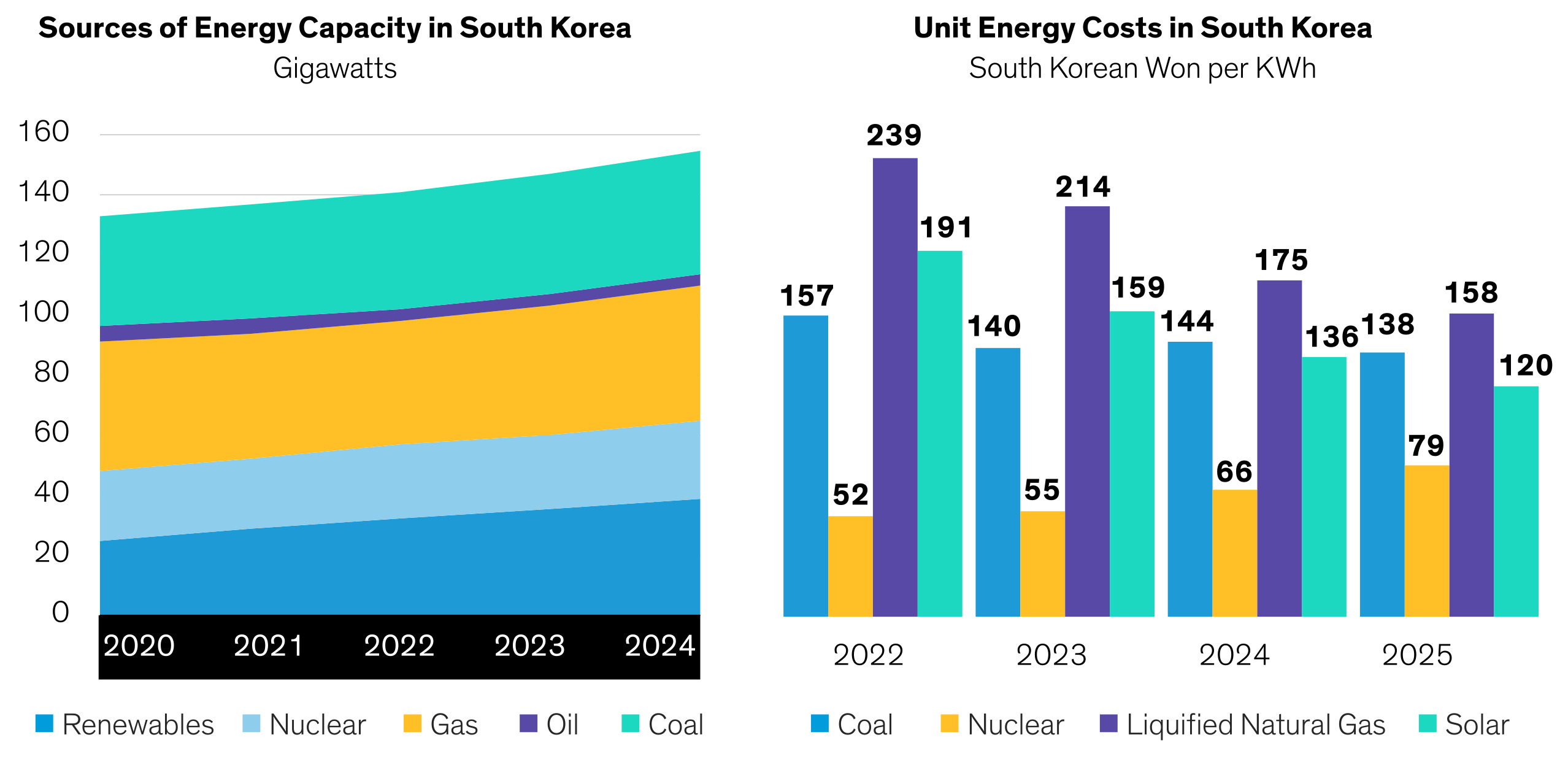
South Korea has found a different path to cost competitiveness. The country is still heavily dependent on imported coal and gas and subject to seasonal nuclear reliability constraints. But after adding renewable capacity in recent years, South Korea's energy costs have fallen meaningfully, making renewables competitive relative to fossil fuels (Display).
Other regions are using creative financing to transition from fossil fuels to renewables. In Chile, the government has teamed up with the private sector to develop the country's green and sustainability linked bond market, paving new pathways for the energy transition.
Similar examples can be found all over the developing world, but progress is uneven and investors must be selective.
Ultimately, scalability and execution are critical to moving up the value chain, in our analysis. In time, we expect to see a broader base of EM reap the economic benefits of renewable energy. For now, only select countries and companies are well-positioned. We think active management and careful credit selection will be essential to picking these winners of the energy transition.
The authors would like to thank Waseem Amin, ESG Strategy and Client Solutions Analyst, and Sourish Chatterjee, Research Analyst, for their contributions to this piece.
The views expressed herein do not constitute research, investment advice or trade recommendations, do not necessarily represent the views of all AB portfolio-management teams and are subject to change over time.
References to specific securities discussed are for illustrative purposes only and should not to be considered recommendations by AllianceBernstein L.P. It should not be assumed that investments in the securities mentioned have necessarily been or will necessarily be profitable.
Learn more about AB's approach to responsibility here.
Find more stories and multimedia from AllianceBernstein at 3blmedia.com.
Contact Info:
Spokesperson: AllianceBernstein
Website: https://www.3blmedia.com/profiles/alliancebernstein
Email: info@3blmedia.com
SOURCE: AllianceBernstein
View the original press release on ACCESS Newswire:
https://www.accessnewswire.com/newsroom/en/banking-and-financial-services/alliancebernstein-renewable-energy-could-define-winners-and-losers-i-1208790
