
NORTHAMPTON, MA / ACCESS Newswire / September 7, 2026 / In Kenya, managing chronic disease often means navigating cost, distance, and uncertainty-every single time. These barriers make consistent care difficult to sustain for many patients. Through a collaborative Access to Healthcare program, partners build pathways to affordable, continuous care.
For thousands of people living with type 2 diabetes or hypertension in Kenya, managing their condition is not just about medical advice or prescriptions. It is about access.
Access can mean the distance to the nearest clinic. The cost of medication. The time away from work. The bus fare required to cross town, sometimes more than once. For many patients, even a routine check-up means leaving children or elderly relatives unattended or giving up income they cannot afford to lose. "For many patients, access isn't just about distance-it's about time, income, and the choices no one should have to make," says Hale Asikoglu Erkol, Head of Sustainable Development for Generations, India, Middle East, Turkey and Africa.
These realities make consistent care difficult to sustain. And when care is delayed or interrupted, the consequences are real: avoidable complications, preventable hospitalizations, and, in some cases, loss of life.
A growing health challenge
Kenya faces a rising burden of non-communicable diseases. More than 1.8 million adults live with diabetes, and approximately 5.5 million adults aged 30-79 have hypertension-of which only 16% are currently treated. Access to affordable, continuous care remains limited-particularly in rural and underserved communities.
For patients, the challenge is rarely a lack of motivation. It is a system that often requires too much time, too much travel, and too much money to sustain long-term treatment.
That reality is what the Access to Healthcare program was designed to address.
A patient-first model for continuous care
Launched in 2022 by Boehringer Ingelheim, the Access to Healthcare program in Kenya is an end-to-end, patient-centered initiative focused on improving disease management for people living with type 2 diabetes and hypertension.
Rather than addressing a single barrier, the program supports the full patient care journey-bringing services closer to communities, reducing financial burden, and strengthening continuity of care over time.
At its core is a tiered pricing model, ensuring that eligible patients can access medication at an affordable cost. But affordability alone is not enough. Sustained care also requires follow-up, guidance, and trust. That is why the program includes regular nurse follow-ups for at least 12 months, supporting patients as they manage their conditions and adhere to treatment plans.
A journey designed around patients
Screening
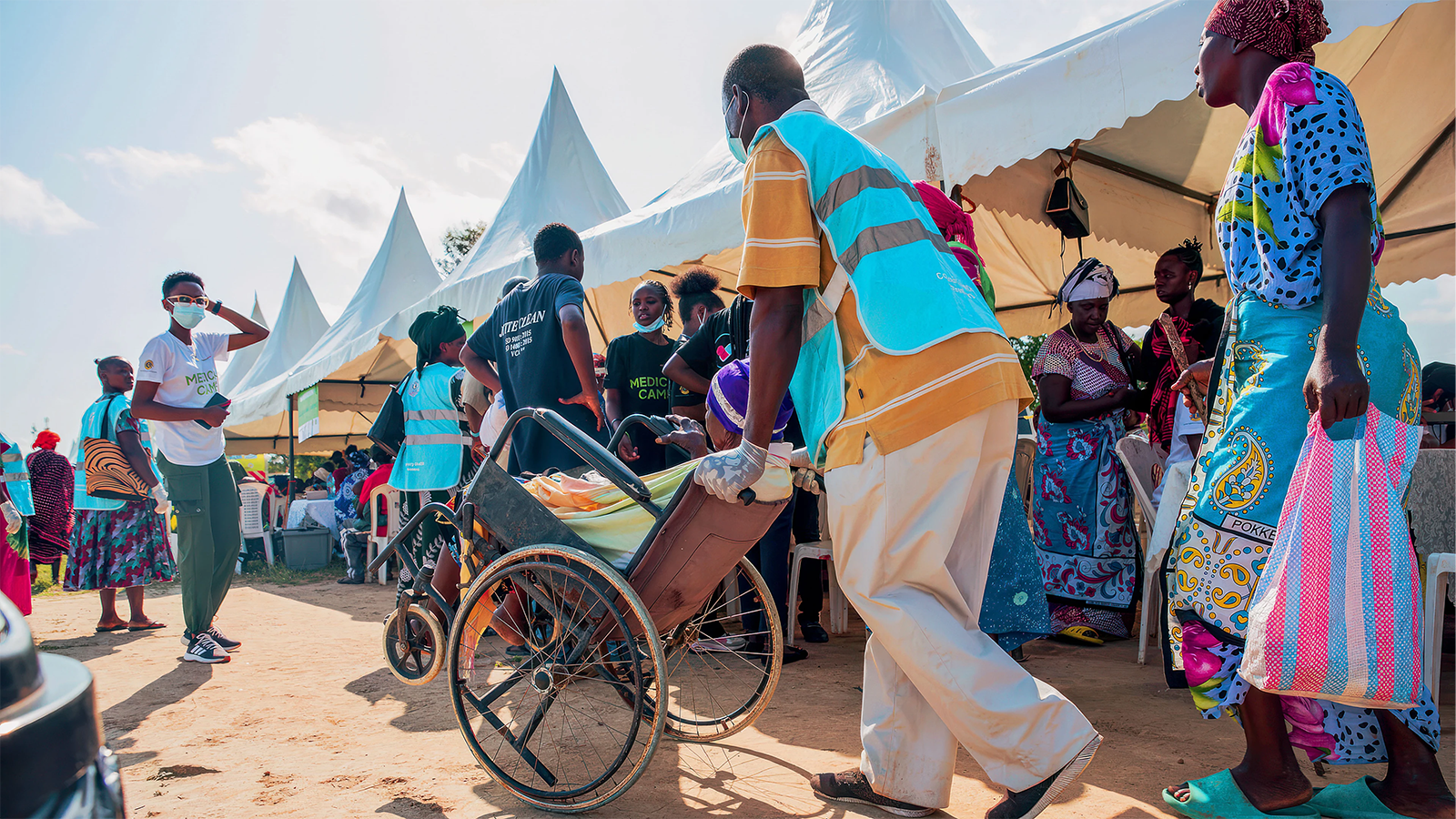
Commmunity pop-up clinics provide testing and referrals, bringing services directly into neighborhoods with limited healthcare infrastructure.
Diagnosis
Physicians confirm diagnoses, while an independent team assesses eligibility for program enrollment.
Enrollment
Eligible patients receive affordable medication and are assigned to a nurse for ongoing support.
Follow-up
Over a period of at least 12 months, nurses and health coaches provide guidance, adherence support, and medication refills.
The Access to Healthcare program follows a clear, patient-centered pathway. This continuity matters. It shifts care from a one-time interaction to an ongoing relationship.
Partnerships at the core
The Access to Healthcare program is built on a simple principle: healthcare innovation only matters when it leads to real outcomes. Achieving that requires collaboration.
The program is delivered through a network of partners, each contributing distinct expertise:
Zuri Health
manages the end-to-end patient journey, from screening and referrals to enrollment and follow-up, using digital tools accessible via SMS and USSD.
Mission for Essential Drugs and Supplies (MEDS)
provides affordable medicines and supports healthcare facilities through reliable distribution.
AMPATH
supports implementation through 20 facilities, enabling physician-driven enrollment.
mPharma
tracks patient numbers, enrollment, and adherence across the program.
Together, these partners help meet patients where they are; geographically, financially, and clinically. Built on close collaboration with local stakeholders, the program is designed to adapt to current healthcare realities, strengthen existing capacities, and support more integrated, people-centered health solutions.
Making real impact at scale
Reach: 140,000+ patients reached and screened
Care: 10,000+ patients currently receiving treatment
Network: 30+ facilities hospitals, community centers, and clinics involved
Support: 20,000 sessions of coaching completed to date
Since its launch, the program has reached meaningful scale. Together, these figures represent more than reach. They reflect patients who are no longer navigating the healthcare system alone.
Why Zuri Health matters
As a social entrepreneur supported through Boehringer Ingelheim's Social Business, Zuri Health plays a critical role in the program's success.
In 2023, Zuri Health joined the Social Business Accelerator program to pilot a continuous care model for hypertension and diabetes. Data from that pilot revealed a consistent challenge: patients in rural areas often discontinue treatment due to difficulties accessing medication and a lack of follow-up care.
"When treatment stops, it's rarely because patients don't care. It's because the system makes continuity too hard," says Ikechukwu Anoke, Founder & CEO of Zuri Health.
Zuri Health's focus on the entire care journey, particularly in rural communities, made it a natural partner. Through mobile health camps and clinics, Zuri Health has screened and onboarded thousands of patients-contributing significantly to the program's reach and continuity.
Building bridges to healthier communities
The Access to Healthcare program is not a standalone project. It is part of a broader ambition to expand access to care in underserved communities by addressing real-world barriers with practical, scalable solutions.
By aligning partners, resources, and expertise, the program is helping patients take greater control of their conditions, while strengthening healthcare pathways that are more inclusive, resilient, and sustainable. Because when barriers are removed, care becomes possible. And when care becomes possible, lives can change.
MPR-CRP-100577 March 2026
Our commitment
By 2030, we aim to expand access to healthcare for 50 million people, investing 35 billion EUR in health innovation and research to tackle non-communicable diseases and an additional 250 million EUR in partnerships to combat emerging infectious diseases.
Access to Healthcare is a program that operates on a tiered pricing model, ensuring that eligible patients can access medication at an affordable cost, with nurse follow-ups provided by a third party for at least 12 months. This empowers patients to manage their conditions and improve adherence to treatment plans.
Read more on Imagine - Boehringer Ingelheim's sustainability story hub.
*Image credits: Headerpicture: Zuri Health, Content videos: Boehringer Ingelheim
Find more stories and multimedia from Boehringer Ingelheim at 3blmedia.com.
Contact Info:
Spokesperson: Boehringer Ingelheim
Website: https://www.3blmedia.com/profiles/boehringer-ingelheim
Email: info@3blmedia.com
SOURCE: Boehringer Ingelheim
View the original press release on ACCESS Newswire:
https://www.accessnewswire.com/newsroom/en/healthcare-and-pharmaceutical/from-barriers-to-bridges-expanding-access-to-healthcare-in-kenya-1217574