

Survey of 600 energy-sector leaders across the U.S., U.K., Germany, Singapore and Australia identify permitting, regulation, infrastructure dependencies, skills and equipment constraints as key barriers to infrastructure delivery
More than three-quarters expect at least 25% of major energy infrastructure projects to face delay or cost overruns over the next three years
57% say infrastructure outside their direct control is a major or critical constraint
Jacobs (NYSE: J) -A survey of 600 senior energy-sector decision makers across the United States, United Kingdom, Germany, Singapore and Australia finds that 71% believe sufficient capital is available in their industry, yet only 29% say there is both enough capital and enough investable energy infrastructure projects.
This press release features multimedia. View the full release here: https://www.businesswire.com/news/home/20261027458539/en/
Findings reveal a consistent global challenge: having capital is only the first step.
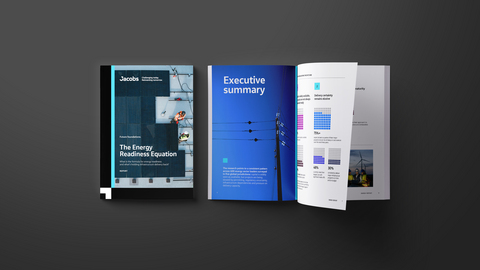
The findings, published by Jacobs in The Energy Readiness Equation, reveal a consistent global challenge: having capital is only the first step. Projects also need the right approvals, grid access, equipment and infrastructure to move forward.
More than three-quarters of energy leaders expect at least 25% of their major energy infrastructure projects to be at risk of delay or cost overruns over the next three years. For 56% of respondents, permitting and consenting alongside regulatory and policy uncertainty are the biggest barriers to getting infrastructure built quickly enough.
The constraint extends beyond individual projects. Fifty-seven percent of energy leaders say the readiness of other infrastructure systems outside their direct control is a major or critical constraint on energy infrastructure delivery. New generation depends on transmission; major industrial and digital facilities depend on power, water, communications and transport; and projects increasingly rely on multiple approvals, suppliers and organizations moving in sequence.
Jacobs Executive Vice President Fiachra Cléirigh said: "The capital is there, but getting the conditions around a project to line up can be harder. Projects can still stall when permitting, grid access, supply chains, skills and supporting infrastructure aren't ready. Identifying barriers and resolving these dependencies earlier can give investors, developers and delivery teams greater certainty and help viable projects move forward faster."
One global challenge, different local pressures
While common delivery challenges appear across all five geographies, the research finds they are playing out differently according to local energy systems, infrastructure needs and regulatory environments.
United States: 80% rank permitting among the top three delivery barriers. Rapid growth in data centers, artificial intelligence and advanced manufacturing is putting pressure on electricity demand, highlighting the need to coordinate generation, networks, regulators, major energy users and communities earlier.
United Kingdom: 59% rank grid or network readiness among the top three delivery barriers. This is the highest proportion across the five geographies, while permitting and regulatory uncertainty also remain significant constraints.
Germany: 84% expect at least a quarter of major energy infrastructure projects to be at risk. Capital, technology and ambition are available, but pressure on skills, supply chains and grid infrastructure is creating a delivery challenge. Sixty-eight percent identify supply chain disruption as a potential risk to operations.
Singapore: 67% say other infrastructure systems are a major or critical constraint. Strong long-term planning and institutional coordination provide a solid foundation, but Singapore's growing reliance on regional electricity imports is creating new cross-border dependencies. That adds a regional dimension to the challenge of coordinating energy, infrastructure and regulation.
Australia: 49% say capital is available but there is a shortage of investable projects. Australia has abundant renewable resources and available capital, but generation projects depend on transmission and enabling infrastructure keeping pace. Sixty-one percent describe other infrastructure systems as a major or critical constraint on energy delivery.
The report also highlights an important gap between confidence in existing assets and how resilience is embedded in practice. Almost 95% of respondents are somewhat or very confident that their critical assets would continue operating during a major disruption tomorrow, but only 36% describe their approach to resilience as built into planning and decision-making.
Jacobs President of Global Operations Patrick Hill said: "There is no single organization, sector or geography with all the answers to the energy security challenge, but there is a lot we can learn from one another. From our own experience, delivery improves when the industry shares what works and addresses dependencies earlier with governments, regulators, investors and delivery teams working from a collective view of what is needed. That is how energy ambitions become infrastructure that serves economies and communities for decades."
The Energy Readiness Equation
About the research
The report is based on a survey of 600 senior energy-sector decision makers across the U. S., U.K., Germany, Singapore and Australia. Respondents are responsible for strategy, procurement, capital programs and major project delivery. All percentage figures have been rounded to the nearest whole number.
The quantitative research is complemented by interviews with Jacobs' energy and infrastructure specialists, clients, system operators and other industry stakeholders including Marinus Link, PUB Singapore, Westnetz, Onyx Power, Statkraft, The National Energy System Operator (NESO), Clean Energy Buyers Association (CEBA), RDQ and National Grid.
At Jacobs, we're challenging today to reinvent tomorrow delivering outcomes and solutions for the world's most complex challenges. With approximately $12 billion in annual revenue and a team of approximately 47,000, we provide end-to-end services in advanced manufacturing, cities places, energy, environmental, life sciences, transportation and water. From advisory and consulting, feasibility, planning, design, program and lifecycle management, we're creating a more connected and sustainable world. See how at jacobs.com and connect with us on LinkedIn, Instagram, X and Facebook.
Certain statements contained in this press release constitute forward-looking statements within the meaning of the Private Securities Litigation Reform Act of 1995. Forward-looking statements are statements that do not directly relate to any historical or current fact. When used herein, words such as "expects," "anticipates," "believes," "seeks," "estimates," "plans," "intends," "future," "will," "would," "could," "can," "may," and similar words are intended to identify forward-looking statements. We base these forward-looking statements on management's current estimates and expectations, as well as currently available competitive, financial and economic data. Forward-looking statements, however, are inherently uncertain. There are a variety of factors that could cause business results to differ materially from our forward-looking statements including, but not limited to, uncertainties as to, the timing of the award of projects and funding and potential changes to the amounts provided for under the Infrastructure Investment and Jobs Act and other legislation and executive orders related to governmental spending, including any directive to federal agencies to reduce federal spending or the size of the federal workforce, and changes in U.S. or foreign tax laws, including the tax legislation enacted in the U.S. in July 2025, statutes, rules, regulations or ordinances, including the impact of, and changes to tariffs and retaliatory tariffs or trade policies, that may adversely impact our future financial positions or results of operations, as well as general economic conditions, including inflation and the actions taken by monetary authorities in response to inflation, changes in interest rates and foreign currency exchange rates, changes in capital markets, the possibility of a recession or economic downturn, and increased uncertainty and risks, including policy risks and potential civil unrest, relating to the outcome of elections across our key markets and elevated geopolitical tension and conflicts, among others. For a description of these and additional factors that may occur that could cause actual results to differ from our forward-looking statements, see our filings with the U.S. Securities and Exchange Commission. The company is not under any duty to update any of the forward-looking statements after the date of this press release to conform to actual results, except as required by applicable law.
View source version on businesswire.com: https://www.businesswire.com/news/home/20261027458539/en/
Contacts:
For press/media inquiries:
media@jacobs.com

