
As supply chain disruption becomes the norm, new DP World research reveals how retailers are rethinking transportation routes, inventory strategies and logistics partnerships to build greater resilience in an unpredictable global market.
NORTHAMPTON, MA / ACCESS Newswire / November 19, 2026 / For decades, retail supply chains were designed around a familiar objective: move products as efficiently as possible, minimize inventory and keep costs under control. Disruptions were treated as temporary setbacks, with operations expected to return to normal once the immediate crisis passed.
That operating model is increasingly difficult to sustain.
From shifting trade policies and geopolitical tensions to port congestion and labor shortages, disruption has become a persistent feature of global commerce. For retailers, the challenge is no longer simply recovering from unexpected events. It is building supply chains capable of adapting while those events unfold.
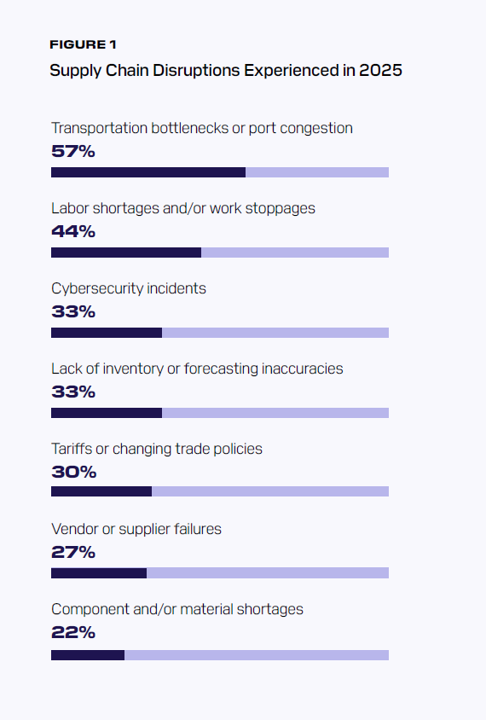
New research from DP World and Supply Chain Dive highlights this shift. In the report, How Retailers Are Rewiring Supply Chains to Handle Rising Costs, Risks and Uncertainty, 95% of the 100 retail supply chain leaders surveyed said disruption is extremely or very important to their organizations, while 57% reported experiencing transportation bottlenecks or port congestion in 2025.
Yet despite these challenges, 80% expressed high confidence in their ability to withstand a major disruption over the next three years.
That confidence reflects an important evolution in how retailers approach resilience.
From efficiency to adaptability
Traditional supply chain strategies prioritized predictable transportation routes, streamlined supplier relationships and just-in-time inventory management. While these approaches helped control costs, they also left businesses vulnerable when established networks were interrupted.
Today's retailers are taking a more dynamic approach.
According to the DP World retail supply chain research, 74% of retail supply chain leaders are adjusting supply chain routing to address tariff impacts, while 53% are optimizing routes to manage costs.
These findings suggest that transportation routing is becoming more than an operational consideration. It is emerging as a strategic capability that allows businesses to respond to changing market conditions.
Retailers that can evaluate alternative routes, transportation modes and logistics partners are better positioned to maintain product availability when disruptions occur.
Resilience requires more than contingency plans
Building flexibility into retail supply chains also requires reconsidering how inventory and supplier relationships are managed.
The research found that 60% of respondents are adjusting inventory management practices in response to tariffs and changing trade policies. Meanwhile, 80% are changing or diversifying suppliers to address material and component shortages.
These strategies reflect a broader recognition that resilience cannot depend on any single solution.
Diversification creates alternatives, but it also introduces complexity. More suppliers, routes and logistics providers can mean additional systems, coordination requirements and costs.
The challenge is finding the right balance between flexibility and operational efficiency.
Building an ecosystem for continuous disruption
As retail supply chains become more interconnected, collaboration across the logistics ecosystem is increasingly important.
Integrated logistics partners can help retailers coordinate transportation, warehousing and distribution while providing access to alternative solutions when circumstances change.
For DP World, this is where global infrastructure and end-to-end logistics capabilities can play an important role, connecting different stages of the supply chain and helping retailers respond to evolving requirements.
Ultimately, the future of retail resilience will not be defined by an organization's ability to predict every disruption. It will be determined by how effectively it can adapt when disruption inevitably occurs.
The most resilient supply chains will not necessarily be those with the fewest interruptions, but those with the flexibility to keep goods moving despite them.
Discover how retailers are building resilience
What strategies are retail supply chain leaders prioritizing to manage rising costs, shifting trade policies and ongoing disruption?
Explore the findings from DP World and Supply Chain Dive's research with 100 retail supply chain leaders, including insights into dynamic routing, supplier diversification and logistics partnerships.
Download the full report: How Retailers Are Rewiring Supply Chains to Handle Rising Costs, Risks and Uncertainty ?
Find more stories and multimedia from DP World at 3blmedia.com.
Contact Info:
Spokesperson: DP World
Website: https://www.3blmedia.com/profiles/dp-world
Email: info@3blmedia.com
SOURCE: DP World
View the original press release on ACCESS Newswire:
https://www.accessnewswire.com/newsroom/en/transportation/the-new-rules-of-retail-resilience-why-flexibility-is-replacing-predictability-1254160