


KGHM leans heavily on the skills and dedication of Cummins
NORTHAMPTON, MA / ACCESS Newswire / November 2, 2026 / Cummins
By Cummins Europe, Global Power Technology Leader
In the subterranean labyrinth of Poland's Lower Silesia region, a thousand metres beneath the rolling hills, an intense battle is waged every day against heat, salt, and crushing pressure.
Welcome to KGHM Polska Miedz in Lubin, one of the world's largest sources of copper and silver. In this unforgiving environment, where the air hangs hot and thick with corrosive dust, a machine is only as good as the heart beating inside it.
For KGHM, that heart is increasingly a Cummins engine - more than 700 of them in total, all helping to work the lucrative seams and transport the precious cargo off to processing.
The Lubin mine is the oldest in the Polish Copper Belt, representing more than 60 years of industrial heritage, and it extracts between seven and eight million tonnes of ore annually. This yields approximately 92,000 tonnes of copper and more than 400 tonnes of silver per year.
The collaboration between Cummins and KGHM (specifically through its equipment manufacturing arm KGHM ZANAM) is not so much a vendor-client relationship as a full-scale engineering pact that has been in place for two decades.
In the past 10 years alone, Cummins has supplied more than 1,400 engines to power the specialised fleet that keeps Poland's copper flowing.
They include the B6.7 CM2450 used in loaders and trucks, the B4.5 CM4250 for trucks and bolters, and the QSL9 CM2450 for high-performance loaders made by Epiroc.
All these engines are certified to EU Stage V standard, which is a strategic necessity for KGHM to honour its commitment to environmental and social responsibility.
Engines built to survive
In most industries, a five-year lifespan for a heavy vehicle would be a failure. In the copper mines of Lower Silesia, it is a badge of honour. The conditions are so corrosive - a cocktail of high humidity and mineral rich salts - that standard equipment would disintegrate.
To combat this, Cummins engineers have developed specialised modifications. These include custom-designed wiring harnesses, heavy-duty alternators, and robust starter motors designed to resist the chemical rot of the underground atmosphere.
This level of customisation ensures that when a loader hits a pile of abrasive copper ore, the engine can take it in its stride.
In a mine where every minute of downtime can cost thousands of Euros in lost productivity, the maintenance strategy is as critical as the hardware.
Cummins operates a dedicated branch in Lubin, strategically located at the epicentre of KGHM's operations. Here, a team of nine office-based staff and 24 technicians embedded at the Lubin mine keeps those 750+ Cummins engines running 24/7.
"Machine downtime is massively expensive for the operator, so our presence is reassuring to KGHM," says Waldemar Bilcharski, Lubin branch manager.
Using advanced data analytics, the teams can monitor engine health in real-time, catching a failing sensor or a drop in oil pressure before it leads to a catastrophic engine failure.
To minimise delays, KGHM and Cummins can choose to utilise a service exchange model, where a worn engine is swapped for a fully remanufactured unit in a matter of hours.
Typically, those 'swing' engines will have been maintained locally at Lubin, but where a more complex overhaul is the order of the day, Cummins can turn to its recently opened European Master Rebuild Centre in Krakow, roughly four hours away by road.
The Green Frontier: Stage V and beyond
The future of the KGHM-Cummins partnership is turning green - or at least, cleaner. The introduction of Stage V emission standards in underground mining has been a hurdle for many, but for KGHM, it was an opportunity.
The latest Cummins Stage V engines drastically reduce nitrogen oxides and particulate matter. Cleaner engines mean less heat and fewer toxins, which in turn reduces the staggering cost of mine ventilation, one of the largest operational expenses in deep-shaft mining.
As KGHM looks toward the next 40 years of copper extraction, the partnership is already exploring Destination Zero - Cummins' strategy for zero-emission mining through battery-electric and hydrogen technologies.
Deep Respect for the Technicians
Ann-Kristin de Verdier, Executive Managing Director of Cummins DBU Europe, had a chance to see the Cummins-KGHM partnership working in real time when she visited the Lubin offices and mine.
"I've been to an silver mine which was more like a museum, but this was my first experience of being a kilometre underground in a working mine," she said. "I wanted to meet our amazing technicians, who do such an incredible job in the harshest of environments, and recognise their dedication."
Ann-Kristin said because the mine was constantly expanding, the workshop areas tended to shift around, requiring the Cummins technicians to carry their toolkits with them. "They're heavy and it's hard work in that heat and humid space, so we're looking at ways we can lighten the load for them".
Ann-Kristin said KGHM was an important partner, and she was delighted to reaffirm Cummins' commitment to their ongoing success. Our picture shows the Cummins special visit team (from left): Waldemar Bilcharski, Ann-Kristin de Verdier, Karol Walczak (Regional Service Manager), Ewelina Ziemba-Termanowska (People Support Advisor), and Ewelina Kolodziej (HSE Leader).
European MRC Proves Its Worth
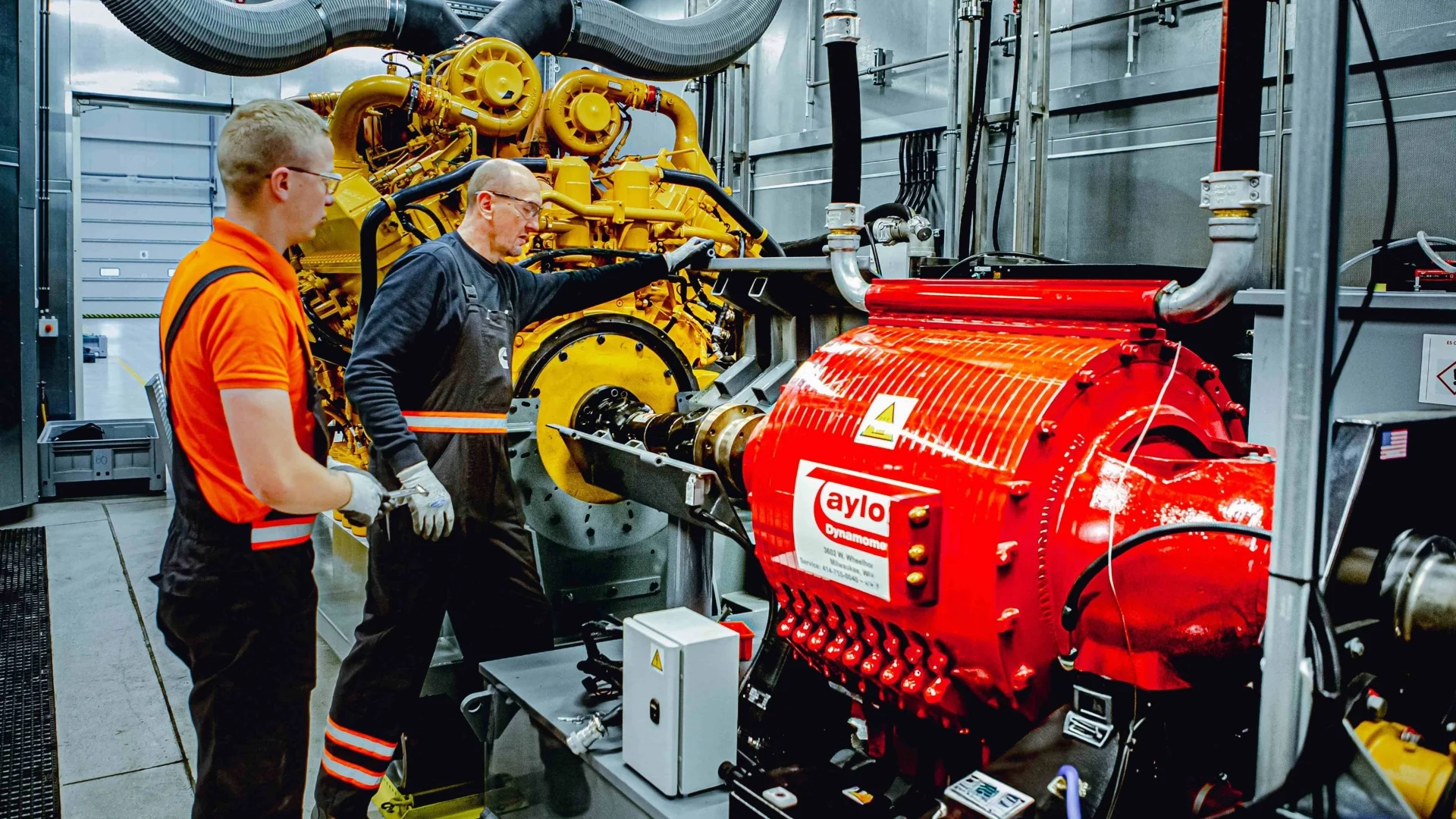
The European Master Rebuild Centre (MRC) in Krakow continues to demonstrate its capability and commitment to supporting the mining industry with high-horsepower solutions.
Recently, the MRC successfully rebuilt and stocked two QSK50MCRS engines, ready to power some of the toughest machines in the field: the Hitachi EH3500 and Komatsu HD1500 haul trucks.
These engines, part of Cummins' high-horsepower portfolio, are designed to deliver exceptional performance and reliability in demanding mining environments.
By rebuilding and stocking these units locally, the MRC ensures faster turnaround times, reduced downtime for customers, and a sustainable alternative to purchasing new engines.
Each rebuild adheres to Cummins' strict factory specifications, using 100% Genuine Parts and advanced remanufacturing processes.
Looking ahead, the MRC is already preparing for the next swing engines, which will be rebuilt soon to further strengthen stock availability and support customer needs across Europe.
This proactive approach ensures mining operations can rely on Cummins for timely, high-quality solutions.
With growing demand for high-horsepower engines across the region, stocking these rebuilt QSK50MCRS units positions Cummins as a trusted partner for reliability and sustainability in mining.
Find more stories and multimedia from Cummins Inc at 3blmedia.com.
Contact Info:
Spokesperson: Cummins Inc
Website: https://www.3blmedia.com/profiles/cummins-inc
Email: info@3blmedia.com
SOURCE: Cummins Inc
View the original press release on ACCESS Newswire:
https://www.accessnewswire.com/newsroom/en/automotive/cummins-inside-the-pressure-cooker-1245070
