VASRO has published an update report on Ainos, Inc. following the company's first-half 2026 results.
The central message is not that financial scale has arrived. It has not. The more relevant development is that Ainos continued expanding the operating footprint and proprietary dataset behind AI Nose without allowing its underlying cash cost base to increase.
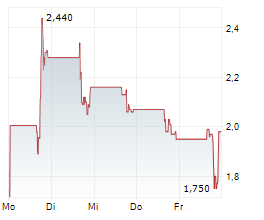
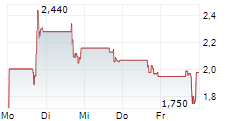
The market reacted sharply to the release. Ainos shares rose 9% on 3 August, with approximately 3.4 million shares traded compared with a normal trading day nearer 35,000 shares. The headline financial figures, however, require context.
Ainos reported first-half revenue of USD 313, compared with USD 110,870 in the prior-year period. The company recorded an operating loss of USD 6.68m and a net loss of USD 7.05m. Read in isolation, those figures present a business with negligible revenue and a substantial cost structure.
That is not what the cash numbers show.
Of the USD 6.68m in reported operating expenses, USD 4.37m consisted of share-based compensation, depreciation and amortization. These expenses reduced the reported result but did not represent cash leaving the business during the period.
After removing those non-cash items, Ainos' cash operating expenses amounted to approximately USD 2.31m for the first half, compared with USD 2.39m one year earlier. Net cash used in operating activities also declined to USD 2.43m from USD 2.58m.
The relevant read-through is cost control. Ainos did not solve the revenue question during the first half, but it demonstrated that platform activity could expand without a corresponding increase in cash operating expenditure.
At the same time, the dataset supporting the AI Nose platform continued to compound.
According to the company, AI Nose has accumulated approximately 613 million industrial smell records since December 2025, primarily from semiconductor manufacturing environments. Data collection continued as deployments progressed under the three-year, USD 2.1m subscription agreement signed with the ASE group in August 2025.
This is a significant non-financial operating indicator. The commercial value of an industrial sensing platform does not depend solely on the number of devices installed. It also depends on the volume, diversity and operating relevance of the data collected by those devices.
Each additional deployment expands the platform's exposure to real industrial conditions and increases the body of information available for training and refining Ainos' Smell ID models. The dataset is therefore becoming larger while the underlying cash cost base remains broadly stable.
The financing position remains the principal constraint.
On 10 July, ASE Test agreed to extend NT$62m of its NT$90m loan from March 2027 to July 2027. The remaining balance retained its existing maturity. The same ASE group holds Ainos' largest commercial agreement and all USD 11m of the company's outstanding convertible notes.
At current share-price levels, the conversion prices of between USD 22.50 and USD 37.50 mean that the notes should be analysed economically as debt rather than as near-term dilution.
The loan extension does not eliminate Ainos' funding requirements. The company continues to operate with a limited liquidity buffer, and the remaining capacity under its at-the-market programme is restricted. However, the extension is still an important signal: the strategic partner with the greatest direct exposure to the technology elected to extend part of its financing rather than demand repayment.
That relationship cuts both ways.
ASE provides commercial validation, operating access and financial support. Its semiconductor facilities also give Ainos a credible environment in which to develop and test the AI Nose platform. At the same time, the commercial contract, the loan and the convertible notes are concentrated within the same corporate group.
The next level of validation must therefore come from outside the existing ASE relationship. A separate customer paying for the platform under commercial conditions would demonstrate that the model can travel beyond its initial strategic partner.
The revenue timeline is now moving into the second half of 2026.
Ainos has a USD 2.1m subscription backlog, including USD 350,000 already received and recorded as a contract liability. The company expects revenue from its AI Nose programmes to begin appearing during the second half as deployments move toward revenue-recognition milestones.
That conversion is now the critical test.
VASRO's view is that two operational developments defined the first half. First, the cash cost of running Ainos remained tightly controlled. Second, the proprietary industrial dataset behind AI Nose expanded to a scale that deserves attention.
Together, these developments buy the company time. They do not replace revenue.
The next phase of the investment case will depend on whether the growing deployment base, the 613 million-record dataset and the support of a major semiconductor partner begin translating into recognised and recurring commercial revenue.
Access the Update - 7 August 2026
The post Ainos, Inc.: 613 Million Records, and a Cost Base That Did Not Move - First Half 2026 Update appeared first on VASRO GmbH.