Anzeige
Mehr »
Dienstag, 17.03.2026 - Börsentäglich über 12.000 News
China drosselt, Preise explodieren: Wird dieser kaum bekannte Rohstoff zum nächsten Milliarden-Play?
Anzeige

Indizes

Kurs

%
News
24 h / 7 T
Aufrufe
7 Tage

Aktien

Kurs

%
News
24 h / 7 T
Aufrufe
7 Tage

Xetra-Orderbuch

Fonds

Kurs

%

Devisen

Kurs

%

Rohstoffe

Kurs

%

Themen

Kurs

%

Erweiterte Suche

WKN: 889250 | ISIN: GB0005774855 | Ticker-Symbol: 14F
Frankfurt
17.03.26 | 08:05
10,300 Euro
+0,98 % +0,100
1-Jahres-Chart
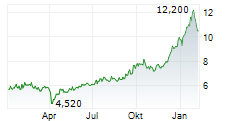
BLACKROCK WORLD MINING TRUST PLC Chart 1 Jahr
5-Tage-Chart
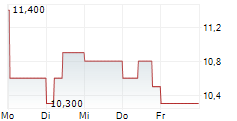
BLACKROCK WORLD MINING TRUST PLC 5-Tage-Chart
RealtimeGeldBriefZeit
10,30010,60010:45
PR Newswire
363 Leser
Artikel bewerten:
(2)

BlackRock World Mining Trust Plc - Final Results

BlackRock World Mining Trust Plc - Final Results

PR Newswire

LONDON, United Kingdom, March 17

BlackRock World Mining Trust plc

LEI: LNFFPBEUZJBOSR6PW155

Annual Report and Financial Statements 31 December 2025

Key highlights

• Very strong year driven by positive demand trends from AI infrastructure build out and energy transition, supply side disruption, and exceptional demand for precious metals.

• Net asset value per share (NAV) total return for the year was +74.2%, compared to a total return of the reference index of +64.2% and the FTSE All-Share Index total return of 24.0%. The share price total return for the same period was +74.1%. (All performance returns in sterling terms with dividends reinvested).

• Proposed final dividend of 7.50p per share. This, together with three quarterly interim dividends, makes a total of 24.00p per share (2024: 23.00p per share) representing a 4.3% increase on dividend payments in 2024.

Chip Goodyear, the Chairman of the Company said:

"The Company's performance through 2025 is a clear illustration of our value as a nimble "virtual mining company", without the constraints that come with the development of fixed mining assets, and the excellent use of the investment trust structure. Our portfolio manager's ability to flex exposure to the appropriate commodities and precious metals, their effective use of gearing to enhance returns, options strategy to boost income, and our exposure to unquoted assets all offers a unique investment opportunity for investors."

Performance record

As at
31 December

2025

As at
31 December
2024

Net assets (£'000)¹

1,598,428

975,199

Net asset value per ordinary share (NAV) (pence)

856.23

510.53

Ordinary share price (pence)

804.00

481.00

Reference index 2 - net total return

8,885.32

5,411.07

Discount to net asset value 3

6.1%

5.8%

=========

=========

Performance (with dividends reinvested)

For the
year ended

31 December

2025

For the
year ended

31 December

2024

Net asset value per share 2,3

+74.2%

-10.7%

Ordinary share price 2,3

+74.1%

-12.7%

Reference index 2

+64.2%

-9.9%

=========

=========

Performance (with dividends reinvested)

For the five
years ended

31 December 2025

For the five
years ended

31 December 2024

Since inception

to 31 December

2025

Since inception

to 31 December

2024

Net asset value per share 2,3

+107.2%

+56.7%

+2,107.8%

+1,167.4%

Ordinary share price 2,3

+101.8%

+69.9%

+2,129.4%

+1,180.2%

Reference index 2

+94.6%

+42.9%

+1,536.0%

+896.3%

=========

=========

=========

=========

For the
year ended

31 December

2025

For the
year ended

31 December

2024

Change
%

Revenue

Net revenue profit after taxation (£'000)

45,867

44,127

+3.9

Revenue return per ordinary share (pence) 4

24.37

23.09

+5.5

---------------

---------------

---------------

Dividends per ordinary share (pence)

- 1st interim

5.50

5.50

-

- 2nd interim

5.50

5.50

-

- 3rd interim

5.50

5.50

-

- Final

7.50

6.50

+15.4

---------------

---------------

---------------

Total dividends paid and payable

24.00

23.00

+4.3

=========

=========

=========

1 The change in net assets reflects portfolio movements, dividends paid and the repurchase of ordinary shares into treasury during the year.

2 MSCI ACWI Metals & Mining 30% Buffer 10/40 Index (net total return). With effect from 31 December 2019, the reference index changed to the MSCI ACWI Metals & Mining 30% Buffer 10/40 Index (net total return). Prior to 31 December 2019, the reference index was the EMIX Global Mining Index (net total return). The performance returns of the reference index since inception have been blended to reflect this change.

3 Alternative Performance Measures, see Glossary in the Company's Annual Report for the year ended 31 December 2025.

4 Further details are given in the Glossary in the Company's Annual Report for the year ended 31 December 2025.

Chairman's Statement

Highlights

• NAV per share 74.2% 1 (with dividends reinvested)

• Share price 74.1% 1 (with dividends reinvested)

• Total dividends of 24.00p per share

Overview

The financial year to 31 December 2025 saw global markets successfully navigate a challenging environment. Despite persistent geopolitical tensions in Eastern Europe and the Middle East, as well as the market volatility triggered by the Liberation Day tariffs, most equity markets delivered positive returns over the year.

For the mining industry, 2025 was similarly constructive. Performance was supported by consumer demand anticipated as a result of enduring structural themes: rapid digitalisation, the acceleration of the energy transition, increased investment in Artificial Intelligence (AI) related infrastructure, and strong demand for critical minerals essential to new technologies. Precious metals were a standout. Gold and silver experienced exceptional demand-driven in part by continued central bank accumulation of gold reserves-which helped propel the sector to market leading returns in the second half of the year. It is against this favourable backdrop that we are pleased to report a very strong year for the Company.

Performance

Over the twelve months to 31 December 2025, the Company's net asset value per share (NAV) returned 74.2% 1 and the share price returned 74.1% 1 . Over the same period, the Company's reference index, the MSCI ACWI Metals & Mining 30% Buffer 10/40 Index (net total return), returned 64.2%, the FTSE All-Share Index returned 24.0% and the UK Consumer Price Index (CPI) increased by 3.4%.

Our portfolio managers provide a more detailed explanation of the Company's performance during the year in their report below. They also provide additional insight into the positioning of the portfolio and their views on the outlook for the coming year.

Revenue return and dividends

The Company's revenue per share for the year to 31 December 2025 was 24.37p, a 5.5% increase compared to the prior year revenue per share of 23.09p. The increase was driven by higher dividend payments from a number of key mining companies.

During the year, three quarterly interim dividends of 5.50p per share were paid. The Board is proposing a final dividend payment of 7.50p per share for the year ended 31 December 2025. This, together with the quarterly interim dividends, makes a total of 24.00p per share (2024: 23.00p per share) representing a increase of 4.3% on payments in 2024.

As in past years, all dividends are fully covered by income. In accordance with the Board's stated policy, the total dividends represent substantially all of the year's available income.

Subject to approval at the Annual General Meeting, the final dividend will be paid on 29 May 2026 to shareholders on the Company's register on 27 March 2026, the ex-dividend date being 26 March 2026.

Gearing

The Company operates a flexible gearing policy which depends on prevailing market conditions. It may borrow up to 25% of the Group's net assets. The maximum level of gearing used during the year was 13.6% and the level of gearing at 31 December 2025 was 4.7%. Average gearing over the year to 31 December 2025 was 8.8%.

Management of premium/discount

The Directors recognise the importance to investors of the market price of the Company's shares relative to the underlying NAV. Accordingly, in normal market conditions, the Company may repurchase shares (at a discount to NAV) or reissue shares from treasury or issue new shares (at a premium to NAV) to manage the premium or discount at which the Company's shares trade, where it is deemed to be in shareholders' interests.

Over the Company's financial year ending in December, the Company's shares have traded at an average discount of 6.6%. During the year, the Company purchased 4,335,000 shares at an average price of 509.83p per share at an average discount of 8.7% for a total cost of £22,101,000. Since the year end and up to 12 March 2026, a further 156,000 shares have been bought back at an average price of 930.40p per share for a total cost of £1,451,000. All shares have been placed in treasury. No shares were issued in 2025 or in 2026 up to the date of this report.

Resolutions to renew the authorities to issue and buy back shares will be put to shareholders at the forthcoming Annual General Meeting.

Board composition

We are pleased to welcome Marion Sears who joined the Board in August 2025. Marion brings a wealth of experience gained in both her executive and non-executive career. Judith Mosley, who having served over nine years, will not be seeking re-election at the forthcoming Annual General Meeting (AGM) and will retire from the Board with effect from the conclusion of the meeting. The Board wishes to thank Judith for her wise counsel and valuable contribution to the Company over her tenure as a Director.

The Board has initiated a search process to identify a new Director with the skills the Board has identified it requires. We will announce the appointment of a new Director later in the year.

Shareholder communication and engagement

We appreciate how important access to regular information is to our shareholders. To supplement our Company website, we offer shareholders the ability to sign up to the Trust Matters newsletter which includes information on the Company as well as news, views and insights on the investment trust market. Information on how to sign up is included on the inside front cover of the Annual Report.

The Board encourages all shareholders to either attend the AGM or exercise your right to vote by proxy. The Board has sought to engage with shareholders who hold their shares through an intermediary or platform via the provisions of Section 793 of the Companies Act 2006. In addition, the Board is aware that certain execution only investment platforms are now providing shareholders with the ability to vote electronically. The Board encourages shareholders to take advantage of this functionality where it is available to you. For those of you who hold shares via platforms, information on how to vote can be found here: www.theaic.co.uk/availability-on-platforms.

Julian Baring Scholarship Fund

At our AGM in 2025, we provided a short presentation on the Julian Baring Scholarship Fund and the annual donation made by the Company. The fund plays an important role in supporting the education and training of the next generation of mining industry professionals. The Company is an enthusiastic supporter of this important initiative. A detailed update on the Fund is provided by the Founder and co-Trustee, Justin Baring, in the Company's Annual Report for the year ended 31 December 2025.

Annual General Meeting arrangements

The Company's AGM will be held at the offices of BlackRock at 12 Throgmorton Avenue, London EC2N 2DL on Friday, 22 May 2026 at 11.30 a.m. Details of the business of the meeting are set out in the Notice of Meeting in the Company's Annual Report for the year ended 31 December 2025.

The Board very much looks forward to meeting shareholders and we encourage you to attend this year's AGM. In the meantime, if shareholders would like to contact me, please write to BlackRock World Mining Trust plc, 12 Throgmorton Avenue, London EC2N 2DL, marked for the attention of the Chairman.

Outlook

The start of 2026 has been marked by volatility, with gold and silver prices touching new highs before pulling back. Persistent inflation, elevated government debt, ongoing geopolitical tensions and increased volatility are keeping demand strong for safe haven assets. The escalation of conflicts in the Middle East at the end of February 2026 has contributed to renewed uncertainty across global markets, particularly in energy markets, where oil prices have experienced sharp moves reflecting concerns around supply security and transport routes. Higher and more volatile oil prices have reinforced the strategic focus on energy security, domestic resource development and supply chain resilience, further underpinning long-term demand for critical minerals. At the same time, major economies are stepping up investment in technology, energy infrastructure and defence. These initiatives continue to drive structural demand for many mined commodities, such as copper, lithium and rare earth elements that are essential to electrification, renewable energy and the growing AI and data centre ecosystem. With supply growth limited and producers currently signalling maintaining capital discipline and strong balance sheets, the backdrop for the sector remains supportive.

Mined materials continue to play a crucial role in modern society, underpinning economic growth and enabling advances in living standards and technology. Your Company seeks to provide shareholders with diversified exposure to these long term themes, aiming to maximise total returns over time. The Board has confidence in the portfolio managers' ability to construct an "optimal virtual mining company" - offering access to diverse opportunities across the sector that would be difficult for most investors to replicate.

Charles Goodyear

Chairman

16 March 2026

Investment Manager's Report

Market overview

We are delighted to report a stellar year of performance for the Company. At the half year point this outcome was not expected given the mixed returns earlier in the year despite foundations in place to achieve this strong result. A combination of renewed focus on the sector, positive demand trends, supply side disruption, critical minerals agenda and ongoing macro tailwinds drove the subsequent NAV total return outcome. 2025 produced the largest one-year gain in Company's assets since inception and the fourth largest gain in the NAV per share. It was also pleasing to see the share price keep up with the move in the underlying portfolio despite the UK budget uncertainty. By the year end, the Company's NAV return and share price return since inception reached 2,107.8% and 2,129.4%, or a return of 10.1% and 10.2% per annum, respectively (all returns in Sterling terms with dividends reinvested).

Performance in 2025 was further enhanced by the use of options, while commodity prices improved royalty income and allowed us to unlock value from selling our unquoted royalty investment in the BHP Brazil contract for a large gain. All of these added together helped deliver returns in excess of the broader mining sector.

2025 proved to be a tale of two halves. The portfolio reached a low point in April 2025, having been impacted by a number of adverse developments, including mine flooding at Ivanhoe Mines (1.2% of the portfolio) in the Democratic Republic of Congo (DRC), production delays at Sigma Lithium, and delays to growth plans at Foran Mining (1.4% of the portfolio). We are pleased to report that these setbacks were more than offset during the second half of the year, which turned out to be one of the strongest six - month periods in the Company's 30 - year history.

Several supportive trends boosted commodity markets. In the US, President Trump was vocal on the need to rebuild the domestic economy, boost the military and add resilience to the supply of critical materials. In addition, his policies to support the roll out of data centres and artificial intelligence (AI) resulted in a large increase in domestic materials-intensive spending. In China, commodity demand continues to move away from the property sector towards industry and technology. And Europe is attempting to keep up by boosting defence and technology investment. Investors eventually began to take note and recognise the critical nature of commodities to the changing world economy.

For the year as a whole, the NAV total return of the Company was 74.2% and the share price total return was 74.1%. This compares to the return on FTSE 100 Index of 25.8%, Consumer Price Inflation (CPI) of 3.4% and the return on the reference index (MSCI Metals and Mining Index 30% Buffer Net TR) of 64.2% (all percentages in Sterling terms with dividends reinvested).

Commodity price trends

Key commodity performers included the precious metals, led by silver (up 149.1%) and gold (up 64.7% - all commodity price performance is in US Dollar terms). The Platinum Group Metals (PGM) suite, despite not performing for most of the year, surged in the latter months to gain 121.8%. The base metals were led by copper and tin, up 43.9% and 40.9% respectively. Most of these gains happened during the second half of the year and some of the prices only moved in the final quarter. This has meant that the gains in average year-on-year prices are a fraction of the average 12-month moves. For example, the 43.9% gain in copper compares to an 8.8% gain in the year-on-year average price. This means that earnings and cash-flow growth will accrue in 2026. Should commodity price strength be sustained, growth in dividends/capital returns should occur in the second half of 2026.

31 December 2025

% Change in 2025

% Change average prices 2025 vs 2024

Commodity

Gold US$/ounce (oz)

4,325.0

64.7%

44.2%

Silver US$/oz

72.0

149.1%

42.0%

Platinum US$/oz

2,027.0

121.8%

34.2%

Palladium US$/oz

1,567.0

72.4%

17.1%

Copper US$/pound (lb)

5.65

43.9%

8.8%

Nickel US$/lb

7.48

9.2%

-9.8%

Aluminium US$/lb

1.35

17.5%

8.7%

Zinc US$/lb

1.40

4.3%

3.2%

Lead US$/lb

0.89

2.2%

-5.2%

Tin US$/lb

18.43

40.9%

13.3%

WTI Cushing US$/barrel

57.26

-21.0%

-14.5%

Iron Ore (China 62% fines) US$/tonne (t)

105.70

6.2%

-8.8%

=========

=========

=========

Source: LSEG Datastream and Bloomberg, December 2025.

Bulk commodity prices were generally resilient versus consensus estimates at the start of the year. Iron ore prices once again defied predictions of a significant decline. Prices failed to retreat sustainably below US$100/t, preserving the high margins and cash flows enjoyed by producers for yet another year. Coal producers were less fortunate with margins falling on the back of lower prices. There was some respite into the year end as energy demand growth expectations rallied on the back of looming shortages due to the growth in AI investment.

The oil price fell to under US$60/barrel for the first time in four years. The lower oil price is a tailwind for mining companies given their extensive use of oil in resource production.

Top contributors and detractors

In 2025, many commodity prices and equities moved up together. The decision to increase exposure to gold equities in early 2024 paid off as the gold price rallied throughout the year. In addition, the multi-year overweight position in copper miners saw the Company benefit from a breakout in copper prices to levels not seen before. The Company could be seen as a "virtual mining company" - with the ability to move commodity exposure around more rapidly and at a lower cost than a listed mining company. This is evident comparing the performance of the Company against the large diversified miners during 2025.

Key contributors to performance in 2025 were positions in Hycroft Mining (1.7% of the portfolio), Kinross Gold (4.1% of the portfolio), Discovery Silver (0.8% of the portfolio) and the sale of the BHP Brazil Royalty. Offsetting these were detractors including Jetti Resources (0.7% of the portfolio) and Ivanhoe Mines (1.2% of the portfolio) and not owning enough of Gold Fields.

Description

Sector

Portfolio
average weight

Reference Index average weight

Portfolio
active weight

Contribution to relative return-total effect

Top Contributors

Cash and cash equivalents

N/A

-8.57%

+0.00%

-8.57%

+8.42%

Hycroft Mining

Gold

+0.32%

+0.00%

+0.32%

+2.60%

BHP Brazil Royalty

Gold/Copper

+1.75%

+0.00%

+1.75%

+2.40%

Kinross Gold

Gold

+4.09%

+1.90%

+2.19%

+1.82%

Discovery Silver

Silver

+0.62%

+0.00%

+0.62%

+1.51%

Nippon Steel

Steel

+0.00%

+1.70%

-1.70%

+1.42%

Agnico Eagle Mines

Gold

+7.35%

+5.10%

+2.25%

+1.26%

Saudi Arabian Mining Company

Diversified

+0.00%

+1.70%

-1.70%

+1.00%

Bravo Mining

PGM

+1.13%

+0.00%

+1.13%

+0.84%

Reliance Inc.

Diversified

+0.16%

+1.40%

-1.24%

+0.82%

Lundin Mining

Copper

+1.75%

+0.70%

+1.05%

+0.81%

Titan Mining

Zinc

+0.32%

+0.00%

+0.32%

+0.81%

Endeavour Mining

Gold

+1.05%

+0.10%

+0.95%

+0.75%

Valterra Platinum

PGM

+1.37%

+0.80%

+0.57%

+0.65%

Minerals 260

Gold

+0.33%

+0.30%

+0.03%

+0.65%

=========

=========

=========

=========

=========

Description

Sector

Portfolio
average weight

Reference Index average weight

Portfolio
active weight

Contribution to relative return-total effect

Top Detractors

Jetti Resources

Copper

+1.47%

+0.00%

+1.47%

-2.52%

Gold Fields

Gold

+0.05%

+2.20%

-2.15%

-2.17%

Ivanhoe Mines

Copper

+1.48%

+0.60%

+0.88%

-1.75%

Zijin Mining Group

Gold

+0.09%

+1.80%

-1.71%

-1.11%

Vale

Diversified

+7.49%

+3.20%

+4.29%

-1.08%

Sociedad Minera Cerro Verde

Copper

+1.87%

+0.00%

+1.87%

-1.07%

Anglo American

Diversified

+4.86%

+2.90%

+1.96%

-1.06%

MCC Mining

Copper

+1.51%

+0.00%

+1.51%

-0.76%

Glencore

Diversified

+4.22%

+3.50%

+0.72%

-0.71%

Labrador Iron Ore Royalty Corp

Iron Ore

+0.93%

+0.00%

+0.93%

-0.67%

CMOC Group

Copper

+0.00%

+0.50%

-0.50%

-0.66%

Pan American Silver

Silver

+0.00%

+1.00%

-1.00%

-0.66%

Newmont Mining

Gold

+4.59%

+5.50%

-0.91%

-0.64%

Industrias Penoles Sab

Silver

+0.00%

+0.50%

-0.50%

-0.62%

Sigma Lithium

Lithium

+0.26%

+0.00%

+0.26%

-0.60%

=========

=========

=========

=========

As can be seen in the graphs on page 13 in the Company's Annual Report for the year ended 31 December 2025, the mix of commodity exposures adjusted by the look through EBITDA contributions gives the Company greater absolute exposure to copper. Doing this work allows us to have greater insight into the true commodity risks within the portfolio. Another finding from this work is the reduced absolute exposure to iron ore which was one of the weaker areas of performance during the year with average prices down 8.8%.

A number of mergers and acquisitions (M&A) were either attempted or completed in 2025. In copper, BHP (3.6% of the portfolio) tried to buy Anglo American (4.1% of the portfolio) after their failed move in 2024. The bid was deemed inadequate and rejected by the Anglo American Board. Anglo American itself made a move to merge with Teck Resources which shareholders voted through as the year drew to a close. In the precious metals sector, Gold Fields completed a deal to buy Gold Road and Harmony used gains from higher gold prices to diversify into copper with the purchase of MAC in Australia. The market was also surprised by the departure of Mark Bristow as Chief Executive Officer (CEO) of Barrick Mining (6.1% of the portfolio) leading to speculation as to what is next for one of the world's largest gold mining companies.

Income

The Company had another good year for income despite the year-on-year cuts in dividend payments by many companies. Importantly, the diversification of income sources meant receipts were sufficient, and more than met our expectations of a flat income level versus last year.

Shareholders should note that the disposal of the BHP Brazil Royalty to Gold Royalty Corp at year end will reduce income in 2026. However, we remain confident of being able to recycle funds raised from the sale of this royalty into new investments.

Source of dividends and other income for last ten years

Shareholders should note that the disposal of the BHP Brazil royalty to Gold Royalty Corp at year end will reduce income in 2026. However, we remain confident of being able to recycle funds raised from the sale of this royalty into new investments.

Base metals

The base metals suite, led by copper, finished the year higher due to a culmination of macro factors (US growth, Federal Reserve (Fed) interest rate expectations), geopolitics (trade tariffs and sanctions), AI build-out and associated power requirements as well as a host of supply-side issues.

Copper, our preferred base metal, rallied as the investment narrative shifted toward energy transition, AI build - out, and defence - led reshoring demand. With AI data centre capital expenditure accelerating, the market has become aware of the supply chain bottlenecks such as power, water and the electricity grid. During the year, the US classified copper as a critical metal and in a world that is increasingly electrified, we agree. Roughly two-thirds of copper demand is linked to the distribution of electricity which continues to increase with power intensive AI data centre growth, rising electric vehicle (EV) demand, solar and wind infrastructure, investment into the electricity grid and defence spending.

The supply challenges facing the copper industry intensified, with three of the world's major copper projects offline - driving prices higher. Mine supply disruptions are estimated to have exceeded 6% of global supply in 2025, meaningfully above historical levels. The challenges to bring on additional future supplies - such as permitting and low availability of higher grade ore - remain, motivating companies to "buy versus build." This drove a series of copper related M&A events during the year, including Anglo American's bid for Teck Resources.

The Company's holding in Lundin Mining (2.1% of the portfolio) gained 135% as it delivered strong operational performance and increased production guidance. In addition, a range of smaller copper companies including Ivanhoe Electric (1.1% of the portfolio), Solaris Resources (0.5% of the portfolio) and NGEx Minerals (0.8% of the portfolio) performed well as the market bid-up these pre-production companies amid higher copper prices.

The aluminium market continued to tighten with China maintaining its 45 million tonnes per year production cap. China has moved from a net exporter to a net importer of aluminium metal in recent years. Aluminium inventories remain low as the US imposed a 50% import tariff, and prices rose as aluminium flowed into the US ahead of the tariff deadline. A key question now is where new supply will come from and the cost of that supply. Aluminium is the most "power-priced" metal with energy representing two-thirds of its cost base. Historically, aluminium has been produced in countries with low-cost energy and low capital costs, such as China. However, with China no longer looking to increase domestic production, new production will need to be built in higher-cost countries, where aluminium smelters will have to compete against AI data centres for power. The Company has exposure to Alcoa (1.2% of the portfolio) which increased by 33% in 2025 and Hydro (0.9% of the portfolio) which increased by 36%.

The nickel price was stable until a year-end price rally triggered by the potential for Indonesia to restrict mining output. Indonesia has structurally changed the market, with nickel pig iron producers rapidly growing production and adapting their facilities to allow the production of nickel matte and other intermediary products. The Company has limited nickel exposure with the material representing just 0.6% of the portfolio.

Bulks and steel

It was a more challenging period for the bulk commodities with iron ore prices in range-bound trading and coal prices soft. The metallurgical and thermal coal market was over supplied in China, although government measures to address overcapacity helped restore prices towards the year end. This remains a focus in 2026.

China's steel production declined by around two percent in 2025, with weak domestic demand offset by increased steel exports. China continues to rely on export markets which face challenges related to increased trade tariffs and protectionist measures.

The iron ore market has benefited from limited growth capital expenditure, supply shocks and resilient Chinese steel demand over the last five years resulting in a "stronger for longer" pricing environment. Investors have been focused on whether the iron ore market moves into oversupply with the arrival of the Simandou project in Guinea. Simandou is a high grade, Chinese-controlled source of iron ore supply, which came into production at the end of the year and is expected to ramp-up over the next three years to produce 120 million tonnes per annum, which represents 7.5% of global seaborne iron ore supply.

An interesting debate is whether production from Simandou will only offset the ongoing depletion of existing deposits. We have seen an increase in spending by major producers as they look to maintain their existing production levels. Although the iron ore price has remained stable, margins and free cash flow generation have declined.

The Company's largest exposure to iron ore is through Vale (7.1% of the portfolio), the best performing diversified mining group in 2025 with a total return of 54.9% in Sterling terms. The company hit the upper end of production guidance in 2025 and also beat market expectations for dividends and share buybacks.

Following a 10% decline in the first half of the year, coking coal prices moved above US$200/t for the first time since 2024 as China's campaign against industrial overcapacity reduced domestic production. Metallurgical coal prices fell after a period of benign weather and higher -than-expected Mongolian volumes into China resulted in an over supplied market. The Company's main coking coal exposure is via Glencore (3.4% of the portfolio), which acquired Teck's coking coal business in 2023.

For most of 2025, thermal coal prices were pressured by strong Chinese production. With lower margins for thermal coal producers and the market well balanced, we see reduced free cash flow generation for these companies. The Company's thermal coal exposure is also via Glencore, which trades on an attractive free cash flow yield despite depressed coal prices. At their Capital Markets Day in December 2025 they outlined a series of options they have in copper to grow the business over time.

Precious metals

Gold, silver, platinum and palladium all set records in 2025. The Company has made meaningful increases to its precious metals exposure over the last few years, and it was at nearly 45% of the portfolio at year end.

Many factors drove the precious metals rally including elevated geopolitical risks, tariff uncertainty, expected interest rate cuts, central bank buying and exchange traded fund (ETF) inflows. The worsening fiscal deficit in the US and rising government debts across the world bring into question the purchasing power of paper currencies, with investors looking to alternatives such as gold (and real assets more broadly) for protection.

Central banks remained strong buyers of gold, and additional demand came from new players such as Tether, a stablecoin company, who held 116 tonnes of gold as at 30 September 2025. Physically backed gold ETFs saw continued inflows in the second half of the year, with full year additions of 801 tonnes and total gold ETF holdings ending at 129 million ounces versus 126 million ounces at the previous peak in 2020. We remain positive on gold over the longer-term, as growing government debt balances necessitate low real rates and ongoing pressures on currencies.

Gold versus gold ETF

Gold equities performed strongly, with the FTSE Gold Mines Index up 163%. The gold mining companies have done a good job capturing higher gold prices and converting it into improved cash flows. This has supported debt reduction as well as increased dividends and buybacks. Lower oil prices and moderate cost inflation has resulted in record margins, albeit reduced by higher government royalty and taxes, and it has been encouraging to see the companies maintain capital cost discipline.

Platinum Group Metals

Kinross Gold was a key contributor to performance, as the company bolstered its organic growth pipeline and maintained a disciplined approach to capital allocation. The Company increased its exposure to Barrick Mining during the second half as momentum built around the potential break-up of the business. Spectacular performance came from some of our smaller holdings, including Endeavour Mining (1.1% of the portfolio) that rose 171.7% and Minerals 260 (0.6% of the portfolio), which listed in April 2025 and finished the year up 230%. And our small silver holdings deserve special mention. Discovery Silver gained 784% since we invested in the company, and Hycroft Mining, which was acquired towards the end of 2025, rose 212% thanks to positive high-grade silver drilling at its Vortex deposit in Nevada.

After a multi-year period of destocking, PGM prices bottomed and markets tightened which saw platinum and palladium prices leap higher. The PGM industry has been cautious in investing in new supply, so producers are unable to increase production as demand rises. We have previously talked about how the growth of EVs that don't use PGMs might be bad for demand. However, over the past two years we have seen greater demand for hybrid EVs that do contain these metals.

The Company increased its exposure to Valterra Platinum (2.0% of the portfolio) and to Northam Platinum (0.9% of the portfolio), which also provides exposure to rhodium. Our other key PGM exposure is held through Bravo Mining (1.1% of the portfolio), which provided positive updates on its Luanga project in Brazil.

Energy transition metals

Global battery EV and hybrid sales continued to increase in 2025, with volumes expected to reach 22 million units, up from 17 million units in 2024. Growth was supported by improvements in battery performance, declining production costs and a broader model range, particularly in China. In addition, demand for Energy Storage Systems (ESS) surpassed expectations and drove lithium prices higher in the second half of the year.

Improved economics for ESS, combined with growing renewable energy generation to power the growth of AI, has seen ESS demand accelerate, and today it accounts for around one-third of lithium demand. Despite weak pricing, supply growth remains strong from projects committed to during a period of higher lithium prices. The Company has limited exposure to lithium through a convertible bond in Albemarle (0.7% of the portfolio), the world's largest lithium producer. The Company also has exposure to lithium via Rio Tinto (5.4% of the portfolio) following their acquisition of Arcadium Lithium in 2024.

The role of nuclear energy in delivering net-zero objectives gained further momentum through 2025, supported by governments and technology companies seeking reliable, low-carbon power for data centres. The Company's holding in Cameco (1.0% of the portfolio) rose 78% in 2025, benefitting from its 49% ownership stake in Westinghouse - which announced a partnership with the US government to invest at least US$80 billion to build new nuclear reactors in the US.

Rare earth elements (REEs) remain strategically important, particularly for EV motors that use neodymium-praseodymium (NdPr) magnets. With supply chains heavily concentrated in China, western governments continued to prioritise alternative sources. In July 2025, MP Materials received an investment from the US Department of War and secured a 10-year offtake agreement with a favorable price floor, underscoring growing geopolitical support for non-Chinese supply. The share price of Lynas Rare Earths (0.8% of the portfolio), the key producer of non-Chinese NdPr from its Mount Weld mine in Australia, gained 100%.

Royalty and unquoted investments

As at year end, the unquoted investments were 4.0% of the portfolio and consist of the Vale Debentures, Jetti Resources and MCC Mining. The BHP Brazil Royalty contract was sold to Gold Royalty Corp. These unquoted investments, and any future investments, will be managed in line with the guidelines set by the Board as outlined to shareholders in the Strategic Report.

BHP Brazil Royalty Contract

In 2014 the Company invested US$12 million in return for a royalty comprising 2% on copper, 25% on gold and 2% on all other metals produced from mines built on Avanco Resources's Antas North and Pedra Branca licences.

Since our investment, the operator of the asset has evolved with Avanco acquired by OZ Minerals and BHP acquiring OZ Minerals in 2023. In 2025, BHP announced that it had signed an agreement to sell the asset to CoreX Holdings, a private Turkish industrial conglomerate.

The Company sold the BHP Brazil Royalty to Gold Royalty Corp, a listed precious metals royalty company for US$70 million in cash. Since our initial investment of US$12 million, total royalty income amounted to US$43 million which, when added to the sale price, amounts to total proceeds of US$113 million. This represents a 40% pre-tax initial rate of return, with a cumulative return of 842%. For reference the return on the reference index over the same time period was 212%.

The portfolio managers continue to evaluate new royalty and unquoted opportunities following a series of successful exits in recent years.

Vale Debentures (2.1% of the portfolio)

At the beginning of 2019, the Company increased its holding in Vale Debentures, which consist of a 1.8% net revenue royalty over Vale's Northern System and Southeastern System iron ore assets in Brazil, as well as a 1.25% royalty over the Sossego copper mine.

Since we acquired the debentures for R$23 per debenture, we have received R$29.77 per debenture in shareholder payments, meaning payback of the initial investment in six years. The Southeastern System assets started making payments under the debentures in the first half of 2025. In October 2025, Vale made an offer to holders to acquire the debentures for R$42/debenture. The Company chose not to sell given the attractive yield of the debentures.

Distribution on Vale Shareholders' debenture payments.

Whilst the Vale Debentures are a royalty and are a listed security on the Brazilian National Debentures System. Historically there has been a low level of liquidity in these debentures and price volatility is to be expected.

Jetti Resources (0.7% of the portfolio)

In 2022, the Company made an investment in a mining technology company, Jetti Resources (Jetti), which has developed a new catalyst that improves copper recovery from primary copper sulphides (specifically copper contained in chalcopyrite, which is often uneconomic) under conventional leach conditions. Jetti is currently trialling their technology across a number of mines where they will look to improve recoveries at a low capital cost. The technology is being used at Capstone's Pinto Valley copper mine and trialled at others, including Escondida, the world's largest copper mine.

During the year, the Company reduced the fair value of Jetti by 39% to reflect the longer contract negotiation process and subsequent delays to revenue expectations. This resulted in a 0.7% impact on performance of the Company. Jetti is now valued modestly higher than our initial cost when the investment was made in the company in 2022.

MCC Mining (1.2% of the portfolio)

MCC Mining (MCC) is a private company exploring for copper in Colombia. It is undertaking early-stage greenfield exploration and has strong geological potential to host multiple world class porphyry deposits. Shareholders include other mid to large-cap copper miners, which is an indication of the strategic value of the company.

MCC continues to deliver encouraging exploration results as it advances its Pantanos and Comita projects, successfully raising US$75 million during the year which sees them fully funded for 2026. MCC is due to commence drilling on its La Rica deposit in 2026 and we continue to monitor the outcome of the upcoming Colombian elections where a more supportive government would enable them to commence permitting on their projects. The investment is currently held at a valuation based on the last funding round completed in September 2025.

Derivatives activity

As usual, the company from time to time enters into derivatives contracts, mostly involving the sale of "puts" and "calls" for income generation. These are taken to revenue and are subject to strict Board guidelines that limit their magnitude to an aggregate of 10% of the portfolio. In 2025 income generated from options was £8.3 million which is slightly below prior year but above average relative to the prior decade. In 2024 there were a number of stock specific events that allowed unique gains to be locked in which drove the higher number. This year there were fewer events but none of the scale or opportunity to repeat the 2024 income. In addition, volatility was lower for most of the year making writing options less attractive. At the end of the year, the Company had 0.02% of the net assets exposed to derivatives and the average exposure to derivatives during the year was less than 5%.

Gearing

At year end, the Company had £96.7 million of net debt, with a gearing level of 4.7%. The debt is held principally in US Dollar rolling short term loans and managed against the value of the debt securities and the high yielding royalty positions in the Company. The debt was generally held against the breadth of the portfolio and for use in derivative transactions. Sale proceeds during the year were used to fund new investments but also to reduce overall debt levels to maintain capacity for future opportunities.

Outlook

In 2024 we wrote about the frustrations of seeing strong fundamentals but falling share prices. It is a delight to write that in 2025 share prices rose significantly to reflect the strong fundamentals. It is important to understand why markets did so well in 2025 to estimate what will happen in 2026. We don't expect the drivers of last year's gains to change unless we see a global economic shock. In fact, commodity markets look set to be even stronger as demand continues to outgrow supply. It will be up to investors to decide what price to put on this, and that will determine total return for 2026, but the year has started well.

Key risks remain, including geopolitical fluctuations, slow growth in the Chinese economy and the concentration of capital spending related to technology and AI. Should there be a wobble on the latter, both the sector as well as broader markets would be challenged.

In summary, 2025 was a tremendous year for shareholder share price total return with a gain of 74.1%. Within this, income remained healthy and looks set to stabilise around current levels - or higher if companies decide to share more with their investors. Management teams look set to remain disciplined on capital spending, but there is a risk that M&A could accelerate given listed producers remain cheaper than the cost of building new capacity. The Company continues to look for interesting new opportunities, especially in the unquoted space to replace the BHP Brazil Royalty. We look forward to completing additional unquoted transactions this year.

Evy Hambro and Olivia Markham

BlackRock Investment Management (UK) Limited

16 March 2026

Ten largest investments

Together, the Company's ten largest investments represented 49.4% of the Company's portfolio as at 31 December 2025 (2024: 52.7%).

1 Vale1,2,3(2024: 6th)

Diversified mining group

Market value: £119,363,000

Share of investments: 7.1% comprising equity of 5.0% and debentures of 2.1% (2024: 4.5%)

Vale is the world's largest producer of iron ore, iron ore pellets and nickel. The group also produces copper and cobalt as part of its base metals division.

2 Barrick Mining (2024: 10th)

Gold producer

Market value: £102,307,000

Share of investments: 6.1% (2024: 3.1%)

A senior gold producer and the third-largest in the world by market capitalisation. The company has operations and projects in North America, South America and Africa.

3 Agnico Eagle Mines (2024: 5th)

Gold producer

Market value: £94,256,000

Share of investments: 5.6% (2024: 5.2%)

A senior gold producer and one of the largest in the world by market capitalisation. The company has operations and projects in North America, South America and Africa.

4 Rio Tinto (2024: 2nd)

Diversified mining group

Market value: £89,648,000

Share of investments: 5.4% (2024: 7.2%)

One of the world's leading mining groups. The British-Australian group's primary product is iron ore, but it also produces aluminium, copper, diamonds and industrial minerals.

5 Newmont Corporation (2024: 12th)

Gold producer

Market value: £86,632,000

Share of investments: 5.2% (2024: 2.8%)

The world's largest gold producer by market capitalisation. The group has gold and copper operations on five continents, with active gold mines in Nevada, Australia, Ghana, Peru and Suriname.

6 AngloGold Ashanti (2024: 43rd)

Gold producer

Market value: £71,615,000

Share of investments: 4.3% (2024: 0.6)

A major global gold mining company, formed in 2004 by the merger of AngloGold and Ashanti Goldfields Corporation. It operates a diverse portfolio of mining operations across four continents making it one of the world's largest gold producers.

7 Anglo American (2024: 4th)

Diversified mining group

Market value: £69,307,000

Share of investments: 4.1% (2024: 5.9%)

A globally diversified group with exposure to copper, premium iron ore, crop nutrients and other commodities. The company is currently undertaking a restructuring to simplify the business and has announced a business combination with Teck Resources.

8 Kinross Gold (2024: 27th)

Gold producer

Market value: £68,170,000

Share of investments: 4.1% (2024: 1.2%)

A mining company conducting extraction and processing of gold and silver ore. It operates a portfolio of gold mines in Canada, the US, Brazil, Chile and Mauritania.

9 Wheaton Precious Metals (2024: 8th)

Precious metals royalty

Market value: £65,063,000

Share of investments: 3.9%(2024: 3.9%)

One of the world's largest precious metals streaming companies. The company provides financing to traditional mining companies in exchange for a percentage of the metals produced by one or more of those companies' mines.

10 BHP3(2024: 1st)

Diversified mining group

Market value: £59,583,000

Share of investments: 3.6%(2024: 9.1%)

The world's largest diversified mining group by market capitalisation. The group is an important global player in a number of commodities including iron ore, copper, metallurgical coal and potash.

1 Includes investments held at Directors' valuation.

2 Includes fixed income securities.

3 Includes options.

All percentages reflect the value of the holding as a percentage of total investments. For this purpose, where more than one class of securities is held, these have been aggregated.

Percentages in brackets represent the value of the holding as at 31 December 2024.

Investments

as at 31 December 2025

Main

geographical

exposure

Market

value

£'000

% of

investments

Gold

Barrick Mining

Global

102,307

6.1

Agnico Eagle Mines

Canada

94,256

5.6

Newmont Corporation

Global

86,632

5.2

AngloGold Ashanti

South Africa

71,615

4.3

Kinross Gold

Global

68,170

4.1

Wheaton Precious Metals

Global

65,063

3.9

Hycroft Mining

United States

29,201

1.7

Franco-Nevada

Global

20,975

1.3

Northern Star Resources

Australasia

18,980

1.1

Endeavour Mining

Other Africa

18,803

1.1

Gold Royalty

Global

15,018

0.9

Capricorn Metals

Australasia

14,821

0.9

Firefly Metals

Canada

11,340

0.7

Allied Gold 1

Other Africa

10,798

0.6

Rio2

Latin America

10,546

0.6

Minerals 260

Australasia

10,456

0.6

Bellevue Gold

Australasia

7,673

0.5

Zijin Mining Group

China

7,217

0.4

Polyus 2

Russia

-

-

---------------

---------------

663,871

39.6

=========

=========

Diversified

Vale

Global

83,963

}

7.1

Vale Debentures 1,3,4

Global

35,749

Vale Put Option 16/01/2026 US$13.00

Global

(349)

Rio Tinto

Global

89,648

5.4

Anglo American

Global

69,307

4.1

BHP

Global

59,593

}

3.6

BHP Put Option 15/01/2026 AUD$41.261

Global

(10)

Glencore

Global

56,115

3.4

Vox Royalty

Canada

10,691

0.6

Teck Resources

Global

9,052

0.5

---------------

---------------

413,759

24.7

=========

=========

Copper

Lundin Mining

Global

34,929

2.1

Freeport-McMoran

Global

34,605

2.1

Southern Copper Corporation

Latin America

30,090

1.8

Sociedad Minera Cerro Verde

Latin America

25,620

1.5

Foran Mining

Canada

24,043

1.4

Develop Global

Australasia

20,443

1.2

MCC Mining 4

Latin America

20,355

1.2

Ivanhoe Mines

Other Africa

19,690

1.2

Ivanhoe Electric

United States

18,879

1.1

First Quantum Minerals

Global

18,545

1.1

NGEx Minerals

Latin America

12,859

0.8

Jetti Resources 4

Global

12,436

0.7

Solaris Resources

Latin America

8,121

0.5

Ero Copper

Latin America

4,146

0.2

LunR Royalties

Latin America

2,946

0.2

---------------

---------------

287,707

17.1

=========

=========

Steel

Steel Dynamics

United States

32,018

1.9

Nucor

United States

31,826

1.9

ArcelorMittal

Global

28,165

1.7

---------------

---------------

92,009

5.5

=========

=========

Platinum Group Metals

Valterra Platinum

South Africa

33,659

2.0

Bravo Mining

Latin America

18,991

1.1

Northam Platinum

Global

14,527

0.9

Impala Platinum

South Africa

4,649

0.3

---------------

---------------

71,826

4.3

=========

=========

Industrial Minerals

Lynas Rare Earths

Australasia

13,547

0.8

Martin Marietta Materials

United States

13,141

0.8

Albemarle

Global

11,376

0.7

Iluka Resources

Australasia

5,179

0.3

Chalice Mining

Australasia

2,053

0.1

Sheffield Resource

Australasia

704

-

---------------

---------------

46,000

2.7

=========

=========

Aluminium

Alcoa

Global

19,743

1.2

Hydro

Global

14,791

0.9

---------------

---------------

34,534

2.1

=========

=========

Iron Ore

Labrador Iron

Canada

10,874

0.6

Fortescue

Australasia

4,341

0.3

Champion Iron

Canada

4,153

0.3

Equatorial Resources

Other Africa

253

-

---------------

---------------

19,621

1.2

=========

=========

Uranium

Cameco

Canada

15,918

1.0

---------------

---------------

15,918

1.0

=========

=========

Silver

Discovery Silver

Latin America

13,013

0.8

---------------

---------------

13,013

0.8

=========

=========

Nickel

Nickel Industries

Indonesia

6,300

0.4

Lifezone Metals

Global

2,959

0.2

---------------

---------------

9,259

0.6

=========

=========

Zinc

Titan Mining

United States

7,181

0.4

---------------

---------------

7,181

0.4

=========

=========

Energy Minerals

Gippsland Energy

Australasia

-

-

Latrobe Fertilisers

Australasia

-

-

---------------

---------------

1,674,698

100.0

=========

=========

Comprising:

- Investments

1,675,057

100.0

- Options

(359)

-

---------------

---------------

1,674,698

100.0

=========

=========

1 Includes fixed income securities.

2 This position is fair valued to nil due to sanctions on Russia. The underlying local value of the position on the Moscow Stock Exchange at 31 December 2025 was £25.2 million.

3 The investment in the Vale debentures is illiquid and has been valued using secondary market pricing information provided by the Brazilian Financial and Capital Markets Association (ANBIMA).

4 Includes investments held at Directors' valuation.

All investments are in equity shares unless otherwise stated.

The total number of investments as at 31 December 2025 (including options classified as liabilities on the balance sheet) was 70 (2024: 70).

As at 31 December 2025 the Company did not hold any equity interests in companies comprising more than 3% of a company's share capital.

Portfolio analysis

as at 31 December 2025

Commodity Exposure1

2025
portfolio

2024
portfolio2

2025 reference index3

Gold

39.6%

22.0%

36.3%

Diversified

24.7%

33.9%

26.8%

Copper

17.1%

24.8%

11.8%

Steel

5.5%

4.7%

11.3%

Platinum Group Metals

4.3%

1.7%

3.2%

Industrial Minerals

2.7%

2.8%

1.0%

Aluminium

2.1%

2.3%

3.0%

Iron Ore

1.2%

3.2%

2.2%

Uranium

1.0%

3.4%

0.0%

Silver

0.8%

0.0%

2.5%

Nickel

0.6%

1.1%

0.0%

Zinc

0.4%

0.1%

1.1%

Other 4

0.0%

0.0%

0.8%

1 Based on index classifications.

2 Represents exposure at 31 December 2024.

3 MSCI ACWI Metals & Mining 30% Buffer 10/40 Index (net total return).

4 Represents a very small exposure.

Geographic Exposure1

2025

Global

57.2%

Canada

10.2%

Latin America

8.7%

Other 2

8.6%

South Africa

6.6%

Australasia

5.8%

Other Africa (ex South Africa)

2.9%

2024

Global

61.3%

Canada

12.5%

Latin America

8.9%

Australasia

6.5%

Other 3

6.2%

Other Africa (ex South Africa)

3.9%

South Africa

0.7%

1 Based on the principal commodity exposure and place of operation of each investment.

2 Consists of China, Indonesia and United States.

3 Consists of Indonesia and United States.

Strategic Report

The Directors present the Strategic Report of BlackRock World Mining Trust plc for the year ended 31 December 2025. The aim of the Strategic Report is to provide shareholders with the information to assess how the Directors have performed their duty to promote the success of the Company for the collective benefit of shareholders.

The Chairman's Statement together with the Investment Manager's Report form part of this Strategic Report. The Strategic Report was approved by the Board at its meeting on 16 March 2026.

Principal activities

The Company carries on business as an investment trust with a listing on the London Stock Exchange. Its principal activity is portfolio investment and that of its subsidiary, BlackRock World Mining Investment Company Limited (together the Group), is investment dealing. The Company was incorporated in England on 28 October 1993 and this is the thirty-second Annual Report.

Investment trusts are pooled investment vehicles which allow exposure to a diversified range of assets through a single investment, thus spreading investment risk.

Objective

The Company's objective is to maximise total returns to shareholders through the cycle using a worldwide portfolio of mining and metal investments.

The Board recognises the importance of dividends to shareholders in achieving that objective, in addition to capital returns.

Strategy, business model and investment policy

Strategy

The Company invests in accordance with the objective given above. The Board is collectively responsible to shareholders for the long-term success of the Company and is its governing body. There is a clear division of responsibility between the Board and BlackRock Fund Managers Limited (the Manager). Matters reserved for the Board include setting the Company's strategy, including its investment objective and policy, setting limits on gearing (both bank borrowings and the effect of derivatives), capital structure, governance and appointing and monitoring of the performance of service providers, including the Manager.

Business model

The Company's business model follows that of an externally managed investment trust. Therefore, the Company does not have any employees and outsources its activities to third-party service providers including the Manager who is the principal service provider. In accordance with the Alternative Investment Fund Managers' Directive (AIFMD), as implemented, retained and onshored in the UK, the Company is an Alternative Investment Fund (AIF). BlackRock Fund Managers Limited is the Company's Alternative Investment Fund Manager.

The management of the investment portfolio and the administration of the Company have been contractually delegated to the Manager who in turn (with the permission of the Company) has delegated certain investment management and other ancillary services to BlackRock Investment Management (UK) Limited (the Investment Manager). The Manager, operating under guidelines determined by the Board, has direct responsibility for the decisions relating to the day-to-day running of the Company and is accountable to the Board for the investment, financial and operating performance of the Company.

The Company delegates fund accounting services to the Manager, which in turn sub-delegates these services to The Bank of New York Mellon (International) Limited (BNY). Other service providers include the Depositary (also BNY) and the Registrar, Computershare Investor Services PLC. Details of the contractual terms with the Manager and the Depositary and more details of the arrangements in place governing custody services are set out in the Directors' Report.

Investment policy

The Company's investment policy is to provide a diversified investment in mining and metal securities worldwide actively managed with the objective of maximising total returns. While the policy is to invest principally in quoted securities, the Company's investment policy includes investing in royalties derived from the production of metals and minerals as well as physical metals. Up to 10% of gross assets may be held in physical metals.

In order to achieve its objective, it is intended that the Group will normally be fully invested, which means at least 90% of the gross assets of the Company and its subsidiary will be invested in stocks, shares, debt securities, royalties and physical metals. However, if such investments are deemed to be overvalued, or if the Manager finds it difficult to identify attractively priced opportunities for investment, then up to 25% of the Group's assets may be held in cash or cash equivalents. Risk is spread by investing in a number of holdings, many of which themselves are diversified businesses.

The Group may occasionally utilise derivative instruments such as options, futures and contracts for difference, if it is deemed that these will, at a particular time or for a particular period, enhance the performance of the Group in the pursuit of its objectives. The Company is also permitted to enter into stock lending arrangements.

The Group may invest in any single holding of quoted or unquoted investments that would represent up to 20% of gross assets at the time of acquisition. Although investments are principally in companies listed on recognised stock exchanges, the Company may invest up to 20% of the Group's gross assets in investments other than quoted securities. Such investments include unquoted royalties, equities or bonds. In order to afford the Company the flexibility of obtaining exposure to metal and mining-related royalties, it is possible that, in order to diversify risk, all or part of such exposure may be obtained directly or indirectly through a holding company, a fund or another investment or special purpose vehicle, which may be quoted or unquoted. The Board will seek the prior approval of shareholders for any unquoted investment in a single company, fund or special purpose vehicle or any single royalty which represents more than 10% of the Group's assets at the time of acquisition.

The Company's royalty strategy permits a 20% maximum exposure to royalties but the royalty/unquoted portfolio should itself deliver diversification across operator, country and commodity. To this end, new investments into individual royalties/unquoted investments will not exceed circa 3% of gross assets at the time of investment. Total exposure to any single operator, including other issued securities such as debt and/or equity, where greater than 30% of that operator's revenues come from the mine over which the royalty lies, must also not be greater than 3% at the time of investment. In addition, the guidelines require that the Investment Manager must, at the time of investment, manage total exposure to a single operator, via reducing exposure to listed securities if they are also held in the portfolio, in a timely manner where royalties/unquoted investments are revalued upwards. In the jurisdictions where statutory royalties are possible (in countries where mineral rights are privately owned) these will be preferred and in respect of contractual royalties (a contractual obligation entered into by the operator and typically unsecured) the valuation must take into account the higher credit risk involved. Board approval will continue to be required for all royalty/unquoted investments.

While the Company may hold shares in other listed investment companies (including investment trusts), the Board has agreed that the Company will not invest more than 15% of the Group's gross assets in other UK listed investment companies. In order to comply with the current Listing Rules, the Company will also not invest more than 10% of its gross asset value in other listed closed-ended investment funds which themselves may invest more than 15% of their gross assets in other listed closed-ended investment funds. This restriction does not form part of the Company's investment policy.

The Group's financial statements are maintained in Sterling. Although many investments are denominated and quoted in currencies other than Sterling, the Board does not intend to employ a hedging strategy against fluctuations in exchange rates.

No material change will be made to the investment policy without shareholder approval.

Gearing

The Company may borrow up to 25% of the Group's net assets. The Board believes that tactical use of gearing can add value from time to time. This gearing is typically in the form of an overdraft or short-term loan facility, which can be repaid at any time or matched by cash. The level and benefit of gearing is discussed and agreed with the Board regularly. The maximum level of gearing used during the year was 13.6% and, at the financial reporting date, net gearing (calculated as borrowings less cash and cash equivalents as a percentage of net assets) stood at 4.7% of shareholders' funds (2024: 12.0%). For further details on borrowings refer to note 14 in the Financial Statements and the Alternative Performance Measure in the Glossary.

Portfolio analysis

Information regarding the Company's investment exposures is contained within Section 2 (Portfolio), with information on the ten largest investments below, the investments listed and portfolio analysis below. Further information regarding investment risk and activity throughout the year can be found in the Investment Manager's Report.

At 31 December 2025, the Level 3 unquoted investments (see note 17 in the Financial Statements) in the preferred shares and equity shares of Jetti Resources and MCC Mining were held at Directors' valuation, representing a total of £32,792,000 (2024: £58,267,000). Unquoted investments can prove to be more risky than listed investments.

Continuation vote

As agreed by shareholders in 1998, an ordinary resolution for the continuation of the Company is proposed at each Annual General Meeting. The Directors remain confident in the value available in the mining sector and therefore recommend that shareholders vote in support of the Company's continuation.

Performance

Details of the Company's performance for the year are given in the Chairman's Statement. The Investment Manager's Report includes a review of the main developments during the year, together with information on investment activity within the Company's portfolio.

Results and dividends

The results for the Company are set out in the Consolidated Statement of Comprehensive Income. The total profit for the year, after taxation, was £688,590,000 (2024: loss of £119,941,000) of which £45,867,000 (2024: £44,127,000) is revenue profit.

It is the Board's intention to distribute substantially all of the Company's available income. The Directors recommend the payment of a final dividend as set out in the Chairman's Statement. Dividend payments/payable for the year ended 31 December 2025 amounted to £44,869,000 (2024: £43,942,000).

Future prospects

The Board's main focus is to maximise total returns over the longer term through investment in mining and metal assets. The future of the Company is dependent upon the success of the investment strategy. The outlook for the Company is discussed in both the Chairman's Statement and the Investment Manager's Report.

Social, community and human rights issues

As an investment trust, the Company has no direct social or community responsibilities or impact on the environment and the Company has not adopted an ESG investment strategy or exclusionary screens. However, the Directors believe that it is important and in shareholders' interests to consider human rights issues and environmental, social and governance factors when selecting and retaining investments. Details of the Company's approach to ESG are set out in the Company's Annual Report for the year ended 31 December 2025 and details of the Manager's approach to ESG integration are also set out in the Company's Annual Report for the year ended 31 December 2025.

Modern Slavery Act

As an investment vehicle, the Company does not provide goods or services in the normal course of business and does not have customers. The Investment Manager considers modern slavery as part of supply chains and labour management within the investment process. Accordingly, the Directors consider that the Company is not required to make any slavery or human trafficking statement under the Modern Slavery Act 2015. In any event, the Board considers the Company's supply chains, dealing predominantly with professional advisers and service providers in the financial services industry, to be low risk in relation to this matter.

Directors, gender representation and employees

The Directors of the Company on 31 December 2025 are set out in the Directors' Biographies in the Company's Annual Report for the year ended 31 December 2025. The Board currently consists of two male Directors and three female Directors. The Company's policy on diversity is set out in the Company's Annual Report for the year ended 31 December 2025. The Company does not have any executive employees.

Key performance indicators

At each Board meeting, the Directors consider a number of performance measures to assess the Company's success in achieving its objectives. The key performance indicators (KPIs) used to measure the progress and performance of the Company over time and which are comparable to other investment trusts, are set out overleaf. As indicated in the footnote to the table, some of these KPIs fall within the definition of 'Alternative Performance Measures' under guidance issued by the European Securities and Markets Authority (ESMA) and additional information explaining how these are calculated is set out in the Glossary in the Company's Annual Report for the year ended 31 December 2025. Additionally, the Board regularly reviews the performance of the portfolio, as well as the net asset value and share price of the Company and compares this against various companies and indices. Information on the Company's performance is given in the Chairman's Statement.

Year ended

31 December

2025

Year ended

31 December

2024

Net asset value total return 1,2

74.2%

-10.7%

Share price total return 1,2

74.1%

-12.7%

Discount to net asset value 2

6.1%

5.8%

Revenue earnings per share

24.37p

23.09p

Total dividends per share

24.00p

23.00p

Ongoing charges on net assets 2,?3

1.05%

0.95%

Ongoing charges on gross assets 2,?4

0.95%

0.84%

=========

=========

1 This measures the Company's net asset value (NAV) and share price total return, which assumes dividends paid by the Company have been reinvested.

2 Alternative Performance Measures, see Glossary in the Company's Annual Report for the year ended 31 December 2025.

3 Ongoing charges based on net assets represent the management fee and all other operating expenses, excluding finance costs, direct transaction costs, custody transaction charges, VAT recovered, taxation, prior year expenses written back and certain non-recurring items, as a percentage of average daily net assets.

4 Ongoing charges based on gross assets represent the management fee and all other operating expenses, excluding finance costs, direct transaction costs, custody transaction charges, VAT recovered, taxation, prior year expenses written back and certain non-recurring items, as a percentage of average daily gross assets. Gross assets are calculated based on net assets during the year before the deduction of the bank overdraft and loans. Ongoing charges based on gross assets are considered to be an appropriate performance measure as management fees are payable on gross assets (subject to certain adjustments and deductions).

Principal risks

The Company is exposed to a variety of risks and uncertainties. As required by the 2024 UK Corporate Governance Code (the UK Code), the Board has put in place a robust ongoing process to identify, assess and monitor the principal risks and emerging risks facing the Company including those that would threaten its business model. A core element of this process is the Company's risk register which identifies the risks facing the Company and assesses the likelihood and potential impact of each risk and the quality of controls operating to mitigate it. A residual risk rating is then calculated for each risk based on the outcome of the assessment.

The risk register, its method of preparation and the operation of key controls in BlackRock's and third-party service providers' systems of internal control, are reviewed on a regular basis by the Audit and Risk Committee. In order to gain a more comprehensive understanding of BlackRock's and other third-party service providers' risk management processes and how these apply to the Company's business, BlackRock's internal audit department provides an annual presentation to the Audit and Risk Committee chairs of the BlackRock investment trusts setting out the results of testing performed in relation to BlackRock's internal control processes. The Audit and Risk Committee also periodically receives and reviews internal control reports from BlackRock and the Company's service providers.

The Board has undertaken a robust assessment of both the principal and emerging risks facing the Company, including those that would threaten its business model, future performance, solvency or liquidity. For instance, the risk that unforeseen or unprecedented events including (but not limited to) heightened geopolitical tensions such as those in Ukraine, the Middle East, the US and China have had a significant impact on global markets. The Board has taken into consideration the risks posed to the Company by these events and incorporated these into the Company's risk register. The threat of climate change has also reinforced the importance of more sustainable practices and environmental responsibility for investee companies.

Emerging risks

Emerging risks are considered by the Board as they come into view and are incorporated into the existing review of the Company's risk register. They were also considered as part of the annual evaluation process. Additionally, the Manager considers emerging risks in numerous forums and the BlackRock Risk and Quantitative Analysis team produces an annual risk survey. Any material risks of relevance to the Company through the annual risk survey will be communicated to the Board.

Emerging risks that have been considered by the Board over the year include the impact of climate change, escalating geopolitical conflict and technological advances. The key emerging risks identified are as follows:

Climate change: Investors can no longer ignore the impact that the world's changing climate will have on their portfolios, with the impact of climate change on returns, including climate-related natural disasters, now potentially significant and with the potential to escalate more swiftly than one is able to predict. The Board receives ESG reports from the Manager on the portfolio and the way ESG considerations are integrated into the investment decision making, so as to mitigate risk at the level of stock selection and portfolio construction.

Geopolitical risk: Escalating geopolitical tensions, including but not limited to those relating to Ukraine, the Middle East, strategic competition between the United States and China, and shifting policy priorities within major global economies, may have a significant adverse impact on global financial markets. The increasing use of tariffs, trade restrictions, sanctions, export controls and domestic industrial policies is contributing to greater complexity in global trade and a trend towards economic fragmentation. Within this category the continuing rise of resource nationalism is presented and assessed.

Artificial Intelligence (AI): Advances in computing power means that AI has become a powerful tool that will impact a huge range of areas and with a wide range of applications that have the potential to dislocate established business models and disrupt labour markets, creating uncertainty in corporate valuations. The significant energy required to power this technological revolution will create further pressure on environmental resources and carbon emissions.

The Board will continue to assess these risks on an ongoing basis. In relation to the UK Code, the Board is confident that the procedures that the Company has put in place are sufficient to ensure that the necessary monitoring of risks and controls has been carried out throughout the reporting period.

The principal risks and uncertainties faced by the Company during the financial year, together with the potential effects, controls and mitigating factors, are set out in the following table.

Arrows indicate movements in the relative risk assessment compared with the position reported in the previous financial year.

Operational

In common with most other investment trust companies, the Company has no employees. The Company therefore relies on the services provided by third parties and is dependent on the control systems of the Manager, the Depositary, Custodian and Fund Accountant and other key service providers which maintain the Company's assets, dealing procedures and accounting records.

The security of the Company's assets, dealing procedures, accounting records and adherence to regulatory and legal requirements depend on the effective operation of the systems of these third-party service providers. There is a risk that a major disaster, such as floods, fire, a global pandemic, or terrorist activity, renders the Company's service providers unable to conduct business at normal operating effectiveness.

Failure by any service provider to carry out its obligations to the Company could have a material adverse effect on the Company's performance. Disruption to the accounting, payment systems or custody records (including cyber security risk) could prevent the accurate reporting and monitoring of the Company's financial position.

Mitigation/Control

Due diligence is undertaken before contracts are entered into with third-party service providers. Thereafter, the performance of the provider is subject to regular review and reported to the Board. This includes consideration of the financial resilience, operational capability and ownership structure of key providers.

The Board reviews on a regular basis an assessment of the fraud risks that the Company could potentially be exposed to and also a summary of the controls put in place by the Manager, Depositary, Custodian, Fund Accountant and Registrar specifically to mitigate these risks.

Most third-party service providers produce Service Organisation Control (SOC 1) reports to provide assurance regarding the effective operation of internal controls as reported on by their reporting accountants. These reports are provided to the Audit and Risk Committee for review. The Committee would seek further representations from service providers if not satisfied with the effectiveness of their control environment.

The Company's financial instruments held in custody are subject to a strict liability regime and, in the event of a loss of such financial instruments, the Depositary must return financial assets of an identical type or the corresponding amount, unless able to demonstrate the loss was a result of an event beyond its reasonable control.

The Board reviews the overall performance of the Manager, Investment Manager and all other third-party service providers on a regular basis and compliance with the Investment Management Agreement annually.

The Board also considers the business continuity arrangements of the Company's key service providers on an ongoing basis and reviews these as part of its review of the Company's risk register.

Investment performance

The returns achieved are reliant primarily upon the performance of the portfolio.

The Board is responsible for:

- deciding the investment strategy to fulfil the Company's objective; and

- monitoring the performance of the Investment Manager and the implementation of the investment strategy.

An inappropriate investment strategy may lead to:

- underperformance compared to the reference index;

- a reduction or permanent loss of capital; and

- dissatisfied shareholders and reputational damage.

The Board is also cognisant of the long-term risk to performance from inadequate attention to ESG issues and in particular the impact of climate change.

Mitigation/Control

To manage this risk the Board:

- regularly reviews the Company's investment mandate and long-term strategy;

- has set investment restrictions and guidelines which the Investment Manager monitors and regularly reports on;

- receives from the Investment Manager a regular explanation of stock selection decisions, portfolio exposure, gearing and any changes in gearing, and the rationale for the composition of the investment portfolio;

- oversees the maintenance of an adequate spread of investments in order to minimise the risks associated with particular countries or factors specific to particular sectors, based on the diversification requirements inherent in the investment policy; and

- receives and reviews regular reports showing an analysis of the Company's performance against other indices, including the performance of major companies in the sector.

ESG analysis is integrated into the Investment Manager's investment process and is monitored by the Board. As the world works toward a transition to a low-carbon economy, the Investment Manager is interested in hearing from companies about their strategies and plans for responding to the challenges and capturing the opportunities that this transition creates. When companies consider climate-related risks, it is likely they will also assess their impact and dependence on natural capital.

Legal and regulatory compliance

The Company has been approved by HM Revenue & Customs as an investment trust, subject to continuing to meet the relevant eligibility conditions, and operates as an investment trust in accordance with Chapter 4 of Part 24 of the Corporation Tax Act 2010. As such, the Company is exempt from corporation tax on capital gains tax on the profits realised from the sale of its investments.

Any breach of the relevant eligibility conditions could lead to the Company losing investment trust status and being subject to corporation tax on capital gains realised within the Company's portfolio. In such event, the investment returns of the Company may be adversely affected.

A serious breach could result in the Company and/or the Directors being fined or the subject of criminal proceedings or the suspension of the Company's shares which would in turn lead to a breach of the Corporation Tax Act 2010.

Amongst other relevant laws, the Company is required to comply with the provisions of the Companies Act 2006, the Alternative Investment Fund Managers' Directive as implemented, retained and onshored in the UK (AIFMD), the UK Listing Rules, Disclosure Guidance and Transparency Rules and the Market Abuse Regulation (as retained and onshored in the UK).

Mitigation/Control

The Investment Manager monitors investment movements, the level and type of forecast income and expenditure and the amount of proposed dividends to ensure that the provisions of Chapter 4 of Part 24 of the Corporation Tax Act 2010 are not breached. The results are reported to the Board at each meeting.

Compliance with the accounting rules affecting investment trusts is also carefully and regularly monitored.

The Company Secretary, Manager and the Company's professional advisers provide regular reports to the Board in respect of compliance with all applicable rules and regulations. The Board and the Manager also monitor changes in government policy and legislation which may have an impact on the Company.

The Company's Investment Manager at all times complies with the sanctions administered by the UK Office of Financial Sanctions Implementation, the United States Treasury's Office of Foreign Assets Control, the United Nations, European Union member states and any other applicable regimes.

Market

Market risk arises from volatility in the prices of the Company's investments. The price of shares in the mining sector can be volatile and this may be reflected in the NAV and market price of the Company's shares.

Changes in general economic and market conditions, such as currency exchange rates, interest rates, rates of inflation, industry conditions, tax laws, political events, liquidity conditions, legal and regulatory developments and trends, can also substantially and adversely affect the securities and, as a consequence, the Company's prospects and share price.

Market risk includes the potential impact of events which are outside the Company's control, including (but not limited to) heightened geopolitical tensions and military conflict, a global pandemic and high inflation.

Companies operating in the sectors in which the Company invests may be impacted by new legislation governing climate change and environmental issues, which may have a negative impact on their valuation and share price.

Mitigation/Control

The Board considers the diversification of the portfolio, asset allocation, stock selection and levels of gearing on a regular basis and has set investment restrictions and guidelines which are monitored and reported on by the Investment Manager.

The Board monitors the implementation and results of the investment process with the Investment Manager.

The Board also recognises the benefits of a closed-end fund structure in extremely volatile markets such as those affected by the current environment of heightened geopolitical tensions and uncertainty. Unlike open-ended counterparts, closed-end funds are not obliged to sell-down portfolio holdings at low valuations to meet liquidity requirements for redemptions. During times of elevated volatility and market stress, the ability of a closed-end fund structure to remain invested for the long term enables the Investment Manager to adhere to disciplined fundamental analysis from a bottom-up perspective and be ready to respond to dislocations in the market as opportunities present themselves.

The Investment Manager seeks to understand the ESG risks and opportunities facing companies and industries in the portfolio. The Company has not adopted an ESG focused investment strategy and does not exclude investment in stocks based on ESG criteria, but the Investment Manager considers ESG information when conducting research and due diligence on new investments and again when monitoring investments in the portfolio.

Financial

The Company's investment activities expose it to a variety of financial risks which include market risk, counterparty credit risk, liquidity risk and the valuation of financial instruments.

Mitigation/Control

Details of these risks are disclosed in note 17 to the Financial Statements, together with a summary of the policies for managing these risks.

In the view of the Board, there have not been any changes to the fundamental nature of these risks and these principal risks and uncertainties are equally applicable for the current financial year.

Viability statement

In accordance with provision 30 of the 2024 UK Corporate Governance Code, the Directors have assessed the prospects of the Company over a longer period than the twelve months referred to in the going concern assessment. The Company is an investment trust with the objective of providing an attractive level of income return together with capital appreciation over the long term.

The Directors expect the Company to continue for the foreseeable future and have therefore conducted this review for a period up to the Annual General Meeting in 2029. The Directors assess viability over a rolling three-year period as they believe it best balances the Company's long-term objective, its financial flexibility and scope, with the difficulty in forecasting economic conditions which could affect both the Company and its shareholders. The Company also undertakes a continuation vote every year with the next one taking place at the forthcoming Annual General Meeting.

In making an assessment on the viability of the Company, the Board has considered the following:

- the impact of a significant fall in commodity markets on the value of the Company's investment portfolio;

- the ongoing relevance of the Company's investment objective, business model and investment policy in the prevailing market;

- the principal and emerging risks and uncertainties, as set out above, and their potential impact;

- the level of ongoing demand for the Company's shares;

- the Company's share price discount/premium to NAV;

- the liquidity of the Company's portfolio; and

- the level of income generated by the Company and future income and expenditure forecasts.

The Directors have concluded that there is a reasonable expectation that the Company will continue in operation and meet its liabilities as they fall due over the period of their assessment based on the following considerations:

- the Investment Manager's compliance with the investment objective and policy, its investment strategy and asset allocation;

- the portfolio is liquid and mainly comprises readily realisable assets which continue to offer a range of investment opportunities for shareholders as part of a balanced investment portfolio;

- the operational resilience of the Company and its key service providers and their ability to continue to provide a good level of service for the foreseeable future;

- the effectiveness of business continuity plans in place for the Company and its key service providers;

- the ongoing processes for monitoring operating costs and income which are considered to be reasonable in comparison to the Company's total assets;

- the Board's discount management policy; and

- the Company is a closed-end investment company and therefore does not suffer from the liquidity issues arising from unexpected redemptions.

In addition, the Board's assessment of the Company's ability to operate in the foreseeable future is included in the Going Concern Statement which can be found in the Directors' Report in the Company's Annual Report for the year ended 31 December 2025.

Section 172 statement: Promoting the success of the Company

The Companies (Miscellaneous Reporting) Regulations 2018 require directors of large companies to explain more fully how they have discharged their duties under Section 172(1) of the Companies Act 2006 in promoting the success of their companies for the benefit of members as a whole. This includes the likely consequences of their decisions in the longer term and how they have taken wider stakeholders' needs into account.

The disclosure that follows covers how the Board has engaged with and understands the views of stakeholders and how stakeholders' needs have been taken into account, the outcome of this engagement and the impact that it has had on the Board's decisions. The Board considers the main stakeholders in the Company to be the Manager, Investment Manager and the shareholders. In addition to this, the Board considers investee companies and key service providers of the Company to be stakeholders; the latter comprise the Company's Depositary, Registrar, Fund Accountants and Brokers.

Stakeholders

Shareholders

Continued shareholder support and engagement are critical to the continued existence of the Company and the successful delivery of its long-term strategy. The Board is focused on fostering good working relationships with shareholders and on understanding the views of shareholders in order to incorporate them into the Board's strategy and objective in maximising total returns to shareholders through a worldwide portfolio of mining and metal securities.

Manager and Investment Manager

The Board's main working relationship is with the Manager, who is responsible for the Company's portfolio management (including asset allocation, stock and sector selection) and risk management, as well as ancillary functions such as administration, secretarial, accounting and marketing services. The Manager has sub-delegated portfolio management to the Investment Manager. Successful management of shareholders' assets by the Investment Manager is critical for the Company to deliver successfully its investment strategy and meet its objective. The Company is also reliant on the Manager as AIFM to provide support in meeting relevant regulatory obligations under the AIFMD and other relevant legislation.

Other key service providers

In order for the Company to function as an investment trust on the London Stock Exchange's (LSE) main market for listed securities and generally function as an investment trust with a listing on the official list of the FCA, the Board relies on a diverse range of advisers for support in meeting relevant obligations and safeguarding the Company's assets. For this reason, the Board considers the Company's Depositary, Registrar, Fund Accountant and Brokers to be stakeholders. The Board maintains regular contact with its key external service providers and receives regular reporting from them through the Board and Committee meetings, as well as outside of the regular meeting cycle.

Investee companies

Portfolio holdings are ultimately shareholders' assets and the Board recognises the importance of good stewardship and communication with investee companies in meeting the Company's investment objective and strategy. The Board monitors the Manager's stewardship activities and receives regular feedback from the Manager in respect of meetings with the management of investee companies.

A summary of the key areas of engagement undertaken by the Board with its key stakeholders in the year under review and how Directors have acted upon this to promote the long-term success of the Company are set out in the table below.

Area of Engagement

Investment mandate and objective

Issue

The Board is committed to promoting the role and success of the Company in delivering on its investment mandate to shareholders over the long term.

The Board also has responsibility to shareholders to ensure that the Company's portfolio of assets is invested in line with the stated investment objective and in a way that ensures an appropriate balance between spread of risk and portfolio returns.

Engagement

The Board worked closely with the Investment Manager throughout the year in further developing investment strategy and underlying policies, not simply for the purpose of achieving the Company's investment objective but in the interests of shareholders and future investors. In addition, the Company continues to seek out new unquoted investments which could add long-term value.

Impact

The portfolio activities undertaken by the Investment Manager can be found in their Report. The Investment Manager continues to actively look for opportunities to grow royalty exposure given it is a key differentiator of the Company and an effective mechanism to lock-in long-term income which further diversifies the Company's revenues.

Details regarding the Company's NAV and share price performance can be found in the Chairman's Statement and in this Strategic Report.

Responsible investing

Issue

The governance and consideration of ESG risks are key factors in making investment decisions. The mining industries in which the Company's investment universe operate are facing ethical and ESG issues that cannot be ignored by asset managers and investment companies alike.

Engagement

The Board works closely with the Investment Manager to review regularly and challenge the Company's performance, investment policy and strategy to seek to ensure that the Company's investment objective continues to be met in an effective and responsible way in the interests of shareholders and future investors. The Company has not adopted an ESG focused investment strategy and does not exclude investment in stocks based on ESG criteria, but the Board believes that responsible investment is integral to the longer-term delivery of the Company's success.

The Investment Manager's approach to the consideration of ESG factors in respect of the Company's portfolio, as well as the Investment Manager's engagement with investee companies to encourage sound corporate governance practices, are kept under review by the Board. The Board also expects to be informed by the Investment Manager of any sensitive voting issues involving the Company's investments.

The Investment Manager reports to the Board in respect of its approach to ESG integration; a summary of BlackRock's approach to ESG integration is set out in the Company's Annual Report for the year ended 31 December 2025. The Investment Manager's approach to engagement with investee companies and voting guidelines is summarised in the Company's Annual Report for the year ended 31 December 2025 and further detail is available on the BlackRock website.

Impact

The Board and the Investment Manager believe there is likely to be a positive correlation between strong ESG practices and investment performance over time. This is especially important in mining given the long investment cycle and the impact of ESG practices on the ability of a mining company to maintain its social license to operate. ESG is one of the many factors that we look at and site visits to companies' operations provide valuable insights into their ESG practices. The Investment Manager has continued to engage with investee companies.

Within the parameters of the Company's existing investment policy, the Investment Manager is continuing to look for opportunities to deploy capital in growth investments that should benefit from the energy transition. It is likely that this area will become a more significant part of the portfolio.

Shareholders

Issue

Continued shareholder support and engagement are critical to the continued existence of the Company and the successful delivery of its long-term strategy.

Engagement

The Board is committed to maintaining open channels of communication and to engage with shareholders. The Company welcomes and encourages attendance and participation from shareholders at its Annual General Meetings. Shareholders have the opportunity to meet the Directors and Investment Manager and to address questions to them directly. The Investment Manager also provides a presentation on the Company's performance and the outlook for the mining sector. The Chairman and Senior Independent Director offer meetings to all major shareholders and also meet directly with shareholders providing a forum for canvassing their views and enabling the Board to be aware of any issues of concern.

The Annual Report and Half Yearly Financial Report are available on the BlackRock website and are also circulated to shareholders either in printed copy or via electronic communications. In addition, regular updates on performance, monthly factsheets, the daily NAV and other information are also published on the website at www.blackrock.com/uk/brwm. The Company's website and marketing initiatives are geared to providing a breadth and depth of informative and engaging content.

The Board also works closely with the Manager to develop the Company's marketing strategy with the aim of ensuring effective communication with shareholders.

Unlike trading companies, one-to-one shareholder meetings normally take the form of a meeting with the Investment Manager as opposed to members of the Board. The Company's willingness to enter into discussions with institutional shareholders is also demonstrated by the programmes of institutional presentations by the Investment Manager. Additionally, the Investment Manager regularly presents at professional and private investor events to help explain and promote the Company's strategy.

If shareholders wish to raise issues or concerns with the Board, they are welcome to do so at any time. The Chairman is available to meet directly with shareholders periodically to understand their views on governance and the Company's performance where they wish to do so. He may be contacted via the Company Secretary whose details are given in the Company's Annual Report for the year ended 31 December 2025.

Impact

The Board values any feedback and questions from shareholders ahead of and during Annual General Meetings in order to gain an understanding of their views and will take action when and as appropriate. Feedback and questions will also help the Company evolve its reporting, aiming to make reports more transparent and understandable.

During the year the Chairman and Senior Independent Director offered meetings to major shareholders and met with some of them, without any members of the management group present. Feedback from all substantive meetings between the Investment Manager and shareholders is also shared with the Board. The Directors also receive updates from the Company's Brokers and Kepler, marketing consultants, on any feedback from shareholders, as well as share trading activity, share price performance and an update from the Investment Manager.

The portfolio management team attended a number of professional investor meetings (many by video conference) and held discussions with a number of wealth management desks and offices in respect of the Company during the year under review.

Portfolio holdings are ultimately shareholders' assets and the Board recognises the importance of good stewardship and communication with investee companies in meeting the Company's investment objective and strategy. The Board monitors the Manager's stewardship activities and receives regular feedback from the Investment Manager in respect of meetings with the management of portfolio companies.

Management of share rating

Issue

The Board recognises the importance to shareholders that the market price of the Company's shares should not trade at either a significant discount or premium to their prevailing NAV. The Board believes this may be achieved by the use of share buyback powers and the issuance of shares.

Engagement

The Board monitors the Company's share rating on an ongoing basis and receives regular updates from the Manager and the Company's Brokers regarding the level of discount/premium. The Board believes that the best way of maintaining the share rating at an optimal level over the long term is to create demand for the shares in the secondary market. To this end, the Investment Manager is devoting considerable effort to broadening the awareness of the Company, particularly to wealth managers and to the wider retail market.

In addition, the Board has worked closely with the Manager to develop the Company's marketing strategy, with the aim of ensuring effective communication with existing shareholders and to attract new shareholders to the Company in order to improve liquidity in the Company's shares and to sustain the share rating of the Company.

Impact

The Board continues to monitor the Company's premium/discount to NAV and will look to issue or buy back shares if it is deemed to be in the interests of shareholders as a whole. The Company participates in a focused investment trust sales and marketing initiative operated by the Manager on behalf of the investment trusts under its management. Further details are set in the Company's Annual Report for the year ended 31 December 2025.

During the financial year and up to the date of this report the Company repurchased 4,491,000 shares which were placed in treasury. The Company did not reissue any shares. As at 12 March 2026, the Company's shares were trading at a discount of 7.3% to the cum income NAV.

Service levels of third-party providers

Issue

The Board acknowledges the importance of ensuring that the Company's principal suppliers are providing a suitable level of service, including the Investment Manager in respect of investment performance and delivering on the Company's investment mandate; the Custodian and Depositary in respect of their duties towards safeguarding the Company's assets; the Registrar in its maintenance of the Company's share register and dealing with investor queries; and the Company's Brokers in respect of the provision of advice and acting as a market maker for the Company's shares.

Engagement

The Manager reports to the Board on the Company's performance on a regular basis. The Board carries out a robust annual evaluation of the Manager's performance, their commitment and available resources.

The Board performs an annual review of the service levels of all third-party service providers and concludes on their suitability to continue in their role. The Board receives regular updates from the AIFM, Depositary, Registrar and Brokers on an ongoing basis.

The Board has also worked closely with the Manager to gain comfort that relevant business continuity plans are operating effectively for all of the Company's key service providers.

Impact

All performance evaluations were performed on a timely basis and the Board concluded that all third-party service providers, including the Manager and Investment Manager, were operating effectively and providing a good level of service.

The Board has received updates in respect of business continuity planning from the Company's Manager, Custodian, Depositary, Fund Accountant, Registrar and Printer and is confident that arrangements are in place to ensure a good level of service will continue to be provided.

Board composition

Issue

The Board is committed to ensuring that its own composition brings an appropriate balance of knowledge, experience and skills, and that it is compliant with best corporate governance practice under the UK Code, including guidance on tenure and the composition of the Board's committees.

Engagement

During the year, the Nomination Committee appointed a new Director. The Board agreed the selection criteria and the method of selection, recruitment and appointment. The services of an external search consultant, Cornforth Consulting Ltd, were used to identify potential candidates.

All Directors are subject to a formal evaluation process on an annual basis (more details and the conclusions of the 2025 evaluation process are given in the Company's Annual Report for the year ended 31 December 2025). All Directors stand for re-election by shareholders annually.

Shareholders may attend the Annual General Meeting and raise any queries in respect of Board composition or individual Directors in person or may contact the Company Secretary or the Chairman using the details provided in the Company's Annual Report for the year ended 31 December 2025 with any issues.

Impact

As a result of the recruitment process, Ms Marion Sears was appointed as a Director of the Company with effect from 27 August 2025.

Details of each Director's contribution to the success and promotion of the Company are set out in the Directors' Report in the Company's Annual Report for the year ended 31 December 2025 and details of the Directors' biographies can be found in the Company's Annual Report for the year ended 31 December 2025.

The Directors are not aware of any issues that have been raised directly by shareholders in respect of Board composition in the year under review. Details of the proxy voting results in favour and against individual Directors' election/re-election at the 2026 Annual General Meeting are given on the Manager's website at www.blackrock.com/uk/brwm.

By order of the Board

KEVIN MAYGER

For and on behalf of

BlackRock Investment Management (UK) Limited

Company Secretary

16 March 2026

Related Party Transactions

At the date of this report, the Board consists of five non-executive Directors, all of whom are considered to be independent of the Manager by the Board. Following the conclusion of the Annual General Meeting on 22 May 2026, the Board will consist of four non-executive Directors. Disclosures of the Directors' interests in the ordinary shares of the Company and fees and expenses payable to the Directors are set out in the Directors' Remuneration Report in the Company's Annual Report for the year ended 31 December 2025. As at 31 December 2025, £18,000 (2024: £18,000) was outstanding in respect of Directors' fees.

Statement of Directors' Responsibilities in respect of the Annual Report and Financial Statements

The Directors are responsible for preparing the Annual Report and Financial Statements in accordance with applicable law and regulations. Company law requires the Directors to prepare financial statements for each financial year. Under that law, the Directors are required to prepare the financial statements in accordance with UK-adopted International Accounting Standards IASss.

Under Company law, the Directors must not approve the financial statements unless they are satisfied that they give a true and fair view of the state of affairs of the Group and Company and of the profit or loss of the Group for that period. In preparing those financial statements, the Directors are required to:

• present fairly the financial position, financial performance and cash flows of the Group and Company;

• select suitable accounting policies in accordance with IAS 8: Accounting Policies, Changes in Accounting Estimates and Errors and then apply them consistently;

• present information, including accounting policies, in a manner that provides relevant, reliable, comparable and understandable information;

• make judgements and estimates that are reasonable and prudent;

• state whether the financial statements have been prepared in accordance with UK-adopted IAS, subject to any material departures disclosed and explained in the financial statements;

• provide additional disclosures when compliance with the specific requirements in accordance with UK-adopted IAS is insufficient to enable users to understand the impact of particular transactions, other events and conditions on the Group's and Company's financial position and financial performance; and

• prepare the financial statements on the going concern basis unless it is inappropriate to presume that the Group and Company will continue in business.

The Directors are responsible for keeping adequate accounting records that are sufficient to show and explain the Group's and Company's transactions and disclose with reasonable accuracy at any time the financial position of the Group and Company and enable them to ensure that the financial statements comply with the Companies Act 2006.

They are also responsible for safeguarding the assets of the Company and hence for taking reasonable steps for the prevention and detection of fraud and other irregularities.

The Directors are also responsible for preparing the Strategic Report, Directors' Report, the Directors' Remuneration Report, the Corporate Governance Statement and the Report of the Audit and Risk Committee in accordance with the Companies Act 2006 and applicable regulations, including the requirements of the Listing Rules and the Disclosure Guidance and Transparency Rules. The Directors have delegated responsibility to the Manager for the maintenance and integrity of the Company's corporate and financial information included on the BlackRock website. Legislation in the United Kingdom governing the preparation and dissemination of financial statements may differ from legislation in other jurisdictions.

Each of the Directors, whose names are listed in the Company's Annual Report for the year ended 31 December 2025, confirm to the best of their knowledge that:

• the financial statements, which have been prepared in accordance with UK-adopted IAS, give a true and fair view of the assets, liabilities, financial position and net return of the Group and Company; and

• the Strategic Report contained in the Annual Report and Financial Statements includes a fair review of the development and performance of the business and the position of the Group and Company, together with a description of the principal risks and uncertainties that it faces.

The 2024 UK Corporate Governance Code also requires Directors to ensure that the Annual Report and Financial Statements are fair, balanced and understandable. In order to reach a conclusion on this matter, the Board has requested that the Audit and Risk Committee advise on whether it considers that the Annual Report and Financial Statements fulfil these requirements. The process by which the Committee has reached these conclusions is set out in the Audit and Risk Committee's Report in the Company's Annual Report for the year ended 31 December 2025. As a result, the Board has concluded that the Annual Report and Financial Statements for the year ended 31 December 2025, taken as a whole, are fair, balanced and understandable and provide the information necessary for shareholders to assess the Group's and Company's position, performance, business model and strategy.

For and on behalf of the Board

CHARLES GOODYEAR

Chairman

16 March 2026

Consolidated Statement of Comprehensive Income

for the year ended 31 December 2025

2025

2024

Notes

Revenue

Capital

Total

Revenue

Capital

Total

£'000

£'000

£'000

£'000

£'000

£'000

Income from investments held at fair value through profit or loss

3

48,248

-

48,248

43,879

-

43,879

Other income

3

9,121

-

9,121

11,255

-

11,255

Total revenue

57,369

-

57,369

55,134

-

55,134

---------------

---------------

---------------

---------------

---------------

---------------

Net profit/(loss) on investments and options held at fair value through profit or loss

-

639,784

639,784

-

(151,792)

(151,792)

Net gains/(losses) on foreign exchange

-

13,299

13,299

-

(672)

(672)

Total

57,369

653,083

710,452

55,134

(152,464)

(97,330)

---------------

---------------

---------------

---------------

---------------

---------------

Expenses

Investment management fee

4

(2,590)

(7,963)

(10,553)

(2,188)

(6,764)

(8,952)

Other operating expenses

5

(1,401)

(8)

(1,409)

(1,269)

(12)

(1,281)

Total operating expenses

(3,991)

(7,971)

(11,962)

(3,457)

(6,776)

(10,233)

---------------

---------------

---------------

---------------

---------------

---------------

Net profit/(loss) before finance costs and taxation

53,378

645,112

698,490

51,677

(159,240)

(107,563)

Finance costs

6

(1,525)

(4,573)

(6,098)

(2,212)

(6,630)

(8,842)

Net profit/(loss) before taxation

51,853

640,539

692,392

49,465

(165,870)

(116,405)

---------------

---------------

---------------

---------------

---------------

---------------

Taxation (charge)/credit

(5,986)

2,184

(3,802)

(5,338)

1,802

(3,536)

Net profit/(loss) after taxation

45,867

642,723

688,590

44,127

(164,068)

(119,941)

---------------

---------------

---------------

---------------

---------------

---------------

Earnings/(loss) per ordinary share (pence) - basic and diluted

8

24.37

341.49

365.86

23.09

(85.84)

(62.75)

=========

=========

=========

=========

=========

=========

The total columns of this statement represent the Group's Statement of Comprehensive Income, prepared in accordance with UK-adopted International Accounting Standards IASs. The supplementary revenue and capital accounts are both prepared under guidance published by the Association of Investment Companies (AIC). All items in the above statement derive from continuing operations. No operations were acquired or discontinued during the year. All income is attributable to the equity holders of the Group.

The Group does not have any other comprehensive income/(loss) (2024: £nil). The net profit/(loss) for the year disclosed above represents the Group's total comprehensive income/(loss).

Consolidated Statement of Changes in Equity

for the year ended 31 December 2025

Group

Notes

Called up share capital

Share premium account

Capital redemption reserve

Special reserve

Capital reserves

Revenue reserve

Total

For the year ended 31 December 2025

£'000

£'000

£'000

£'000

£'000

£'000

£'000

At 31 December 2024

9,651

151,493

22,779

192,134

561,093

38,049

975,199

Total comprehensive income:

Net profit after taxation

-

-

-

-

642,723

45,867

688,590

Transactions with owners, recorded directly to equity:

Ordinary shares repurchased into treasury

9,10

-

-

-

(21,947)

-

-

(21,947)

Share repurchase costs

9,10

-

-

-

(154)

-

-

(154)

Dividends paid 1

7

-

-

-

-

-

(43,260)

(43,260)

---------------

---------------

---------------

---------------

---------------

---------------

---------------

At 31 December 2025

9,651

151,493

22,779

170,033

1,203,816

40,656

1,598,428

=========

=========

=========

=========

=========

=========

=========

For the year ended 31 December 2024

At 31 December 2023

9,651

151,493

22,779

193,008

725,161

57,959

1,160,051

Total comprehensive (loss)/income:


Net (loss)/profit after taxation

-

-

-

-

(164,068)

44,127

(119,941)

Transactions with owners, recorded directly to equity:

Ordinary shares repurchased into treasury

9,10

-

-

-

(868)

-

-

(868)

Share repurchase costs

9,10

-

-

-

(6)

-

-

(6)

Dividends paid 2

7

-

-

-

-

-

(64,037)

(64,037)

---------------

---------------

---------------

---------------

---------------

---------------

---------------

At 31 December 2024

9,651

151,493

22,779

192,134

561,093

38,049

975,199

=========

=========

=========

=========

=========

=========

=========

1 The final dividend of 6.50p per share for the year ended 31 December 2024, declared on 4 March 2025 and paid on 27 May 2025; 1st interim dividend of 5.50p per share for the year ended 31 December 2025, declared on 21 May 2025 and paid on 27 June 2025; 2nd interim dividend of 5.50p per share for the year ended 31 December 2025, declared on 3 September 2025 and paid on 26 September 2025 and 3rd interim dividend of 5.50p per share for the year ended 31 December 2025, declared on 19 November 2025 and paid on 19 December 2025.

2 The final dividend of 17.00p per share for the year ended 31 December 2023, declared on 7 March 2024 and paid on 14 May 2024; 1st interim dividend of 5.50p per share for the year ended 31 December 2024, declared on 9 May 2024 and paid on 28 June 2024; 2nd interim dividend of 5.50p per share for the year ended 31 December 2024, declared on 23 August 2024 and paid on 30 September 2024 and 3rd interim dividend of 5.50p per share for the year ended 31 December 2024, declared on 14 November 2024 and paid on 20 December 2024.

Parent Company Statement of Changes in Equity

for the year ended 31 December 2025

Company

Notes

Called up share capital

Share premium account

Capital redemption reserve

Special reserve

Capital reserves

Revenue reserve

Total

For the year ended 31 December 2025

£'000

£'000

£'000

£'000

£'000

£'000

£'000

At 31 December 2024

9,651

151,493

22,779

192,134

567,116

32,026

975,199

Total comprehensive income:


Net profit after taxation

-

-

-

-

642,820

45,770

688,590

Transactions with owners, recorded directly to equity:

Ordinary shares repurchased into treasury

9,10

-

-

-

(21,947)

-

-

(21,947)

Share repurchase costs

9,10

-

-

-

(154)

-

-

(154)

Dividends paid 1

7

-

-

-

-

-

(43,260)

(43,260)

---------------

---------------

---------------

---------------

---------------

---------------

---------------

At 31 December 2025

9,651

151,493

22,779

170,033

1,209,936

34,536

1,598,428

=========

=========

=========

=========

=========

=========

=========

For the year ended 31 December 2024

At 31 December 2023

9,651

151,493

22,779

193,008

731,067

52,053

1,160,051

Total comprehensive (loss)/income:


Net (loss)/profit after taxation

-

-

-

-

(163,951)

44,010

(119,941)

Transactions with owners, recorded directly to equity:

Ordinary shares repurchased into treasury

9,10

-

-

-

(868)

-

-

(868)

Share repurchase costs

9,10

-

-

-

(6)

-

-

(6)

Dividends paid 2

7

-

-

-

-

-

(64,037)

(64,037)

---------------

---------------

---------------

---------------

---------------

---------------

---------------

At 31 December 2024

9,651

151,493

22,779

192,134

567,116

32,026

975,199

=========

=========

=========

=========

=========

=========

=========

1 The final dividend of 6.50p per share for the year ended 31 December 2024, declared on 4 March 2025 and paid on 27 May 2025; 1st interim dividend of 5.50p per share for the year ended 31 December 2025, declared on 21 May 2025 and paid on 27 June 2025; 2nd interim dividend of 5.50p per share for the year ended 31 December 2025, declared on 3 September 2025 and paid on 26 September 2025 and 3rd interim dividend of 5.50p per share for the year ended 31 December 2025, declared on 19 November 2025 and paid on 19 December 2025.

2 The final dividend of 17.00p per share for the year ended 31 December 2023, declared on 7 March 2024 and paid on 14 May 2024; 1st interim dividend of 5.50p per share for the year ended 31 December 2024, declared on 9 May 2024 and paid on 28 June 2024; 2nd interim dividend of 5.50p per share for the year ended 31 December 2024, declared on 23 August 2024 and paid on 30 September 2024 and 3rd interim dividend of 5.50p per share for the year ended 31 December 2024, declared on 14 November 2024 and paid on 20 December 2024.

For information on the Company's distributable reserves please refer to note 16 in the Company's Annual Report for the year ended 31 December 2025.

Consolidated and Parent Company Statements of Financial Position

as at 31 December 2025

31 December 2025

31 December 2024

Notes

Group

Company

Group

Company

£'000

£'000

£'000

£'000

Non current assets

Investments held at fair value through profit or loss

1,675,057

1,682,678

1,093,198

1,100,722

Current assets

Current taxation asset

2,418

2,418

1,317

1,317

Other receivables

9,092

9,092

2,861

2,861

Cash collateral held with brokers

4,415

4,415

4,882

4,882

Cash and cash equivalents - cash at bank

13,800

7,161

21,396

14,834

Total current assets

29,725

23,086

30,456

23,894

---------------

---------------

---------------

---------------

Total assets

1,704,782

1,705,764

1,123,654

1,124,616

---------------

---------------

---------------

---------------

Current liabilities

Current taxation liability

(399)

(366)

(877)

(824)

Other payables

(7,531)

(8,546)

(10,270)

(11,285)

Derivative financial liabilities held at fair value through profit or loss

(359)

(359)

(622)

(622)

Bank loans

(96,651)

(96,651)

(135,739)

(135,739)

Cash and cash equivalents - bank overdraft

(57)

(57)

(4)

(4)

Total current liabilities

(104,997)

(105,979)

(147,512)

(148,474)

Total assets less current liabilities

1,599,785

1,599,785

976,142

976,142

---------------

---------------

---------------

---------------

Non current liabilities

Deferred taxation liability

(1,357)

(1,357)

(943)

(943)

Net assets

1,598,428

1,598,428

975,199

975,199

---------------

---------------

---------------

---------------

Equity attributable to equity holders

Called up share capital

9

9,651

9,651

9,651

9,651

Share premium account

10

151,493

151,493

151,493

151,493

Capital redemption reserve

10

22,779

22,779

22,779

22,779

Special reserve

10

170,033

170,033

192,134

192,134

Capital reserves:

At 1 January

561,093

567,116

725,161

731,067


Net profit/(loss) after taxation

642,723

642,820

(164,068)

(163,951)

---------------

---------------

---------------

---------------

At 31 December

10

1,203,816

1,209,936

561,093

567,116

Revenue reserve:

At 1 January

38,049

32,026

57,959

52,053


Net profit after taxation

45,867

45,770

44,127

44,010

Dividends paid

(43,260)

(43,260)

(64,037)

(64,037)

At 31 December

10

40,656

34,536

38,049

32,026

Total equity

1,598,428

1,598,428

975,199

975,199

---------------

---------------

---------------

---------------

Net asset value per ordinary share (pence)

8

856.23

856.23

510.53

510.53

=========

=========

=========

=========

Consolidated and Parent Company Cash Flow Statements

for the year ended 31 December 2025

31 December 2025

31 December 2024

Group

Company

Group

Company

£'000

£'000

£'000

£'000

Operating activities

Net profit/(loss) before taxation 1

692,392

692,392

(116,405)

(116,405)

Changes in working capital items:

(Increase)/decrease in other receivables

(6,052)

(6,052)

321

321

(Decrease)/increase in other payables

(2,241)

(2,241)

2,554

2,501

(Increase)/decrease in amounts due from brokers

(179)

(179)

410

410

Increase in amounts due to brokers

67

67

-

-

Other adjustments:

Finance costs

6,098

6,098

8,842

8,842

Net (profit)/loss on investments and options held at
fair value through profit or loss

(639,784)

(639,881)

151,792

151,675

Net (gains)/losses on foreign exchange

(13,299)

(13,299)

672

672

Sale of investments held at fair value through profit
or loss

773,242

773,242

637,750

637,750

Purchase of investments held at fair value through
profit or loss

(716,063)

(716,063)

(585,496)

(585,496)

Contractual rights - return of capital

483

483

397

397

Net movement in cash collateral held with brokers

467

467

1,387

1,387

---------------

---------------

---------------

---------------

Net cash inflow from operating activities before taxation

95,131

95,034

102,224

102,054

---------------

---------------

---------------

---------------

Taxation paid

(5,381)

(5,361)

(3,052)

(3,093)

---------------

---------------

---------------

---------------

Net cash inflow from operating activities

89,750

89,673

99,172

98,961

---------------

---------------

---------------

---------------

Financing activities

Repayment of loan

(25,362)

(25,362)

(14,599)

(14,599)

Interest paid

(6,249)

(6,249)

(8,721)

(8,721)

Ordinary shares repurchased into treasury

(22,101)

(22,101)

(874)

(874)

Dividends paid

(43,260)

(43,260)

(64,037)

(64,037)

---------------

---------------

---------------

---------------

Net cash outflow from financing activities

(96,972)

(96,972)

(88,231)

(88,231)

---------------

---------------

---------------

---------------

(Decrease)/increase in cash and cash equivalents

(7,222)

(7,299)

10,941

10,730

Effect of foreign exchange rate changes

(427)

(427)

(161)

(161)

---------------

---------------

---------------

---------------

Change in cash and cash equivalents

(7,649)

(7,726)

10,780

10,569

Cash and cash equivalents at start of year

21,392

14,830

10,612

4,261

---------------

---------------

---------------

---------------

Cash and cash equivalents at end of year

13,743

7,104

21,392

14,830

---------------

---------------

---------------

---------------

Comprised of:

Cash at bank

13,800

7,161

21,396

14,834

Bank overdraft

(57)

(57)

(4)

(4)

---------------

---------------

---------------

---------------

13,743

7,104

21,392

14,830

=========

=========

=========

=========

1 Dividends and interest received in cash during the year amounted to £30,122,000 and £3,898,000 (2024: £36,895,000 and £4,584,000).

Notes to the financial statements

for the year ended 31 December 2025

1. Principal activity

The principal activity of the Company is that of an investment trust company within the meaning of Section 1158 of the Corporation Tax Act 2010. The Company was incorporated in England on 28 October 1993 and this is the thirty-second Annual Report.

The principal activity of the subsidiary, BlackRock World Mining Investment Company Limited, is investment dealing.

2. Material accounting policies

The material accounting policies adopted by the Group and Company have been applied consistently, other than where new policies have been adopted and are set out below.

(a) Basis of preparation

The Group and Company financial statements have been prepared under the historic cost convention modified by the revaluation of certain financial assets and financial liabilities held at fair value through profit or loss and in accordance with UK-adopted International Accounting Standards IASs, with future changes being subject to endorsement by the UK Endorsement Board and with the requirements of the Companies Act 2006 as applicable to companies reporting under those standards. The Company has taken advantage of the exemption provided under Section 408 of the Companies Act 2006 not to publish its individual Statement of Comprehensive Income and related notes. All of the Group's operations are of a continuing nature.

Insofar as the Statement of Recommended Practice (SORP) for investment trust companies and venture capital trusts, issued by the Association of Investment Companies (AIC) in October 2019 and updated in July 2022, is compatible with UK-adopted IASs, the financial statements have been prepared in accordance with guidance set out in the SORP.

Substantially all of the assets of the Group consist of securities that are readily realisable and, accordingly, the Directors believe that the Group has adequate resources to continue in operational existence for the foreseeable future for the period to 31 March 2027, being a period of at least twelve months from the date of approval of the financial statements and therefore consider the going concern assumption to be appropriate. The Directors have reviewed compliance with the covenants associated with the bank overdraft facility, loan facility, annual continuation vote, income and expense projections and the liquidity of the investment portfolio in making their assessment.

The Directors have considered the impact of climate change on the value of the investments included in the financial statements and have concluded that there was no further impact of climate change to be considered as the investments are valued based on market pricing as required by IFRS 13.

None of the Group's other assets and liabilities were considered to be potentially impacted by climate change.

The Group's financial statements are presented in Sterling, which is the currency of the primary economic environment in which the Group operates. All values are rounded to the nearest thousand pounds (£'000) except where otherwise indicated.

Adoption of new and amended International Accounting Standards and interpretations:

IAS 21 - Lack of exchangeability (effective 1 January 2025). The IASB issued amendments to IAS 21 The Effects of Changes in Foreign Exchange Rates to specify how an entity should assess whether a currency is exchangeable and how it should determine a spot exchange rate when exchangeability is lacking. The amendments also require disclosure of information that enables users of its financial statements to understand how the currency not being exchangeable into the other currency affects, or is expected to affect, the entity's financial performance, financial position and cash flows.

The amendment of this standard did not have a significant impact on the Group's operations as IAS 21 better reflects the practical considerations of establishing fair values for the Group's foreign currency assets.

Relevant International Accounting Standards that have yet to be adopted:

IFRS 18 - Presentation and disclosure in financial statements (effective 1 January 2027). The IASB issued IFRS 18, which replaces IAS 1 Presentation of Financial Statements. IFRS 18 introduces new requirements for presentation within the statement of profit or loss, including specified totals and subtotals. Furthermore, entities are required to classify all income and expenses within the statement of profit or loss into one of five categories: operating, investing, financing, income taxes and discontinued operations, whereof the first three are new. It also requires disclosure of newly defined management defined performance measures, subtotals of income and expenses, and includes new requirements for aggregation and disaggregation of financial information based on the identified 'roles' of the primary financial statements and the notes.

The amendment of this standard is expected to have an impact on the disclosure and presentation of the Statement of Comprehensive Income but will not have any impact on the accounting or financial results.

(b) Basis of consolidation

The Group's financial statements are made up to 31 December each year and consolidate the financial statements of the Company and its wholly owned subsidiary, which is registered and operates in England and Wales, BlackRock World Mining Investment Company Limited (together 'the Group'). The subsidiary company is not considered an investment entity. In the financial statements of the Parent Company, the investment in the subsidiary company is held at fair value.

Subsidiaries are consolidated from the date of their acquisition, being the date on which the Company obtains control, and continue to be consolidated until the date that such control ceases. The financial statements of subsidiaries used in the preparation of the consolidated financial statements are based on consistent accounting policies. All intra-group balances and transactions, including unrealised profits arising therefrom, are eliminated.

(c) Presentation of the Statement of Comprehensive Income

In order to better reflect the activities of an investment trust company and in accordance with guidance issued by the AIC, supplementary information which analyses the Consolidated Statement of Comprehensive Income between items of a revenue and a capital nature has been presented alongside the Consolidated Statement of Comprehensive Income.

(d) Segmental reporting

The Directors are of the opinion that the Group is engaged in a single segment of business being investment business.

(e) Income

Dividends receivable on equity shares are recognised as revenue for the year on an ex-dividend basis. Where no ex-dividend date is available, dividends receivable on or before the year end are treated as revenue for the year. Provision is made for any dividends and interest income not expected to be received. Special dividends, if any, are treated as a capital or a revenue receipt depending on the facts or circumstances of each particular case. The return on a debt security is recognised on a time apportionment basis so as to reflect the effective yield on the debt security. Interest income and deposit interest is accounted for on an accruals basis.

Options may be purchased or written over securities held in the portfolio for generating or protecting capital returns, or for generating or maintaining revenue returns. Where the purpose of the option is the generation of income, the premium is treated as a revenue item. Where the purpose of the option is the maintenance of capital, the premium is treated as a capital item.

Option premium income is recognised as revenue evenly over the life of the option contract and included in the revenue account of the Consolidated Statement of Comprehensive Income unless the option has been written for the maintenance and enhancement of the Group's investment portfolio and represents an incidental part of a larger capital transaction, in which case any premia arising are allocated to the capital account of the Consolidated Statement of Comprehensive Income.

Royalty income from contractual rights is measured at the fair value of the consideration received or receivable where the Investment Manager can reliably estimate the amount, pursuant to the terms of the agreement. Royalty income from contractual rights received comprises of a return of income and a return of capital based on the underlying cost of the contract and, accordingly, the return of income element is taken to the revenue account and the return of capital element is taken to the capital account. These amounts are disclosed in the Consolidated Statement of Comprehensive Income within income from investments and net profit on investments held at fair value through profit or loss, respectively.

The useful life of the contractual rights will be determined by reference to the contractual arrangements, the planned mine life on commencement of mining and the underlying cost of the contractual rights will be revalued on a systematic basis using the units of production method over the life of the contractual rights which is estimated using available estimated proved and probable reserves specifically associated with the mine. The Investment Manager relies on public disclosures for information on proven and probable reserves from the operators of the mine. Amortisation rates are adjusted on a prospective basis for all changes to estimates of the life of contractual rights and iron ore reserves. These are disclosed in the Consolidated Statement of Comprehensive Income within net profit on investments held at fair value through profit or loss.

Where the Group has elected to receive its dividends in the form of additional shares rather than in cash, the cash equivalent of the dividend is recognised as income. Any excess in the value of the shares received over the amount of the cash dividend is recognised in capital.

Underwriting commission receivable is taken into account on an accruals basis.

(f) Expenses

All expenses, including finance costs, are accounted for on an accruals basis. Expenses have been charged wholly to the revenue account of the Consolidated Statement of Comprehensive Income, except as follows:

- expenses which are incidental to the acquisition or sale of an investment are charged to the capital account of the Consolidated Statement of Comprehensive Income. Details of transaction costs on the purchases and sales of investments are disclosed within note 10 to the financial statements in the Company's Annual Report for the year ended 31 December 2025;

- expenses are treated as capital where a connection with the maintenance or enhancement of the value of the investments can be demonstrated; and

- the investment management fee and finance costs have been allocated 75% to the capital account and 25% to the revenue account of the Consolidated Statement of Comprehensive Income in line with the Board's expectations of the long-term split of returns, in the form of capital gains and income, respectively, from the investment portfolio.

(g) Taxation

The tax expense represents the sum of the tax currently payable and deferred tax. The tax currently payable is based on the taxable profit for the year. Taxable profit differs from net profit as reported in the Consolidated Statement of Comprehensive Income because it excludes items of income or expenses that are taxable or deductible in other years and it further excludes items that are never taxable or deductible. The Group's liability for current tax is calculated using tax rates that were applicable at the balance sheet date.

Where expenses are allocated between capital and revenue accounts, any tax relief in respect of the expenses is allocated between capital and revenue returns on the marginal basis using the Company's effective rate of corporation tax for the accounting period.

Deferred taxation is recognised in respect of all temporary differences that have originated but not reversed at the financial reporting date, where transactions or events that result in an obligation to pay more taxation in the future or right to pay less taxation in the future have occurred at the financial reporting date. This is subject to deferred taxation assets only being recognised if it is considered more likely than not that there will be suitable profits from which the future reversal of the temporary differences can be deducted. Deferred taxation assets and liabilities are measured at the rates applicable to the legal jurisdictions in which they arise.

(h) Investments held at fair value through profit or loss

In accordance with IFRS 9, the Group classifies its investments at initial recognition as held at fair value through profit or loss and are managed and evaluated on a fair value basis in accordance with its investment strategy and business model.

A ll investments, including contractual rights, are measured initially and subsequently at fair value through profit or loss. Purchases of investments are recognised on a trade date basis. Contractual rights are recognised on the completion date, where a purchase of the rights is under a contract, and are initially measured at fair value excluding transaction costs. Sales of investments are recognised at the trade date of the disposal.

The fair value of the financial investments is based on their quoted bid price at the financial reporting date, without deduction for the estimated future selling costs. This policy applies to all current and non-current asset investments held by the Group.

The gains and losses from changes in fair value of contractual rights are taken to the Consolidated Statement of Comprehensive Income and arise as a result of the revaluation of the underlying cost of the contractual rights, changes in commodity prices and changes in estimates of proven and probable reserves specifically associated with the mine.

Under IAS, the investment in the subsidiary in the Company's Statement of Financial Position is fair valued which is deemed to be the net asset value of the subsidiary.

Changes in the value of investments held at fair value through profit or loss and gains and losses on disposal are recognised in the Consolidated Statement of Comprehensive Income as 'Net profit on investments held at fair value through profit or loss'. Also included within the heading are transaction costs in relation to the purchase or sale of investments.

For all financial instruments not traded in an active market, the fair value is determined by using various valuation techniques. Valuation techniques include market approach (i.e., using recent arm's length market transactions adjusted as necessary and reference to the current market value of another instrument that is substantially the same) and the income approach (i.e., discounted cash flow analysis and option pricing models making as much use of available and supportable market data where possible). See note 2(q) below.

(i) Options

Options are held at fair value through profit or loss based on the bid/offer prices of the options written to which the Group is exposed. The value of the option is subsequently marked-to - market to reflect the fair value through profit or loss of the option based on traded prices. Where the premium is taken to the revenue account, an appropriate amount is shown as capital return such that the total return reflects the overall change in the fair value of the option. When an option is exercised, the gain or loss is accounted for as a capital gain or loss. Any cost on closing out an option is transferred to the revenue account along with any remaining unamortised premium.

(j) Other receivables and other payables

Other receivables and other payables do not carry any interest and are short-term in nature and are accordingly stated on an amortised cost basis.

(k) Dividends payable

Under IAS, final dividends should not be accrued in the financial statements unless they have been approved by shareholders before the financial reporting date. Interim dividends should not be recognised in the financial statements unless they have been paid.

Dividends payable to equity shareholders are recognised in the Consolidated and Parent Company Statements of Changes in Equity.

(l) Foreign currency translation

Transactions involving foreign currencies are converted at the rate ruling at the date of the transaction. Foreign currency monetary assets and liabilities and non-monetary assets held at fair value are translated into Sterling at the rate ruling on the financial reporting date. Foreign exchange differences arising on translation are recognised in the Consolidated Statement of Comprehensive Income as a revenue or capital item depending on the income or expense to which they relate. For investment transactions and investments held at the year end, denominated in a foreign currency, the resulting gains or losses are included in the profit/(loss) on investments held at fair value through profit or loss in the Consolidated Statement of Comprehensive Income.

(m) Cash and cash equivalents

Cash comprises cash in hand, bank overdrafts and on demand deposits. Cash equivalents are short-term, highly liquid investments that are readily convertible to known amounts of cash and that are subject to an insignificant risk of changes in value. Bank overdrafts are shown separately on the Consolidated and Parent Company Statements of Financial Position.

(n) Bank borrowings

Bank overdrafts and loans are recorded at the net proceeds received. Finance charges, including any premium payable on settlement or redemption and direct issue costs, are accounted for on an accruals basis in the Consolidated Statement of Comprehensive Income using the effective interest rate method and are added to the carrying amount of the instrument to the extent that they are not settled in the period in which they arise.

(o) Offsetting

Financial assets and financial liabilities are offset and the net amount reported in the Consolidated and Parent Company Statements of Financial Position if there is a currently enforceable legal right to offset the recognised amounts and there is an intention to settle on a net basis, or to realise the asset and settle the liability simultaneously.

(p) Share repurchases and share reissues

Shares repurchased and subsequently cancelled - share capital is reduced by the nominal value of the shares repurchased and the capital redemption reserve is correspondingly increased in accordance with Section 733 of the Companies Act 2006. The full cost of the repurchase is charged to the special reserve.

Shares repurchased and held in treasury - the full cost of the repurchase is charged to the special reserve.

Where treasury shares are subsequently reissued:

- amounts received to the extent of the repurchase price are credited to the special reserve and capital reserves based on a weighted average basis of amounts utilised from these reserves on repurchases; and

- any surplus received in excess of the repurchase price is taken to the share premium account.

Costs on share reissues are charged to the special reserve and capital reserves.

(q) Critical accounting estimates and judgements

The Group makes estimates and assumptions concerning the future. The resulting accounting estimates and assumptions will, by definition, seldom equal the related actual results. Estimates and judgements are regularly evaluated and are based on historical experience and other factors, including expectations of future events that are believed to be reasonable under the circumstances. The estimates and assumptions that have a significant risk of causing a material adjustment to the carrying amounts of assets and liabilities within the next financial year are addressed below.

Fair value of unquoted financial instruments

When the fair values of financial assets and financial liabilities recorded in the Consolidated and Parent Company Statements of Financial Position cannot be derived from active markets, their fair value is determined using a variety of valuation techniques that include the use of valuation models.

(a) The fair value of the investment in equity shares of Jetti Resources and MCC Mining were assessed by an independent valuer with a recognised and relevant professional qualification.

The valuation is carried out based on market approach using earnings multiple and price of recent transactions. Changes in assumptions about these factors could affect the reported fair value of financial instruments in the Consolidated and Parent Company Statements of Financial Position and the level where the instruments are disclosed in the fair value hierarchy. To assess the significance of a particular input to the entire measurement, the external valuer performs sensitivity analysis.

(b) The investment in the subsidiary company was valued based on the net assets of the subsidiary company, which is considered appropriate based on the nature and volume of transactions in the subsidiary company.

The key assumptions used to determine the fair value of the unquoted financial instruments and sensitivity analyses are provided in note 17(d).

3. Income

2025

2024

£'000

£'000

Investment income:

UK dividends

9,007

10,223

Overseas dividends

26,506

24,602

Overseas special dividends

765

2,558

Overseas stock dividends

680

440

Income from contractual rights (BHP Brazil Royalty)

7,366

2,431

Income from Vale debentures

3,272

2,815

Income from fixed income investments

652

810

---------------

---------------

Total investment income

48,248

43,879

---------------

---------------

Other income:

Option premium income

8,317

10,227

Deposit interest

563

719

Interest received on cash collateral with brokers

140

189

Stock lending income

101

120

---------------

---------------

Total other income

9,121

11,255

---------------

---------------

Total

57,369

55,134

=========

=========

During the year, the Group received option premium income in cash totalling £8,310,000 (2024: £10,909,000) for writing put and covered call options for the purposes of revenue generation.

Option premium income is amortised evenly over the life of the option contract and, accordingly, during the year, option premiums of £8,317,000 (2024: £10,227,000) were amortised to revenue.

At 31 December 2025, there were two open positions (2024: three) with an associated liability of £359,000 (2024: £622,000).

Dividends and interest received in cash during the year amounted to £30,122,000 and £3,898,000 (2024: £36,895,000 and £4,584,000).

No special dividends have been recognised in capital during the year (2024: none).

4. Investment management fee

2025

2024

Revenue £'000

Capital £'000

Total

£'000

Revenue £'000

Capital £'000

Total

£'000

Investment management fee

2,590

7,963

10,553

2,188

6,764

8,952

Total

2,590

7,963

10,553

2,188

6,764

8,952

=========

=========

=========

=========

=========

=========

The investment management fee (which includes all services provided by BlackRock) is 0.80% of the Company's gross assets (subject to certain adjustments). During the year, £9,800,000 (2024: £8,471,000) of the investment management fee was generated from net assets and £753,000 (2024: £481,000) from the gearing effect on gross assets due to the quarter-on-quarter increase in the NAV per share for the year as set out below:

Quarter end

Cum income

NAV per share (pence)

Quarterly

increase/

(decrease) %

Gearing effect

on management

fees (£'000)

31 December 2023

606.78

-

-

31 March 2024

568.07

-6.4

-

30 June 2024

572.21

+0.7

259

30 September 2024

580.66

+1.5

222

31 December 2024

510.53

-12.1

-

31 March 2025

524.77

+2.8

235

30 June 2025

540.48

+3.0

121

30 September 2025

700.52

+29.6

186

31 December 2025

856.23

+22.2

211

=========

=========

=========

The daily average of the net assets under management during the year ended 31 December 2025 was £1,142,715,000 (2024: £1,082,468,000).

The fee is allocated 25% to the revenue account and 75% to the capital account of the Consolidated Statement of Comprehensive Income.

There is no additional fee for company secretarial and administration services.

5. Other operating expenses

2025

2024

£'000

£'000

Allocated to revenue:

Custody fee

108

98

Auditors' remuneration - audit services 1

56

65

Registrar's fee

89

88

Directors' emoluments 2

161

166

AIC fees

29

21

Broker fees

35

30

Depositary fees

96

104

FCA fee

53

49

Directors' insurance

19

21

Marketing fees

161

169

Stock exchange listing fees

59

52

Legal and professional fees

76

126

Bank facility fees 3

92

92

Printing and postage fees

65

46

Directors' search fees

27

-

Write back of prior year expenses 4

-

(19)

Other administrative costs

275

161

---------------

---------------

Total revenue expenses

1,401

1,269

---------------

---------------

Allocated to capital:

Transaction charges 5

8

12

---------------

---------------

Total capital expenses

8

12

Total

1,409

1,281

=========

=========

2025

2024

Ongoing charges (as a percentage of average daily net assets) 6

1.05%

0.95%

Ongoing charges (as a percentage of average daily gross assets) 6

0.95%

0.84%

=========

=========

¹ Fees paid to the auditors for non-audit services were £nil excluding VAT (2024: £nil).

2 Details of the Directors' emoluments can be found in the Directors' Remuneration Report in the Company's Annual Report for the year ended 31 December 2025. The Company has no employees.

3 There is a 4 basis point facility fee chargeable on the full loan facility whether drawn or undrawn.

4 No expenses were written back during the year (2024: legal and professional fees and Directors' expenses).

5 Expenses of £8,000 (2024: £12,000) were charged to the capital account of the Consolidated Statement of Comprehensive Income. These include transaction costs charged by the custodian on sale and purchase trades.

6 The Company's ongoing charges, calculated as a percentage of average daily net assets and as a percentage of average daily gross assets, and using the management fee and all other operating expenses, excluding finance costs, direct transaction costs, transaction charges, VAT recovered, taxation, prior year expenses written back and certain non-recurring items. Alternative Performance Measure, see Glossary in the Company's Annual Report for the year ended 31 December 2025.

6. Finance costs

2025

2024

Revenue
£'000

Capital
£'000

Total
£'000

Revenue
£'000

Capital
£'000

Total
£'000

Interest paid on bank loans

1,477

4,430

5,907

2,196

6,581

8,777

Interest paid on bank overdraft

48

143

191

16

49

65

---------------

---------------

---------------

---------------

---------------

---------------

Total

1,525

4,573

6,098

2,212

6,630

8,842

=========

=========

=========

=========

=========

=========

7. Dividends

Dividends paid on equity shares:

Record date

Payment date

2025

2024

£'000

£'000

Final dividend of 6.50p per share for the year ended 31 December 2024 (2023: 17.00p)

21 March 2025

27 May 2025

12,381

32,501

1st interim dividend of 5.50p per share for the year ended 31 December 2025 (2024: 5.50p)

30 May 2025

27 June 2025

10,306

10,515

2nd interim dividend of 5.50p per share for the year ended 31 December 2025 (2024: 5.50p)

12 September 2025

26 September 2025

10,305

10,515

3rd interim dividend of 5.50p per share for the year ended 31 December 2025 (2024: 5.50p)

28 November 2025

19 December 2025

10,268

10,506

---------------

---------------

Accounted for in the financial statements

43,260

64,037

=========

=========

The total dividends payable in respect of the year ended 31 December 2025 which form the basis of Section 1158 of the Corporation Tax Act 2010 and Section 833 of the Companies Act 2006, and the amounts declared, meet the relevant requirements as set out in this legislation.

2025

2024

Dividends paid or declared on equity shares:

£'000

£'000

1st quarterly interim dividend of 5.50p per share for the year ended 31 December 2025
(2024: 5.50p)

10,306

10,515

2nd quarterly interim dividend of 5.50p per share for the year ended 31 December 2025
(2024: 5.50p)

10,305

10,515

3rd quarterly interim dividend of 5.50p per share for the year ended 31 December 2025
(2024: 5.50p)

10,268

10,506

Final dividend of 7.50p per share for the year ended 31 December 2025
(2024: 6.50p)

13,990

12,406

---------------

---------------

Total for the year

44,869

43,942

=========

=========

1 Based on 186,527,036 ordinary shares in issue on 12 March 2026.

8. Consolidated earnings and net asset value per ordinary share

Total revenue, capital profit/(loss) and net asset value per ordinary share are shown below and have been calculated using the following:

2025

2024

Net revenue profit attributable to ordinary shareholders (£'000)

45,867

44,127

Net capital profit/(loss) attributable to ordinary shareholders (£'000)

642,723

(164,068)

---------------

---------------

Total profit/(loss) attributable to ordinary shareholders (£'000)

688,590

(119,941)

---------------

---------------

Equity shareholders' funds (£'000)

1,598,428

975,199

---------------

---------------

The weighted average number of ordinary shares in issue during the year on which the earnings per ordinary share was calculated was:

188,213,496

191,149,163

The actual number of ordinary shares in issue at the year end on which the net asset value per ordinary share was calculated was:

186,683,036

191,018,036

Earnings per ordinary share

Revenue earnings per share (pence) - basic and diluted

24.37

23.09

Capital earnings/(loss) per share (pence) - basic and diluted

341.49

(85.84)

---------------

---------------

Total earnings/(loss) per share (pence) - basic and diluted

365.86

(62.75)

=========

=========

As at
31 December
2025

As at
31 December
2024

Net asset value per ordinary share (pence)

856.23

510.53

Ordinary share price (pence)

804.00

481.00

=========

=========

There were no dilutive securities at the year end.

9. Share capital

Ordinary shares
in issue
number

Treasury shares
number

Total shares
number

Nominal
value
£'000

Allotted, called up and fully paid share capital comprised:

Ordinary shares of 5p each

At 31 December 2023

191,183,036

1,828,806

193,011,842

9,651

Ordinary shares repurchased into treasury

(165,000)

165,000

-

-

At 31 December 2024

191,018,036

1,993,806

193,011,842

9,651

Ordinary shares repurchased into treasury

(4,335,000)

4,335,000

-

-

At 31 December 2025

186,683,036

6,328,806

193,011,842

9,651

=========

=========

=========

=========

During the year ended 31 December 2025 the Company repurchased 4,335,000 shares into treasury (2024: 165,000) for a total consideration including costs of £22,101,000 (2024: £874,000).

Since the year end and up to 12 March 2026, the Company has repurchased 156,000 shares into treasury for a total consideration including costs of £1,451,000 . No shares were reissued.

10. Reserves

Share
premium
account

Capital
redemption
reserve

Special
reserve

Capital reserve arising on investments sold

Capital reserve arising on revaluation of investments held

Revenue reserve

Group

£'000

£'000

£'000

£'000

£'000

£'000

At 31 December 2023

151,493

22,779

193,008

510,400

214,761

57,959

Movement during the year:

Total comprehensive (loss)/income:

Net (loss)/profit for the year

-

-

-

(13,425)

(150,643)

44,127

Transactions with owners, recorded directly to equity:


Ordinary shares repurchased into treasury

-

-

(868)

-

-

-

Share repurchase costs

-

-

(6)

-

-

-

Dividends paid

-

-

-

-

-

(64,037)

At 31 December 2024

151,493

22,779

192,134

496,975

64,118

38,049

---------------

---------------

---------------

---------------

---------------

---------------

Movement during the year:

Total comprehensive income:

Net profit for the year

-

-

-

77,298

565,425

45,867

Transactions with owners, recorded directly to equity:


Ordinary shares repurchased into treasury

-

-

(21,947)

-

-

-

Share repurchase costs

-

-

(154)

-

-

-

Dividends paid

-

-

-

-

-

(43,260)

---------------

---------------

---------------

---------------

---------------

---------------

At 31 December 2025

151,493

22,779

170,033

574,273

629,543

40,656

=========

=========

=========

=========

=========

=========

Distributable reserves

Share
premium
account

Capital
redemption
reserve

Special
reserve

Capital reserve arising on investments sold

Capital reserve arising on revaluation of investments held

Revenue reserve

Company

£'000

£'000

£'000

£'000

£'000

£'000

At 31 December 2023

151,493

22,779

193,008

508,899

222,168

52,053

Movement during the year:

Total comprehensive (loss)/income:

Net (loss)/profit for the year

-

-

-

(13,425)

(150,526)

44,010

Transactions with owners, recorded directly to equity:


Ordinary shares repurchased into treasury

-

-

(868)

-

-

-

Share repurchase costs

-

-

(6)

-

-

-

Dividends paid

-

-

-

-

-

(64,037)

At 31 December 2024

151,493

22,779

192,134

495,474

71,642

32,026

---------------

---------------

---------------

---------------

---------------

---------------

Movement during the year:

Total comprehensive income:

Net profit for the year

-

-

-

77,298

565,522

45,770

Transactions with owners, recorded directly to equity:


Ordinary shares repurchased into treasury

-

-

(21,947)

-

-

-

Share repurchase costs

-

-

(154)

-

-

-

Dividends paid

-

-

-

-

-

(43,260)

---------------

---------------

---------------

---------------

---------------

---------------

At 31 December 2025

151,493

22,779

170,033

572,772

637,164

34,536

=========

=========

=========

=========

=========

=========

Pursuant to a resolution of the Company passed at an Extraordinary General Meeting on 13 January 1998 and following the Company's application to the Court for cancellation of its share premium account, the Court approval was received on 27 January 1999 and £157,633,000 was transferred from the share premium account to a special reserve which is a distributable reserve.

The share premium account and capital redemption reserve of £151,493,000 and £22,779,000 (2024: £151,493,000 and £22,779,000) are not distributable reserves under the Companies Act 2006. In accordance with ICAEW Technical Release 02/17BL on Guidance on Realised and Distributable Profits under the Companies Act 2006, the special reserve and capital reserves of the Parent Company may be used as distributable reserves for all purposes and, in particular, the repurchase by the Parent Company of its ordinary shares and for payment as dividends. In accordance with the Company's Articles of Association, the special reserve of £170,033,000 (2024: £192,134,000), capital reserves of £1,209,936,000 (2024: £567,116,000) and the revenue reserve of £34,536,000 (2024: £32,026,000) may be distributed by way of dividend. The Parent Company's capital gains of £1,209,936,000 (2024: £567,116,000) comprise a gain on the capital reserve arising on investments sold of £572,772,000 (2024: £495,474,000), a gain on the capital reserve arising on revaluation of listed investments of £632,821,000 (2024: £56,862,000), revaluation losses on unquoted investments of £3,278,000 (2024: gains of £7,256,000) and a revaluation gain on the investment in the subsidiary of £7,621,000 (2024: £7,524,000). The capital reserve arising on the revaluation of listed investments of £632,821,000 (2024: £56,862,000) is subject to fair value movements and may not be readily realisable at short notice; as such it may not be entirely distributable. The investments are subject to financial risks, as such capital reserves (arising on investments sold) and the revenue reserve may not be entirely distributable if a loss occurred during the realisation of these investments. The reserves of the subsidiary company are not distributable until distributed as a dividend to the Parent Company.

As at 31 December 2025, the Parent Company's distributable reserves (excluding capital reserves on the revaluation of investments) amounted to £777,341,000 (2024: £719,634,000).

11. Valuation of financial instruments

Financial assets and financial liabilities are either carried in the Consolidated and Parent Company Statements of Financial Position at their fair value (investment and derivatives) or at amortised cost (due from brokers, dividends and interest receivable, due to brokers, accruals, cash at bank and bank overdrafts). IFRS 13 requires the Group to classify fair value measurements using a fair value hierarchy that reflects the significance of inputs used in making the measurements. The valuation techniques used by the Group are explained in the accounting policies note 2(h) to the Financial Statements above.

Categorisation within the hierarchy has been determined on the basis of the lowest level input that is significant to the fair value measurement of the relevant asset.

The fair value hierarchy has the following levels:

Level 1 - Quoted market price for identical instruments in active markets

A financial instrument is regarded as quoted in an active market if quoted prices are readily available from an exchange, dealer, broker, industry group, pricing service or regulatory agency and those prices represent actual and regularly occurring market transactions on an arm's length basis. The Group does not adjust the quoted price for these instruments.

Level 2 - Valuation techniques using observable inputs

This category includes instruments valued using quoted prices for similar instruments in markets that are considered less than active, or other valuation techniques where all significant inputs are directly or indirectly observable from market data.

Valuation techniques used for non-standardised financial instruments such as options, currency swaps and other over-the-counter derivatives include the use of comparable recent arm's length transactions, reference to other instruments that are substantially the same, discounted cash flow analysis, option pricing models and other valuation techniques commonly used by market participants making the maximum use of market inputs and relying as little as possible on entity specific inputs.

Over-the-counter derivative option contracts have been classified as Level 2 investments as their valuation has been based on market observable inputs represented by the underlying quoted securities to which these contracts expose the Group.

Level 3 - Valuation techniques using significant unobservable inputs

This category includes all instruments where the valuation technique includes inputs not based on market data and these inputs could have a significant impact on the instrument's valuation.

This category also includes instruments that are valued based on quoted prices for similar instruments where significant entity determined adjustments or assumptions are required to reflect differences between the instruments and instruments for which there is no active market. The Investment Manager considers observable data to be that market data that is readily available, regularly distributed or updated, reliable and verifiable, not proprietary, and provided by independent sources that are actively involved in the relevant market.

The level in the fair value hierarchy within which the fair value measurement is categorised in its entirety is determined on the basis of the lowest level input that is significant to the fair value measurement. If a fair value measurement uses observable inputs that require significant adjustment based on unobservable inputs, that measurement is a Level 3 measurement.

Assessing the significance of a particular input to the fair value measurement requires judgement, considering factors specific to the asset or liability including an assessment of the relevant risks including but not limited to credit risk, market risk, liquidity risk, business risk and sustainability risk. The determination of what constitutes 'observable' inputs requires significant judgement by the Investment Manager and these risks are adequately captured in the assumptions and inputs used in measurement of Level 3 assets or liabilities.

Valuation process and techniques for Level 3 valuations

Jetti Resources and MCC Mining equity shares

The fair value of the investment equity shares of Jetti Resources and MCC Mining were assessed by an independent valuer with a recognised and relevant professional qualification. The valuation is carried out based on market approach using earnings multiple and price of recent transactions. Changes in assumptions about these factors could affect the reported fair value of financial instruments in the Consolidated and Parent Company Statements of Financial Position and the level where the instruments are disclosed in the fair value hierarchy. To assess the significance of a particular input to the entire measurement, the external valuer performs a sensitivity analysis.

Fair values of financial assets and financial liabilities

The table below sets out fair value measurements using the IFRS 13 fair value hierarchy.

Financial assets/(liabilities) at fair value through profit or loss
at 31 December 2025 - Group

Level 1
£'000

Level 2
£'000

Level 3
£'000

Total
£'000

Assets:

Equity investments

1,595,718

-

32,792

1,628,510

Fixed income securities

-

46,547

-

46,547

Total assets

1,595,718

46,547

32,792

1,675,057

Liabilities:

Derivative financial instruments - written options

(349)

(10)

-

(359)

---------------

---------------

---------------

---------------

Total

1,595,369

46,537

32,792

1,674,698

=========

=========

=========

=========

Financial assets/(liabilities) at fair value through profit or loss
at 31 December 2024 - Group

Level 1
£'000

Level 2
£'000

Level 3
£'000

Total
£'000

Assets:

Equity investments

987,723

10,555

36,070

1,034,348

Fixed income securities

-

36,653

-

36,653

Investment in contractual rights

-

-

22,197

22,197

Total assets

987,723

47,208

58,267

1,093,198

Liabilities:

Derivative financial instruments - written options

-

(622)

-

(622)

---------------

---------------

---------------

---------------

Total

987,723

46,586

58,267

1,092,576

=========

=========

=========

=========

Financial assets/(liabilities) at fair value through profit or loss
at 31 December 2025 - Company

Level 1
£'000

Level 2
£'000

Level 3
£'000

Total
£'000

Assets:

Equity investments

1,595,718

-

40,413

1,636,131

Fixed income investments

-

46,547

-

46,547

Total assets

1,595,718

46,547

40,413

1,682,678

Liabilities:

Derivative financial instruments - written options

(349)

(10)

-

(359)

---------------

---------------

---------------

---------------

Total

1,595,369

46,537

40,413

1,682,319

=========

=========

=========

=========

Financial assets/(liabilities) at fair value through profit or loss
at 31 December 2024 - Company

Level 1
£'000

Level 2
£'000

Level 3
£'000

Total
£'000

Assets:

Equity investments

987,723

10,555

43,594

1,041,872

Fixed income securities

-

36,653

-

36,653

Investment in contractual rights

-

-

22,197

22,197

Total assets

987,723

47,208

65,791

1,100,722

Liabilities:

Derivative financial instruments - written options

-

(622)

-

(622)

---------------

---------------

---------------

---------------

Total

987,723

46,586

65,791

1,100,100

=========

=========

=========

=========

A reconciliation of fair value measurement in Level 3 is set out below.

Group

Company

2025

2024

2025

2024

Level 3 Financial assets at fair value through profit or loss
at 31 December

£'000

£'000

£'000

£'000

Opening fair value

58,267

51,011

65,791

58,418

Return of capital - royalty

(483)

(397)

(483)

(397)

Additions at cost

2,847

5,626

2,847

5,626

Sale of investments

(52,582)

-

(52,582)

-

Total profit or loss included in net profit/(loss) on investments in the Consolidated Statement of Comprehensive Income

- realised gain on investments sold

30,868

-

30,868

-

- unrealised (losses)/gains on assets held at the end of the year

(6,125)

2,027

(6,028)

2,144

---------------

---------------

---------------

---------------

Closing balance

32,792

58,267

40,413

65,791

=========

=========

=========

=========

The BHP Brazil Royalty was sold on 8 December 2025 for US$70.0 million at a premium of 105% to the fair value of US$34.1 million as of 8 December 2025.

The Level 3 valuation process and techniques used are explained in the accounting policies in notes 2(h) and 2(q). A more detailed description of the techniques is found in the Company's Annual Report for the year ended 31 December 2025 under 'Valuation process and techniques for Level 3 valuations'.

The Level 3 investments as at 31 December 2025 in the table that follows relate to equity shares of Jetti Resources and MCC Mining. In accordance with IFRS 13, these investments were categorised as Level 3.

In arriving at the fair value of Jetti Resources and MCC Mining, the key inputs are shown in the Company's Annual Report for the year ended 31 December 2025.

Quantitative information of significant unobservable inputs - Level 3 - Group and Company

The significant unobservable inputs used in the fair value measurement categorised within Level 3 of the fair value hierarchy, together with an estimated quantitative sensitivity analysis, as at 31 December 2025 and 31 December 2024 are as shown below.

Description

As at

31 December

2025

£'000

Valuation

technique

Unobservable

input

Range of weighted

average inputs

Reasonable

possible shift¹ +/-

Impact on

fair value

MCC Mining

20,356

Market
approach

Price of recent transaction

10.0%

£2.0m

Jetti Resources

12,436

Market
approach

Earnings multiple

17.50x

10.0%

£1.2m

---------------

Total

32,792

=========

Description

As at

31 December

2024

£'000

Valuation

technique

Unobservable

input

Range of weighted

average inputs

Reasonable

possible shift¹ +/-

Impact on

fair value

BHP Brazil Royalty

22,197

Discounted cash flows

Discount rate-
weighted average cost
of capital

5.0% - 8.0%

1.0%

£1.2m

Average
gold prices

US$2,270-

US$2,376

per ounce

10.0%

£2.1m

Average
copper prices

US$9,025-

US$9,325

per tonne

10.0%

£1.0m

Jetti Resources

21,973

Market
approach

Earnings multiple

4.75x

10.0%

£2.3m

MCC Mining

14,097

Market
approach

Price of recent
transaction

10.0%

£1.4m

---------------

Total

58,267

=========

1 The sensitivity analysis refers to a percentage amount added or deducted from the input and the effect this has on the fair value.

The sensitivity impact on fair value is calculated based on the sensitivity estimates set out by the independent valuer in its report on the valuation of contractual rights. Significant increases/(decreases) in estimated commodity prices and discount rates in isolation would result in a significantly higher/(lower) fair value measurement. Generally, a change in the assumption made for the estimated value is accompanied by a directionally similar change in the commodity prices and discount rates.

For exchange listed equity investments, the quoted price is the bid price. Substantially, all investments are valued based on unadjusted quoted market prices. Where such quoted prices are readily available in an active market, such prices are not required to be assessed or adjusted for any price related risks, including climate risk, in accordance with the fair value related requirements of the Company's financial reporting framework.

12. Transactions with the Investment Manager and AIFM

BlackRock Fund Managers Limited (BFM) provides management and administration services to the Company under a contract which is terminable on six months' notice. BFM has (with the Group's consent) delegated certain portfolio and risk management services, and other ancillary services to BlackRock Investment Management (UK) Limited (BIM (UK)). Further details of the investment management contract are disclosed in the Directors' Report in the Company's Annual Report for the year ended 31 December 2025.

The investment management fee due for the year ended 31 December 2025 amounted to £10,553,000 (2024: £8,952,000). At the year end, £6,266,000 was outstanding in respect of the management fee (2024: £9,018,000).

In addition to the above services, BIM (UK) has provided the Group with marketing services. The total fees paid or payable for these services for the year ended 31 December 2025 amounted to £161,000 excluding VAT (2024: £169,000). Marketing fees of £216,000 were outstanding as at 31 December 2025 (2024: £64,000).

The ultimate holding company of the Manager and the Investment Manager is BlackRock, Inc., a company incorporated in Delaware, USA.

13. Related party disclosure

Directors' emoluments

At the date of this report, the Board consists of five non-executive Directors, all of whom are considered to be independent of the Manager by the Board. Following the conclusion of the Annual General Meeting on 22 May 2026, the Board will consist of four non-executive Directors.

Disclosures of the Directors' interests in the ordinary shares of the Company and fees and expenses payable to the Directors are set out in the Directors' Remuneration Report in the Company's Annual Report for the year ended 31 December 2025. As at 31 December 2025, £18,000 (2024: £18,000) was outstanding in respect of Directors' fees.

Significant holdings

The following investors are:

a. funds managed by the BlackRock Group or are affiliates of BlackRock Inc. (Related BlackRock Funds); or

b. investors (other than those listed in (a) above) who held more than 20% of the voting shares in issue in the Company and are, as a result, considered to be related parties to the Company (Significant Investors).

Total % of shares held by Related BlackRock Funds

Total % of shares held by Significant Investors who are not affiliates of BlackRock Group or BlackRock, Inc.

Number of Significant
Investors who are not affiliates of BlackRock Group or BlackRock, Inc.

As at 31 December 2025

1.18

n/a

n/a

As at 31 December 2024

1.19

n/a

n/a

=========

=========

=========

14. Contingent liabilities

There were no contingent liabilities at 31 December 2025 (2024: nil).

15. Publication of non statutory accounts

The financial information contained in this announcement does not constitute statutory accounts as defined in the Companies Act 2006. The Annual Report and Financial Statements for the year ended 31 December 2025 will be filed with the Registrar of Companies after the Annual General Meeting.

The figures set out above have been reported upon by the auditor, whose report for the year ended 31 December 2025 contains no qualification or statement under Section 498(2) or (3) of the Companies Act 2006.

The comparative figures are extracts from the audited financial statements of BlackRock World Mining Trust plc and its subsidiary for the year ended 31 December 2024, which have been filed with the Registrar of Companies. The report of the auditor on those financial statements contained no qualification or statement under Section 498 of the Companies Act 2006.

16. Annual Report and Financial Statements

Copies of the Annual Report and Financial Statements will be published shortly and will be available from the registered office, c/o The Secretary, BlackRock World Mining Trust plc, 12 Throgmorton Avenue, London EC2N 2DL.

17. Annual General Meeting

The Annual General Meeting of the Company will be held at 12 Throgmorton Avenue, London EC2N 2DL on Friday, 22 May 2026 at 11.30 a.m.

The Annual Report and Financial Statements will also be available on the BlackRock website at www.blackrock.com/uk/brwm. Neither the contents of the website nor the contents of any website accessible from hyperlinks on the website (or any other website) is incorporated into, or forms part of, this announcement.

For further information, please contact:

Charles Kilner, Director, Closed End Funds, BlackRock Investment Management (UK) Limited - Tel: 020 7743 3000

Evy Hambro, Fund Manager, BlackRock Investment Management (UK) Limited - Tel: 020 7743 3000

Bart Nash, Media & Communications, BlackRock Investment Management (UK) Limited - Tel: 020 7743 3000

Press enquires:

Ed Hooper, Lansons Communications

Tel: 020 7294 3616

E-mail: BlackRockInvestmentTrusts@lansons.com or EdH@lansons.com

16 March 2026

12 Throgmorton Avenue

London EC2N 2DL

ENDS


Release

© 2026 PR Newswire
Favoritenwechsel - diese 5 Werte sollten Anleger im Depot haben!
Das Börsenjahr 2026 ist für viele Anleger ernüchternd gestartet. Tech-Werte straucheln, der Nasdaq 100 tritt auf der Stelle und ausgerechnet alte Favoriten wie Microsoft und SAP rutschen zweistellig ab. KI ist plötzlich kein Rückenwind mehr, sondern ein Belastungsfaktor, weil Investoren beginnen, die finanzielle Nachhaltigkeit zu hinterfragen.

Gleichzeitig vollzieht sich an der Wall Street ein lautloser Favoritenwechsel. Während viele auf Wachstum setzen, feiern Value-Titel mit verlässlichen Cashflows ihr Comeback: Telekommunikation, Industrie, Energie, Pharma – die „Cashmaschinen“ der Realwirtschaft verdrängen hoch bewertete Hoffnungsträger.

In unserem aktuellen Spezialreport stellen wir fünf Aktien vor, die genau in dieses neue Marktbild passen: solide, günstig bewertet und mit attraktiver Dividende. Werte, die nicht nur laufende Erträge liefern, sondern auch bei Marktkorrekturen Sicherheit bieten.

Jetzt den kostenlosen Report sichern – bevor der Value-Zug 2026 endgültig abfährt!

Dieses exklusive PDF ist nur für kurze Zeit gratis verfügbar.
Werbehinweise: Die Billigung des Basisprospekts durch die BaFin ist nicht als ihre Befürwortung der angebotenen Wertpapiere zu verstehen. Wir empfehlen Interessenten und potenziellen Anlegern den Basisprospekt und die Endgültigen Bedingungen zu lesen, bevor sie eine Anlageentscheidung treffen, um sich möglichst umfassend zu informieren, insbesondere über die potenziellen Risiken und Chancen des Wertpapiers. Sie sind im Begriff, ein Produkt zu erwerben, das nicht einfach ist und schwer zu verstehen sein kann.