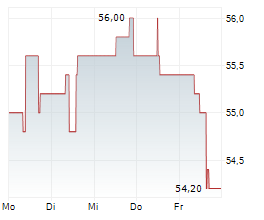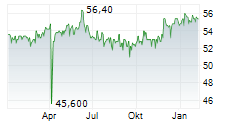
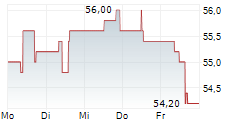
Flughafen Wien's May traffic data were better than feared and support our positive stance on the stock. Group passenger numbers returned to growth, rising 0.7% yoy to 3.9m, while Vienna Airport improved sequentially to -5.4% yoy after -8.2% in April. Malta remained the key growth driver, with passengers up 16.5% yoy to 1.1m. With Group PAX now up 2.4% yoy after five months, the FY26 guidance of c. 41.5m passengers looks increasingly conservative, as it implies an increasingly unlikely 8.3% yoy decline for June to December.
Vienna remains temporarily held back by the known headwinds: low-cost carrier capacity reductions and a reduced flight offering related to the Middle East crisis. Importantly, the monthly trend improved materially vs April. The Middle East drag eased to -60% yoy in May from -83% yoy in April. The seat load factor improved by 1.4pp yoy to 80.5%, suggesting that the weakness is primarily capacity-driven, not demand-driven. In fact, other airlines are seen to slowly fill the capacity gap left by low-cost-carriers (e.g. Austrian Airlines, airBaltic, Air Corsica).
Malta continues to provide a strong offset. Passenger traffic at Malta Airport increased 16.5% yoy in May and is up 15.2% yoy after five months, confirming that the Group's diversified airport portfolio remains a relevant stabilising factor in a year in which Vienna is facing both low-cost carrier cuts and Middle East-related disruption.
Peer data reinforce the improving market backdrop. The peer group traffic median was up 3% yoy in May and 3% YTD, with all major peers in our sample reporting positive May growth (see p.2). More importantly, ADP explicitly pointed to a gradual easing of the Middle East-related effects seen since March, with traffic recovering and load factors improving, although uncertainty around fuel prices remains. This is a relevant cross-read for Flughafen Wien, where the Middle East drag also eased materially in May. In our view, the peer set therefore supports the key message from the May release: the broader airport market is recovering.
Looking ahead, a potential further stabilisation of the US-Iran situation could be a positive catalyst and, as a second-order effect, could ease airline cost pressure via lower fuel prices. We conservatively leave estimates unchanged pending further evidence from the summer travel season, but May has clearly reduced downside risk and strengthened the case for a guidance and earnings upgrade.
In sum, the company is a high-quality infrastructure asset with no concession expiry, above-peer operating returns and € 407m net liquidity. Terminal 3 South remains on schedule for Q2 2027 and should lift retail, hospitality and lounge revenues per passenger.
BUY, PT € 57, based on DCF.
ISIN: AT00000VIE62