Growing coalition of scientists, government leaders, NGOs, businesses, and philanthropists push nations to protect at least 30 percent of the planet by 2030
MONTREAL, April 24, 2019 /PRNewswire/ -- With only 18 months left before world leaders meet in China to finalize an agreement to address biodiversity loss, reduce historic rates of wildlife extinction, mitigate the impacts of climate change, and protect the planet's last wild places, governmental and non-governmental entities from more than a dozen nations are uniting today and tomorrow in Montreal to push an ambitious global deal for nature.
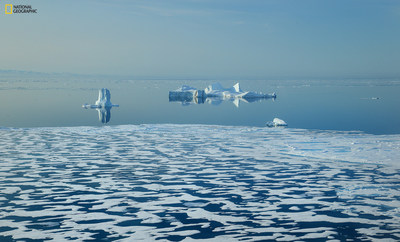
Hosted by the Canadian government, the Nature Champions Summit will set the stage for October 2020 when policy-makers meet in Kunming, China at the Convention on Biological Diversity Conference of Parties to set global biodiversity policy for the next decade. The meeting is kicking off the day after Agence France-Presse (AFP) reported that the definitive study on the state of biodiversity, expected to be issued by the Intergovernmental Science-Policy Platform on Biodiversity and Ecosystem Services (IPBES), will find that the loss of nature and the ongoing wildlife extinction crisis is even worse than previously known.
"The scientific community is clear on the matter: nations need to rapidly accelerate the pace and scale at which we are protecting the planet before it is too late," saidBrian O'Donnell, Director of the Campaign for Nature who will be a participant in the summit this week. "Only by protecting far more land and water can we safeguard nature for the billions of people who depend upon healthy and functional natural areas."
Government representatives from Chile, China, Costa Rica, Germany, Norway, and the United Kingdom, among others, will be joining the Canadian government this week in Montreal. The high-level summit reflects renewed urgency in developing new, bold, and achievable goals for protecting more land and ocean around the world. As philanthropist Hansjörg Wyss - who has committed $1 billion to nature conservation - discussed in an op-ed published on Monday in the Toronto Star, the summit is an important opportunity for nations to start talking about specific strategies for safeguarding life on Earth.
The event will focus, specifically, on two areas critical for the success of any ambitious global agenda for nature: financing protections and indigenous-led conservation.
Effectively conserving at least 30 percent of the planet's lands and oceans will require the global community to commit the resources necessary to manage parks, marine protected areas, wildlife refuges, and other conserved areas. Resources are needed for planning, monitoring, interpretation, and patrolling protected and conserved areas.
The second focal area this week is the importance of prioritizing indigenous-led conservation. Though indigenous communities represent less than 5 percent of the world's population, they manage or hold land-tenure over 25 percent of the planet's land area comprising 80 percent of its plant and wildlife diversity. Only by valuing sovereignty and empowering indigenous communities to protect their traditional lands and waters will nations be successful in protecting nature at the scale necessary to safeguard wildlife and wild places.
To stem the tide of nature loss, a growing coalition of scientists, indigenous groups, government leaders, environmental groups, business leaders, and philanthropists, are coalescing around a goal to protect at least 30 percent of the planet by 2030. Just last week, more than 75 groups around the world endorsed that goal, and 19 of the world's leading scientists published a study in Science Advances to make a data-driven, science-backed case for protecting more of the planet.
"The science is clear: we need to protect 30 percent of the planet within the next decade." said Dr. Enric Sala, a National Geographic explorer-in-residence and one of the study's authors who will also be participating in this week's meetings. "What we need now is political leadership to save the natural world that gives us the oxygen we breath, the food we eat, and the clean water we drink."
Scientists have shown that the current state of nature is grim. Our planet is losing wildlife 1,000 times faster than at any other time in human history - and the problem is getting worse, not better. Huge numbers of species are already on the path to extinction, including 14 percent of birds, 25 percent of mammals, and 40 percent of amphibians.
Communities are seeing tangible consequences from the rapid loss of nature. Pollution, overfishing, and invasive species are threatening peoples' livelihoods; the destruction of forests and wetlands are worsening local air quality and leaving people more vulnerable to hurricanes, flooding, and other natural disasters; the loss of pollinators is forcing some communities to pay to pollinate their plants by hand. Conversely, children who live next to protected areas have better health and economic outcomes than those who do not.
As Hansjörg Wyss noted in this week's op-ed:
"It will take all of us - across borders, across generations, and across cultures - working together to protect our natural world… The Nature Champions Summit [this] week offers a remarkable opportunity to chart an ambitious shared path to protecting nature for all living things."

Photo - https://mma.prnewswire.com/media/876566/National_Geographic_Baffin_Island.jpg
Logo - https://mma.prnewswire.com/media/876674/Wyss_Logo.jpg