- Lunit's latest study provides evidence for Lunit SCOPE IO's ability to predict immunotherapy response
- This is the first study that adopted AI technology to define the tumor immune phenotype and to demonstrate its ability in predicting treatment outcomes of anti-PD-L1 therapy
SEOUL, South Korea, March 16, 2022 /PRNewswire/ -- Lunit, a leading startup in AI-based cancer solutions, announced today the publication of its study in the Journal of Clinical Oncology (JCO). Findings from the study validate the effectiveness of Lunit's AI biomarker, Lunit SCOPE IO, in predicting clinical outcomes of immunotherapy in patients with advanced non-small cell lung cancer (NSCLC).
The JCO is an international, peer-reviewed medical journal published by the American Society of Clinical Oncology (ASCO), with an impact factor (IF) of 44.54. This is the first time that research on AI biomarkers has been published in an international SCI-grade journal of JCO's prestige.
"Immune phenotyping of tumor microenvironment is a logical biomarker for immunotherapy, but objective measurement of such would be extremely challenging," said Professor Tony Mok from the Chinese University of Hong Kong, co-senior author of the journal. "This is the first study that adopted AI technology to define the tumor immune phenotype, and to demonstrate its ability in predicting treatment outcomes of anti-PD-L1 therapy in two large cohorts of patients with advanced non-small cell lung cancer."
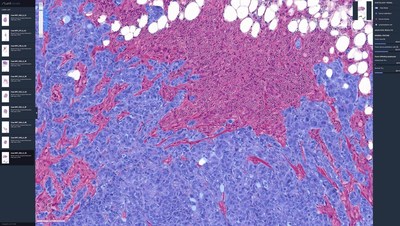
Immune checkpoint inhibitors (ICI) are a standard therapy method for advanced NSCLC with programmed death ligand-1 (PD-L1) expression. However, outcomes vary depending on the patient's tumor microenvironment.
Assessing the PD-L1 tumor proportion score (TPS) can bring predictive benefit for patients with high expression (over 50%), who show superior response to ICI therapy over standard chemotherapy. However, ICIs lose their potency in patients with PD-L1 TPS between 1% and 49%, showing outcomes similar to chemotherapy. Therefore, the development of an accuracy-enhanced biomarker to predict ICI response in NSCLC patients with low PD-L1 expression is highly warranted.
While tumor infiltrating lymphocytes (TIL) are promising biomarkers for predicting ICI treatment outcomes apart from PD-L1, clinical application remains challenging as TIL quantification involves a manual evaluation process bound to practical limitations of interobserver bias and intensive labor. Employing AI's superhuman computational capabilities should open new possibilities for the objective quantification of TIL.
To validate immune phenotyping as a complementary biomarker in NSCLC, researchers divided 518 NSCLC patients into three groups based on their tumor microenvironment: inflamed, immune-excluded, and immune-desert. As a result, clinical characteristics based on each immune phenotype group showed statistically significant differences in progression-free survival (PFS) and overall survival (OS).
Furthermore, analysis of NSCLC patients with PD-L1 TPS between 1% and 49% based on their immune phenotype found that the inflamed group showed significantly higher results in objective response rate (ORR) and progression-free survival (PFS), compared to the non-inflamed groups. This shows Lunit SCOPE IO's ability to supplement PD-L1 TPS as a biomarker by accurately predicting immunotherapy response for patients with low PD-L1 TPS.
"Lunit has demonstrated through several abstracts the credibility of Lunit SCOPE IO as a companion diagnostic tool to predict immunotherapy treatment outcomes," said Chan-Young Ock, Chief Medical Officer at Lunit. "This study is a proof-of-concept that compiles all of our past research that elucidates Lunit AI's ability to optimize cancer treatment selection."
Last year, Lunit announced a strategic investment of USD 26 million from Guardant Health, Inc., a leading precision oncology company. Following this major collaboration intended to reshape and innovate the precision oncology landscape, Lunit continues to refine its global position by validating the effectiveness of its AI technology through various studies.

Photo - https://mma.prnewswire.com/media/1767756/Lunit_s_AI_biomarker_platform_Lunit_SCOPE_IO.jpg
Logo - https://mma.prnewswire.com/media/1576401/Lunit_CI_Logo.jpg