- New Report Reveals: It's the Practices, Not the Plants, That Matter in Vegetable Oil Production
BANDAR SERI BEGAWAN, Brunei, May 14, 2024 /PRNewswire/ -- Few topics have provoked as many polarized views and headlines as oil crops. These controversies span conservation, human rights, and nutrition, but what does the evidence reveal? A new report produced by Borneo Futures, the host organization of the IUCN Oil Crops Task Force provides fresh insights.
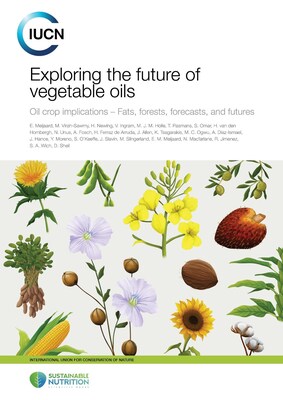
Oil crops, occupying 37% of global cropland, play a significant role in biodiversity loss and are linked to various human rights violations. However, they also serve as essential sources of income and nutrition. With global vegetable oil demand projected to rise, reaching 288 million tons by 2050, the need for sustainable production practices is urgent.
The report underscores that all oil crops, including seemingly benign ones like olive and coconut, can have negative impacts when produced without regard for people or nature. Rather than demonizing specific crops, attention should be directed towards sustainable production practices.
"What this report shows is that positive outcomes can be achieved with all oil crops. With the right investment, planning, policies and improved crop production methods, oil crop areas can offer substantial opportunities for reducing biodiversity loss, addressing human rights issues and restoring nature," said Professor Erik Meijaard, report lead author and co-chair of IUCN's Oil Crops Task Force.
Using oil palm as an example, he illustrates how this crop, when managed in African forests and village gardens, contrasts starkly with its cultivation in monocultures that replace biodiverse Asian forests when not adopting sustainability practices. "it is not the palm, but the context in which it is grown, that determines the impacts", he said.
Malika Virah-Sawmy, co-chair of the IUCN Oil Crops Task Force, challenges the narrative that categorizes certain oil crops as inherently good or bad. Instead, she urges stakeholders to focus on production practices rather than demonizing specific crops.
The report has some surprising findings. Areas currently cultivating maize and coconut present significant opportunities for reducing extinction risks of threatened species. Yet, the concentration of power in the global grain trade, with just four companies controlling 75-95%, poses challenges to equitable agricultural practices.
While impacts from crops like oil palm and soybean are well-documented, others like peanuts and sesame remain understudied despite their association with ecosystem conversion and human rights concerns. This lack of data underscores the importance of informed public discourse to avoid unjustified polarization.
In a rapidly growing oil market, understanding the complexities of production is crucial for making sustainable choices. The report aims to fill some of the existing gaps in knowledge while recognizing the need for further research to address remaining blind spots.
Professor Douglas Sheil said "we need to shift the focus from what's planted to how it's grown, traded, marketed and consumed. This report is our first attempt to overview practices, impacts and standards and what can be done".
In a world where the choices we make impact ecosystems and communities globally, understanding the complexities of vegetable oil production is essential for creating a sustainable future. Concerned people should download the free report, inform themselves about the complex world of vegetable oils, and learn what they can do themselves.
The study was funded independently by Soremartec SA and Soremartec Italia S.r.l., Ferrero Group, and offers a comprehensive overview of practices, impacts, and standards in vegetable oil production.
Photo - https://mma.prnewswire.com/media/2412133/New_IUCN_report_on_the_Future_of_Vegetable_Oil.jpg
 View original content:https://www.prnewswire.co.uk/news-releases/there-are-no-good-or-bad-oil-crops-only-good-and-bad-practices-302144730.html