
Discussions on future role of science continue in Indonesia in 2026
BUDAPEST, Hungary, Nov. 23, 2024 (GLOBE NEWSWIRE) -- The 11th World Science Forum, held in Budapest, Hungary, on 20-23 November, ended with a declaration accepted by the founding and partner organizations and participants of WSF2024. The next Forum will be held in Jakarta, Indonesia, in 2026 and be titled "Science for Global Resilience and Equity".
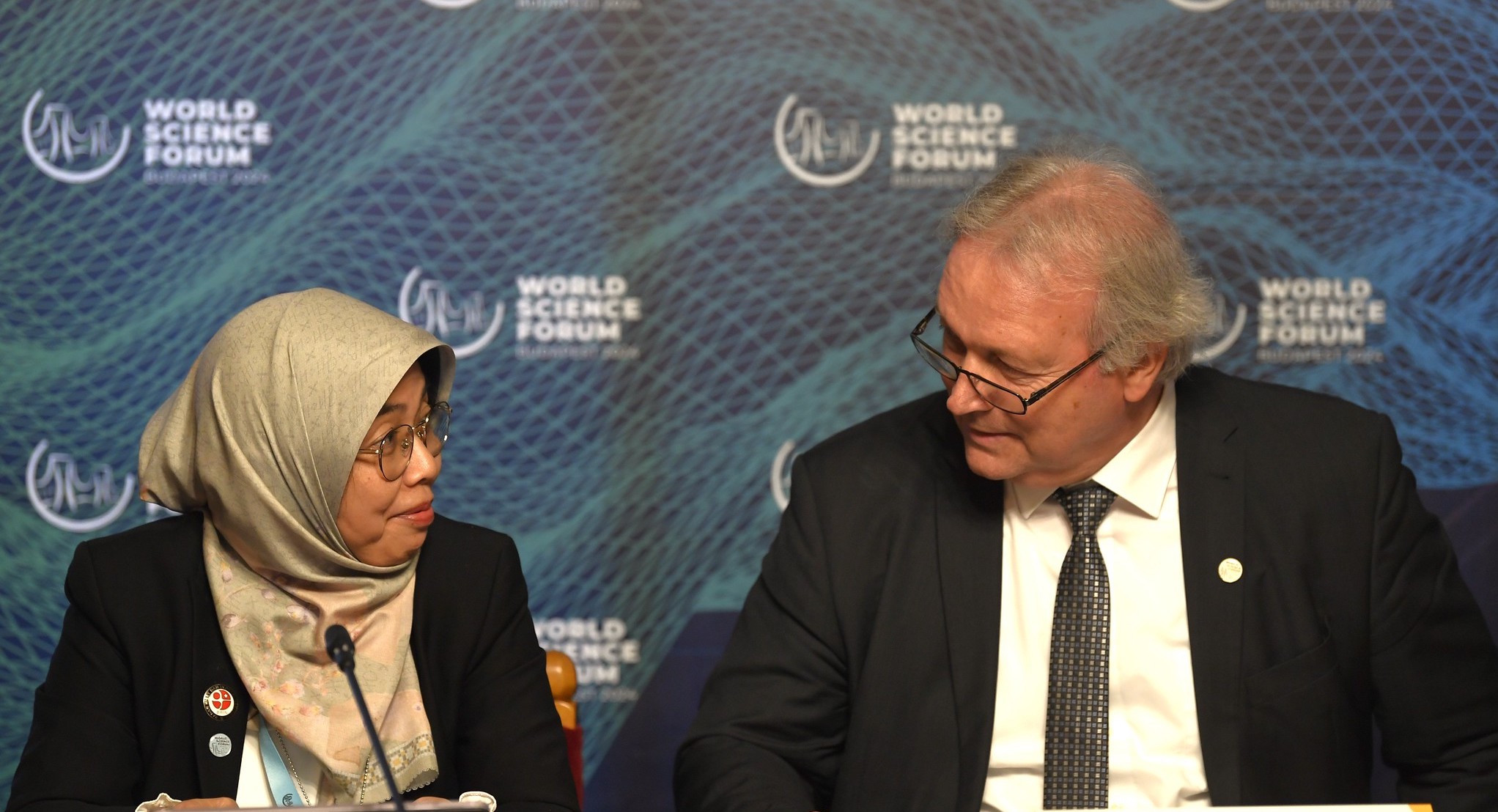
The WSF2024 declaration calls for efficient, trusted and creative science and policy interfaces, responding to disruptive global transformations.
"Our world is under rapid transformation and facing an uncertain future. Extraordinary scientific and technological advances are at odds with inadequate progress on addressing the challenges of climate change and most of the Sustainable Development Goals, a growing number of conflicts, rising inequalities and the emergence of rapidly evolving and disruptive technologies," the declaration states. "We urgently need to broaden scientific understanding and to promote evidence-based, science-informed and long-term thinking and decision-making."
The World Science Forum was created by three founding organisations, the Hungarian Academy of Sciences - hosting of the 2024 event - the United Nations Educational, Scientific and Cultural Organization (UNESCO), the International Science Council (ISC), and partner organisations the American Association for the Advancement of Science (AAAS), The World Academy of Sciences (TWAS), the InterAcademy Partnership (IAP), and the European Academies' Science Advisory Council (EASAC).
"Science as a universal language is the evidence-based tool for understanding our world and its future. It should guide society, policymakers, and the economy on risks, opportunities, and choices. […] We recognise the evolving role of science diplomacy in bringing together science and policy to address these challenges and promote science for peace," the declaration highlights.
Titled "A Science and Policy Interface and Dialogue at the Time of Global Transformations", WSF2024 attracted 1,200 delegates from 122 countries, who joined 100 lectures in 19 plenary and thematic sessions over four days, with the aim to overcome the limits of wide-scale implementation of science-based policy measures on a global level.
The full text of the declaration can be found here: https://worldscienceforum.org/contents/draft-declaration-of-the-11th-world-science-forum-110170
The Steering Committee of WSF selected the application by the National Research and Innovation Agencyof Indonesia to host the next World Science Forum in Jakarta in 2026, taking the Forum for the first time to Asia and the Eastern Hemisphere.
Media Contact:
Gabor Jelinek
Gabor.Jelinek@mindgeer.com
A photo accompanying this announcement is available at https://www.globenewswire.com/NewsRoom/AttachmentNg/cced1f60-7d57-451f-bf19-d34a662d60f0

