

NORTHAMPTON, MA / ACCESS Newswire / August 7, 2025 / MilliporeSigma
Paulo Freire, Brazilian educator and philosopher, once said, "Education does not change the world. Education changes people, and people change the world."
This quote captures the spirit of key events at the 29th Annual American Chemical Society Green Chemistry & Engineering Conference, held in June 2025 in Pittsburgh-where the message was clear: education lays the foundation, but it is collaboration and community that truly catalyzes lasting change.
As a Platinum Sponsor, MilliporeSigma, the U.S. and Canada Life Science business of Merck KGaA, Darmstadt, Germany, partnered with Beyond Benign to foster a green chemistry community that empowers educators to transform chemistry education for a sustainable future through key events that demonstrated the value of partnership to catalyze change in chemistry education.
Catalyzing Change in Chemistry Education
At the panel, "Catalyzing Change in Chemistry Education," Jeffrey Whitford, Vice President of Sustainability & Social Business Innovation at MilliporeSigma, and Dr. Amy Cannon, Co-founder and Executive Director of Beyond Benign, led a dynamic discussion with:
Dr. Lloyd Bastin, Professor, Departments of Chemistry and Biochemistry, Widener University
Dr. Glenn Hurst, Professor, Green Chemistry Education, University of York
Dr. Flavia Zacconi, Associate Professor, Department of Organic Chemistry, Pontificia Universidad Católica de Chile
They shared practical strategies for integrating green chemistry into higher education. Key takeaways and actionable insights included:
Sign Beyond Benign's Green Chemistry Commitment (GCC): Signing the GCC can spark department-wide change, serving as a catalyst to move green chemistry from individual efforts to institutional priorities. For the panelists, the GCC sets a clear framework for curriculum development, visibility and long-term sustainability goals.
Leverage Community Through the GCTLC: Joining Beyond Benign's Green Chemistry Teaching and Learning Community (GCTLC) connects educators worldwide to a free platform for shared resources, mentorship and collective momentum-making change less isolating and more achievable.
Start Small, Scale Strategically: Change begins with one lecture, one lab or one policy. Small wins-like replacing a reagent or introducing green metrics-can snowball into broader departmental or institutional transformation.
Break Down Disciplinary Silos: The panelists shared success in integrating green chemistry across departments-from political science, engineering, environmental studies and beyond. Interdisciplinary collaboration creates new pathways for sustainability education.
Showcase Impact and Demonstrate Value: Quantify environmental and economic benefits-such as reduced CO2 emissions, water savings from new lab setups or decreased hazardous waste-to gain administrative buy-in and drive broader adoption.
Normalize Green Chemistry as a Core Learning Goal: Shift green chemistry from an optional add-on to an embedded learning objective. When it becomes part of departmental identity, it reshapes student expectations and institutional culture.
Commit to Continuous Improvement and Storytelling: Use the GCC's annual reporting structure to reflect, improve and highlight success stories. The GCC program drives continuous improvement and accountability through regular reporting and engagement to encourage adoption of green chemistry in higher education.
One panelist summed it up succinctly: "Drop seeds in every conversation." This simple act can help normalize green chemistry and showcase its potential for innovation, institutional transformation and competitive advantage.
Bridging Industry, Academia and Community
In the session, "Bringing Industry, Academia and Community into the Classroom: Promoting Experiential Green Chemistry Education for Environmental and Community Health," Dr. Ettigounder Ponnusamy, Fellow & Global Manager of Green Chemistry at MilliporeSigma and on Beyond Benign's Advisory Board, showcased case studies where students engaged in real-world green chemistry research. Insights included:
Experiential Learning Drives Engagement: Projects grounded in real-world challenges helped students connect theory to practice and deepen understanding.
Community Ties Strengthen Purpose: When student work contributed to local sustainability efforts, it fostered a deeper sense of motivation and social impact.
These insights aligned with recent research from the Royal Society of Chemistry, which found that 81% of young people believe schools and colleges should teach about climate change and sustainability.
Also featured in the session was a joint presentation by Areej Nitowski, Green Chemistry Education Manager, MilliporeSigma, Dr. Omar Villanueva and Dr. Amy Cannon from Beyond Benign, and Melissa Hackmeier, Global Head of Employee & Community Engagement, MilliporeSigma, titled, "Catalyzing Change in Chemistry Education: Transformative Partnerships to Amplify Impacts." The presentation highlighted how cross-sector partnerships between industry, academia and non-profits can drive systemic change in green chemistry education-ensuring alignment with workforce needs while empowering students to innovate safer, more sustainable solutions.
In that same spirit of collaboration, MilliporeSigma and Beyond Benign co-hosted a Student-Faculty Social Event on Sunday evening of the conference, creating a relaxed space for community building and dialogue. With trivia, laughter and new introductions, the event brought together participants across roles and institutions, reinforcing the importance of relationships in catalyzing lasting change.
MilliporeSigma and Beyond Benign: A Model for Scalable Impact
Through their long-standing partnership, MilliporeSigma and Beyond Benign are breaking down barriers to green chemistry education by expanding access to the tools, training and support educators need to bring sustainability into the classroom-and into the lab.
Their shared goals are within reach:
They are now just eight signers away from achieving their goal of 250 GCC signers by the end of 2025.
To date, 1.6 million students have been exposed to green chemistry principles in their coursework, surpassing their 2025 goal of 1.4 million ahead of schedule and progressing towards their 2030 target of 15.5 million.
Educators ready to take the next step can find more information on how to sign the Green Chemistry Commitment by visiting Beyond Benign's GCC webpage. Those interested in joining the GCTLC platform can register for an account on its website.
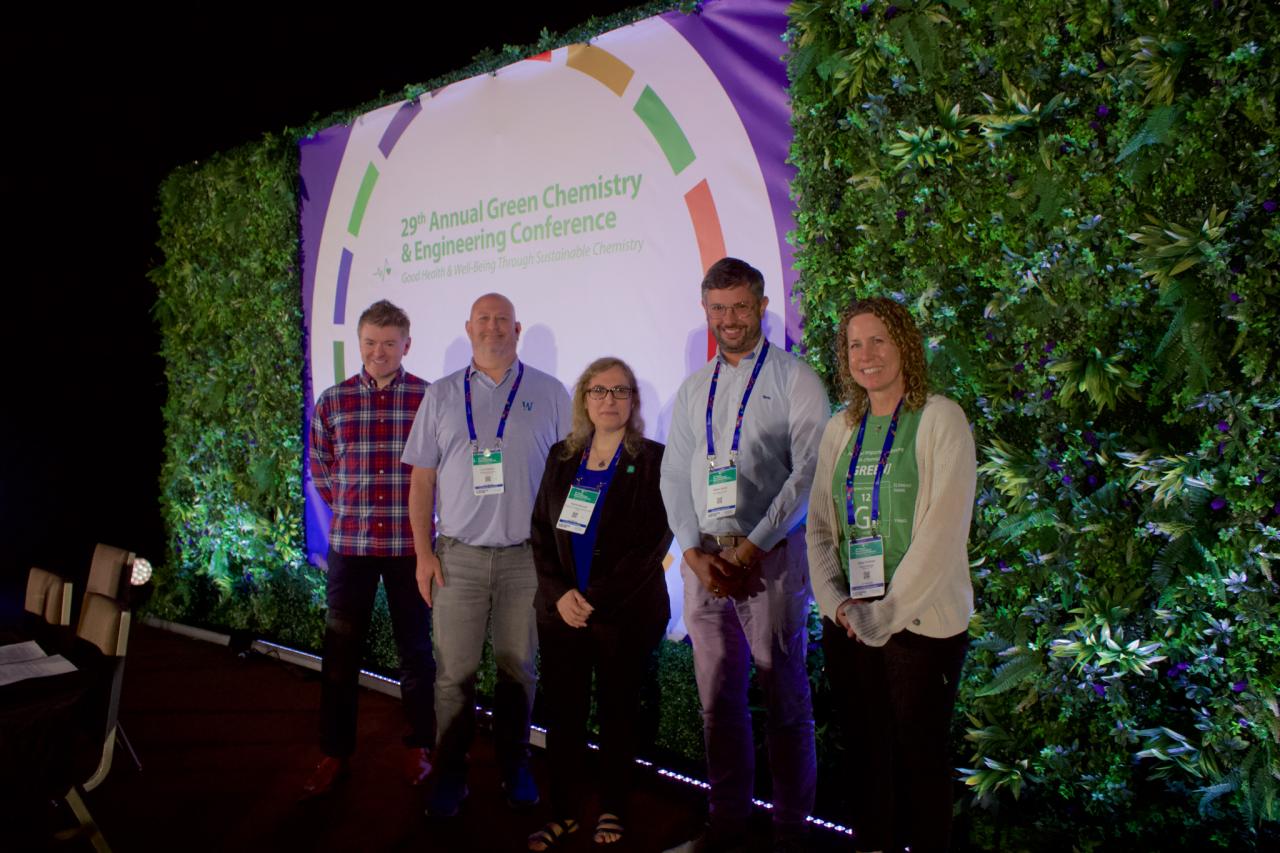
At the "Catalyzing Change in Chemistry Education" panel, Jeffrey Whitford of MilliporeSigma and Dr. Amy Cannon of Beyond Benign moderated a thought-provoking discussion with Dr. Lloyd Bastin (Widener University), Dr. Glenn Hurst (University of York), and Dr. Flavia Zacconi (Pontificia Universidad Católica de Chile) on actionable strategies to embed green chemistry into higher education curricula.
View additional multimedia and more ESG storytelling from MilliporeSigma on 3blmedia.com.
Contact Info:
Spokesperson: MilliporeSigma
Website: https://www.3blmedia.com/profiles/milliporesigma
Email: info@3blmedia.com
SOURCE: MilliporeSigma
View the original press release on ACCESS Newswire:
https://www.accessnewswire.com/newsroom/en/healthcare-and-pharmaceutical/catalyzing-change-in-chemistry-education-key-takeaways-from-the-2025-1058112
