
Black Book Launches Rapid-Response Polls Tracking Real-Time Impacts on Providers, Payers and Patients
WASHINGTON, D.C. / ACCESS Newswire / October 1, 2025 / Black Book Research today released an independent assessment showing that while Medicare and Medicaid continue unaffected, the shutdown is forcing sweeping furloughs and program suspensions at the FDA, CDC, NIH, CMS, and SAMHSA, creating systemic risks to patient safety, public health, and medical innovation.
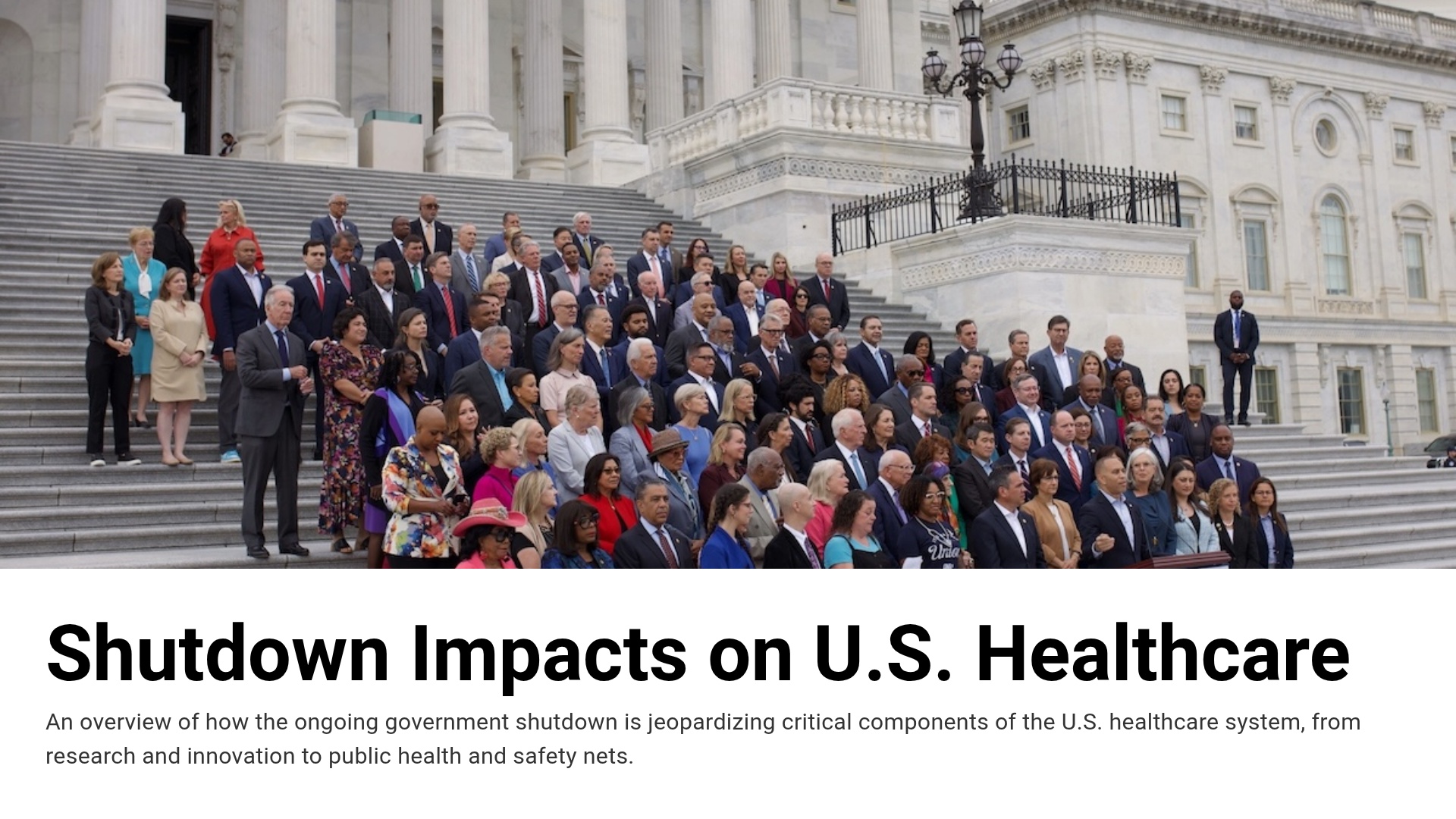
"The nation's healthcare system isn't shutting down overnight," said Doug Brown, founder of Black Book Research. "But important functions that support research, oversight, and public health are being slowed or suspended. If the shutdown continues, the effects will become more visible and increasingly difficult to reverse."
Key Agency Impacts
Department of Health and Human Services (HHS): Tens of thousands of staff furloughed, with only life-saving or urgent public health functions continuing. Grants, policy development, and regulatory reviews pause indefinitely.
Centers for Medicare & Medicaid Services (CMS): Medicare and Medicaid claims continue to be paid as mandatory programs. However, audits, program integrity reviews, and innovation pilots including accountable care and bundled payment models stall, leaving oversight gaps.
Food and Drug Administration (FDA): User-fee funded drug and device application reviews continue, but most food safety inspections, routine facility checks, and non-user-fee programs are halted. Risks include supply chain vulnerabilities and delayed enforcement actions.
Centers for Disease Control and Prevention (CDC): Emergency outbreak response and essential disease surveillance persist, but broad public health programs, communications, and prevention initiatives are curtailed. The agency's long-term preparedness mission is substantially weakened.
National Institutes of Health (NIH): Patients already in clinical trials continue receiving care. However, most grant reviews, new trial starts, and research support staff are furloughed. The U.S. biomedical research pipeline stalls until funding resumes.
Substance Abuse and Mental Health Services Administration (SAMHSA): Community program grants and state block funding are frozen, threatening the continuity of local substance use and mental health initiatives.
Indian Health Service (IHS): Direct patient care is protected as essential, but supply chains, contracting, and administrative functions are disrupted.
Veterans Health Administration (VA): Protected by advance appropriations, VA hospitals and clinics remain operational. Research and long-term policy projects, however, may slow due to staff furloughs.
Cross-Cutting Risks
Research & Innovation: With NIH and FDA research pipelines paused, thousands of grant reviews and trial starts are delayed. Innovation suffers immediate setbacks.
Regulation & Oversight: FDA and CMS furloughs weaken safety inspections, compliance audits, and contractor oversight. Food and medical device monitoring is drastically reduced.
Public Health: CDC's ability to track and mitigate health threats outside of emergency outbreaks is severely hampered. Preventive health campaigns and state support programs stall.
Vulnerable Populations: Programs such as WIC (Women, Infants, and Children) may run out of funds, threatening nutrition access for low-income families. Mental health and substance abuse treatment programs lose stability as grants freeze.
Provider Operations: Claims payments continue, but cash-flow delays from administrative slowdowns could disproportionately harm smaller hospitals and safety-net providers.
Duration Matters
According to Black Book's analysis, the severity of impact escalates with the shutdown's length:
First 2-3 weeks: Entitlement funding cushions core services, but backlogs and administrative slowdowns begin.
One month or more: Research, grants, and inspections stall significantly. Telehealth waivers and hospital-at-home programs expire without congressional renewal, pulling patients back into traditional settings.
Multi-month: Structural harm occurs - loss of innovation momentum, worsening health disparities, and rising long-term costs from deferred care and weakened oversight.
Black Book warns that while core entitlements remain funded, the broader healthcare scaffolding is fragile. A protracted shutdown risks long-term harm to research, regulation, and safety nets, weakening U.S. preparedness for future crises.
About Black Book Research
Black Book Research is the healthcare industry's leading source for unbiased, crowdsourced client experience data, benchmarking, and market intelligence. Since 2011, Black Book has surveyed more than 3.5 million healthcare professionals to provide independent evaluations across 36 key performance indicators for over 5,000 health IT and services vendors. Gratis industry research reports can be downloaded at www.blackbookmarketresearch.com.
Contact Information
Press Office
research@blackbookmarketresearch.com
8008637590
SOURCE: Black Book Research
View the original press release on ACCESS Newswire:
https://www.accessnewswire.com/newsroom/en/healthcare-and-pharmaceutical/medicare-holds-but-the-rest-of-healthcare-wobbles-shutdown-threatens-1081057
