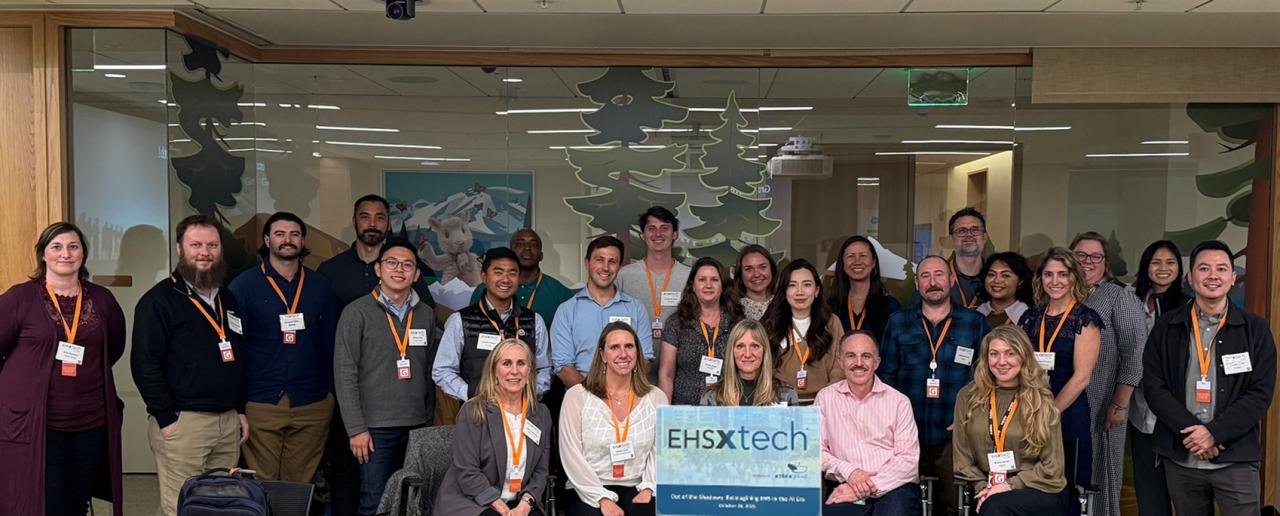
NORTHAMPTON, MA / ACCESS Newswire / December 4, 2025 / The Fall 2025 EHSxTech San Francisco event, hosted by Salesforce and facilitated by Antea Group, brought together 30 environmental, health and safety leaders representing 18 different technology companies to explore how technology, innovation, and culture are redefining the workplace. From artificial intelligence (AI) applications to Total Worker Health (TWH) initiatives and creative learning campaigns, discussions throughout the day centered on how EHS can adapt and lead in an era of accelerating change. Below are some of the key takeaways from the event.
1. AI in EHS: Current Use and Future Directions
AI continues to shape how EHS professionals manage compliance, risk, and workforce well-being. Yet, while companies are excited about automation, many are still balancing lean budgets, rising compliance demands, and the expectation that AI will quickly deliver measurable value.
Strategic Perspectives: AI as an Enabler of High-Performance Safety
One speaker shared a forward-looking view of how AI can accelerate progress across EHS functions, outlining several ways health and safety teams can add measurable value: enhancing trust, supporting business growth, enabling high performance, building resilience, and attracting top talent.
High performance, he explained, is linked not only to physical safety but also to psychological safety and employee well-being. By embedding AI into daily operations, automating transactional support, simplifying communication, and improving responsiveness, EHS professionals can spend more time focusing on human-centric initiatives.
The speaker encouraged teams to think strategically about AI adoption:
Assign every team member an opportunity to experiment with AI in their role.
Use automation to enhance quick support, such as automated communications, chatbots, and proactive outreach, but keep open the option of speaking to an EHS team member to continue to strengthen the culture of care.
Leverage AI to personalize learning through customized training and global translation.
The message was clear: as organizations enter the "agentic era," EHS leaders should guide AI's development and application responsibly, ensuring it enhances, not replaces, the human element.
Practical Applications: AI as a Bandwidth Multiplier
Stephanie Leduc, Manager, H&S Programs at Salesforce, highlighted real-world examples of AI in practice, from creating training videos and chatbots for employee safety engagement to using AI tools for vendor qualification and global gap assessments.
AI is helping EHS teams:
Facilitate health and safety committee work.
Review and update safety standards efficiently.
Generate content for communications and training.
She emphasized the importance of maintaining legal oversight and human review, especially when AI tools address sensitive topics such as mental health. AI, she said, should be implemented thoughtfully with escalation pathways and human checks built in.
Ultimately, both strategic and tactical discussions reflected a shared belief: AI won't replace EHS professionals, but it will redefine how they work, unlocking time for strategic initiatives, innovation, and employee engagement.
2. Innovative Certification and Forward-Thinking Approaches
Mental health and psychosocial well-being took center stage as companies shared how they're expanding the definition of safety to include the "whole person." The group discussed how the culture around mental health in the workplace is evolving, and how EHS teams can play a role.
The H.O.P.E. Certification: A New Framework for Psychological Safety
Donna Lynch, VP, EHS, of STACK Infrastructure introduced the H.O.P.E. Certification (Helping Our People Elevate through Tough Times). This is a structured, certification program that provides a framework for organizations to turn good intentions into measurable, sustainable action around mental health.
The certification is built on nine core practices, from leadership and peer support to crisis response, and progresses through levels that deepen organizational capacity over time. The focus is on shifting mental health from a reactive response to a proactive business strategy. The program normalizes mental health conversations, empowers peer support, and helps leaders model vulnerability and compassion.
This proactive approach reinforces that mental well-being is not separate from safety and performance, but a core part of building a resilient, thriving workforce
Total Worker Health as a Business Benefit
This aligns closely with the principles of Total Worker Health, which emphasize that employees bring their whole selves to work, and that personal, psychological, and community stressors directly shape safety, performance, and engagement.
The goal is to make Total Worker Health part of the company's identity: a benefit that strengthens culture, supports recruitment and retention, and boosts long-term well-being and resilience.
And increasingly, this isn't just about doing the right thing; it's becoming a matter of regulatory expectation. Globally, we are seeing a shift in legislation that recognizes psychosocial health as integral to occupational safety:
California's Senate Bill 553 require employers to develop comprehensive workplace violence prevention plans, including addressing psychosocial hazards like hostility, stress, and inadequate staffing.
Australia's new Psychological Health Regulations (effective December 2025) elevate psychosocial risk management to the same level as physical hazards.
Brazil's NR-01 regulations (effective May 2026) will integrate psychosocial risks into national H&S requirements.
The takeaway: Global regulations are catching up with what leading companies are already doing, embedding mental health and psychological safety into their EHS strategies.
3. Driving Culture Change Through Learning: The DoorDash Case Study
Paschal Mbawuike, Global EHS Manager at DoorDash, shared how his team transformed workplace culture with an engaging, multi-phased learning campaign.
The year-long campaign used a multi-channel approach, including videos, posters, manager-led scenarios, and short weekly clips, to reinforce safety concepts in practical, relatable ways. By focusing on micro-learning (short training moments that fit into busy schedules), the team was able to reduce training hours by 40% while still improving overall safety performance.
Managers played a crucial role, using talking points and Q&A prompts to personalize lessons and connect them to employees' daily work. The campaign helped turn safety from a compliance task into a shared value.
The results spoke for themselves: recordable injury rates dropped, employee awareness rose, and operational efficiency improved.
Key Takeaways
The discussions throughout EHSxTech San Francisco 2025 underscored the continued evolution of EHS teams, one that blends technology, empathy, and strategy to create healthier, more resilient organizations.
Executive buy-in remains essential to scale innovation and sustain momentum.
AI will continue to reshape EHS operations, from automating compliance tasks to supporting engagement.
Psychosocial health and Total Worker Health are no longer optional. They are becoming regulatory expectations and a core component of social sustainability.
As the boundaries between technology, well-being, and performance continue to blur, one theme was clear: the future of EHS lies in integration. When organizations align data, digital tools, and human connection, they unlock the full potential of their people and build safer, smarter workplaces ready for whatever comes next.
Interested in the EHSxTech event? Reach out to Julie Kreger-King with questions.
View additional multimedia and more ESG storytelling from Antea Group on 3blmedia.com.
Contact Info:
Spokesperson: Antea Group
Website: https://www.3blmedia.com/profiles/antea-group
Email: info@3blmedia.com
SOURCE: Antea Group
View the original press release on ACCESS Newswire:
https://www.accessnewswire.com/newsroom/en/business-and-professional-services/the-future-of-ehs-insights-from-ehsxtech-san-francisco-2025-1114856