Reparative education initiative by the Global Survivors Fund, Neem Foundation and local partners - part of an Education Cannot Wait grant - helps survivors of conflict-related sexual violence rediscover confidence, connection and the joy of learning in Nigeria.
MAIDUGURI, Nigeria, Dec. 15, 2025 /PRNewswire/ -- In a quiet corner of Maiduguri, children settle into their seats at Lafiya Sarari School, notebooks open and pencils ready. The morning is calm, a feeling many students are still learning to trust after years of insecurity, displacement, and loss. For them, school is more than a place to learn-it's a place to heal.
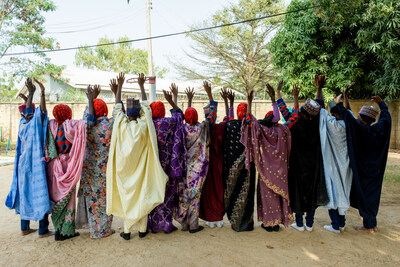
Sixteen years of violence by Boko Haram and other insurgent groups have deeply affected the childhoods, safety, and education of countless children in northeast Nigeria, with schools and homes often targeted in attacks and kidnappings.
Every student at Lafiya Sarari has lived through the insurgency, and many continue to carry the weight of that experience. Fatima is one of them, a student who has rebuilt far more than her academic skills within these walls.
"Here, I started to see that I have a bright future," said Fatima.
Her words echo the purpose of a groundbreaking initiative led by the Global Survivors Fund (GSF) alongside Neem Foundation and local partners, the Youth Initiative Against Terrorism and Future Resilience and Development Foundation. With support from an Education Cannot Wait (ECW) Acceleration Facility grant, they are providing trauma-responsive, reparative education to children affected by conflict-related sexual violence across Borno State.
Fatima's Journey Back to Learning
Fatima recalls the moment her life shifted in 2014 when Boko Haram attacked her town.
"The attack was loud and it scared us all. I had to hide with my family," said Fatima. "After a few hours, we thought they had left, and that no one would save us so we had to save ourselves. We stepped out. Boko Haram captured us."
They were taken to the insurgents' village, where Fatima witnessed her father's death and endured horrors no child should.
Eventually, her family escaped. "We walked for 11 days. We couldn't sleep - it was raining. Only a few of us made it back. We lost many on the way."
Returning to education felt impossible until she joined Neem's trauma-responsive education programme at Lafiya Sarari. There, she found stability, routine and support. After joining, she could imagine a future again.
Her experience mirrors many survivors in northeast Nigeria, where insecurity and crises have forced over 18 million children out of school, according to UNICEF. Protection risks like abductions and attacks on schools have escalated.
After release or escape, Boko Haram survivors face revictimization and stigmatization - often seen as tainted or labeled "Boko Haram wives," assumed to hold insurgent ideologies. Survivors carry heavy psychological burdens that disrupt all aspects of life.
Education stands as a right and form of reparation that helps children like Fatima reintegrate, build skills and transform their futures.
A School Designed for Learning
At Lafiya Sarari, all students have been affected by the insurgency and ~80% are survivors of conflict-related sexual violence - many having struggled to return to conventional schooling.
Educational progress is measured over six years rather than annual benchmarks, allowing students to learn at their own pace. The curriculum emphasizes values such as peace, integrity, respect, honesty and tolerance - values systematically targeted by Boko Haram.
"Formal education wasn't a thing for these children," said Philemon Nyminiba, biology teacher and educational psychologist. "Sometimes you feel a wall around them. Through art, movement and one-on-one support, we help them express what's hard to say."
The school has 17 teachers, two counselors and four psychologists, all trained in trauma-responsive care and psychological first aid. In play-based therapy, staff see anxiety and anger surface, psychological wounds often overlooked elsewhere. "When some children joined, I couldn't have a session without them crying. They didn't feel safe. We had to create activities to make them feel free," said a school psychologist.
Reimagining Futures
With ECW grant support, GSF and Neem are helping children re-enter education with dignity, safety and tailored support. The initiative is rooted in co-creation with survivors to ensure they help define what reparations and supportive learning mean for them.
Every step forward matters. Fatima has now graduated from the programme, stepping into her next chapter with renewed confidence. She exemplifies resilience and possibility as others follow in her footsteps through Lafiya Sarari's doors. "Almost everything we need to progress in life is provided here. This school makes us feel we have hope," said a student.
Their journeys reveal a powerful truth: with the right support, education becomes more than a pathway to learning. It becomes a pathway to healing.
Photo - https://mma.prnewswire.com/media/2845866/Students_in_front_of_the_Education_Cannot_Wait_supported_Lafiya_Sarari.jpg
Logo - https://mma.prnewswire.com/media/1656121/Education_Cannot_Wait_Logo.jpg
 View original content:https://www.prnewswire.co.uk/news-releases/a-school-for-healing-302642570.html