
BEIJING, Dec. 30, 2025 /PRNewswire/ -- A news report from WWF China:
Exotic pets refer to pets from exotic places or non-traditional pets, they include reptiles, amphibians, birds, invertebrates and small mammals. What was once a niche hobby has now become a global, high-impact trade. Its risks to biodiversity, biosecurity and public health increasingly exceed the regulatory capacity of any single country, highlighting the need for international cooperation, platform governance and consumer awareness.
These concerns are increasingly recognised internationally. At the IUCN (International Union for Conservation of Nature) World Conservation Congress in 2025, member states adopted Motion 108, mandating IUCN to develop global guidelines for regulating the commercial wildlife pet trade.
The issue was also highlighted at the 20th Meeting of the Conference of the Parties (CoP20) to the Convention on International Trade in Endangered Species of Wild Fauna and Flora (CITES). Twelve of the 51 proposals reviewed included wildlife traded as pets, covering over 80 species. Ten proposals were adopted, strengthening protections for multiple species, including the addition of Linneaus' and Hoffman's sloths on Appendix II, and the uplisting of the Great-billed seed-finch, Home's hinge-back tortoise, Galápagos marine iguana, Hispaniolan giant galliwasp, and others from Appendix II to I.
Much of exotic pet trade is increasingly linked to poaching and smuggling. The big-headed turtle (Platysternon megacephalum), heavily collected for the pet trade and now critically endangered, is an example of how demand can drive ecological decline.
Shipping of live animals through express delivery and logistics channels also creates risks of animal escape, invasive species, and zoonotic disease transmission.
There are estimated over 17 million exotic pet owners in China, contributing to a market value at over USD 1 billion. To help tackle these challenges, the World Wide Fund for Nature (WWF) has been working with local governments, industry partners and research institutions to curb illegal exotic pet trade, by promoting cross-sector collaboration, raising awareness among logistics companies, e-commerce platforms and exotic pet breeders, identifying key risk points along the supply chain, and facilitating discussions on sustainable industry practices.
WWF encourages consumers to say no to illegal and unsustainable pet trade. Together, informed consumer choices, responsible business practices and strong political commitment can turn the tide toward a legal, sustainable and nature-friendly approach to pet keeping.

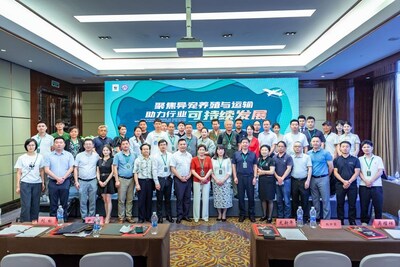
Photo - https://mma.prnewswire.com/media/2852658/Big_headed_turtle__Platysternon_megacephalum__displayed_for_sale_at_an_exotic_pet_fair.jpg
Photo - https://mma.prnewswire.com/media/2852657/Workshop_on_Regulating_Exotic_Pet_Trade_and_Transportation_for_Sustainable_Development_in_Changsha_H.jpg
 View original content:https://www.prnewswire.co.uk/news-releases/managing-the-exotic-pet-trade-to-reduce-ecological-and-social-risks-302650632.html

