WASHINGTON, D.C. / ACCESS Newswire / January 7, 2026 / A new report by the 21st Century School Fund, the International WELL Building Institute, and the National Council on School Facilities reveals massive, chronic underinvestment in school facilities and grounds, while offering a roadmap for turning the tide toward safer, healthier, and more modern schools.
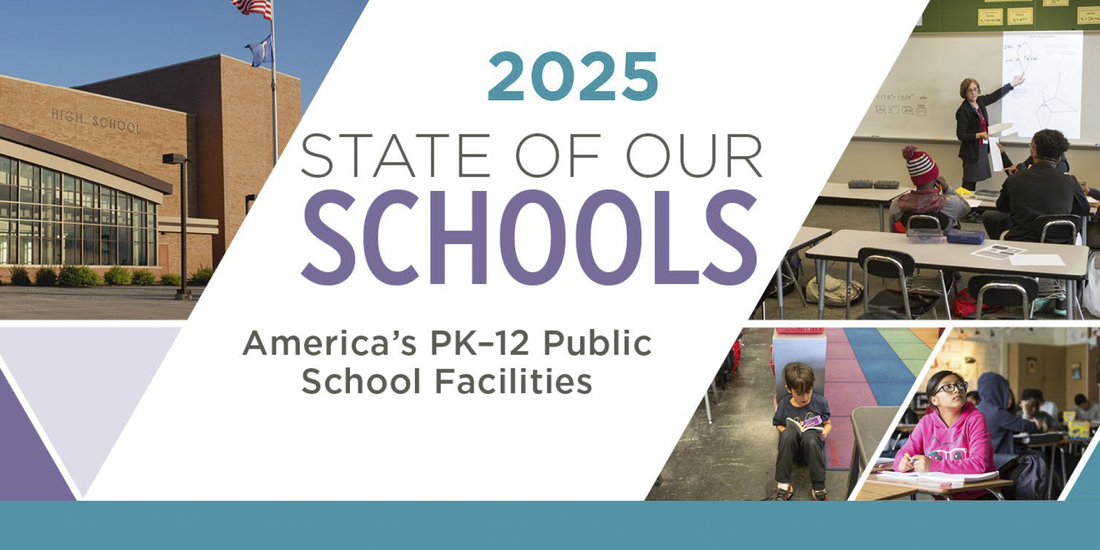
The 2025 State of Our Schools report, released by the 21st Century School Fund, International WELL Building Institute (IWBI), and the National Council on School Facilities (NCSF), shows that the U.S. now faces a $90 billion shortfall in school facility funding every single year, despite significant progress local school districts have made to ramp up their investments.
Since its earlier releases in 2016 and 2021, the report has tracked a steep and alarming rise in the nation's school facilities funding deficit. What was a $46 billion gap in 2016 grew to $85 billion in 2021 and has continued to widen as school construction costs climb, building inventories expand, and aging facilities require more extensive maintenance, modernization, or replacement.
"Even as local districts have stepped up by increasing their annual spending on school facilities from $95 billion in 2016 to more than $150 billion now, they are still falling behind," said Mary Filardo, Executive Director, 21st Century School Fund and lead author of the report. "As the funding gap for our critical school infrastructure grows, it becomes even harder to climb out of this hole unless we begin to better share the load across levels of government and embrace a dynamic solution set that ensures every public dollar delivers a stronger return on investment."
In the United States, PK-12 school facilities represent the second largest sector of public infrastructure investment, surpassed only by highways. These buildings are where nearly 60 million students, teachers, and staff spend their days, making them among the most essential pieces of community infrastructure we have. Yet unlike transportation infrastructure, where federal and state governments shoulder most of the costs, school facilities are primarily left to local districts. The report finds that local districts bear 80 percent of school facility funding, with states contributing 17 percent and the federal government just 3 percent.
"With a $90 billion annual shortfall, the magnitude of this crisis is undeniable and utterly unacceptable. It's simply impossible for local districts to continue to shoulder this burden disproportionately," said Rachel Hodgdon, President and CEO, International WELL Building Institute. "Without greater responsibility across all levels of government, particularly the federal government, our country will continue to underfund the very infrastructure that determines the health, safety, and educational outcomes of millions of children. Where our children learn matters, and access to safe, healthy, and modern learning environments should be a right, not a privilege."
The report also underscores how deeply uneven and unequal school facility investment remains across the country, with the most significant burdens falling on disadvantaged and rural districts. High-poverty districts had 30 percent less capital invested in their school buildings than low-poverty districts, and rural districts received less than half the per-student capital investment of their suburban and city counterparts. The findings point to persistent gaps that continue to leave rural and high-poverty communities bearing a disproportionate share of the burden and facing far greater challenges in achieving safe, healthy, and modern school facilities.
"For all of us who care about our communities, we know that our schools are their beating hearts. Closing these funding gaps should be a top priority for every one of us," said Brandon Payne, Executive Director, National Council on School Facilities. "This is a moment to unite to ensure our public schools meet modern standards for health, safety, learning, and educational adequacy."
Furthermore, according to the report, as school districts struggle to fill this widening gap, they are also sinking deeper into debt. By the end of fiscal year 2023, local districts carried more than half a trillion dollars in long-term debt and paid $22 billion in interest alone.
As stated in the report, the $90 billion annual investment gap reflects what is required for responsible stewardship and modern school facilities and grounds, covering both capital needs and operations and maintenance. Each year, the U.S. spends an average of $82 billion on capital improvements, leaving a $56 billion shortfall. Similarly, the total outlay for facility operations and maintenance is $70 billion, $34 billion less than needed. Together, these deficiencies in capital investment and ongoing maintenance constitute the total gap of $90 billion.
This year's report does more than diagnose the scale and severity of the crisis; it also lays out a bold, actionable path to achieve modern schools by 2050. It calls for new approaches and more shared investment across all levels of government, alongside a stronger focus on building the capacity needed to deliver improvements. Central to its recommendations is securing a stable, reliable federal incentive funding program of $25 billion per year, which the report finds would reduce annual requirements by $75 billion - a 34 percent return on investment. The report also urges expanding federal support for state capacity grants for facility data, planning, technical assistance, and training to all states to ensure that states and districts are equipped for the modernization work ahead. (The Supporting America's School Infrastructure).
What Other Leaders Are Saying about the 2025 State of Our Schools Report
"Public schools are public infrastructure.? And we should invest in them just as we invest in roads and bridges. With annual shortfalls growing despite increased state and local investment, it is clear that a federal partnership is needed," said Senator Jack Reed (D-RI), the author of the Rebuild America's Schools Act which would target new federal infrastructure investments to help local school districts address building and modernization needs. "Congress must come together to solve this crisis and deliver the federal investment our schools need to keep students healthy, safe, and equipped to meet the challenges of the future."
"As a former Surgeon General, I had the honor to serve as the 'Nation's Doctor,' and what I find particularly concerning are the serious health implications from poor conditions of school buildings and grounds. As I've said before, our facilities are not just walls, roofs, and blacktop - they are health-critical environments," said Dr. Richard Carmona, 17th Surgeon General of the United States. "It's time to take decisive action to ensure our schools are adequately funded so they are healthy, sustainable, safe, and secure, becoming places where learning thrives and dreams take hold."
"Students need clean air, sufficient caring and competent staff to meet their needs, and enough room to do more than sit in rows and stand in lines. Many districts are being stretched too thin to provide these foundational facility characteristics for all their students," said David Sturtz, Founder and CEO, Sturtz and Company. "We need at least as much thought, if not more, in how to adequately fund and design a school district's facilities and operations as we do individual school buildings. If districts do not have sufficient budgets to keep all their buildings in good working condition and staff them sufficiently to meet their students' needs, then focusing on the particulars of architectural design misses the mark."
"Modern, thoughtfully designed public schools are not luxuries - they are essential to student success," said Pamela Loeffelman, senior principal at DLR Group, an integrated design firm specializing in future-focused learning environments for K-12 schools. "Well-designed, dynamic learning environments empower students, support well-being, and are foundational for them to thrive in a rapidly changing world. We need federal leadership and sustained funding to ensure that all students, in every community, benefit from the power of modern, high-performing school facilities."
About The 21st Century School Fund
21CSF is a not-for-profit organization dedicated to building the public will and capacity to modernize public school facilities so they support high-quality education and community revitalization. It is dedicated to helping local, state, and national stakeholders create a country where every child learns in an educationally appropriate, healthy, and safe school that serves as a community anchor and is built and maintained in an environmentally and fiscally responsible manner.
About the International WELL Building Institute
The International WELL Building Institute (IWBI) is a public benefit corporation and the global authority for transforming health and well-being in buildings, organizations and communities. In pursuit of its public-health mission, IWBI mobilizes its community through the development and administration of the WELL Building Standard (WELL), WELL for residential, WELL Community Standard, its WELL ratings and management of the WELL AP credential. IWBI also translates research into practice, develops educational resources and advocates for policies that promote people-first places for everyone, everywhere. More information on WELL can be found here.
International WELL Building Institute, IWBI, the WELL Building Standard, WELL v2, WELL Certified, WELL AP, WELL EP, WELL Score, The WELL Conference, We Are WELL, the WELL Community Standard, WELL Health-Safety Rated, WELL Performance Rated, WELL Equity Rated, WELL Equity, WELL Coworking Rated, WELL Residence, Works with WELL, WELL and others, and their related logos are trademarks or certification marks of International WELL Building Institute pbc in the United States and other countries.
About the National Council on School Facilities
The National Council on School Facilities is a membership organization of state facilities officials that supports states in their varied roles and responsibilities for elementary and secondary public school facilities. It advocates for support mechanisms, innovations, and processes that equitably deliver safe, healthy, and educationally appropriate public school facilities that are sustainable and fiscally sound.
Media contacts:
media@wellcertified.com
SODonnell@21csf.org
Brandon.Payne@facilitiescouncil.org
View original content here.
View additional multimedia and more ESG storytelling from International WELL Building Institute (IWBI) on 3blmedia.com.
Contact Info:
Spokesperson: International WELL Building Institute (IWBI)
Website: https://www.3blmedia.com/profiles/international-well-building-institute
Email: info@3blmedia.com
SOURCE: International WELL Building Institute (IWBI)
View the original press release on ACCESS Newswire:
https://www.accessnewswire.com/newsroom/en/business-and-professional-services/90-billion-annual-funding-gap-exposes-urgent-need-to-modernize-a-1124919