
As the Milano Cortina 2026 Torch Relay passed through Cortina d'Ampezzo earlier this week, the unveiling of a poster dedicated to the 1956 Winter Games offered a timely reminder of the town's Olympic story.
NORTHAMPTON, MA / ACCESS Newswire / January 29, 2026 / International Olympic Committee news
Key Facts
An enduring legacy: Cortina d'Ampezzo's 1956 Olympic venues, innovations and global profile remain integral to the town's identity and year-round vitality.
Progress beyond sport: From pioneering broadcast and sporting technology in 1956 to record women's participation in 2026, Cortina's Olympic story reflects wider social and technological progress.
Legacy for a changing mountain reality: Milano Cortina 2026 leverages its Olympic legacy to strengthen the resilience of local communities in the face of climate change.
Seventy years after hosting the Olympic Winter Games, Cortina d'Ampezzo is preparing for its next chapter. Milano Cortina 2026 builds on the legacy of the 1956 Games, with a planning model that makes the most of what already exists, and an approach focused on creating long-term value for Alpine communities in a changing mountain environment.
Legacy that lives on
In Cortina, the Olympic Games' spirit lives on to this day. The Olympic Ice Stadium remains part of local life, while the Tofane slopes that staged some of skiing's great moments continue to host elite competitions. The Games broadened Cortina's links to the world and raised its international profile, anchoring tourism and year-round activity in this Dolomite valley.
Spirit of innovation
That legacy was shaped not only by what was built, but also by how the Games were experienced. Cortina 1956 was notable for a series of sporting and technological innovations that helped position Cortina not just as a host, but also as a reference point for the evolution of winter sport.
Advances in timekeeping set new standards: cross-country skiing results were measured to one-hundredth of a second, a level of precision later adopted by international sports federations for major competitions.
In alpine skiing, starting gates were used for the first time, with official start times triggered by optical signals and a buzzer alerting the athlete - a system used at every Olympic Winter Games since.
Planning with the future in mind
One of the most telling decisions in 1956 was what Cortina chose not to build. There was no Olympic Village: athletes stayed in local hotels or were hosted by families, drawing on existing hospitality capacity and reflecting a clear focus on what would continue to serve the community long after the Games had ended.
When venues were built, it was with the future in mind. Seventy years on, Cortina's 1956 competition venues still anchor the town's identity. Almost 70 per cent of its permanent venues remain in use today, regularly hosting FIS World Cup and ski and curling World Championship events. Several will again take centre stage in 2026, ensuring that investments are targeted, efficient and enduring.
That mindset resonates strongly today. With 85 per cent of competition venues already existing, Milano Cortina 2026 organisers are making the best use of world-class venues already woven into the landscape across Northern Italy's cities, valleys and Alpine towns.
In Cortina, the Olympic Ice Stadium will host curling and wheelchair curling. The Tofane Alpine Skiing Centre will host alpine skiing and para-alpine skiing events.
Sliding sports are also set to return to the Cortina Sliding Centre (Eugenio Monti), through a full redevelopment of the historic track. Deeply ingrained in the town's sporting heritage, the venue has long been associated with Cortina's Olympic identity. While the IOC encouraged the use of an existing track in another country to minimise construction, national authorities opted to rebuild the Cortina track to host bobsleigh, skeleton and luge for the 2026 Games, and the hope is now that it will continue the long-held tradition in sliding sports.
The Milano Cortina 2026 Olympic Villages will again redefine the concept of Olympic living, responding to the needs of the host communities. Six Olympic Villages will adapt to their surroundings, through new construction or the use of existing hotels and facilities. In Cortina, a temporary Alpine town has been created for the Games to welcome 1,400 residents against the dramatic backdrop of the Pomagagnon and Tofane peaks.
Opening doors to the world
The 1956 Games also transformed how Cortina connected with visitors and viewers. These were the first Olympic Winter Games to be broadcast live, in black and white, across eight European countries - a remarkable shift for an event previously experienced mainly by those able to travel to the mountains.
For the first time, winter sport reached audiences as real-time images: skiers carving down the Tofane, skaters circling the rink, a small Alpine town briefly becoming a shared European living-room spectacle.
On the ground, access to Cortina improved as well. While upgrades to the road network were already planned, the staging of the Games accelerated their delivery, supported by significant national investment. Those connections continue to serve residents and visitors today.
Together, these developments made Cortina's landscape instantly recognisable far beyond Italy, and reinforced its position as an open, connected mountain town. Today, Cortina is home to around 6,000 people in low season, rising to around 50,000 in winter months.
Inclusion milestones that echo across decades
Cortina 1956 also left an imprint on the Olympic story itself. At the Opening Ceremony, the Olympic oath was sworn by a woman for the first time, Italian alpine skier Giuliana Chenal-Minuzzo - a symbolic moment that broadened representation on the Olympic stage.
Seventy years on, Milano Cortina 2026 is set to mark another milestone: 47 per cent of athlete places reserved for women, and 50 women's events - the most ever at the Olympic Winter Games - reflecting sustained progress towards greater gender balance in winter sport.
A new mountain reality
The region shaped by the Cortina 1956 Olympic Winter Games now faces new challenges. Shorter and less predictable winters are putting increasing pressure on winter tourism economies across Alpine countries, including Italy.
For mountain communities, these changes intersect with broader questions: how to sustain year-round livelihoods, how to retain younger generations, and how to keep local services resilient in the face of growing seasonal uncertainty.
This is where Olympic legacy must mean more than preservation. Through accelerated electricity infrastructure upgrades, the modernisation of the Codivilla Hospital, and the promotion of Cortina as a leading wellness destination, Milano Cortina 2026 is strengthening long-term resilience for the local community.
Seventy years on, Cortina 1956's story is no longer only about what the Games left behind. It is about how those legacies continue to evolve, responding to the region's needs and enabling it to thrive in a new mountain reality.
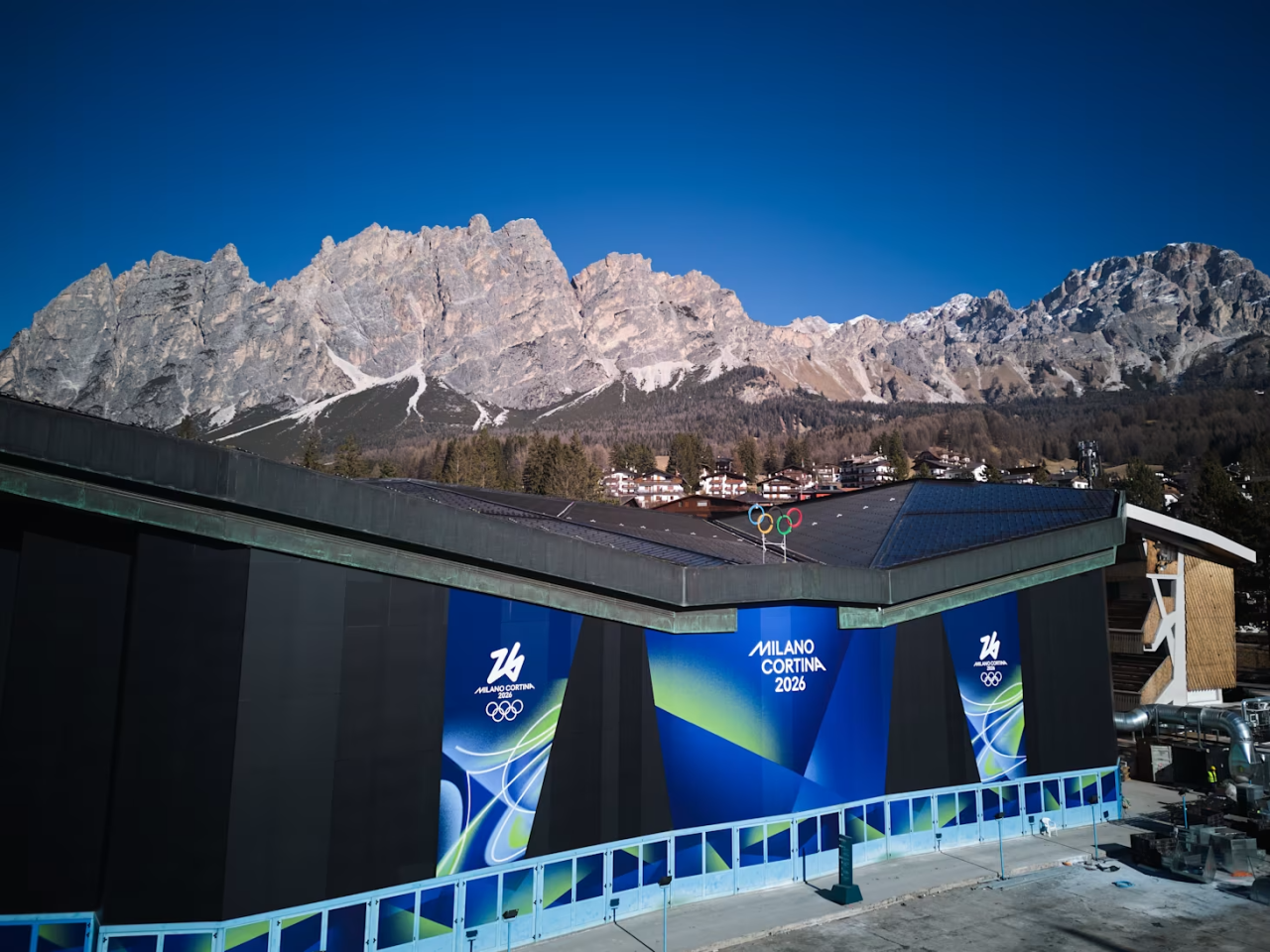
© 2026 / International Olympic Committee (IOC) / CIANCAGLINI, Emmanuele
View additional multimedia and more ESG storytelling from International Olympic Committee on 3blmedia.com.
Contact Info:
Spokesperson: International Olympic Committee
Website: https://www.3blmedia.com/profiles/international-olympic-committee
Email: info@3blmedia.com
SOURCE: International Olympic Committee
View the original press release on ACCESS Newswire:
https://www.accessnewswire.com/newsroom/en/business-and-professional-services/seventy-years-on-cortina-dampezzos-olympic-legacy-shapes-the-blu-1131619
