
REEDVILLE, VA / ACCESS Newswire / January 29, 2026 / In a letter to the Atlantic States Marine Fisheries Commission's (ASMFC) Atlantic Menhaden Management Board released this week, Ocean Harvesters explained that the ASMFC should examine the premise of a proposed addendum to the Atlantic Menhaden Fishery Management Plan. The addendum is based on the premise that a recent decline in Maryland menhaden pound net catches can be attributed to Ocean Harvesters' purse seine fishery in the lower Chesapeake Bay, creating a "gauntlet" that has prevented fish from reaching pound nets in the mid and upper Bay. Ocean Harvesters maintains that neither the Board nor its Plan Development Team (PDT) have thoroughly examined this premise, and that available data suggests that other factors may be the cause.
"Before the Commission advances restrictions premised on a single, untested narrative, the PDT should be tasked with a rigorous examination of what is actually happening in the Bay - including other plausible environmental and economic drivers," said Ben Landry, Vice President of Public Affairs for Ocean Fleet Services.
Statistical Review Questions Inverse Relationship Between Purse Seine Effort and Maryland Pound Net Harvest
Ocean Harvesters cites a preliminary statistical memorandum prepared by economic consulting firm Georgetown Economic Services indicating that, in the months during 2022-2024 when the number of reduction purse seine net sets was above average, the Maryland pound net harvest size also tended to be above average. The opposite was also true, and the direct relationship was found to be statistically significant. If the "gauntlet" theory were true, the relationship between purse seine effort and pound net landings would be expected to be negative (inverse), not positive.
The letter also identifies a graph of weekly pound net and reduction catch rates presented in PDT discussions last week. If the gauntlet theory were correct, Maryland pound net catch rates should show a steep drop during the weeks in which the purse seine fleet was purportedly intercepting fish. Instead, weekly catch-rate curves show pound net catch rates remained stable through the season, further contradicting the "blockage" theory.
Data Show Maryland Pound Net Capacity Has Collapsed - Independent of the "Gauntlet" Narrative
The letter also highlights a fundamental trend that can directly explain reduced landings: Maryland's pound net fishery has sharply contracted in both effort and capacity over the past decade. Data from the Atlantic Coastal Cooperative Statistics Program (ACCSP) Data Warehouse shows that Maryland pound net trips fell from 1,835 (2013) to 284 (2024), with the maximum number of vessels operating in any month declining from 25 to 6, alongside comparable declines in the number of pound net fishermen. Pound net landings over these years did not proportionally increase in response to substantial reductions made to the purse seine Bay quota during the same period.
Call for Further Examination and Analysis by the PDT
Ocean Harvesters urged the PDT to conduct its own examination using the purse seine data from the April Work Group Report and the ACCSP data on Maryland pound net landings. The letter calls on the Board to direct the PDT to examine a range of considerations, including environmental and economic conditions, that may be a more direct cause of declining pound net catches than the "gauntlet" theory.
This is especially important because the Board's push for an addendum originated with the narrow "gauntlet" narrative presented to the Board by Maryland ASMFC delegate Lynn Fegley. This claim has been accepted as fact without examination, and the PDT has not meaningfully evaluated alternative explanations for weak pound net landings in 2023 and 2024.
Similarly, the January 28, 2026 Menhaden PDT memo, "Progress Report on Draft Addendum II to Amendment 3," does not define the problem it is trying to solve, and instead quickly pivots to structuring "options" for three, four, or five time intervals of allowable Ocean Harvesters landings without a clear rationale rooted in tested causation.
Additionally, the memo's characterization of a 50% reduction in the Bay cap as providing "the most conservative buffer ... for ecological and socioeconomic benefit" is an unsupported conclusion presented as analysis, rather than a finding tied to defined objectives, quantified tradeoffs, or tested assumptions.
About Ocean Harvesters
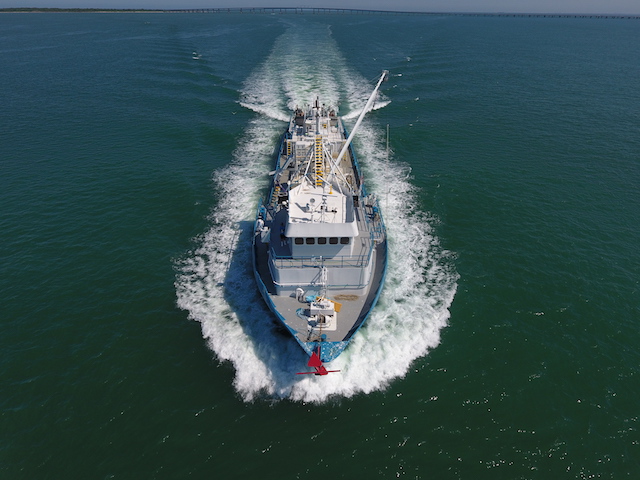
Ocean Harvesters owns and operates a fleet of more than 30 fishing vessels in the Atlantic Ocean and Gulf of Mexico. The company's purse-seine fishing operation is exclusively engaged in the harvest of menhaden, a small, nutrient-dense fish used to produce fish meal, fish oil, and fish solubles. Both its Atlantic and Gulf Menhaden fisheries are certified sustainable by the Marine Stewardship Council. Committed to responsible fishing operations, Ocean Harvesters is proud to be heir to a fishing legacy that extends nearly 150 years.
Press Contact
Stove Boat Communications
(202) 595-1212
contact@stoveboat.com
SOURCE: Ocean Harvesters
View the original press release on ACCESS Newswire:
https://www.accessnewswire.com/newsroom/en/industrial-and-manufacturing/ocean-harvesters-urges-asmfc-to-test-gauntlet-claim-before-advancing-n-1131913
