
BlackRock American Income Trust Plc - Final Results
PR Newswire
LONDON, United Kingdom, February 04
BlackRock American Income Trust plc
LEI: 549300WWOCXSC241W468
Annual Report and Financial Statements 31 October 2025
Key highlights
- Introduction of a new innovative and differentiated investment mandate managed by BlackRock's Systematic Active Equity team, that combines human insight with big data and AI, retaining a focus on value stocks with an attractive dividend, and at a lower fee.
- Net asset value per share (NAV) total return and share price total return for the year were +11.5% and +20.9% respectively, compared to a total return of the index of +8.4%. (All performance in sterling terms with dividends reinvested).
- Enhanced dividend policy introduced with payment of quarterly dividends equivalent to 1.5% of the Company's net asset value, equivalent to 6% of net assets value annually.
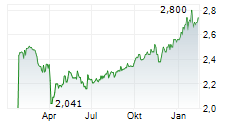
- As a result of the changes and positive sentiment towards the Company, the discount reduced significantly to -5.0% by 31 October 2025 and as at close of business on 30 January, the share price was at -1.2% discount to net asset value per share.
David Barron, the Chairman of the Company said:
"The Company's systematic investment approach, which we believe is truly innovative and the first of its kind in the UK investment company sector, its diversified exposure to US value stocks beyond the US mega cap names, and its enhanced income mean it is a truly differentiated proposition. We are pleased that since the change in strategy, the Company has outperformed its benchmark and seen a significant narrowing of its discount. The Board is confident that the strategy will continue to deliver for investors over the long-term. We thank shareholders for their support during the year."
Performance record
| As at 31 October 2025 | As at 31 October 2024 | ||
| Net assets (£'000)1 | 129,499 | 155,067 | |
| Net asset value per ordinary share (pence) | 229.56 | 216.24 | |
| Ordinary share price (pence) | 218.00 | 190.00 | |
| Ongoing charges2 | 0.73% | 1.06% | |
| Discount to cum income net asset value2 | 5.0% | 12.1% | |
| Russell 1000 Value Index - net total return3 | 2747.32 | 2533.77 | |
| ========= | ========= |
Performance (with dividends reinvested) | For the year ended 31 October 2025 | For the year ended 31 October 2024 | |
| Net asset value per share2 | 11.5% | 16.0% | |
| Ordinary share price2 | 20.9% | 13.8% | |
| Russell 1000 Value Index - net total return3 | 8.4% | 23.2% | |
| ========= | ========= |
Performance (with dividends reinvested) | For the five year period ended 31 October 2025 | For the five year period ended 31 October 2024 |
For the period since inception to 31 October 2025 | For the period since inception to 31 October 2024 |
| Net asset value per share2 | 78.3% | 45.8% | 286.3% | 246.5% |
| Ordinary share price2 | 86.4% | 26.5% | 268.3% | 204.7% |
| Russell 1000 Value Index - net total return3 | 88.7% | 60.4% | 350.1% | 315.1% |
| ========= | ========= | ========= | ========= |
| For the year ended 31 October 2025 | For the year ended 31 October 2024 | Change % | |
| Revenue | |||
| Net profit after taxation (£'000) | 1,781 | 2,604 | -31.6 |
| Revenue earnings per ordinary share (pence)4 | 2.83 | 3.39 | -16.5 |
| --------------- | --------------- | --------------- | |
| Interim dividends (pence) | |||
| 1st interim | 2.00 | 2.00 | - |
| 2nd interim | 3.03 | 2.00 | 51.5 |
| 3rd interim | 3.23 | 2.00 | 61.5 |
| 4th interim | 3.44 | 2.00 | 72.0 |
| --------------- | --------------- | --------------- | |
| Total dividends payable/paid | 11.70 | 8.00 | 46.3 |
| ========= | ========= | ========= |
1 The change in net assets reflects portfolio movements, shares repurchased into treasury, shares tendered and dividends paid during the year.
2 Alternative Performance Measures, see Glossary in the Company's Annual Report for the year ended 31 October 2025.
3 The Company's performance benchmark (the Russell 1000 Value Index) may be calculated on either a gross or a net total return basis. Net total return (NR) indices calculate the reinvestment of dividends net of withholding taxes using the tax rates applicable to non-resident institutional investors, and hence give a lower total return than indices where calculations are on a gross total return basis. As the Company is subject to the same withholding tax rates for the countries in which it invests, the NR basis is felt to be the most accurate, appropriate, consistent and fair comparison for the Company.
4 Further details are given in the Glossary in the Company's Annual Report for the year ended 31 October 2025.
Chairman's Statement
Dear Shareholder
Introduction
This has been a year of significant development for your Company. Before turning to a review of performance, outlook and the Board report on the strategy of the Company, it is worth reviewing the changes which shareholders approved.
The changes proposed by the Board reflected our desire to deliver a more compelling and scalable proposition for shareholders by adopting a differentiated, lower-cost approach while retaining the Company's value-oriented philosophy. The new mandate, managed by BlackRock's Systematic Active Equity team, commenced on 17 April 2025.
The package of measures put forward by the Board included the following:
- shareholders were invited to participate in a tender offer of up to 20% of the shares in issue. The tender was undersubscribed with approximately 16.15% of the share capital being tendered;
- those shareholders who remained invested benefitted from a six-month fee holiday to 31 October 2025, resulting in a more competitive ongoing charges ratio for the year. The management fee agreed at the times of the proposal was 0.35% on net assets up to £350 million and 0.30% in excess of £350 million (reduced from 0.70% on net assets);
- a regular quarterly dividend equivalent to 1.5% of the Company's net asset value equivalent to 6% of net asset value annually;
- a commitment to offer a tender should the investment management performance not exceed the benchmark by a margin of 0.5% over the three years following the introduction of the new strategy.
The transition to the new investment strategy was implemented with minimal transaction costs on a single day.
The Board is encouraged by the positive performance achieved since the new mandate took effect and by the meaningful narrowing of the discount over the period. While it remains early in the life of the new strategy, these developments provide a promising foundation as the Company seeks to deliver attractive returns and income to shareholders, through a differentiated systematic approach that blends data science and investment expertise. At the time of the tender, the price at which shares could be tendered was 192.05p. The discount on the day prior to announcement of the proposals was 6.6%. As at 30 January 2026, the share price was 234.00p and the discount to NAV is 1.2%. Performance is discussed in greater detail below however since the introduction of the new investment approach, the NAV has outperformed the benchmark by 3.7%.
Market overview
US equity markets delivered solid gains over the year to 31 October 2025 despite considerable political and economic volatility. Early concerns around the impact of widespread trade tariffs, slowing growth and a weaker US Dollar weighed on sentiment, but conditions improved meaningfully as the year progressed. Inflation continued to ease, the Federal Reserve began to cut interest rates, and economic activity rebounded strongly in the second quarter. Targeted policy actions from the new US administration also supported areas such as AI and technology supply chains. These developments helped restore risk appetite and supported a broadly positive market backdrop.
Performance
Over the year to 31 October 2025, the Company's net asset value per share (NAV) returned +11.5% and the share price returned +20.9%. This compares with a rise of +8.4% of the Company's benchmark, the Russell 1000 Value Index - net total return1 (all figures are in Sterling terms with dividends reinvested). In the same period, and as a broader comparison, the S&P 500 Index was up by +18.4%.
From the date of the Company's change of strategy on 17 April 2025, the Company's NAV returned +22.0% and the share price return +19.1%, compared with the Company's benchmark which rose by +18.3%.
Since the financial year end and up to close of business on 30 January 2026, the Company's NAV had increased by 4.8% (with dividends reinvested). More details on this and the significant contributors to and detractors from performance during the year are given in the Investment Manager's Report.
Revenue earnings and dividends
During the year, the Company adopted an enhanced dividend policy, approved by shareholders. The Company's ability to pay the enhanced dividends is no longer reliant on revenue generation to fund dividend. Revenue earnings per share for the year were 2.83p (2024: 3.39p), reflecting the change in investment approach which does not specifically look to generate revenue return. One dividend was paid under the previous policy, with the remaining three dividends paid in accordance with the new approach, whereby the Company distributes 1.5% of net asset value each quarter.
In total, shareholders received dividends of 11.70p per share during the year, reflecting three quarterly payments at an annualised rate of 6% of net asset value and one payment made under the previous dividend policy. Based on the share price at 31 October 2025, this represents a dividend yield of 5.4%. The Board continues to believe that the enhanced policy provides shareholders with an attractive and sustainable income level while enabling ongoing exposure to the breadth of the US equity market.
Management of share rating
The Directors recognise the importance to investors that the market price of the Company's shares should not trade at a significant premium or discount to the underlying NAV. The Board regards the successful delivery of an attractive long-term investment proposition as a key driver of the rating of the Company's shares. This was one of the factors driving the changes implemented earlier in the year. We also recognise that whilst systematic investing is well-established in other markets, it is less known here. As a Board, we have spent significant time with the BlackRock teams responsible for promoting the Company. The systematic approach has a long and highly credible track record and BlackRock has committed significant resource, know-how and thought to how to build consumer awareness of the Company and its approach in our key target markets. The success of both the investment approach and the promotion of the Company to establish the benefits to shareholders of what the Board believes is a new and innovative approach in the investment trust sector, will be a key determinant of the achievement of our strategic aims.
In the broader market, the investment trust sector average discount remained relatively wide over the year as markets were affected by volatility stemming from increased geopolitical instability and election uncertainty in both the US and Europe as well as structural shifts in the pattern of demand for investment company shares. Within this context, the AIC North America sector traded at an average discount of 21.5% as at 31 October 2025. While the Company experienced a wider discount earlier in the year, the change in strategy implemented on 17 April 2025 has coincided with a noticeable improvement in investor sentiment.
The Company's discount narrowed meaningfully following the transition and stood at 5.0% as at 31 October 2025. As at the date of this report, the Company's discount stood at 1.2%. The Company retains its powers to buyback shares and resolutions to renew the authorities to issue and buy back shares will be put to shareholders at the forthcoming Annual General Meeting. The most recent buyback took place on 1 August 2025. Since 31 October 2025 to date, the prevailing narrow discount has been supported by investor demand, and there have been no additional shares bought back.
Over the Company's financial year to end 31 October 2025, the Company's shares have traded at an average discount of 6.3%. During the year, the Company purchased 4,386,580 shares (4.6% of shares in issue) at an average price of 206.01p per share at an average discount of 8.4% for a total cost of £9,037,000. Figures exclude the shares repurchased through the tender offer, under which 10,910,252 shares were bought back at 192.05p per share for a total cost of £20,953,000. The tender offer and buyback of shares during the year has provided a gross capital uplift of £1.09 million (0.81% of the average daily NAV for the year).
Following Shareholder approval of the amendment to the Company's investment objective and investment policy, the Board has implemented an enhanced discount control mechanism applying to rolling three-year periods commencing on 1 May 2025. Under this mechanism, Shareholders are offered the opportunity to tender for up to 100% of the Company's issued share capital at a price reflecting the latest cum-income NAV per ordinary share, less 2% and adjusted for portfolio realisation costs, where the Company's annualised total NAV return over the three year period does not exceed the annualised benchmark by more than 50 basis points. In addition, the Board retains discretion to implement a tender offer on the same terms where the Company's cum-income NAV at the end of the three-year period is below £125 million.
These additional protections for shareholders reflects both the Board's confidence in the new investment approach but also a recognition that success will ultimately be judged by good investment performance, leading to asset growth, increased interest in the Company's shares and a consistently strong rating leading to share issuance. These remain our key strategic aims.
Board composition
As stated in the 2025 Half Yearly Financial Report, Alice Ryder did not seek re-election at the Company's Annual General Meeting in April. On behalf of the Board, I would once again like to extend our sincere thanks to Alice for her wise counsel and the significant contribution she made to the Company both as a Director and, more recently, as Chair. Following her retirement, I assumed the role of Chair and Solomon Soquar became the Senior Independent Director.
The Board also advised at the interim stage that an external recruitment firm had been appointed to support the search for an additional Director. I am pleased to report that, following this process, Gaynor Coley joined the Board on 25 June 2025. Gaynor's extensive experience will both enhance and complement the capabilities of the Board, and she has assumed the role of Chair of the Audit Committee.
I am pleased to report that the Board remains fully compliant with the recommendations of both the Parker Review and the FTSE Women Leaders Review and, as at the date of this report, has achieved a 50:50 gender balance. The Board has also disclosed its ethnic diversity, together with its broader policy on diversity and inclusion, within the Corporate Governance Statement in the Company's Annual Report for the year ended 31 October 2025.
Annual General Meeting
The Annual General Meeting of the Company will be held at the offices of BlackRock at 12 Throgmorton Avenue, London EC2N 2DL on Monday, 23 March 2026 at 12 noon. Details of the business of the meeting are set out in the Notice of Annual General Meeting in the Company's Annual Report for the year ended 31 October 2025. The Board very much looks forward to meeting shareholders on the day and we hope you will be able to attend.
Outlook
The outlook for the US economy remains broadly positive, supported by moderating inflation, resilient consumer demand and the Federal Reserve's shift toward a more accommodative policy stance. Although uncertainty surrounding trade measures and regulatory priorities may continue to generate short-term volatility, these factors are not expected to derail the underlying momentum of the US economy, which continues to compare favourably with other major developed markets.
Valuations across several areas of the market remain appealing, particularly among high-quality and attractively valued companies that have lagged the more speculative parts of the market during the recent rally. History suggests that fundamentals tend to reassert themselves over time, creating a potentially supportive environment for investors with a disciplined, long-term approach.
Against this backdrop, the Company's diversified, systematic investment process aims to balance fundamental, valuation and sentiment insights, enabling it to capture opportunities across different market conditions. The Board believes that this approach positions the Company well to continue providing shareholders with exposure to the breadth and resilience of the US equity market.
The Company's differentiated investment approach, its diversified exposure to US value stocks beyond the US mega cap names, its enhanced income and its systematic investment approach give the Board confidence that there are good reasons to view the future of the Company with confidence. We thank shareholders for their support during the year.
DAVID BARRON
Chairman
3 February 2026
1 Return on net total return index is calculated including the reinvestment of dividends net of withholding taxes.
Investment Manager's Report
Market overview
Over the year to 31 October 2025, the Company's net asset value per share (NAV) returned +11.5% and the share price returned +20.9%. This compares with a return of +8.4% in the Russell 1000 Value Index - net total return. Over the five year period to 31 October 2025, the NAV returned +78.3%, the share price returned +86.4% and the benchmark returned +88.7% (all percentages calculated in Sterling terms with dividends reinvested).
The past 12 months have been characterised by substantial volatility from a political, economic and markets perspective. In the final two months of 2024, a clean sweep of the White House, House of Representatives and the Senate for the Republicans raised expectations for a business-friendly environment characterised by deregulation and mergers and acquisitions (M&A) activity. But as we moved into 2025, it became clear that one of the new President's top priorities was trade tariffs, culminating in April's 'Liberation Day' announcement of substantial and widespread levies being imposed on countries across the world. This was accompanied by something of a reversal in economic momentum, with the annualised gross domestic product (GDP) growth in the fourth quarter of 2024 of 2.3% being followed by a 0.3% rate of contraction in the first quarter of 2025.
Concerns around the health of the US economy and public finances, as well as the unwinding of US exceptionalism oriented sentiment saw the US Dollar fall 8.9% against Sterling in the first half of the year, while after briefly dipping c4% in early April. US 10-year yields touched 4.6% the following month. But from this low point, a huge reversal was to come. Trade tariff related compromises were made that ensured the tariff picture was not so catastrophic; the Federal Reserve cut interest rates by 0.25% in September and then again in October; and the Trump administration took a number of actions that favoured certain sectors including drone manufacturers, cryptocurrency, artificial intelligence (AI) and rare earth metals. Meanwhile GDP growth surged back to 3.8% in the second quarter of 2025. This prompted a surge in risk appetite not only for speculative growth stocks, but also more traditionally high beta stocks exposed to broader economic growth. By the end of October, the S&P 500 Index was up 21.0% in US Dollar terms, while the Russell 1000 Value - net total return was up 10.3% (net total return index is calculated including the reinvestment of portfolio company dividends net of withholding taxes).
Portfolio overview
The investment approach of the Manager changed during the period, with the Company being managed using a systematic active equity approach from 17 April 2025. Over the subsequent months, the broadly speculative and risk-seeking market environment saw quality-focused signals struggle. For example, insights that favour more stable companies with low expectations for defaulting on their debt did not fare well. But valuation and sentiment signals - particularly sentiment insights that track the trading activity of certain investors - nicely captured the mood in the market. In particular, the use of valuations to inform top-down industry views steered the portfolio towards some investment banks, which benefitted from buoyant markets and expectations for deregulation. Meanwhile signals that favour stocks which are not seeing significant shorting activity helped to inform overweights in a number of semiconductor firms, which benefitted from AI-related enthusiasm.
Before we discuss attribution and positioning at a sector and stock level, it is worth noting that we follow a highly diversified approach, holding a relatively large number of positions, as well as only moderate overweights or underweights in any given stock or sector. So in any given period, the risk and performance will be driven by a broad range of positions within the portfolio. (Please refer to the investment process section in the Company's Annual Report for the year ended 31 October 2025).
From a sector perspective, positions within the Information Technology (IT), Financials, Health Care, Consumer Staples and Consumer Discretionary sectors all made significantly positive contributions to relative returns. Many of the largest contributors at the stock level were overweight positions in technology stocks that benefitted from the ongoing enthusiasm around AI, or capital markets-exposed banks that caught a tailwind from both a buoyant economy and trading activity in the market. Overweight exposures to Lam Research, Morgan Stanley, Citigroup and Bank of America were the top contributors to relative returns.
In terms of detractors at the sector level, it was only within the Energy and Real Estate sectors that significant negative contributions were experienced. Stock selection within energy was the source of the negative contribution with, for example, an overweight in energy explorer and producer Devon Energy versus and underweight in Marathon Petroleum, whose refining operations offered some insulation from commodity price volatility, not working well. Within real estate, an overweight in data centre-focused REIT Equinix was the largest detractor, as investors fretted over capital expenditure requirements.
Financials: 0.3% underweight (21.6% of the portfolio)
The portfolio has no holding in Wells Fargo, a bank which scores negatively on both quality and investor sentiment metrics. Text analysis of company reports implies weak revenue growth, while hedge fund trading activity has a bias towards shorts in this stock. But the portfolio is overweight Morgan Stanley, which look particularly attractive on signals focusing on momentum in fundamentals.
Industrials: 1.6% overweight (14.8% of the portfolio)
The portfolio is overweight electrical equipment firm AMETEK, which looks attractive based on fundamental momentum and investor sentiment signals. Text analysis of broker research using transformer-based Large Language Models, and trends in shorting activity both point towards a positive outlook.
Health Care: 1.2% overweight (13.1% of the portfolio)
The portfolio holds an overweight position in pharmaceuticals firm Pfizer, driven by both bottom measures of fundamental momentum, and top-down industry timing signals. AI-based analysis of broker-produced financial metrics, as well as insights that take industry views based on macro and market data are key drivers of this position.
Information Technology: 3.1% overweight (14.5% of the portfolio)
The portfolio has an overweight position in networking company Arista Networks, driven by positive views from top-down industry and bottom-up investor sentiment insights. The hardware industry looks attractive as a result of macroeconomic data and strong cash flows, while shorting activity is muted.
Consumer Discretionary: 1.5% overweight (9.2% of the portfolio)
The portfolio is overweight online retailer Amazon, thanks to bullish views coming from quality and investor sentiment signals. The company's high level of research and development spending and strong support from retail investors are two drivers of the position.
Communication Services: 1.8% underweight (6.4% of the portfolio)
The portfolio has no holding in Walt Disney thanks to weak scores on quality signals, in particular insights that perform text analysis on company filings in an effort to predict future fundamentals. But the portfolio holds an overweight in Meta Platforms, which scores more positively on quality metrics.
Consumer Staples: 0.9% underweight (6.4% of the portfolio)
The portfolio has no holding in PepsiCo, thanks to negative views coming from fundamental momentum insights, including those that seek to capture brand sentiment from online consumer activity. But the portfolio is overweight Walmart, which scores positively across quality, investor sentiment and top-down industry metrics.
Energy: 1.4% underweight (4.4% of the portfolio)
The portfolio holds an underweight position in Exxon Mobil, driven by negative scores on investor sentiment and fundamental momentum metrics. Information from credit markets and analysis of hiring trends both suggest a negative outlook. But the portfolio is overweight Devon Energy, which looks attractive from a fundamental momentum and investor sentiment perspective.
Materials: 0.4% underweight (3.5% of the portfolio)
The portfolio has no holding in chemicals firm Linde, which scores negatively across all areas of the model. Hiring trends and text-based thematic analysis are two notable drivers of the negative view. But the portfolio is overweight chemicals firm Corteva, which scores highly on fundamental momentum and investor sentiment insights.
Utilities: 1.4% underweight (3.2% of the portfolio)
The portfolio has no holding in electric utility Constellation Energy, driven by negative fundamental momentum and top-down industry timing views - the latter coming from relatively weak cash flow trends at the industry level. But the portfolio is overweight electric utility Entergy, which scores positively across all bottom-up signal types.
Real Estate: 1.2% underweight (2.9% of the portfolio)
The portfolio has no holding in healthcare REIT, Welltower, thanks to negative scores. Fundamental momentum insights, particularly those focused on broker-produced metrics, are the main contributors to this positioning. But the portfolio is overweight Ventas, which looks attractive based on quality and fundamental momentum measures.
Benchmark
The Company's benchmark, the Russell 1000 Value Index (net total return), provides a dynamic and evolving representation of the US large-capitalisation value equity universe, with inclusion determined by valuation characteristics rather than traditional sector classifications. As a result, large and even technology-focused companies can enter the index when their share prices, earnings profiles or balance sheet metrics begin to exhibit value attributes, meaning that well-known mega-cap names such as Alphabet, Amazon and Meta may feature at certain points in the cycle when market conditions or investor sentiment create more attractive valuations. The composition of the index changes over time, with companies entering and leaving through its regular semi-annual reconstitution as relative valuations and fundamentals evolve; stocks migrate out as they adopt growth characteristics and new opportunities rotate in. This disciplined, rules-based refresh ensures that the benchmark remains responsive to changing market conditions and corporate developments, reflecting the reality that value opportunities in modern equity markets can emerge across sectors and market capitalisations, rather than being confined to traditional areas of the market.
Market outlook
Six months ago, in our interim report, we wrote about a potentially worrying economic and political outlook, highlighting the ongoing uncertainty around tariffs. Since then, the S&P 500 Index has risen over 20% in local currency terms, and we have seen a surge in optimism and speculative activity in markets. Although they have also achieved positive returns in absolute terms, value stocks have lagged the market, while some of our signals that focus on fundamental financial indicators and quality have struggled. However, it's worth noting that the structural value exposure continues to offer diversifying properties against a broad market which continues to be dominated by a handful of mega capitalisation growth stocks. And history suggests that fundamentals and quality can only be ignored for so long, especially when more speculative areas of the market get ahead of themselves. At the same time, as the discussion of portfolio performance and positioning above illustrates, we also have insights in the model that have captured and may continue to capture shorter term opportunities in firms that are benefiting from bullish sentiment. By following a diversified, balanced approach, we seek to ensure that we build portfolios that can generate positive outcomes regardless of the environment.
TRAVIS COOKE AND MUZO KAYACAN
BLACKROCK INVESTMENT MANAGEMENT (UK) LIMITED
3 February 2026
Ten largest investments
Together, the Company's ten largest investments represented 25.5% of the Company's portfolio as at 31 October 2025 (2024: 26.9%)
1
Alphabet (2024: n/a)
Sector: Communication Services
Market value: £5,171,000
Percentage of total portfolio: 4.0% (2024: n/a) (Benchmark weight: 3.6%)
Alphabet, the holding company of Google, is a global technology company. It offers a wide range of products and platforms including Google Search, Google Maps, Gmail, Google Play, Google Cloud, Chrome and YouTube. It also offers hardware products such as pixel phones, smartwatches and Google Nest home products.
2
Amazon (2024: 28th)
Sector: Consumer Discretionary
Market value: £4,483,000
Percentage of total portfolio: 3.5% (2024: 1.7%) (Benchmark weight: 2.2%)
Amazon is a global technology company primarily involved in the sale of a range of products and services. The company's main activities include operating an online marketplace for both buyers and sellers and producing media content. The company's major products and services include merchandise, electronic devices such as the Kindle and Echo, and services such as cloud computing, digital content subscriptions and advertising.
3
JPMorgan Chase (2024: n/a)
Sector: Financials
Market value: £4,014,000
Percentage of total portfolio: 3.1% (2024: n/a) (Benchmark weight: 3.0%)
JPMorgan Chase is a banking services company that offers consumer and commercial banking, investment banking, financial transaction processing and asset management solutions.
4
Berkshire Hathaway
(2024: n/a)
Sector: Financials
Market value: £3,449,000
Percentage of total portfolio: 2.7% (2024: n/a) (Benchmark weight: 3.0%)
Berkshire Hathaway is a holding company engaged in a wide range of business activities. The company's main operations include insurance, freight rail transportation and utility and energy generation and distribution. Its major products and services encompass property and casualty insurance, life and health insurance and reinsurance.
5
Walmart
(2024: n/a)
Sector: Consumer Staples
Market value: £3,242,000
Percentage of total portfolio: 2.5% (2024: n/a) (Benchmark weight: 1.4%)
Walmart is a US-based omni-channel retailer. It sells groceries, consumables, health & wellness products, office products, apparel, fuel and home furnishings, among others, through grocery stores, supermarkets, hypermarkets, department and discount stores, e-commerce portals and neighbourhood markets.
6
Bank of America
(2024: n/a)
Sector: Financials
Market value: £3,061,000
Percentage of total portfolio: 2.4% (2024: n/a) (Benchmark weight: 1.1%)
Bank of America is a banking services company offering a wide range of financial products and services to retail customers, companies and institutions through its eight lines of business. The bank serves retail customers through its retail, preferred, wealth management, business banking, global commercial banking and global corporate and investment banking lines of business.
7
Morgan Stanley
(2024: n/a)
Sector: Financials
Market value: £2,457,000
Percentage of total portfolio: 1.9% (2024: n/a) (Benchmark weight: 0.6%)
Morgan Stanley is one of the largest providers of financial services. The company provides institutional securities, wealth management and investment management services. Solutions under institutional securities and wealth management consist of lending, investment banking, sales and trading, brokerage and investment advisory, wealth and financial planning, banking and retirement planning and insurance.
8 Johnson & Johnson
(2024: n/a)
Sector: Health Care
Market value: £2,415,000
Percentage of total portfolio: 1.9% (2024: n/a) (Benchmark weight: 1.6%)
Johnson & Johnson is a healthcare company engaged in the research, development, manufacture, and sale of innovative medicines and medical technologies. The company provides pharmaceutical products for therapy areas related to immune disorders, cancer, neurological disorders, infectious, cardiovascular, and metabolic diseases; and medical devices for use in cardiovascular, orthopaedic, neurovascular care, general surgery and vision care.
9
Meta Platforms
(2024: n/a)
Sector: Information Technology
Market value: £2,288,000
Percentage of total portfolio: 1.8% (2024: n/a) (Benchmark weight: 0.9%)
Meta Platforms, formerly Facebook Inc., is a provider of social networking, advertising and business insight solutions through its major products Facebook, Instagram, Oculus, Messenger and WhatsApp. The company sells advertising placements for marketers to reach people based on various factors including age, gender, location, interests and behaviour.
10
Charles Schwab
(2024: n/a)
Sector: Financials
Market value: £2,199,000
Percentage of total portfolio: 1.7% (2024: n/a) (Benchmark weight: 0.5%)
The Charles Schwab Corporation (Charles Schwab) is a savings and loan holding company that provides wealth management, securities brokerage, banking, asset management, custody and financial advisory services. The company offers brokerage accounts, mutual funds, exchange-traded funds, managed investing solutions, alternative investments, banking services and trust services.
All percentages reflect the value of the holding as a percentage of total investments.
Percentages in brackets represent the value of the holding as at 31 October 2024.
Portfolio analysis as at 31 October 2025
Sector Exposure
| Portfolio exposure at 31 October 2025 | Portfolio exposure at 31 October 2024 | Exposure of the Russell 1000 Value Index at 31 October 2025 | Exposure of the S&P 500 Index at 31 October 2025 | |
| Communication Services | 6.4% | 7.8% | 8.2% | 10.1% |
| Consumer Discretionary | 9.2% | 10.2% | 7.7% | 10.5% |
| Consumer Staples | 6.4% | 5.8% | 7.3% | 4.7% |
| Energy | 4.4% | 6.0% | 5.8% | 2.8% |
| Financials | 21.6% | 16.1% | 21.9% | 12.9% |
| Health Care | 13.1% | 18.0% | 11.9% | 9.0% |
| Industrials | 14.8% | 5.8% | 13.2% | 8.1% |
| Information Technology | 14.5% | 16.5% | 11.4% | 36.1% |
| Materials | 3.5% | 6.6% | 3.9% | 1.7% |
| Real Estate | 2.9% | 2.1% | 4.1% | 1.8% |
| Utilities | 3.2% | 5.1% | 4.6% | 2.3% |
Fifty largest investments as at 31 October 2025
Company | Sector | Market value £'000 | % of total portfolio |
| Alphabet | Communication Services | 5,171 | 4.0 |
| Amazon | Consumer Discretionary | 4,483 | 3.5 |
| JPMorgan Chase | Financials | 4,014 | 3.1 |
| Berkshire Hathaway | Financials | 3,449 | 2.7 |
| Walmart | Consumer Staples | 3,242 | 2.5 |
| Bank of America | Financials | 3,061 | 2.4 |
| Morgan Stanley | Financials | 2,457 | 1.9 |
| Johnson & Johnson | Health Care | 2,415 | 1.9 |
| Meta Platforms | Information Technology (IT) | 2,288 | 1.8 |
| Charles Schwab Corporation | Financials | 2,199 | 1.7 |
| UnitedHealth Group | Health Care | 2,125 | 1.6 |
| Pfizer | Health Care | 2,062 | 1.6 |
| Micron Technology | IT | 1,879 | 1.5 |
| Procter & Gamble | Consumer Staples | 1,825 | 1.4 |
| Bristol-Myers Squibb | Health Care | 1,764 | 1.4 |
| Entergy | Utilities | 1,748 | 1.4 |
| Citigroup | Financials | 1,697 | 1.3 |
| Union Pacific | Industrials | 1,618 | 1.3 |
| Boston Scientific | Health Care | 1,592 | 1.2 |
| AMETEK | Industrials | 1,536 | 1.2 |
| Corteva | Materials | 1,505 | 1.2 |
| Devon Energy | Energy | 1,481 | 1.1 |
| Regeneron Pharmaceuticals | Health Care | 1,468 | 1.1 |
| Cardinal Health | Health Care | 1,458 | 1.1 |
| Travelers | Financials | 1,346 | 1.0 |
| Honeywell International | Industrials | 1,341 | 1.0 |
| Qualcomm | IT | 1,322 | 1.0 |
| Caterpillar | Industrials | 1,153 | 0.9 |
| Cisco Systems | IT | 1,146 | 0.9 |
| 3M | Industrials | 1,138 | 0.9 |
| Medtronic | Health Care | 1,126 | 0.9 |
| Comcast | Communication Services | 1,108 | 0.9 |
| Ferguson Enterprises | Industrials | 1,098 | 0.8 |
| TJX Companies | Consumer Discretionary | 1,097 | 0.8 |
| CME Group | Financials | 1,070 | 0.8 |
| Intercontinental Exchange | Financials | 1,070 | 0.8 |
| Philip Morris International | Consumer Staples | 1,068 | 0.8 |
| Salesforce | IT | 1,068 | 0.8 |
| McDonald's | Consumer Discretionary | 1,017 | 0.8 |
| Mueller Industries | Industrials | 994 | 0.8 |
| Costco Wholesale | Consumer Staples | 982 | 0.8 |
| Ventas | Real Estate | 956 | 0.7 |
| Intel | IT | 955 | 0.7 |
| General Dynamics | Industrials | 955 | 0.7 |
| General Motors | Consumer Discretionary | 943 | 0.7 |
| Consolidated Edison | Utilities | 922 | 0.7 |
| Arista Networks | IT | 905 | 0.7 |
| AbbVie | Health Care | 876 | 0.7 |
| Progressive Corporation | Financials | 874 | 0.7 |
| Huntington Bancs | Financials | 841 | 0.7 |
| --------------- | --------------- | ||
| 50 largest investments | 83,908 | 64.9 | |
| Remaining 100 investments | 45,304 | 35.1 | |
| --------------- | --------------- | ||
| Total | 129,212 | 100.0 | |
| ========= | ========= |
Details of the full portfolio are available on the Company's website at www.blackrock.com/uk/brai.
All investments are listed in the US and ordinary shares unless otherwise stated. The number of holdings as at 31 October 2025 was 150 (2024: 60).
At 31 October 2025, the Company did not hold any equity interests comprising more than 3% of any company's share capital.
Geographic Exposure1
| As at 31/10/2025 | As at 31/10/2024 | |
| United States | 100.0% | 90.2% |
| United Kingdom | 3.4% | |
| Other2 | 2.3% | |
| France | 2.2% | |
| South Korea | 1.9% |
1 Based on the principal place of operation of each investment.
2 Consists of Ireland and Canada.
Strategic Report
The Directors present the Strategic Report of the Company for the year ended 31 October 2025.
Principal activity
The Company carries on business as an investment trust and is listed on the London Stock Exchange. Its principal activity is portfolio investment.
Investment objective
The Company's investment objective is to provide long
-
term capital growth, whilst paying an attractive level of income.
Strategy, business model and investment policy
Strategy
The Company invests in accordance with the objective given above. The Board is collectively responsible to shareholders for the long
-
term success of the Company and is its governing body. There is a clear division of responsibility between the Board and BlackRock Fund Managers Limited (the Manager). Matters reserved for the Board include setting the Company's strategy, including its investment objective and policy, setting limits on gearing, capital structure, governance and appointing and monitoring performance of service providers, including the Manager.
Business model
The Company's business model follows that of an externally managed investment trust. Therefore, the Company does not have any employees and outsources its activities to third
-
party service providers including the Manager who is the principal service provider. In accordance with the Alternative Investment Fund Managers' Directive (AIFMD) the Company is an Alternative Investment Fund (AIF). BlackRock Fund Managers Limited is the Company's Alternative Investment Fund Manager.
The management of the investment portfolio and the administration of the Company have been contractually delegated to the Manager which in turn (with the permission of the Company) has delegated certain investment management and other ancillary services to BlackRock Investment Management (UK) Limited (the Investment Manager or BIM (UK)). The Manager, operating under guidelines determined by the Board, has direct responsibility for the decisions relating to the day - to - day running of the Company and is accountable to the Board for the investment, financial and operating performance of the Company.
The Company delegates fund accounting services to the Manager, which in turn sub - delegates these services to The Bank of New York Mellon (International) Limited (BNY). Other service providers include the Depositary (also BNY) and the Registrar, Computershare Investor Services PLC. Details of the contractual terms with the Manager and the Depositary and more details of arrangements in place governing custody services are set out in the Directors' Report. Oversight of service levels of third-party providers is set out in the Company's Annual Report for the year ended 31 October 2025.
Investment policy
The Company invests predominantly in a diversified portfolio of US equity securities, with a systematic (i.e. rules based) active investment approach, focussing on large
-
cap and medium
-
cap companies. A security is a US equity security if: (i) the equity security is listed, quoted or traded on a US stock exchange; or (ii) the majority of the company's economic exposure is to the US. Subject to the restrictions set out below, the Company may also invest in (i) equity securities that are not US equity securities and (ii) other securities from time
-
to
-
time including, inter alia, options, futures contracts, convertible securities, fixed interest securities, preference shares, non
-
convertible preferred stock and depositary receipts. The Company does not invest in companies which are not listed, quoted or traded on an exchange at the time of investment, although it may have exposure to such companies where, following investment, the relevant securities cease to be listed, quoted or traded on an exchange.
The Investment Manager seeks to pursue the Company's investment objective by investing in a systematic manner, harnessing big data, using machine learning and the power of artificial intelligence to inform proprietary return forecast models that incorporate quantitative (i.e. mathematical or statistical) analysis. These forecast models are designed to identify aspects of mispricing across stocks which the Investment Manager can seek to capture by over - and underweighting particular equities while seeking to control incremental risk. The Investment Manager then constructs and rebalances the portfolio by integrating its investment insights with the model based optimisation process. The Company has no stated minimum holding period for investments and may buy or sell securities whenever the Investment Manager sees an appropriate opportunity. The Investment Manager may engage in active and frequent trading of investments.
Typically, it is expected that the investment portfolio will comprise between 150 and 250 equity securities.
Use of derivatives
The Company may invest in derivatives for efficient portfolio management. Any use of derivatives for efficient portfolio management is made based on the same principles of risk spreading and diversification that apply to the Company's direct investments.
Risk diversification
Portfolio risk is mitigated by investing in a diversified spread of investments. In particular, the Company observes the following investment restrictions:
- no single investment (including for the avoidance of doubt, any single derivative instrument), at the time of investment, shall account for more than 10 per cent of the gross asset value of the Company;
- no more than 20 per cent of the gross asset value of the Company, at the time of investment, shall be invested in securities which are not US equity securities; and
- no more than 35 per cent of the gross asset value of the Company, at the time of investment, shall be exposed to any one sector.
Benchmark
Performance is measured against an appropriate benchmark, the Russell 1000 Value Index (net total return).
Borrowing and gearing policy
The Company may borrow up to 20 per cent of its net asset value (calculated at the time of draw down), although typically borrowings are not expected to exceed 10 per cent of its net asset value at the time of draw down. Borrowings may be used for investment purposes. The Company may enter into interest rate hedging arrangements.
Currency hedging
The Company's foreign currency investments are not hedged to Sterling as a matter of general policy. However, the investment team may employ currency hedging, either back to Sterling or between currencies (i.e. cross
-
hedging of portfolio investments).
Further investment restrictions
In order to comply with the current Listing Rules, the Company also complies with the following investment restrictions (which do not form part of the Company's investment policy):
- the Company will not conduct any trading activity which is significant in the context of its group as a whole; and
- the Company will not invest more than 10 per cent of its gross asset value in other listed closed-ended investment funds, whether managed by the Investment Manager or not, except that this restriction shall not apply to investments in listed closed-ended investment funds which themselves have stated investment policies to invest no more than 15 per cent of their gross assets in other listed closed-ended investment funds.
Changes to the investment policy
No material change will be made to the investment policy without the approval of shareholders by ordinary resolution.
Performance
Over the year ended 31 October 2025, the Company's net asset value returned 11.5% compared with a return of 8.4% in the Russell 1000 Value Index (net total return). Since the change of strategy effective from 17 April 2025, the Company's net asset value returned 22.0%. The ordinary share price returned 19.1% (all percentages are calculated in Sterling terms with dividends reinvested). The Investment Manager's Report includes a review of the main developments during the year, together with information on investment activity within the Company's portfolio.
Results and dividends
The results for the Company are set out in the Statement of Comprehensive Income. The total return for the year, after taxation, was a profit of £10,954,000 (2024: £22,572,000) of which the revenue return amounted to a profit of £1,781,000 (2024: £2,604,000) and the capital return amounted to a profit of £9,173,000 (2024: £19,968,000).
Previously, the Company paid quarterly dividends of 2.00p per share. The first quarterly dividend of 2.00p per share was paid on 2 May 2025.
At the General Meeting on 16 April 2025, at the same time shareholders approved the amendments to the Company's investment objective and investment policy, the Company adopted a new enhanced dividend policy. The new policy calculates and pays a dividend quarterly, based on 1.5% of the Company's NAV at close of business on the last working day of January, April, July and October.
The second quarterly dividend was calculated based on 1.5% of the Company's NAV at close of business on 30 April 2025 (being the last business day of the calendar quarter) which was 201.81p per share. A second quarterly dividend of 3.03p per share was declared and was paid on 4 July 2025.
The third quarterly dividend was calculated based on 1.5% of the Company's NAV at close of business on 31 July 2025 (being the last business day of the calendar quarter) which was 215.53 pence per share. A third quarterly dividend of 3.23p per share was declared and was paid on 12 September 2025.
The fourth quarterly dividend was calculated based on 1.5% of the Company's NAV at close of business on 31 October 2025 (being the last business day of the calendar quarter) which was 229.56 pence per share. A fourth quarterly dividend of 3.44p per share was declared and was paid on 12 December 2025.
Future prospects
The Board's main focus is to is to provide long
-
term capital growth, whilst paying an attractive level of income. The future of the Company is dependent upon the success of the investment strategy. The outlook for the Company in the next twelve months is discussed in both the Chairman's Statement and in the Investment Manager's Report.
Social, community and human rights issues
As an investment trust, the Company has no direct social or community responsibilities or impact on the environment. However, the Directors believe that it is important and in shareholders' interests to consider human rights issues and environmental, social and governance factors when selecting and retaining investments.
Modern Slavery Act
As an investment vehicle, the Company does not provide goods or services in the normal course of business and does not have customers. The Investment Manager considers modern slavery as part of supply chains and labour management within the investment process. Accordingly, the Directors consider that the Company is not required to make any slavery or human trafficking statement under the Modern Slavery Act 2015. In any event, the Board considers the Company's supply chains, dealing predominantly with professional advisers and service providers in the financial services industry, to be low risk in relation to this matter.
Directors, gender representation and employees
The Directors of the Company on 31 October 2025 are set out in the Directors' Biographies in the Company's Annual Report for the year ended 31 October 2025. The Board consists of two male Directors and two female Directors. The Company does not have any executive employees. Further information on the composition and diversity of the Board is set out in the Company's Annual Report for the year ended 31 October 2025.
Key performance indicators
At each Board meeting, the Directors consider a number of performance measures to assess the Company's success in achieving its objectives. The key performance indicators (KPIs) used to measure the progress and performance of the Company over time, and which are comparable to other investment trusts, are set out in the following table.
Additionally, the Board regularly reviews the performance of the portfolio, as well as the net asset value and share price of the Company and compares this against various companies and indices. The Board also reviews the performance of the portfolio against a benchmark, the Russell 1000 Value Index (net total return). Information on the Company's performance is given in the Chairman's Statement.
| Year ended 31 October 2025 | Year ended 31 October 2024 | |
| Net asset value total return1,2 | 11.5% | 16.0% |
| Share price total return1,2 | 20.9% | 13.8% |
| Dividends per share | 11.70p | 8.00p |
| Discount to cum income net asset value2,3 | 5.0% | 12.1% |
| Ongoing charges4 | 0.73% | 1.06% |
| ========= | ========= |
1 This measures the Company's share price and NAV total return, which assumes dividends paid by the Company have been reinvested.
2 Alternative Performance Measures, see Glossary in the Company's Annual Report for the year ended 31 October 2025.
3 This is the difference between the share price and the NAV per share. It is an indicator of the need for shares to be repurchased or, in the event of a premium to NAV per share, issued.
4 Ongoing charges represent the management fee and all other operating expenses excluding finance costs, direct transaction costs, custody transaction charges, VAT recovered, taxation, prior year expenses written back and certain non-recurring items as a % of average daily net assets.
Principal risks
The Company is exposed to a variety of risks and uncertainties. As required by the 2018 UK Corporate Governance Code (the UK Code), the Board has put in place a robust ongoing process to identify, assess and monitor the principal and emerging risks facing the Company, including those that would threaten its business model. A core element of this process is the Company's risk register which identifies the risks facing the Company and assesses the likelihood and potential impact of each risk and the quality of controls operating to mitigate it. A residual risk rating is then calculated for each risk based on the outcome of the assessment.
The risk register, its method of preparation and the operation of key controls in BlackRock's and third - party service providers' systems of internal control, are reviewed on a regular basis by the Audit Committee. In order to gain a more comprehensive understanding of BlackRock's and other third - party service providers' risk management processes and how these apply to the Company's business, BlackRock's internal audit department provides an annual presentation to the Audit Committee chairs of the BlackRock investment trusts setting out the results of testing performed in relation to BlackRock's internal control processes. The Audit Committee also periodically receives and reviews internal control reports from BlackRock and the Company's service providers.
The Board has undertaken a robust assessment of both the principal and emerging risks facing the Company, including those that would threaten its business model, future performance, solvency or liquidity. For instance, the risk that unforeseen or unprecedented events including (but not limited to) heightened geopolitical tensions such as the war in Ukraine and the conflict in the Middle East, inflation and the current cost of living crisis has had a significant impact on global markets. The Board has taken into consideration the risks posed to the Company by these events and incorporated these into the Company's risk register. The threat of climate change has also reinforced the importance of environmental responsibility.
Emerging risks are considered by the Board as they come into view and are incorporated into the existing review of the Company's risk register. Emerging risks that have been considered by the Board over the year include the impact of climate change, escalating geopolitical conflict and technological advances.
The key emerging risks identified are as follows:
Artificial Intelligence (AI): Advances in computing power means that AI has become a powerful tool that will impact a huge range of areas and with a wide range of applications that have the potential to dislocate established business models and disrupt labour markets, creating uncertainty in corporate valuations. In addition, the growing use of AI in investment decision - making introduces risks such as algorithmic bias, lack of transparency and potential systemic vulnerabilities, which could lead to unintended market distortions. The significant energy required to power this technological revolution will create further pressure on environmental resources and carbon emissions.
Climate change: Investors can no longer ignore the impact that the world's changing climate will have on their portfolios, with the impact of climate change on returns, including climate related natural disasters, now potentially significant and with the potential to escalate more swiftly than one is able to predict.
The Board will continue to assess these risks on an ongoing basis. In relation to the UK Code, the Board is confident that the procedures that the Company has put in place are sufficient to ensure that the necessary monitoring of risks and controls has been carried out throughout the reporting period.
The principal risks and uncertainties faced by the Company during the financial year, together with the potential effects, controls and mitigating factors are set out below.
Movements in the relative risk assessment compared with the position reported in the previous financial year are given on pages 35 to 38 of the annual report which can be found on the Company's website at www.blackrock.com/uk/brai.
Market
Principal risk
Market risk arises from volatility in the prices of the Company's investments. It represents the potential loss the Company might suffer through realising investments in the face of negative market movements. This risk remains unchanged from the prior year, however market volatility during the year increased the potential impact of adverse market movements, with the likelihood of this risk impacting the Company remaining elevated due to ongoing macroeconomic uncertainty.
Market risk includes the potential impact of changes in economic and market conditions and events outside the Company's control, including interest rates, inflation, geopolitical tensions, political events and legislative change, which may adversely affect the valuation of investee companies.
Mitigation/Control
The Board considers the diversification of the portfolio, asset allocation, stock selection and levels of gearing on a regular basis and has set investment restrictions and guidelines which are monitored and reported on by the Investment Manager.
The Board monitors the implementation and results of the investment process with the Investment Manager.
The Board also recognises the benefits of a closed - end fund structure in extremely volatile markets such as those affected by the current environment of heightened geopolitical tensions and uncertainty. Unlike open - ended counterparts, closed - end funds are not obliged to sell - down portfolio holdings at low valuations to meet liquidity requirements for redemptions. During times of elevated volatility and market stress, the ability of a closed - end fund structure to remain invested for the long term enables the portfolio managers to adhere to disciplined fundamental analysis from a bottom - up perspective and be ready to respond to dislocations in the market as opportunities present themselves.
The portfolio managers spend a considerable amount of time understanding the ESG risks and opportunities facing investee companies and conduct research and due diligence on new investments and when monitoring investments in the portfolio.
Investment performance
Principal risk
Returns achieved are reliant primarily upon the performance of the portfolio.
The Board is responsible for:
- deciding the investment strategy to fulfil the Company's objective; and
- monitoring the performance of the Investment Manager and the implementation of the investment strategy.
An inappropriate investment strategy may lead to:
- underperformance compared to the benchmark;
- a widening discount to NAV;
- a reduction or permanent loss of capital; and
- dissatisfied shareholders and reputational damage.
The assessed level of this risk has decreased during the year following the implementation of the revised investment objective and policy, under which the portfolio is constructed to more closely track the benchmark, with controlled active positioning through modest overweights and underweights to seek outperformance.
Mitigation/Control
To manage this risk the Board:
- regularly reviews the Company's investment mandate and long-term strategy;
- has set investment restrictions and guidelines which the Investment Manager monitors and regularly reports on;
- receives from the Investment Manager a regular explanation of stock selection decisions, portfolio exposure, gearing and any changes in gearing and the rationale for the composition of the investment portfolio;
- monitors and maintains an adequate spread of investments in order to minimise the risks associated with particular countries or factors specific to particular sectors, based on the diversification requirements inherent in the investment policy; and
- receives and reviews regular reports showing an analysis of the Company's performance against the Russell 1000 Value Index (net total return) and other similar indices.
Operational
Principal risk
In common with most other investment trust companies, the Company has no employees. The Company therefore relies on the services provided by third
-
parties and is dependent on the control systems of the Manager, the Depositary and Fund Accountant, which maintain the Company's assets, dealing procedures and accounting records.
The security of the Company's assets, dealing procedures, accounting records and adherence to regulatory and legal requirements depend on the effective operation of the systems of these other third - party service providers. There is a risk that a major disaster renders the Company's service providers unable to conduct business at normal operating effectiveness.
Failure by any service provider to carry out its obligations could have a material adverse effect on the Company's performance. Disruption to the accounting, payment systems or custody records (including cyber security risk) could prevent the accurate reporting and monitoring of the Company's financial position.
Mitigation/Control
Due diligence is undertaken before contracts are entered into with third
-
party service providers. Thereafter, the performance of the provider is subject to regular review and reported to the Board.
The Board reviews on a regular basis an assessment of the fraud risks that the Company could potentially be exposed to and also a summary of the controls put in place by the Manager, Depositary, Custodian, Fund Accountant and Registrar specifically to mitigate these risks.
Most third - party service providers produce Service Organisation Control (SOC 1) reports to provide assurance regarding the effective operation of internal controls as reported on by their reporting accountants. These reports are provided to the Audit Committee for review. The Committee would seek further representations from service providers if not satisfied with the effectiveness of their control environment.
The Company's financial instruments held in custody are subject to a strict liability regime and, in the event of a loss of such financial instruments held in custody, the Depositary must return financial instruments of an identical type or the corresponding amount, unless able to demonstrate the loss was a result of an event beyond its reasonable control.
The Board reviews the overall performance of the Manager, Investment Manager and all other third - party service providers on a regular basis and compliance with the Investment Management Agreement annually.
The Board also considers the business continuity arrangements of the Company's key service providers on an ongoing basis and reviews these as part of its review of the Company's risk register.
Legal & Regulatory Compliance
Principal risk
The Company has been approved by HM Revenue & Customs as an investment trust, subject to continuing to meet the relevant eligibility conditions, and operates as an investment trust in accordance with Chapter 4 of Part 24 of the Corporation Tax Act 2010. As such, the Company is exempt from corporation tax on capital gains on the profits realised from the sale of its investments.
Any breach of the relevant eligibility conditions could lead to the Company losing investment trust status and being subject to corporation tax on capital gains realised within the Company's portfolio. In such event, the investment returns of the Company may be adversely affected.
A serious regulatory breach could result in the Company and/or the Directors being fined or the subject of criminal proceedings, or the suspension of the Company's shares which would in turn lead to a breach of the Corporation Tax Act 2010.
Amongst other relevant laws, the Company is required to comply with the provisions of the Companies Act 2006, the Alternative Investment Fund Managers' Directive, the UK Listing Rules, Disclosure Guidance and Transparency Rules, the Sanctions and Anti-Money Laundering Act 2018 and the Market Abuse Regulation.
Mitigation/Control
The Investment Manager monitors investment movements, the level and type of forecast income and expenditure and the amount of proposed dividends to ensure that the provisions of Chapter 4 of Part 24 of the Corporation Tax Act 2010 are not breached. The results are reported to the Board at each meeting.
Compliance with the accounting rules affecting investment trusts is also carefully and regularly monitored.
The Company Secretary, Manager and the Company's professional advisers provide regular reports to the Board in respect of compliance with all applicable rules and regulations. The Board and Manager also monitor changes in government policy and legislation which may have an impact on the Company.
The Company's Investment Manager, BlackRock, at all times complies with the sanctions administered by the UK Office of Financial Sanctions Implementation, the United States Treasury's Office of Foreign Assets Control, the United Nations, European Union member states and any other applicable regimes.
Financial
Principal risk
The Company's investment activities expose it to a variety of financial risks which include market risk, counterparty credit risk, liquidity risk and the valuation of financial instruments.
Mitigation/Control
Details of these risks are disclosed in note 15 of the Company's Annual Report for the year ended 31 October 2025, together with a summary of the policies for managing these risks.
Marketing
Principal risk
There is a failure to communicate adequately with shareholders or reach out to potential new shareholders resulting in reduced demand for the Company's shares and a widening of the discount.
Mitigation/Control
The Board reviews marketing strategy and initiatives and the Manager is required to provide regular updates on progress. BlackRock has a dedicated investment trust sales team visiting both existing and potential clients on a regular basis. The Manager also devotes considerable resources marketing to self
-
directed private investors. Data on client meetings and issues raised are provided to the Board on a regular basis.
Geopolitical
Principal risk
The Company is exposed to geopolitical risks arising from escalating global political tensions, including conflict, trade disputes, sanctions and changes in domestic regulation. These developments may increase market volatility, disrupt global trade and supply chains, weaken economic growth and adversely affect investor sentiment, corporate earnings and asset valuations, which could result in increased volatility in the Company's net asset value and share price and negatively impact performance.
Mitigation/Control
The Board seeks to mitigate this risk through oversight of a diversified investment strategy and by monitoring portfolio exposures, sectors and individual investments. The Investment Manager incorporates ongoing assessment of geopolitical and macroeconomic developments into its investment process and portfolio construction, and reports regularly to the Board on market conditions and risk exposures. The Board also reviews the Company's risk management framework on an ongoing basis to ensure it remains appropriate in light of changing global conditions.
Section 172 statement: Promoting the success of the Company
The Directors are required to explain in detail how they have discharged their duties under Section 172(1) of the Companies Act 2006 in promoting the success of their companies for the benefit of members as a whole. This includes the likely consequences of their decisions in the longer term and how they have taken wider stakeholders' needs into account.
The disclosure that follows covers how the Board has engaged with and understands the views of stakeholders and how stakeholders' needs have been taken into account, the outcome of this engagement and the impact that it has had on the Board's decisions. The Board considers the main stakeholders in the Company to be the Manager, Investment Manager and the shareholders. In addition to this, the Board considers investee companies and key service providers of the Company to be stakeholders; the latter comprise the Company's Custodian, Depositary, Registrar and Broker.
Stakeholders
Shareholders
The Board is focused on fostering good working relationships with shareholders and on understanding the views of shareholders in order to incorporate them into the Board's strategy and objectives in delivering an attractive level of income return together with capital appreciation over the long term.
Manager and Investment Manager
The Company's Board has delegated the management of the Company's portfolio to BlackRock Investment Management (UK) Limited (the Manager), as well as ancillary functions such as administration, secretarial, accounting and marketing services. The Manager has sub
-
delegated portfolio management to the Investment Manager (BlackRock Investment Management LLC). Successful management of shareholders' assets by the Investment Manager is critical for the Company to deliver successfully its investment strategy and meet its objective. The Board engages regularly with both the Manager and the Investment Manager through formal Board meetings, reporting and ongoing dialogue. The Company is also reliant on the Manager as AIFM to provide support in meeting relevant regulatory obligations under the AIFMD and other relevant legislation.
Other key service providers
In order for the Company to function as an investment trust on the London Stock Exchange's (LSE) main market for listed securities and generally function as an investment trust with a listing on the official list of the FCA, the Board relies on a diverse range of advisors for support in meeting relevant obligations and safeguarding the Company's assets. For this reason, the Board considers the Company's Custodian, Depositary, Registrar and Broker to be stakeholders. The Board maintains regular contact with its key external service providers and receives regular reporting from them through the Board and Committee meetings, as well as outside of the regular meeting cycle.
A summary of the key areas of engagement undertaken by the Board with its key stakeholders in the year under review and how Directors have acted upon this to promote the long - term success of the Company are set out below.
Area of Engagement
Investment mandate and objective
Issue
The Board is committed to promoting the role and success of the Company in delivering on its investment mandate to shareholders over the long term. The Board also has responsibility to shareholders to ensure that the Company's portfolio of assets is invested in line with the stated investment objective and in a way that ensures an appropriate balance between spread of risk and portfolio returns.
The Board recognised that the Company's performance relative to its benchmark had been challenged and that regulatory and market developments, including changes arising from the UK Sustainability Disclosure Requirements, required a reassessment of the Company's investment positioning.
Engagement
The Board worked closely with the Investment Manager throughout the year to review the Company's investment mandate. This included detailed discussions on portfolio performance, cost competitiveness, regulatory developments and the preferences of shareholders.
As part of this process, the Board undertook a comprehensive review of the Company's investment strategy and considered a range of alternative approaches, including proposals presented by the Investment Manager. The Board also engaged with advisers and sought feedback from shareholders to understand their views on the Company's strategy, structure and long-term prospects.
Impact
Following shareholder approval, the Company adopted a revised investment objective and policy. The Company now seeks to deliver long
-
term capital growth while paying an attractive level of income through the adoption of a systematic active equity investment approach. The revised mandate is intended to enhance the consistency of returns, reduce costs and support the long
-
term attractiveness of the Company for both existing and prospective shareholders.
The Board believes that the change in investment mandate better positions the Company to deliver on its objectives over the long term, supports continued shareholder engagement and provides a stronger platform for future growth while maintaining an appropriate risk profile.
Shareholders
Issue
Continued shareholder support and engagement are critical to the continued existence of the Company and the successful delivery of its long
-
term strategy.
Engagement
The Board is committed to maintaining open channels of communication and engaging with shareholders. The Company welcomes and encourages attendance and participation from all shareholders at its Annual General Meetings. Shareholders will have the opportunity to meet the Directors and Investment Manager and to address questions to them directly. The Investment Manager will also provide a presentation on the Company's performance and outlook. The Chairman and Senior Independent Director are available to meet with major shareholders and also meet directly with shareholders providing a forum for canvassing their views and enabling the Board to be aware of any issues of concern.
The Annual Report and Half Yearly Financial Report are available on the BlackRock website and are also circulated to shareholders. In addition, regular updates on performance, monthly factsheets, the daily NAV and other information are also published on the Manager's website at www.blackrock.com/uk/brai.
Unlike trading companies, one - to - one shareholder meetings normally take the form of a meeting with the Investment Manager as opposed to members of the Board. The Company's willingness to enter into discussions with institutional shareholders is also demonstrated by the programmes of institutional presentations by the portfolio managers. Additionally, the Investment Manager regularly presents at professional and private investor events to help explain and promote the Company's strategy.
If shareholders wish to raise issues or concerns with the Board, they are welcome to do so at any time. The Chairman is available to meet directly with shareholders periodically to understand their views on governance and the Company's performance where they wish to do so. He may be contacted via the Company Secretary whose details are given in the Company's Annual Report for the year ended 31 October 2025.
Impact
The Board values any feedback and questions from shareholders ahead of and during Annual General Meetings in order to gain an understanding of their views and will take action when and as appropriate. Feedback and questions will also help the Company evolve its reporting, aiming to make reports more transparent and understandable.
During the year the Chairman and Senior Independent Director offered meetings to all identifiable major shareholders, without any representatives of the management group present. These meetings, and private Board discussions with its Broker Cavendish, are particularly important as the Company approaches its continuation vote. Feedback from all substantive meetings between the Investment Manager and shareholders is also shared with the Board. The Directors also receive updates from the Company's Broker on any feedback from shareholders, as well as share trading activity, share price performance and updates from the Investment Manager.
Portfolio holdings are ultimately shareholders' assets and the Board recognises the importance of good stewardship and communication with investee companies in meeting the Company's investment objective and strategy. The Board monitors the Manager's stewardship activities and receives regular feedback from the Investment Manager in respect of meetings with the management of portfolio companies.
Management of share rating
Issue
The Board recognises that it is in the long
-
term interests of shareholders that the Company's shares do not trade at a significant discount (or premium) to their prevailing NAV. The Board believes this may be achieved by the use of share buy back powers and the issue of shares.
Engagement
The Board monitors the Company's share rating on an ongoing basis and receives regular updates from the Manager and the Company's Broker, Cavendish Securities, regarding the level of discount/premium.
The Board believes that the best way of maintaining the share rating at an optimal level over the long term is to create demand for the shares in the secondary market. To this end, the Investment Manager is devoting considerable effort to broadening the awareness of the Company, particularly to wealth managers and to the wider retail market.
In addition, the Board has worked closely with the Manager to develop the Company's marketing strategy, with the aim of ensuring effective communication with existing shareholders and to attract new shareholders to the Company in order to improve liquidity in the Company's shares and to sustain the share rating of the Company.
The Board has implemented an enhanced discount control mechanism applying to rolling three - year periods commencing on 1 May 2025. Under this mechanism, Shareholders are offered the opportunity to tender for up to 100% of the Company's issued share capital at a price reflecting the latest cum-income NAV per Ordinary Share, less 2% and adjusted for portfolio realisation costs, where the Company's annualised total NAV return over the three year period does not exceed the annualised benchmark by more than 50 basis points. In addition, the Board retains discretion to implement a tender offer on the same terms where the Company's cum-income NAV at the end of the three-year period is below £125 million.
Impact
The Board continues to monitor the Company's premium/discount to NAV and will look to buy back or issue shares if it is deemed to be in the interests of shareholders as a whole. During the financial year and up to the date of this report the Company did not reissue any shares. The Company repurchased 4,386,580 shares during the financial year. Since the year end and up to 30 January 2026, no further shares have been repurchased.
The Company's average discount for the year to 31 October 2025 was 6.3% and the discount at 30 January 2026 stood at 1.2%.
Service levels of third-party providers
Issue
The Board acknowledges the importance of ensuring that the Company's principal suppliers are providing a suitable level of service, including the Manager in respect of investment performance and delivering on the Company's investment mandate; the Custodian and Depositary in respect of their duties towards safeguarding the Company's assets; the Registrar in its maintenance of the Company's share register and dealing with investor queries; and the Company's Broker in respect of the provision of advice and acting as a market maker for the Company's shares.
Engagement
The Manager reports to the Board on the Company's performance on a regular basis. The Board carries out a robust annual evaluation of the Manager's performance, their commitment and available resources.
The Board performs an annual review of the service levels of all third - party service providers and concludes on their suitability to continue in their role. The Board receives regular updates from the AIFM, Depositary, Registrar and Broker on an ongoing basis. For example, our Broker, Cavendish Securities, reports to the Board at each board meeting and provides direct unfiltered feedback on the views of the shareholders, wider market considerations and offers Company specific advice. They also arrange meetings for major shareholders to meet the Chairman, or other Directors, outside the normal general meeting cycle. The AIFM and Depositary also attend the Audit Committee meetings and provide a report on their monitoring activities, whilst the Registrar produces a quarterly report to monitor their level of service and ensure it is acceptable.
The Board works closely with the Manager to gain comfort that relevant business continuity plans are operating effectively for all of the Company's key service providers.
Impact
All performance evaluations were performed on a timely basis and the Board concluded that all key third
-
party service providers, including the Manager, were operating effectively and providing a good level of service.
The Board has received updates in respect of business continuity planning from the Company's Manager, Custodian, Depositary, Fund Accountant, Registrar and Printer and is confident that arrangements are in place to ensure a good level of service will continue to be provided.
Board composition
Issue
The Board is committed to ensuring that its own composition brings an appropriate balance of knowledge, experience and skills, and that it is compliant with best corporate governance practice under the UK Code, including guidance on tenure and the composition of the Board's committees.
Engagement
During the year, the Board appointed a new Director. The Nomination Committee agreed the selection criteria and the method of selection, recruitment and appointment. The services of an external search consultant, Cornforth Consulting Ltd, were used to identify potential candidates.
All Directors are subject to a formal evaluation process on an annual basis (more details and the conclusions of the 2025 evaluation process are given in the Company's Annual Report for the year ended 31 October 2025). All Directors stand for re - election by shareholders annually.
Shareholders may attend the Annual General Meeting and raise any queries in respect of Board composition or individual Directors in person or may contact the Company Secretary or the Chairman using the details provided in the Company's Annual Report for the year ended 31 October 2025 with any issues.
Impact
As a result of the recruitment process, Ms Gaynor Coley was appointed as a Director of the Company with effect from 25 June 2025.
As at the date of this report, the Board was comprised of two men and two women. The Board considers that the tenure of the Chairman and Directors should be determined principally by how the Board's purpose in providing strategic leadership, governance and bringing challenge and support to the Manager can best be maintained, whilst also recognising the importance of independence, refreshment, diversity and retention of accumulated knowledge. It firmly believes that an appropriate balance of these factors is essential for an effective functioning board and, at times, will naturally result in some longer serving Directors. Furthermore, the Board wishes to retain the flexibility to recruit outstanding candidates when they become available rather than simply adding new Directors based upon a predetermined timetable.
Details of each Directors' contribution to the success and promotion of the Company are set out in the Directors' Report and details of Directors' biographies can be found in the Company's Annual Report for the year ended 31 October 2025.
The Directors are not aware of any issues that have been raised directly by shareholders in respect of Board composition in the year under review. Details of the proxy voting results in favour and against individual Directors' re-election at the 2025 Annual General Meeting are given on the Manager's website at www.blackrock.com/uk/brai.
Viability statement
In accordance with provision 31 of the 2018 UK Corporate Governance Code, the Directors have assessed the prospects of the Company over a longer period than the twelve months referred to by the 'Going Concern' guidelines.
The Directors expect the Company to continue for the foreseeable future and have therefore conducted this review for a period up to the Annual General Meeting in 2029. The new strategy, effective from 17 April 2025, has committed to a conditional 100% tender offer if the Company does not outperform its benchmark by 0.50% per annum over each three-year period from 1 May 2025. The Directors assess viability over a rolling three-year period as they believe it best balances the Company's long - term objective, its financial flexibility and scope with the difficulty in forecasting economic conditions which could affect both the Company and its shareholders. The Company also undertakes a continuation vote every three years with the next one taking place at the Annual General Meeting in 2028.
In making an assessment on the viability of the Company, the Board has considered the following:
- the impact of a significant fall in US equity markets on the value of the Company's investment portfolio;
- the principal and emerging risks and uncertainties, as set out above, and their potential impact;
- the level of ongoing demand for the Company's shares;
- a significant reduction in the Company's ongoing charges in the new investment strategy;
- the Company's share price discount/premium to NAV;
- the liquidity of the Company's portfolio; and
- the level of income generated by the Company and future income and expenditure forecasts.
The Directors have concluded that there is a reasonable expectation that the Company will continue in operation and meet its liabilities as they fall due over the period of their assessment based on the following considerations:
- the Investment Manager's compliance with the investment objective and policy, its investment strategy and asset allocation;
- the portfolio mainly comprises readily realisable assets with low value at risk which continue to offer a broad range of investment opportunities for shareholders as part of a balanced investment portfolio;
- the ongoing processes for monitoring operating costs and income which are considered to be reasonable in comparison to the Company's total assets; and
- the Board's discount management policy.
In addition, the Board's assessment of the Company's ability to operate in the foreseeable future is included in the Going Concern Statement which can be found in the Directors' Report.
BY ORDER OF THE BOARD
WILLIAM ROWLEDGE
FOR AND ON BEHALF OF
BLACKROCK INVESTMENT MANAGEMENT (UK) LIMITED
Company Secretary
3 February 2026
Related Party and Transactions with the Investment Manager and AIFM
BlackRock Fund Managers Limited (BFM) provides management and administration services to the Company under a contract which is terminable on six months' notice. BFM has (with the Company's consent) delegated certain portfolio and risk management services, and other ancillary services, to BlackRock Investment Management (UK) Limited (BIM (UK)). Further details of the investment management contract are disclosed in the Directors' Report in the Company's Annual Report for the year ended 31 October 2025.
The investment management fee due for the year ended 31 October 2025 amounted to £481,000 (2024: £1,146,000). At the year end, £170,000 was outstanding in respect of the management fee (2024: £1,128,000).
In addition to the above services, BIM (UK) has provided the Company with marketing services. The total fees paid or payable for these services for the year ended 31 October 2025 amounted to £42,000 excluding VAT (2024: £87,000). Marketing fees of £77,000 excluding VAT (2024: £35,000) were outstanding as at the year end.
The Company has an investment in the BlackRock Institutional Cash Series plc - US Dollar Liquid Environmentally Aware Fund of £nil (2024: £801,000) at the year end, which is a fund managed by a company within the BlackRock Group. The Company's investment in the Cash Fund is held in a share class on which no management fees are paid to BlackRock to avoid double dipping. The Cash Fund is managed by BlackRock Asset Management Ireland Limited and is subject to an expense cap of 0.03% of its NAV.
The ultimate holding company of the Manager and the Investment Manager is BlackRock, Inc., a company incorporated in Delaware, USA.
At the date of this report, the Board consists of four non-executive Directors, all of whom are considered to be independent of the Manager by the Board.
Disclosures of the Directors' interests in the ordinary shares of the Company and fees and expenses payable to the Directors are set out in the Directors' Remuneration Report on pages 55 to 57. At 31 October 2025, £12,000 (2024: £12,000) was outstanding in respect of Directors' fees.
Statement of Directors' Responsibilities in respect of the Annual Report and Financial Statements
The Directors are responsible for preparing the Annual Report and the financial statements in accordance with applicable United Kingdom law and regulations.
Company law requires the Directors to prepare financial statements for each financial year. Under that law, the Directors have elected to prepare the financial statements under UK-adopted International Accounting Standards (IASs) in conformity with the requirements of the Companies Act 2006. Under Company law, the Directors must not approve the financial statements unless they are satisfied that they give a true and fair view of the state of affairs of the Company as at the end of each financial year and of the profit or loss of the Company for that period.
In preparing those financial statements, the Directors are required to:
- present fairly the financial position, financial performance and cash flows of the Company;
- select suitable accounting policies in accordance with IAS 8, 'Accounting Policies, Changes in Accounting Estimates and Errors,' and then apply them consistently;
- present information, including accounting policies, in a manner that provides relevant, reliable, comparable and understandable information;
- make judgements and estimates that are reasonable and prudent;
- state whether the financial statements have been prepared in accordance with IASs in conformity with the requirements of the Companies Act 2006, subject to any material departures disclosed and explained in the financial statements;
- provide additional disclosures when compliance with the specific requirements in IASs in conformity with the requirements of the Companies Act 2006 is insufficient to enable users to understand the impact of particular transactions, other events and conditions on the Company's financial position and financial performance; and
- prepare the financial statements on the going concern basis unless it is inappropriate to presume that the Company will continue in business.
The Directors are responsible for keeping adequate accounting records that are sufficient to show and explain the Company's transactions and disclose with reasonable accuracy at any time the financial position of the Company and enable them to ensure that the financial statements comply with the Companies Act 2006. They are also responsible for safeguarding the assets of the Company and hence for taking reasonable steps for the prevention and detection of fraud and other irregularities.
The Directors are also responsible for preparing the Strategic Report, Directors' Report, the Directors' Remuneration Report, the Corporate Governance Statement and the Report of the Audit Committee in accordance with the Companies Act 2006 and applicable regulations, including the requirements of the Listing Rules and the Disclosure Guidance and Transparency Rules. The Directors have delegated responsibility to the Manager for the maintenance and integrity of the Company's corporate and financial information included on the BlackRock website. Legislation in the United Kingdom governing the preparation and dissemination of financial statements may differ from legislation in other jurisdictions.
Each of the Directors, whose names are listed in the Company's Annual Report for the year ended 31 October 2025, confirm to the best of their knowledge that:
- the financial statements, which have been prepared in accordance with IASs in conformity with the requirements of the Companies Act 2006, give a true and fair view of the assets, liabilities, financial position and net profit of the Company; and
- the Strategic Report contained in the Annual Report and Financial Statements includes a fair review of the development and performance of the business and the position of the Company, together with a description of the principal risks and uncertainties that it faces.
The 2018 UK Corporate Governance Code also requires Directors to ensure that the Annual Report and Financial Statements are fair, balanced and understandable. In order to reach a conclusion on this matter, the Board has requested that the Audit Committee advise on whether it considers that the Annual Report and Financial Statements fulfil these requirements. The process by which the Committee has reached these conclusions is set out in the Audit Committee's report in the Company's Annual Report for the year ended 31 October 2025. As a result, the Board has concluded that the Annual Report and Financial Statements for the year ended 31 October 2025, taken as a whole, are fair, balanced and understandable and provide the information necessary for shareholders to assess the Company's position, performance, business model and strategy.
FOR AND ON BEHALF OF THE BOARD
DAVID BARRON
Chairman
3 February 2026
Statement of Comprehensive Income for the year ended 31 October 2025
| 2025 | 2024 | ||||||
Notes | Revenue £'000 | Capital £'000 | Total £'000 | Revenue £'000 | Capital £'000 | Total £'000 | |
| Income from investments held at fair value through profit or loss | 3 | 2,693 | - | 2,693 | 3,813 | - | 3,813 |
| Other income | 3 | 37 | - | 37 | 42 | - | 42 |
| --------------- | --------------- | --------------- | --------------- | --------------- | --------------- | ||
| Total income | 2,730 | - | 2,730 | 3,855 | - | 3,855 | |
| ========= | ========= | ========= | ========= | ========= | ========= | ||
| Net profit on investments and derivatives held at fair value through profit or loss | - | 9,572 | 9,572 | - | 20,909 | 20,909 | |
| Net loss on foreign exchange | - | (26) | (26) | - | (67) | (67) | |
| --------------- | --------------- | --------------- | --------------- | --------------- | --------------- | ||
| Total | 2,730 | 9,546 | 12,276 | 3,855 | 20,842 | 24,697 | |
| ========= | ========= | ========= | ========= | ========= | ========= | ||
| Expenses | |||||||
| Investment management fee | 4 | (120) | (361) | (481) | (286) | (860) | (1,146) |
| Other operating expenses | 5 | (495) | (11) | (506) | (534) | (10) | (544) |
| --------------- | --------------- | --------------- | --------------- | --------------- | --------------- | ||
| Total operating expenses | (615) | (372) | (987) | (820) | (870) | (1,690) | |
| ========= | ========= | ========= | ========= | ========= | ========= | ||
| Net profit before finance costs and taxation | 2,115 | 9,174 | 11,289 | 3,035 | 19,972 | 23,007 | |
| Finance costs | - | (1) | (1) | (2) | (4) | (6) | |
| --------------- | --------------- | --------------- | --------------- | --------------- | --------------- | ||
| Net profit before taxation | 2,115 | 9,173 | 11,288 | 3,033 | 19,968 | 23,001 | |
| Taxation | (334) | - | (334) | (429) | - | (429) | |
| --------------- | --------------- | --------------- | --------------- | --------------- | --------------- | ||
| Profit for the year | 1,781 | 9,173 | 10,954 | 2,604 | 19,968 | 22,572 | |
| ========= | ========= | ========= | ========= | ========= | ========= | ||
| Earnings per ordinary share (pence) | 7 | 2.83 | 14.61 | 17.44 | 3.39 | 25.97 | 29.36 |
| ========= | ========= | ========= | ========= | ========= | ========= | ||
The total columns of this statement represent the Company's Statement of Comprehensive Income, prepared in accordance with UK-adopted International Accounting Standards (IASs). The supplementary revenue and capital accounts are both prepared under guidance published by the Association of Investment Companies (AIC). All items in the above statement derive from continuing operations. No operations were acquired or discontinued during the year. All income is attributable to the equity holders of the Company.
The Company does not have any other comprehensive income/(loss) (2024: £nil). The net profit/(loss) for the year disclosed above represents the Company's total comprehensive income.
Statement of Changes in Equity for the year ended 31 October 2025
Notes | Called up share capital £'000 | Capital redemption reserve £'000 | Special reserve £'000 | Capital reserves £'000 | Revenue reserve £'000 | Total £'000 | |
| For the year ended 31 October 2025 | |||||||
| At 31 October 2024 | 1,004 | 1,460 | 66,412 | 85,692 | 499 | 155,067 | |
| Total comprehensive income: | |||||||
| Net profit for the year | - | - | - | 9,173 | 1,781 | 10,954 | |
| Transactions with owners, recorded directly to equity: | |||||||
| Ordinary shares repurchased into treasury | 8,9 | - | - | (8,879) | - | - | (8,879) |
| Treasury shares cancelled | 8,9 | (50) | 50 | - | - | - | - |
| Share repurchase costs | 8,9 | - | - | (158) | - | - | (158) |
| Ordinary shares repurchased into treasury - tender offer | 8,9 | - | - | (20,953) | - | - | (20,953) |
| Tender offer and other costs relating to the proposals | 8,9 | - | - | (350) | - | - | (350) |
| BlackRock contribution to costs of the proposals | 8,9 | - | - | 118 | - | - | 118 |
| Dividends paid | 6 | - | - | - | (4,336) | (1,964) | (6,300) |
| --------------- | --------------- | --------------- | --------------- | --------------- | --------------- | ||
| At 31 October 2025 | 954 | 1,510 | 36,190 | 90,529 | 316 | 129,499 | |
| ========= | ========= | ========= | ========= | ========= | ========= | ||
| For the year ended 31 October 2024 | |||||||
| At 31 October 2023 | 1,004 | 1,460 | 82,540 | 69,201 | 584 | 154,789 | |
| Total comprehensive income: | |||||||
| Net profit for the year | - | - | - | 19,968 | 2,604 | 22,572 | |
| Transactions with owners, recorded directly to equity: | |||||||
| Ordinary shares repurchased into treasury | 8,9 | - | - | (16,067) | - | - | (16,067) |
| Share repurchase costs | 8,9 | - | - | (61) | - | - | (61) |
| Dividends paid | 6 | - | - | - | (3,477) | (2,689) | (6,166) |
| --------------- | --------------- | --------------- | --------------- | --------------- | --------------- | ||
| At 31 October 2024 | 1,004 | 1,460 | 66,412 | 85,692 | 499 | 155,067 | |
| ========= | ========= | ========= | ========= | ========= | ========= |
For information on the Company's distributable reserves please refer to note 9 below.
Statement of Financial Position as at 31 October 2025
Notes | 2025 £'000 | 2024 £'000 | |
| Non current assets | |||
| Investments held at fair value through profit or loss | 129,205 | 155,578 | |
| Current assets | |||
| Current tax asset | 121 | 97 | |
| Other receivables | 162 | 212 | |
| Derivative assets held at fair value though profit or loss - index futures | 7 | - | |
| Cash collateral pledged with brokers | 35 | - | |
| Cash and cash equivalents - cash at bank | 711 | 274 | |
| Cash and cash equivalents - cash fund1 | - | 801 | |
| --------------- | --------------- | ||
| Total current assets | 1,036 | 1,384 | |
| ========= | ========= | ||
| Total assets | 130,241 | 156,962 | |
| ========= | ========= | ||
| Current liabilities | |||
| Other payables | (742) | (1,895) | |
| --------------- | --------------- | ||
| Total current liabilities | (742) | (1,895) | |
| ========= | ========= | ||
| Net assets | 129,499 | 155,067 | |
| ========= | ========= | ||
| Equity | |||
| Called up share capital | 954 | 1,004 | |
| Capital redemption reserve | 9 | 1,510 | 1,460 |
| Special reserve | 9 | 36,190 | 66,412 |
| Capital reserves | 9 | 90,529 | 85,692 |
| Revenue reserve | 9 | 316 | 499 |
| --------------- | --------------- | ||
| Total shareholders' funds | 129,499 | 155,067 | |
| ========= | ========= | ||
| Net asset value per ordinary share (pence) | 7 | 229.56 | 216.24 |
| ========= | ========= |
1 Cash fund represents funds held on deposit with the BlackRock Institutional Cash Series plc - US Dollar Liquid Environmentally Aware Fund.
Cash Flow Statement for the year ended 31 October 2025
| 2025 £'000 | 2024 £'000 | |
| Operating activities | ||
| Net profit before taxation1 | 11,288 | 23,001 |
| Changes in working capital items: | ||
| Decrease in other receivables (excluding amounts due from brokers) | 5 | 17 |
| (Decrease)/increase in other payables (excluding amounts due to brokers) | (695) | 208 |
| Decrease in amounts due from brokers | 45 | 2,385 |
| Decrease in amounts due to brokers | - | (1,918) |
| Increase in cash collateral pledged with brokers | (35) | - |
| Other adjustments: | ||
| Finance costs | 1 | 6 |
| Net profit on investments and derivatives held at fair value through profit or loss | (9,572) | (20,909) |
| Net loss on foreign exchange | 26 | 67 |
| Sales of investments held at fair value through profit or loss | 279,878 | 133,284 |
| Purchases of investments held at fair value through profit or loss | (243,940) | (113,741) |
| Taxation paid | (358) | (402) |
| --------------- | --------------- | |
| Net cash inflow from operating activities | 36,643 | 21,998 |
| ========= | ========= | |
| Financing activities | ||
| Interest paid | (1) | (6) |
| Payments for ordinary shares repurchased into treasury | (9,495) | (15,776) |
| Payments for shares repurchased into treasury - tender offer | (20,953) | - |
| Tender offer costs | (350) | - |
| BlackRock contribution to costs of the proposals | 118 | - |
| Dividends paid | (6,300) | (6,166) |
| --------------- | --------------- | |
| Net cash outflow from financing activities | (36,981) | (21,948) |
| ========= | ========= | |
| (Decrease)/increase in cash and cash equivalents | (338) | 50 |
| Effect of foreign exchange rate changes | (26) | (67) |
| --------------- | --------------- | |
| Change in cash and cash equivalents | (364) | (17) |
| Cash and cash equivalents at start of year | 1,075 | 1,092 |
| --------------- | --------------- | |
| Cash and cash equivalents at end of year | 711 | 1,075 |
| ========= | ========= | |
| Comprised of: | ||
| Cash at bank | 711 | 274 |
| Cash fund2 | - | 801 |
| --------------- | --------------- | |
| 711 | 1,075 | |
| ========= | ========= |
1 Dividends and interest received in cash during the year amounted to £2,329,000 and £37,000 (2024: £3,363,000 and £43,000).
2 Cash fund represents funds held on deposit with the BlackRock Institutional Cash Series plc - US Dollar Liquid Environmentally Aware Fund.
Notes to the Financial Statements for the year ended 31 October 2025
1. Principal activity
The principal activity of the Company is that of an investment trust company within the meaning of Section 1158 of the Corporation Tax Act 2010. The Company was incorporated in England and Wales on 30 August 2012 under the Companies Act 2006 and this is the twelfth Annual Report.
2. Accounting policies
The principal accounting policies adopted by the Company have been applied consistently, other than where new policies have been adopted and are set out below.
(a) Basis of preparation
The financial statements have been prepared under the historic cost convention modified by the revaluation of certain financial assets and financial liabilities held at fair value through profit or loss and in accordance with UK-adopted International Accounting Standards (IASs) and in accordance with the requirements of the Companies Act 2006. All of the Company's operations are of a continuing nature.
Insofar as the Statement of Recommended Practice (SORP) for investment trust companies and venture capital trusts, issued by the Association of Investment Companies (AIC) in October 2019 and updated in July 2022, is compatible with UK-adopted IASs, the financial statements have been prepared in accordance with the guidance set out in the SORP.
Substantially, all of the assets of the Company consist of securities that are readily realisable and, accordingly, the Directors are satisfied that the Company has adequate resources to continue in operational existence for the foreseeable future for the period to 3 February 2027, being a period of at least twelve months from the date of approval of the financial statements and therefore consider the going concern assumption to be appropriate. (See the Company's Annual Report for the year ended 31 October 2025 for further details on going concern.) The Directors have reviewed the income and expense projections, the continuation vote coming up at the forthcoming AGM and the nature, liquidity and stock volatility of the investment portfolio in making their assessment.
The Directors have considered the impact of climate change on the value of the investments included in the Financial Statements and have concluded there was no further impact of climate change to be considered as the investments are valued based on market pricing as required by IFRS 13.
None of the Company's other assets and liabilities were considered to be potentially impacted by climate change.
The Company's financial statements are presented in Sterling, which is the functional currency of the Company and the currency of the primary economic environment in which the Company operates. All values are rounded to the nearest thousand pounds (£'000) except where otherwise indicated.
Adoption of new and amended International Accounting Standards and interpretations:
IAS 1 - Classification of liabilities as current or non current and non current liabilities with covenants
(effective 1 January 2024). The IASB has amended IAS 1 Presentation of Financial Statements to clarify its requirement for the presentation of liabilities depending on the rights that exist at the end of the reporting period. The amendment requires liabilities to be classified as non current if the entity has a substantive right to defer settlement for at least 12 months at the end of the reporting period. The amendment no longer refers to unconditional rights. The IASB has also introduced additional disclosures for liabilities with covenants within 12 months of the reporting period. The additional disclosures include the nature of covenants, when the entity is required to comply with covenants, the carrying amount of related liabilities and circumstances that may indicate that the entity will have difficulty complying with the covenants.
The amendment of this standard did not have any significant impact on the Company.
IAS 21 - Lack of exchangeability (effective 1 January 2025 - early adopted from 1 November 2024). The IASB issued amendments to IAS 21 The Effects of Changes in Foreign Exchange Rates to specify how an entity should assess whether a currency is exchangeable and how it should determine a spot exchange rate when exchangeability is lacking. The amendments also require disclosure of information that enables users of its financial statements to understand how the currency not being exchangeable into the other currency affects, or is expected to affect, the entity's financial performance, financial position and cash flows.
The amendment of this standard did not have any significant impact on the Company's operations as IAS 21 better reflects the practical considerations of establishing fair values for the Company's foreign currency assets.
Relevant International Accounting Standards that have yet to be adopted:
IFRS 18 - Presentation and disclosure in financial statements
(effective 1 January 2027). The IASB issued IFRS 18, which replaces IAS 1 Presentation of Financial Statements. IFRS 18 introduces new requirements for presentation within the statement of profit or loss, including specified totals and subtotals. Furthermore, entities are required to classify all income and expenses within the statement of profit or loss into one of five categories: operating, investing, financing, income taxes and discontinued operations, whereof the first three are new. It also requires disclosure of newly defined management defined performance measures, subtotals of income and expenses, and includes new requirements for aggregation and disaggregation of financial information based on the identified 'roles' of the primary financial statements and the notes.
The amendment of this standard is expected to have an impact on the disclosure and presentation of the Statement of Comprehensive Income but will not have any impact on the accounting or financial results.
(b) Presentation of the Statement of Comprehensive Income
In order to better reflect the activities of an investment trust company and in accordance with guidance issued by the AIC, supplementary information which analyses the Statement of Comprehensive Income between items of a revenue and a capital nature has been presented alongside the Statement of Comprehensive Income.
(c) Segmental reporting
The Directors are of the opinion that the Company is engaged in a single segment of business being investment business.
(d) Income
Dividends receivable on equity shares are recognised as revenue for the year on an ex-dividend basis. Where no ex-dividend date is available, dividends receivable on or before the year end are treated as revenue for the year. Provision for bad debts is made for any doubtful dividends not expected to be received. Special dividends, if any, are treated as a capital or a revenue receipt depending on the facts or circumstances of each particular case. The return on a debt security is recognised on a time apportionment basis so as to reflect the effective yield on the debt security.
Deposit interest receivable is accounted for on an accruals basis. Interest income from the Cash Fund is accounted for on an accruals basis.
Where the Company has elected to receive its dividends in the form of additional shares rather than in cash, the cash equivalent of the dividend is recognised as income. Any excess in the value of the shares received over the amount of the cash dividend is recognised in capital.
(e) Expenses
All expenses, including finance costs, are accounted for on an accruals basis. Expenses have been charged wholly to the revenue account of the Statement of Comprehensive Income, except as follows:
- expenses which are incidental to the acquisition or sale of an investment are charged to the capital account of the Statement of Comprehensive Income. Details of transaction costs on the purchases and sales of investments are disclosed within note 10 to the financial statements in the Company's Annual Report for the year ended 31 October 2025;
- expenses are treated as capital where a connection with the maintenance or enhancement of the value of the investments can be demonstrated; and
- the investment management fee and finance costs have been allocated 25% to the revenue account and 75% to the capital account of the Statement of Comprehensive Income in line with the Board's expected long-term split of returns, in the form of capital gains and income, respectively, from the investment portfolio.
(f) Taxation
The tax expense represents the sum of the tax currently payable and deferred tax. The tax currently payable is based on the taxable profit for the year. Taxable profit differs from net profit as reported in the Statement of Comprehensive Income because it excludes items of income or expenses that are taxable or deductible in other years and it further excludes items that are never taxable or deductible. The Company's liability for current tax is calculated using tax rates that were applicable at the balance sheet date.
Where expenses are allocated between capital and revenue accounts, any tax relief in respect of expenses is allocated between capital and revenue returns on the marginal basis using the Company's effective rate of corporation tax for the accounting period.
Deferred taxation is recognised in respect of all temporary differences that have originated but not reversed at the financial reporting date, where transactions or events that result in an obligation to pay more taxation in the future or right to pay less taxation in the future have occurred at the financial reporting date. This is subject to deferred taxation assets only being recognised if it is considered more likely than not that there will be suitable profits from which the future reversal of the temporary differences can be deducted. Deferred taxation assets and liabilities are measured at the rates applicable to the legal jurisdictions in which they arise.
(g) Investments held at fair value through profit or loss
In accordance with IFRS 9, the Company classifies its investments at initial recognition as held at fair value through profit or loss and are managed and evaluated on a fair value basis in accordance with its investment strategy and business model.
All investments are measured initially and subsequently at fair value through profit or loss. Purchases of investments are recognised on a trade date basis. Sales of investments are recognised at the trade date of the disposal.
The fair value of the financial investments is based on their quoted bid price at the financial reporting date, without deduction for the estimated selling costs. This policy applies to all current and non-current asset investments held by the Company.
Changes in the value of investments held at fair value through profit or loss and gains and losses on disposal are recognised in the Statement of Comprehensive Income as "Net profit/(loss) on investments and options held at fair value through profit or loss". Also included within the heading are transaction costs in relation to the purchase or sale of investments.
For all financial instruments not traded in an active market, the fair value is determined by using various valuation techniques. Valuation techniques include market approach (i.e., using recent arm's length market transactions adjusted as necessary and reference to the current market value of another instrument that is substantially the same) and the income approach (i.e., discounted cash flow analysis and option pricing models making as much use of available and supportable market data where possible).
(h) Other receivables and other payables
Other receivables and other payables do not carry any interest and are short term in nature and are accordingly stated on an amortised cost basis.
(i) Dividends payable
Under IASs, final dividends should not be accrued in the financial statements unless they have been approved by shareholders before the financial reporting date. Interim dividends should not be recognised in the financial statements unless they have been paid.
Dividends payable to equity shareholders are recognised in the Statement of Changes in Equity.
(j) Foreign currency translation
Transactions involving foreign currencies are converted at the rate ruling at the date of the transaction. Foreign currency monetary assets and liabilities and non-monetary assets held at fair value are translated into Sterling at the rate ruling on the financial reporting date. Foreign exchange differences arising on translation are recognised in the Statement of Comprehensive Income as a revenue or capital item depending on the income or expense to which they relate. For investment transactions and investments held at the year end, denominated in a foreign currency, the resulting gains or losses are included in the profit/(loss) on investments and options held at fair value through profit or loss in the Statement of Comprehensive Income.
(k) Cash and cash equivalents
Cash comprises cash in hand, bank overdrafts and on demand deposits. Cash equivalents are short term, highly liquid investments that are readily convertible to known amounts of cash and that are subject to an insignificant risk of changes in value.
The investment in the Cash Fund is managed as part of the Company's cash and cash equivalents as defined under IAS 7 and is presented as a cash equivalent in the Financial Statements.
(l) Bank borrowings
Bank overdrafts and loans are recorded as the proceeds received. Finance charges, including any premium payable on settlement or redemption and direct issue costs, are accounted for on an accruals basis in the Statement of Comprehensive Income using the effective interest rate method and are added to the carrying amount of the instrument to the extent that they are not settled in the period in which they arise.
(m) Share repurchases
Shares repurchased and subsequently cancelled - share capital is reduced by the nominal value of the shares repurchased and the capital redemption reserve is correspondingly increased in accordance with Section 733 of the Companies Act 2006. The full cost of the repurchase is charged to the special reserve.
Shares repurchased and held in treasury - the full cost of the repurchase is charged to the special reserve.
(n) Critical accounting estimates and judgements
The Company makes estimates and assumptions concerning the future. The resulting accounting estimates and assumptions will, by definition, seldom equal the related actual results. Estimates and judgements are regularly evaluated and are based on historical experience and other factors, including expectations of future events that are believed to be reasonable under the circumstances. The Directors do not believe that any accounting judgements or estimates have a significant risk of causing a material adjustment to the carrying amount of assets and liabilities within the next financial year.
3. Income
| 2025 £'000 | 2024 £'000 | |
| Investment income: | ||
| UK dividends | 104 | 518 |
| Overseas dividends | 2,407 | 3,107 |
| Overseas special dividends | - | 12 |
| Overseas REIT1 dividends | 182 | 176 |
| --------------- | --------------- | |
| Total investment income | 2,693 | 3,813 |
| ========= | ========= | |
| Other income: | ||
| Deposit interest | 23 | 13 |
| Interest from cash fund | 13 | 29 |
| Interest on cash collateral | 1 | - |
| --------------- | --------------- | |
| Total other income | 37 | 42 |
| ========= | ========= | |
| Total | 2,730 | 3,855 |
| ========= | ========= |
1 Real Estate Investment Trust.
Dividends and interest received in cash during the year amounted to £2,329,000 and £37,000 (2024: £3,363,000 and £43,000).
No special dividends have been recognised in capital during the year (2024: £nil).
4. Investment management fee
| 2025 | 2024 | |||||
| Revenue £'000 | Capital £'000 | Total £'000 | Revenue £'000 | Capital £'000 | Total £'000 | |
| Investment management fee | 120 | 361 | 481 | 286 | 860 | 1,146 |
| --------------- | --------------- | --------------- | --------------- | --------------- | --------------- | |
| Total | 120 | 361 | 481 | 286 | 860 | 1,146 |
| ========= | ========= | ========= | ========= | ========= | ========= | |
Up to 16 April 2025, the investment management fee was payable quarterly in arrears, calculated at the rate of 0.70% per annum of the Company's net assets.
From 17 April 2025, the investment management fee is payable quarterly in arrears, calculated on a tiered basis: 0.35% of the net asset value per annum up to and including £350 million and 0.30% of the net asset value in excess of £350 million. From 1 May 2025 to 31 October 2025, the Company benefited from a six-month management fee holiday which was agreed to by the Manager.
The investment management fee is allocated 25% to the revenue account and 75% to the capital account.
There is no additional fee for company secretarial and administration services.
5. Other operating expenses
| 2025 £'000 | 2024 £'000 | |
| Allocated to revenue: | ||
| Custody fee | 2 | 2 |
| Auditors' remuneration - audit services1 | 43 | 47 |
| Registrar's fee | 36 | 30 |
| Directors' emoluments2 | 144 | 145 |
| Broker fees | 40 | 40 |
| Depositary fees | 13 | 16 |
| Printing fees | 41 | 43 |
| Legal and professional fees | 15 | 16 |
| Marketing fees | 78 | 87 |
| AIC fees | 13 | 12 |
| FCA fees | 12 | 12 |
| Write back of prior year expenses3 | (17) | (43) |
| Other administrative costs | 75 | 127 |
| --------------- | --------------- | |
| Total revenue expenses | 495 | 534 |
| ========= | ========= | |
| Allocated to capital: | ||
| Custody transaction charges4 | 11 | 10 |
| --------------- | --------------- | |
| Total capital expenses | 11 | 10 |
| ========= | ========= | |
| Total | 506 | 544 |
| ========= | ========= |
| 2025 % | 2024 % | |
| Ongoing charges5 | 0.73 | 1.06 |
| ========= | ========= |
1 No non-audit services were provided by the Company's auditor (2024: none).
2 Further information on Directors' emoluments can be found in the Directors' Remuneration Report in the Company's Annual Report for the year ended 31 October 2025. The Company has no employees.
3 Relates to Directors' expenses and miscellaneous fees written back during the year (2024: Directors' expenses and legal fees).
4 For the year ended 31 October 2025, expenses of £11,000 (2024: £10,000) were charged to the capital account of the Statement of Comprehensive Income. These relate to transaction costs charged by the custodian on sale and purchase trades.
5 The Company's ongoing charges are calculated as a percentage of average daily net assets and using the management fee and all other operating expenses excluding finance costs, direct transaction costs, custody transaction charges, VAT recovered, taxation, prior year expenses written back and certain non-recurring items. Alternative Performance Measure, see Glossary in the Company's Annual Report for the year ended 31 October 2025.
6. Dividends
Dividends paid on equity shares: | Record date | Payment date | 2025 £'000 | 2024 £'000 |
| Fourth interim dividend of 2.00p per share for the year ended 31 October 2024 (2023: 2.00p) | 22 November 2024 | 2 January 2025 | 1,412 | 1,597 |
| First interim dividend of 2.00p per share for the year ended 31 October 2025 (2024: 2.00p) | 11 April 2025 | 2 May 2025 | 1,351 | 1,560 |
| Second interim dividend of 3.03p per share for the year ended 31 October 2025 (2024: 2.00p) | 6 June 2025 | 4 July 2025 | 1,715 | 1,521 |
| Third interim dividend of 3.23p per share for the year ended 31 October 2025 (2024: 2.00p) | 15 August 2025 | 12 September 2025 | 1,822 | 1,488 |
| --------------- | --------------- | |||
| Accounted for in the financial statements | 6,300 | 6,166 | ||
| ========= | ========= |
The total dividends payable in respect of the year ended 31 October 2025 which form the basis of Section 1158 of the Corporation Tax Act 2010 and Section 833 of the Companies Act 2006, and the amounts declared, meet the relevant requirements as set out in this legislation.
Dividends paid or declared on equity shares: | 2025 £'000 | 2024 £'000 |
| First interim dividend of 2.00p per share for the year ended 31 October 2025 (2024: 2.00p) | 1,351 | 1,560 |
| Second interim dividend of 3.03p per share for the year ended 31 October 2025 (2024: 2.00p) | 1,715 | 1,521 |
| Third interim dividend of 3.23p per share for the year ended 31 October 2025 (2024: 2.00p) | 1,822 | 1,488 |
| Fourth interim dividend of 3.44p per share for the year ended 31 October 20251 (2024: 2.00p) | 1,9412 | 1,410 |
| --------------- | --------------- | |
| Total for the year | 6,829 | 5,979 |
| ========= | ========= |
1 Based on 56,412,138 ordinary shares in issue on 13 November 2025 (the ex-dividend date).
2 £312,000 paid from the revenue reserve and £1,692,000 paid from capital realised reserves.
On 3 November 2025, the Company announced the fourth quarterly dividend of 3.44 pence (2024: 2.00 pence) for the year ended 31 October 2025. The dividend was paid on 12 December 2025 to shareholders on the register as of 14 November 2025.
7. Earnings and net asset value per ordinary share
Revenue earnings, capital earnings and net asset value per ordinary share are shown below and have been calculated using the following:
| 2025 | 2024 | |
| Net revenue profit attributable to ordinary shareholders (£'000) | 1,781 | 2,604 |
| Net capital profit attributable to ordinary shareholders (£'000) | 9,173 | 19,968 |
| --------------- | --------------- | |
| Total profit attributable to ordinary shareholders (£'000) | 10,954 | 22,572 |
| ========= | ========= | |
| Total shareholders' funds (£'000) | 129,499 | 155,067 |
| ========= | ========= | |
| The weighted average number of ordinary shares in issue during the year on which the earnings per ordinary share was calculated was: | 62,809,902 | 76,877,643 |
| The actual number of ordinary shares in issue at the year end on which the net asset value per ordinary share was calculated was: | 56,412,138 | 71,708,970 |
| Earnings per ordinary share | ||
| Revenue earnings per share (pence) - basic and diluted | 2.83 | 3.39 |
| Capital earnings per share (pence) - basic and diluted | 14.61 | 25.97 |
| --------------- | --------------- | |
| Total earnings per share (pence) - basic and diluted | 17.44 | 29.36 |
| ========= | ========= |
| As at 31 October 2025 | As at 31 October 2024 | |
| Net asset value per ordinary share (pence) | 229.56 | 216.24 |
| Ordinary share price (pence) | 218.00 | 190.00 |
| ========= | ========= |
There were no dilutive securities at the year end.
8. Share capital
| Ordinary shares in issue number | Treasury shares number | Total shares number | Nominal value £'000 | |
| Allotted, called up and fully paid share capital comprised: | ||||
| Ordinary shares of 1 pence each: | ||||
| At 31 October 2023 | 79,989,044 | 20,372,261 | 100,361,305 | 1,004 |
| Ordinary shares repurchased into treasury | (8,280,074) | 8,280,074 | - | - |
| --------------- | --------------- | --------------- | --------------- | |
| At 31 October 2024 | 71,708,970 | 28,652,335 | 100,361,305 | 1,004 |
| Ordinary shares repurchased into treasury | (4,386,580) | 4,386,580 | - | - |
| Ordinary shares repurchased into treasury - tender offer | (10,910,252) | 10,910,252 | - | - |
| Treasury shares cancelled | - | (5,000,000) | (5,000,000) | (50) |
| --------------- | --------------- | --------------- | --------------- | |
| At 31 October 2025 | 56,412,138 | 38,949,167 | 95,361,305 | 954 |
| ========= | ========= | ========= | ========= |
During the year ended 31 October 2025, the Company repurchased and transferred 4,386,580 (2024: 8,280,074) shares into treasury for a total consideration including costs of £9,037,000 (2024: £16,128,000).
During the year ended 31 October 2025, the Company also repurchased 10,910,252 (2024: nil) shares into treasury for a total consideration of £20,953,000 (2024: £nil) following the implementation of the tender offer. Tender offer costs incurred were £350,000 (2024: £nil) and BlackRock contributions to the costs of the proposals were £118,000 (2024: £nil).
During the year ended 31 October 2025, the Company cancelled 5,000,000 treasury shares (2024: none).
Since 31 October 2025 and up to the date of this report, no additional shares have been repurchased into treasury.
9. Reserves
| Distributable reserves | |||||
Capital redemption reserve £'000 | Special reserve £'000 | Capital reserve arising on investments sold £'000 | Capital reserve arising on revaluation of investments held £'000 | Revenue reserve £'000 | |
| At 31 October 2023 | 1,460 | 82,540 | 75,840 | (6,639) | 584 |
| Movement during the year: | |||||
| Total comprehensive income: | |||||
| Net profit for the year | - | - | 10,333 | 9,635 | 2,604 |
| Transactions with owners, recorded directly to equity: | |||||
| Ordinary shares repurchased into treasury | - | (16,067) | - | - | - |
| Share repurchase costs | - | (61) | - | - | - |
| Dividends paid | - | - | (3,477) | - | (2,689) |
| --------------- | --------------- | --------------- | --------------- | --------------- | |
| At 31 October 2024 | 1,460 | 66,412 | 82,696 | 2,996 | 499 |
| ========= | ========= | ========= | ========= | ========= | |
| Movement during the year: | |||||
| Total comprehensive income: | |||||
| Net (loss)/profit for the year | - | - | (3,185) | 12,358 | 1,781 |
| Transactions with owners, recorded directly to equity: | |||||
| Ordinary shares repurchased into treasury | - | (8,879) | - | - | - |
| Treasury shares cancelled | 50 | - | - | - | - |
| Share repurchase costs | - | (158) | - | - | - |
| Ordinary shares repurchased into treasury - tender offer | - | (20,953) | - | - | - |
| Tender offer and other costs relating to the proposals1 | - | (350) | - | - | - |
| BlackRock contribution to costs the proposals1 | - | 118 | - | - | - |
| Dividends paid | - | - | (4,336) | - | (1,964) |
| --------------- | --------------- | --------------- | --------------- | --------------- | |
| At 31 October 2025 | 1,510 | 36,190 | 75,175 | 15,354 | 316 |
| ========= | ========= | ========= | ========= | ========= | |
1 Costs relating to the implementation of the proposals set out in the Circular dated 27 February 2025 and the tender offer and other costs relating to the portfolio transition amounted to £350,000. The Manager agreed to make a contribution to the costs of the proposals that do not relate to the tender offer of £118,000 such that the proposals are cost-neutral to the continuing shareholders. The tender price was at a 2% discount to the NAV at 17 April 2025 adjusted for the estimated portfolio realisation costs. The 2% discount resulted in a NAV uplift of around 14 basis points for existing shareholders. The costs relating to the proposals and the contribution from the Manager are adjusted against capital reserves. The Manager also agreed a six-month management fee holiday for the period 1 May 2025 to 31 October 2025.
The capital redemption reserve is not a distributable reserve of £1,510,000 (2024: £1,460,000) under the Companies Act 2006. In accordance with ICAEW Technical Release 02/17BL on Guidance on Realised and Distributable profits under the Companies Act 2006, the special reserve and capital reserves may be used as distributable reserves for all purposes and, in particular, the repurchase by the Company of its ordinary shares and for payments such as dividends. In accordance with the Company's Articles of Association, the special reserve of £36,190,000 (2024: £66,412,000), capital reserves of £90,529,000 (2024: £85,692,000) and the revenue reserve of £316,000 (2024: £499,000) may be distributed by way of dividend. The gain on the capital reserve arising on the revaluation of investments of £15,354,000 (2024: £2,996,000) is subject to fair value movements and may not be readily realisable at short notice, as such it may not be entirely distributable. The investments are subject to financial risks, as such the capital reserves (arising on investments sold) and the revenue reserve may not be entirely distributable if a loss occurred during the realisation of these investments.
As at 31 October 2025, the Company's distributable reserves excluding capital reserves on the revaluation of investments amounted to £111,681,000 (2024: £149,607,000).
The Company's share premium account was cancelled pursuant to shareholders' approval of a special resolution at the Company's Annual General Meeting on 22 March 2022 and Court approval on 19 July 2022. The share premium account which totalled £44,873,000 was transferred to a special reserve. This action was taken, in part, to ensure that the Company had sufficient distributable reserves.
10. Valuation of financial instruments
Financial assets and financial liabilities are either carried in the Statement of Financial Position at their fair value (investments) or at an amount which is a reasonable approximation of fair value (due from brokers, dividends and interest receivable, due to brokers, accruals, cash at bank and bank overdrafts). IFRS 13 requires the Company to classify fair value measurements using a fair value hierarchy that reflects the significance of inputs used in making the measurements. The valuation techniques used by the Company are explained in the accounting policies note 2(g) above.
Categorisation within the hierarchy has been determined on the basis of the lowest level of input that is significant to the fair value measurement of the relevant asset.
The fair value hierarchy has the following levels:
Level 1 - Quoted market price for identical instruments in active markets
A financial instrument is regarded as quoted in an active market if quoted prices are readily available from an exchange, dealer, broker, industry group, pricing service or regulatory agency and those prices represent actual and regularly occurring market transactions on an arm's length basis. The Company does not adjust the quoted price for these instruments.
Level 2 - Valuation techniques using observable inputs
This category includes instruments valued using quoted prices for similar instruments in markets that are considered less than active, or other valuation techniques where all significant inputs are directly or indirectly observable from market data.
Level 3 - Valuation techniques using significant unobservable inputs
This category includes all instruments where the valuation technique includes inputs not based on market data and these inputs could have a significant impact on the instrument's valuation.
This category includes instruments that are valued based on quoted prices for similar instruments where significant entity determined adjustments or assumptions are required to reflect differences between the instruments and instruments for which there is no active market.
The Investment Manager considers observable data to be that market data that is readily available, regularly distributed or updated, reliable and verifiable, not proprietary and provided by independent sources that are actively involved in the relevant market.
The level in the fair value hierarchy within which the fair value measurement is categorised in its entirety is determined on the basis of the lowest level input that is significant to the fair value measurement. If a fair value measurement uses observable inputs that require significant adjustment based on unobservable inputs, that measurement is a Level 3 measurement.
Assessing the significance of a particular input to the fair value measurement in its entirety requires judgement, considering factors specific to the asset or liability, including an assessment of the relevant risks including but not limited to credit risk, market risk, liquidity risk, business risk and climate change risk. The determination of what constitutes 'observable' inputs requires significant judgement by the Investment Manager and these risks are adequately captured in the assumptions and inputs used in measurement of Level 3 assets or liabilities.
Fair values of financial assets and financial liabilities
The table below sets out fair value measurements using the IFRS 13 fair value hierarchy.
| Financial assets at fair value through profit or loss as at 31 October 2025 | Level 1 £'000 | Level 2 £'000 | Level 3 £'000 | Total £'000 |
| Equity investments | 129,205 | - | - | 129,205 |
| Derivative instruments - index futures | 7 | - | - | 7 |
| --------------- | --------------- | --------------- | --------------- | |
| Total | 129,212 | - | - | 129,212 |
| ========= | ========= | ========= | ========= |
| Financial assets at fair value through profit or loss as at 31 October 2024 | Level 1 £'000 | Level 2 £'000 | Level 3 £'000 | Total £'000 |
| Equity investments | 155,578 | - | - | 155,578 |
| --------------- | --------------- | --------------- | --------------- | |
| Total | 155,578 | - | - | 155,578 |
| ========= | ========= | ========= | ========= |
There were no transfers between levels of financial assets and financial liabilities during the year recorded at fair value as at 31 October 2025 and 31 October 2024. The Company did not hold any Level 3 securities throughout the financial year or as at 31 October 2025 (2024: nil).
For exchange listed equity investments, the quoted price is the bid price. Substantially, all investments are valued based on unadjusted quoted market prices. Where such quoted prices are readily available in an active market, such prices are not required to be assessed or adjusted for any price related risks, including climate risk, in accordance with the fair value related requirements of the Company's financial reporting framework.
11. Related party disclosure
Directors' Emoluments
At the date of this report, the Board consists of four non-executive Directors, all of whom are considered to be independent of the Manager by the Board.
Disclosures of the Directors' interests in the ordinary shares of the Company and fees and expenses payable to the Directors are set out in the Directors' Remuneration Report in the Company's Annual Report for the year ended 31 October 2025. At 31 October 2025, £12,000 (2024: £12,000) was outstanding in respect of Directors' fees.
Significant Holdings
The following investors are:
a. funds managed by the BlackRock Group or are affiliates of BlackRock, Inc. (Related BlackRock Funds); or
b. investors (other than those listed in (a) above) who held more than 20% of the voting shares in issue in the Company and are, as a result, considered to be related parties to the Company (Significant Investors).
Total % of shares held by Related BlackRock Funds | Total % of shares held by Significant Investors who are not affiliates of BlackRock Group or BlackRock, Inc. | Number of Significant Investors who are not affiliates of BlackRock Group or BlackRock, Inc. | |
| As at 31 October 2025 | 1.0 | n/a | n/a |
| As at 31 October 2024 | 0.9 | n/a | n/a |
| ========= | ========= | ========= |
12. Transactions with the Investment Manager and AIFM
BlackRock Fund Managers Limited (BFM) provides management and administration services to the Company under a contract which is terminable on six months' notice. BFM has (with the Company's consent) delegated certain portfolio and risk management services, and other ancillary services, to BlackRock Investment Management (UK) Limited (BIM (UK)). Further details of the investment management contract are disclosed in the Directors' Report in the Company's Annual Report for the year ended 31 October 2025.
The investment management fee due for the year ended 31 October 2025 amounted to £481,000 (2024: £1,146,000). At the year end, £170,000 was outstanding in respect of the management fee (2024: £1,128,000).
In addition to the above services, BIM (UK) has provided the Company with marketing services. The total fees paid or payable for these services for the year ended 31 October 2025 amounted to £42,000 excluding VAT (2024: £87,000). Marketing fees of £77,000 excluding VAT (2024: £35,000) were outstanding as at the year end.
The Company has an investment in the BlackRock Institutional Cash Series plc - US Dollar Liquid Environmentally Aware Fund of £nil (2024: £801,000) at the year end, which is a fund managed by a company within the BlackRock Group. The Company's investment in the Cash Fund is held in a share class on which no management fees are paid to BlackRock to avoid double dipping. The Cash Fund is managed by BlackRock Asset Management Ireland Limited and is subject to an expense cap of 0.03% of its NAV.
The ultimate holding company of the Manager and the Investment Manager is BlackRock, Inc., a company incorporated in Delaware, USA.
13. Contingent liabilities
There were no contingent liabilities at 31 October 2025 (2024: none).
14. Subsequent events
On 2 February 2026, the Company announced the first quarterly dividend of 3.55 pence for the year ending 31 October 2026. The dividend will be paid on 6 March 2026 to shareholders on the register as of 13 February 2026. There are no other subsequent events to be disclosed (2024: none).
15. Annual Report
Copies of the Annual Report and Financial Statements will be published shortly and will be available from the registered office, c/o The Company Secretary, BlackRock American Income Trust plc, 12 Throgmorton Avenue, London EC2N 2DL.
16. Annual General Meeting
The Annual General Meeting of the Company will be held at the offices of BlackRock, 12 Throgmorton Avenue, London EC2N 2DL on Monday, 23 March 2026 at 12.00 noon.
ENDS
The Annual Report will also be available on the BlackRock website at blackrock.com/uk/brai. Neither the contents of the Manager's website nor the contents of any website accessible from hyperlinks on the Manager's website (or any other website) is incorporated into, or forms part of, this announcement.
For further information please contact:
Charles Kilner, Director, Investment Trusts, BlackRock Investment Management (UK) Limited
Tel: 020 7743 3000
Press enquiries:
Ed Hooper, Lansons Communications
Tel: 020 7294 3620
E-mail: BlackRockInvestmentTrusts@lansons.com or EdH@lansons.com
12 Throgmorton Avenue
London
EC2N 2DL
3 February 2026

