
NORTHAMPTON, MA / ACCESS Newswire / February 4, 2026 / Originally published on newsroom.marykay.com
At Baylor Scott & White Health, a groundbreaking initiative is underway aiming to revolutionize early detection and intervention strategies for better breast cancer survivorship and beyond. Led by Oncology Chief Dr. Ronan Kelly, the Texas Cancer Interception Institute (TCII) is transforming the fight against cancer by bringing together multiple advances in early detection under a single, coordinated effort - accelerating progress and impact.
Closely aligned with TCII is the TRIM-EBC Trial (Tirzepatide weight loss in patients with MRD and Early Breast Cancer), supported by a generous grant from the Mary Kay Ash Foundation. Through this innovative study, led by Celebrating Women Endowed Chair in Breast Cancer Research, Joyce O'Shaughnessy, MD, who is investigating whether weight loss achieved with Zepbound (tirzepatide) can reduce the risk of breast cancer recurrence by lowering or eliminating circulating tumor DNA (ctDNA).
The TRIM-EBC Trial has the potential to reduce the risk of breast cancer recurrence in patients who meet body mass index (BMI) criteria for overweight or obesity. Through its support of both TCII and the TRIM-EBC Trial, the Mary Kay Ash Foundation is helping advance this critical work and is recognized as a Founding Member of TCII. This distinction reflects the Foundation's early leadership as part of an exclusive group of visionary supporters dedicated to shaping the future of cancer interception and accelerating the development of innovative prevention strategies. Together, TCII and the TRIM-EBC Trial strongly align with the Mary Kay Ash Foundation's mission to invest in breakthrough research aimed at finding cures for cancers affecting women.
In recognition of its steadfast, decades-long commitment to women's health, the Mary Kay Ash Foundation was honored with the prestigious Circle of Care Award at the 2025 Celebrating Women Luncheon, hosted by the Baylor Scott & White Dallas Foundation. The award celebrates those who have made a profound impact in shaping the future of breast cancer care through advocacy, philanthropy, and innovation.
The luncheon also honored Dr. Joyce O'Shaughnessy, MD, one of the nation's leading breast oncologists, for four decades of her tireless and life-saving work to further breast cancer research, patient care, and survivorship.
Q&A with Dr. Joyce O'Shaughnessy
We sat down with Dr. O'Shaughnessy to hear her perspective on the future of breast cancer research and how her contributions over four decades have helped shape treatment and patient care for thousands facing a cancer diagnosis. Read her thoughts on the past, present, and future of breast cancer research.
Q: How would you describe the cancer research community and how do members support one another to advance the field?
Dr. O'Shaughnessy: It really is a remarkably tight-knit community. The people who dedicate their careers not only to patient care but also to advancing therapies and improving outcomes truly know one another. There is an extraordinary level of global collaboration. We design trials together, we share ideas, and when someone has a difficult case, they can reach out to colleagues around the world. It's one of the most rewarding parts of this work-we genuinely like each other, we're rowing in the same direction, and we're united by the same goal.
Q: Why is interdisciplinary and global collaboration more critical in breast cancer research today?
Dr. O'Shaughnessy: As we identify more molecular subtypes and biomarkers, patient populations are becoming smaller and more specific. You simply cannot answer important questions without collaboration. No single center can do it alone. Global partnerships allow us to test hypotheses, design feasible trials, and address unmet needs. This molecular revolution is still at the beginning, and collaboration is absolutely essential for it to succeed.
Q: How would you describe the evolution of women in oncology since starting your career?
Dr. O'Shaughnessy: When I started more than 35 years ago, there were no senior women faculty at my institution - none. The opportunities just weren't there. That has changed dramatically. Once women began moving into leadership roles and succeeding, it created a snowball effect. Seeing women in those positions makes others realize it's possible.
That visibility is critical - not just for women in general, but also for minority women. You need to see someone like yourself doing the job to believe you can do it too.
Q: What role has mentorship played in your career?
Dr. O'Shaughnessy: Mentorship has been absolutely essential. I would not be where I am without mentors who opened doors for me. Leadership opportunities don't happen in a vacuum - you need people who believe in you and are willing to support you. That combination of role models and mentors is what truly makes progress possible.
Q: How do you see patient advocacy shaping breast cancer research and care in the U.S.?
Dr. O'Shaughnessy: Patient advocacy has been transformative. Early advocates were insistent that things had to change - communication, shared decision-making, funding, and transparency. Because of that advocacy, breast cancer research funding in the U.S. increased dramatically.
More recently, patients with metastatic breast cancer have driven change around drug dosing. They pointed out that many therapies were being dosed too high, based on outdated models. That advocacy directly led to the FDA's OPTIMUS initiative, which now requires dose-optimization studies before approval. That's an extraordinary example of patients improving science.
Q: Are patient advocates now formally involved in research?
Dr. O'Shaughnessy: Yes, and that's an incredibly positive development. Patient advocates are now often required participants on steering committees and institutional review boards, especially when patient-reported outcomes are involved. Survivors bring perspectives that investigators alone simply cannot provide, and it makes trials more meaningful and relevant.
Q: You've expressed concern about the decline of investigator-initiated academic research. Why is this an issue?
Dr. O'Shaughnessy: Most ideas used to come from investigators. Over time, that has shifted heavily toward pharma-sponsored research. While industry trials are important, they do not answer many critical questions - such as optimal combinations, duration of therapy, or which patients truly benefit.
Pharma often provides the drugs, which is helpful, but funding for the trials themselves is frequently inadequate. Investigator-initiated research is essential, and without sufficient funding - often philanthropic - we risk losing that innovation. That is why I am so grateful to organizations like the Mary Kay Ash Foundation that believe in research and have so generously contributed to this life-saving and revolutionary work!
Q: What other barriers make academic research difficult today?
Dr. O'Shaughnessy: The regulatory and administrative burden has become enormous. Writing protocols, securing budgets, negotiating contracts - it takes years. For young investigators, a five-year timeline can be discouraging. We need to streamline these processes so academic research can move faster and remain viable.
Q: How do you personally cope with the emotional challenges of treating patients when options are limited?
Dr. O'Shaughnessy: It gets harder over time - it is cumulative. The way I cope is by staying proactive. Clinical research is our most powerful problem-solving tool. Even when we don't have answers, we can work to understand why a treatment failed, identify resistance mechanisms, and get patients to the best possible trials.
Being proactive - scientifically and clinically - helps counter the sense of helplessness that can otherwise take over.
Q: Why have you chosen to focus your research on triple-negative breast cancer?
Dr. O'Shaughnessy: Primary resistance in triple-negative breast cancer is one of the most difficult biological questions we face. Some patients simply do not respond to therapy, and we don't fully understand why. My focus is on serial biopsies, pilot trials, and novel therapeutics to address that gap.
This work is entirely supported by philanthropic funding. As a busy clinician, I simply don't have the time required to pursue large federal grants, so philanthropy has been essential.
Q: What are the most important recent advances in triple-negative breast cancer?
Dr. O'Shaughnessy: The addition of immunotherapy to chemotherapy in the curative setting has been a major breakthrough. Pembrolizumab is now approved, and others are being studied. We've seen a substantial improvement in cure rates.
Equally important are pre-operative trial designs. They allow us to get answers much faster by assessing response at surgery rather than waiting years for recurrence data.
Q: What gives you the most hope for the future?
Dr. O'Shaughnessy: We are sitting on a mountain of new agents and new strategies. One of the most exciting areas is blood-based tumor DNA testing. Detecting circulating tumor DNA after treatment can identify patients at very high risk of recurrence and allow us to intervene earlier.
This approach could revolutionize how we design trials and eventually how we practice medicine. We're just at the beginning, but the potential is enormous.
Q: What would you say to young investigators entering the field today?
Dr. O'Shaughnessy: Stay tuned. The next few decades are going to be extraordinary. When I started, opportunities were limited and research was confined to large academic centers. Today, collaboration, technology, and innovation are accelerating rapidly. It's going to be an incredible journey, and young investigators will be right at the center of it.
Did You Know:
Guided by Mary Kay Ash's dream to enrich the lives of women everywhere, the Mary Kay Ash Foundation raises and distributes funds to invest in cancer research to find cures for cancers affecting women and ending domestic violence against women. Over the past two decades, the Mary Kay Ash Foundation has generously contributed more than $1.3 million to cancer research programs at Baylor Scott & White.
Learn more about the Mary Kay Ash Foundation and its ongoing commitment to finding cures for cancers affecting women here.
***
About Mary Kay Ash Foundation
Guided by Mary Kay Ash's dream to enrich the lives of women everywhere, the Mary Kay Ash Foundation raises and distributes funds to end domestic violence and invest in breakthrough cancer research to find cures for women-related cancers. Since 1996, the Mary Kay Ash Foundation has contributed more than $98 million to organizations aligned with its two-fold mission. In addition, the Foundation supports awareness initiatives, community outreach programs, and advocates for legislation to ensure women are healthy and safe. Together, we can make the world better for women. To learn more about how to educate, advocate, volunteer, donate, and join life-saving work to support and empower women, visit marykayashfoundation.org, or find us on Facebook and Instagram.
About Baylor Scott & White Dallas Foundation
Baylor Scott & White Dallas Foundation raises money to advance the Mission of Baylor Scott & White Health: Founded as a Christian ministry of healing, Baylor Scott & White Health promotes the well-being of all individuals, families, and communities. At Baylor Scott & White Dallas Foundation, philanthropy is the catalyst for change - advancing innovation, expanding access to compassionate care, and empowering more people to live well. Together, we are shaping the future of healthcare in North Texas.
# # #
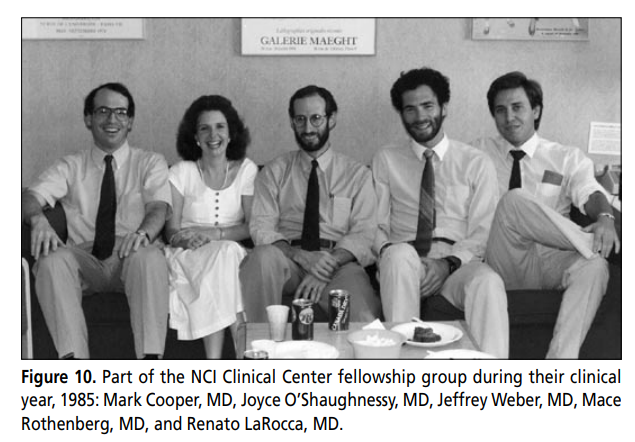
Dr. Joyce O'Shaughnessy (2nd from left) pictured with her all-male NCI Clinical Center fellowship group during their clinical year, 1985: Mark Cooper, MD, Joyce O'Shaughnessy, MD, Jeffrey Weber, MD, Mace Rothenberg, MD, and Renato LaRocca, MD. (Photo Credit: Dr. Joyce O'Shaughnessy.)
View additional multimedia and more ESG storytelling from Mary Kay on 3blmedia.com.
Contact Info:
Spokesperson: Mary Kay
Website: https://www.3blmedia.com/profiles/mary-kay
Email: info@3blmedia.com
SOURCE: Mary Kay
View the original press release on ACCESS Newswire:
https://www.accessnewswire.com/newsroom/en/business-and-professional-services/the-next-revolution-in-breast-cancer-research-according-to-world-1133533
