
TORONTO, ONTARIO / ACCESS Newswire / March 1, 2026 / As Canadian cities grapple with intensifying housing shortages, escalating land costs, and complex municipal zoning regimes, a growing number of developers and urban planners are turning their attention to an often-overlooked engine of urban growth: strategic land assembly. The practice of consolidating multiple adjacent parcels into a single, larger development site is increasingly seen as one of the most effective tools for unlocking high-density housing and mixed-use communities in Canada's most constrained urban markets.

Ladan Hosseinzadeh Sadeghi, President & CEO of Sky Property Group Inc., is among the industry voices making the case that disciplined, community-sensitive land assembly is not just a business strategy - it is a civic imperative at a time when Canada's housing supply crisis demands bold, coordinated action.
"We are in a defining moment for Canadian cities. Land assembly done right doesn't just create value for developers - it creates the physical foundation for the kinds of high-density, mixed-income communities our cities desperately need. The challenge is doing it with transparency, fairness, and a long-term vision."
- Ladan Hosseinzadeh Sadeghi, President & CEO, Sky Property Group Inc.
The Mechanics of Land Assembly in Canada
Land assembly involves the acquisition of two or more contiguous or adjacent properties - often single-family lots, aging low-rise buildings, or underutilized commercial parcels - to create a combined site capable of supporting larger-scale development. In cities like Toronto, Vancouver, Calgary, and Ottawa, where land scarcity is acute, this process can be transformative.
Unlike greenfield development on the urban periphery, land assembly targets existing urban fabric, enabling higher-density residential or mixed-use projects in established, transit-accessible neighbourhoods. The result: more homes in locations where people already want to live, with reduced pressure on infrastructure expansion and environmental impact.
The process, however, is rarely simple. Land assembly in Canadian urban markets demands a sophisticated understanding of municipal zoning codes, community consultation requirements, heritage designations, environmental liability, and - most critically - the human dynamics of negotiating with multiple property owners whose interests, timelines, and price expectations rarely align.
"Every assembly is a puzzle. You're not just negotiating on price - you're managing relationships, timing, and community trust simultaneously. The developers who succeed are the ones who approach this as a long-term investment in a neighbourhood, not a short-term transaction."

Why Land Assembly Is More Relevant Than Ever
Canada's National Housing Strategy has set ambitious targets for housing construction, yet supply consistently lags demand in major urban centres. One structural barrier is the fragmentation of urban land ownership: in mature neighbourhoods, dozens of individual owners may control parcels that, assembled together, could accommodate hundreds of housing units.
Provincial and municipal governments have begun to recognize this. British Columbia's recent zoning reforms enabling small-scale, multi-unit housing on single-family lots represent an early step. Ontario's More Homes Built Faster Act introduced changes that streamline certain approvals and reduce exclusionary zoning. Yet the real transformation in urban density requires not just policy reform, but the private-sector expertise to execute complex assemblies at scale.
"Developers have a responsibility to be active participants in housing policy conversations. We see firsthand where the regulatory bottlenecks are, where the market is failing, and where there are opportunities to accelerate supply if the conditions are right. That knowledge belongs in the room when cities are making decisions about their future."

Community Engagement: The Missing Ingredient
Historically, land assembly has sometimes been associated with displacement, speculation, and neighbourhood disruption. Critics have pointed to cases where longtime residents - particularly renters and lower-income homeowners - were pressured to sell or priced out of revitalizing areas.
Sky Property Group Inc. has made community engagement a core pillar of its development philosophy. Ladan Hosseinzadeh Sadeghi is emphatic that sustainable urban development cannot proceed over the objections of the communities it affects.
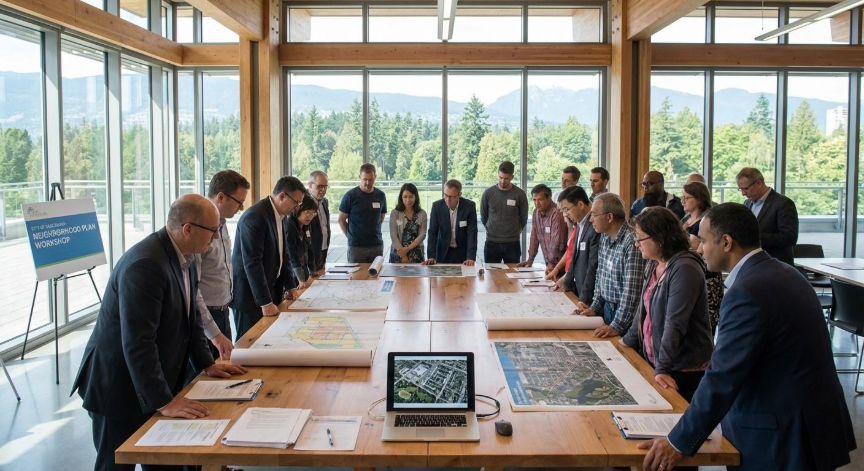
"We invest heavily in consultation - not checkbox consultation, but genuine, ongoing dialogue with residents, local businesses, and community organizations. When people understand what's being proposed and why, and when they feel heard, projects move forward more smoothly and the resulting developments better serve everyone."
This approach, she argues, is not just ethically sound - it's strategically smart. Municipal planning processes increasingly require evidence of meaningful community engagement, and projects that generate neighbourhood opposition face costly delays and redesigns. Building trust early translates directly into development efficiency.
Financing the Assembly: A Layered Challenge
One of the most technically demanding aspects of land assembly is the financing structure. Unlike single-parcel acquisitions, assemblies require capital to be deployed sequentially across multiple transactions, often over months or years, with no guarantee that every required parcel will ultimately be secured.
"Financing an assembly is fundamentally different from financing a conventional acquisition. You're managing a portfolio of options, conditional agreements, and carrying costs against a timeline that is almost never fully in your control. It requires patient capital and a sophisticated financial partner."
Canadian lenders and institutional investors are increasingly comfortable with assembly structures as the asset class matures. Mezzanine financing, joint ventures with institutional capital partners, and - in some cases - municipal land trusts or co-investment programs are expanding the toolkit available to developers pursuing large-scale assemblies.
Looking Ahead: The Policy Environment
Federal and provincial housing strategies continue to evolve, with an increasing recognition that supply must be unlocked through a combination of zoning reform, streamlined approvals, and incentives for density. Canada Mortgage and Housing Corporation (CMHC) programs targeting purpose-built rental and affordable housing are creating new financial pathways for developers willing to include affordable units in large-scale assembly projects.
"Canada has the political will right now to make real progress on housing supply. But political will only converts into homes if developers, municipalities, and communities are aligned. Land assembly is one of the most powerful tools we have. The question is whether we as an industry can deploy it responsibly, at scale, and fast enough to make a difference."
Contact Information
Ladan Hosseinzadeh Sadeghi
ladanhosseinzadehsadeghi@gmail.com
SOURCE: Sky Property Group Inc.
View the original press release on ACCESS Newswire:
https://www.accessnewswire.com/newsroom/en/real-estate/how-strategic-land-assembly-is-reshaping-canadas-urban-development-landscape-1142565
