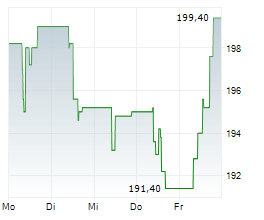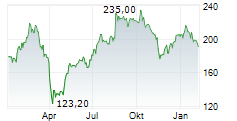
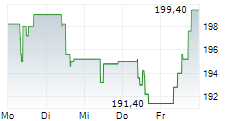
The 12% sell-off following the escalation around Iran appears disproportionate to DOC's current underlying operational exposure. We therefore view the move as fundamentally unjustified.
No direct operational footprint in the conflict zone. DOC does not operate kitchens in Iran or directly affected countries. As such, exposure is primarily indirect via volumes linked to Middle East carriers.
Very short-term disruption is cushioned. Over the weekend, most flights to affected regions have been cancelled. Cancellations through Monday appear to be fully compensated under DOC's contracts.
Short-term impact looks manageable. From Tuesday onwards, revenues from cancelled flights are no longer compensated. Under current airspace restrictions, the missed revenues are estimated at around mid-single-digit €m per week (eNuW, also discussed with the company). Against group revenues of almost € 2.5bn (eNuW), this is not thesis-changing even if disruptions were to persist for several weeks. In fact, we expect that a four-week closure of the Middle East airspace would lower DOC's FY sales by only approx. 1% and EBIT by c. 2% (eNuW). Given that a partial, phased normalisation at key hubs is reasonable before four weeks, the above sensitivity is viewed as conservative and estimates are therefore left unchanged for now.
High cost flexibility set to limit margin pressure. While the reported material expense ratio is seen at c. 39% (FY 25/26e, eNuW), the company previously indicated that roughly 80% of total costs are effectively variable. Food and beverage costs fall away entirely if production is halted. Personnel costs are partly flexible, with temporary staff scalable and fixed staff adjustable via leave or hour reductions, supported by relatively short notice periods. In addition, as production is largely fresh and not based on pre-produced items with lead times, inventory risk appears limited.
Seasonality is supportive. Ramadan (until March 19) is not peak travel season, capping short-term volume risk.
Potential offsetting effects. Provided Turkey's airspace remains open, rerouting of traffic from Gulf hubs towards Istanbul is conceivable. Given DOC's strong presence in Turkey, this could partly offset lost volumes, although visibility remains limited at this stage.
In sum, our assessment is that the impact is temporary, operationally cushioned and financially digestible. Unless the disruption broadens materially or persists, we see limited risk to the medium-term earnings trajectory. Hence, the share price weakness appears overdone and we reiterate our BUY recommendation, unchanged PT at € 266, based on DCF.
ISIN: AT0000818802