

NORTHAMPTON, MA / ACCESS Newswire / March 10, 2026 / Originally published by Mastercard
By Manu Chopra and Shamina Singh
In India, there is a subtle but tangible shift in the digital economy. In a society of diverse languages and communities, questions of informal work, uneven access to opportunity and who remains unseen come to the fore. That's why a growing number of organizations are re-thinking their approach to digital solutions. There is momentum around building technologies with inclusion as a foundational principle, which is reshaping how economic growth is achieved and how its benefits are distributed.
This moment is not new. The 2025 Findex shows that hundreds of millions have come online through inexpensive smartphones. Digital systems now sit at the intersection between people, work, welfare and markets.
Technology at the edges of everyday life
At the same time, the rapid rollout of 5G networks across India is beginning to reshape the speed, volume, and intensity with which digital services are delivered-bringing low-latency internet connectivity into sectors, such as healthcare, education, agriculture, and micro and small enterprises (MSEs).
In India, these forces converge with intensity. They bring long-standing inequalities into sharper focus, even as they create new opportunities for participation. Now is the time to shape systems and leverage innovation to incentivize inclusion - something that Indian social enterprises are achieving at scale.
While the digital economy needs to be underpinned by strong infrastructure, trust and usage can be a challenge. Across India, local intermediaries, ranging from field agents to community organizers to self-help groups and small entrepreneurs, play a decisive role in how digital systems are understood and taken up. It is in these relationships that inclusion is worked out in practice at the community - creating jobs and new livelihoods in an era of emerging technologies and bolstered by familiarity and function.
Local actors, local innovation
From this context, a dense and varied ecosystem has emerged. Civil society organizations, cooperatives, and social enterprises are treating digital systems as assets that can be adapted to local conditions. They understand participation in the digital economy as something that hinges on language, dignity, and the ability to earn and learn on terms that feel fair. Social sector startups, such as Frontier Markets and Haqdarshak center the rural user as agents of change by connecting markets, government schemes, and financial services to typically underserved, rural communities. India has become a hot bed for social and economic innovation that focuses on making technology work for the underserved.
One avenue to economic opportunity for underserved communities is the work being done by Karya, which is leveraging AI to create pathways for people from low-income communities to take part directly in the digital economy. Over a hundred thousand workers across India, equipped with just a smartphone, have found fair work opportunities in contributing to datasets that encompass the linguistic diversity of the country.
Simply said, AI systems and solutions can become more inclusive while providing a pathway to meaningful economic opportunities. In collaboration with the Mastercard Center for Inclusive Growth (CFIG), this model can scale to other regions and countries where there is opportunity to build inclusive digital systems of their own.
As data-driven technologies reshape economies across the world, the stakes of these questions continue to rise. Decisions about who generates value, who becomes visible to systems, and who gains from economic growth are increasingly embedded in the ability to access and engage with the digital economy.
The work unfolding in India points towards a trajectory in which digital ecosystems enable markets, create space for dignified work, and treat contributors with respect. Inclusive innovation, in this sense, will be a vital pathway to creating economic progress for all.
Shamina Singh: founder and president of the Mastercard Center for Inclusive Growth and the EVP for Sustainability at Mastercard.
Manu Chopra: founder and chief executive officer of Karya
Continue reading here
Follow along Mastercard's journey to connect and power an inclusive, digital economy that benefits everyone, everywhere.
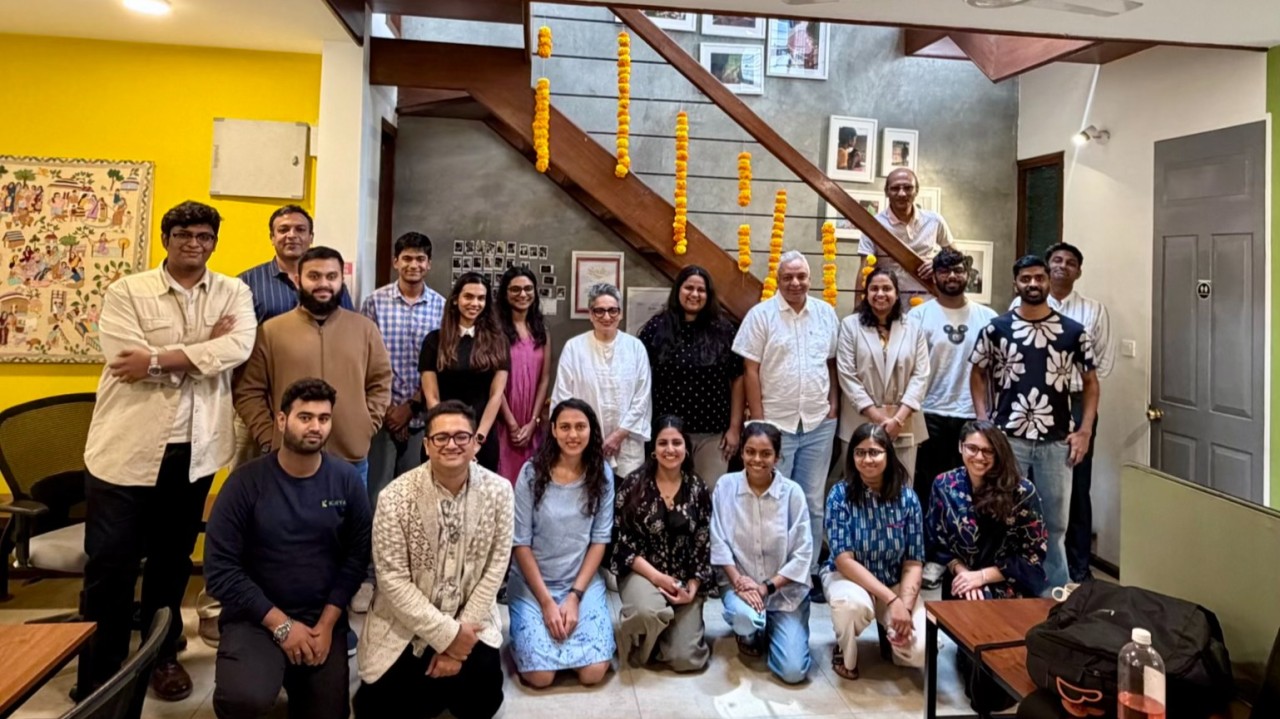
Find more stories and multimedia from Mastercard at 3blmedia.com.
Contact Info:
Spokesperson: Mastercard
Website: https://www.3blmedia.com/profiles/mastercard
Email: info@3blmedia.com
SOURCE: Mastercard
View the original press release on ACCESS Newswire:
https://www.accessnewswire.com/newsroom/en/banking-and-financial-services/mastercard-inclusive-india-is-innovating-ai-to-create-economic-oppor-1145643
