
Fidelity Emerging Markets Limited - Half-year Financial Report
PR Newswire
LONDON, United Kingdom, March 13
Fidelity Emerging Markets Limited
HALF YEAR REPORT for the six months ended 31 December 2025
- During the six-month period ended 31 December 2025, Fidelity Emerging Markets Limited outperformed the benchmark
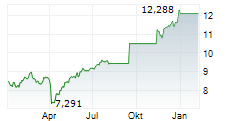
- The share price total return was +38.9% while the Net Asset Value (NAV) return was +35.5%,
- Over the same timeframe, the benchmark index, the MSCI Emerging Markets Index, returned +18.1%
- The company's extensive 'toolkit' contributed positively to performance, with long and short positions adding to performance alongside smaller-cap holdings
- Long positions in materials, commodities, and gold miners also added notable value
Financial Highlights
| 31 December 2025 | 30 June 2025 |
Assets | ||
USD | ||
Gross Asset Exposure 1 | $1,086.0m | $1,235.3m |
Equity Shareholders' Funds | $692.5m | $771.6m |
NAV per Participating Preference Share 2 | $15.55 | $11.99 |
Gross Gearing 2,3 | 56.8% | 60.1% |
Net Gearing 2,4 | 6.0% | 5.5% |
GBP |
| |
Gross Asset Exposure 1,5 | £807.4m | £901.4m |
Equity Shareholders' Funds 5 | £514.9m | £563.1m |
NAV per Participating Preference Share 2,5 | £11.56 | £8.75 |
Participating Preference Share Price and Discount Data | ||
Participating Preference Share Price at the period end | £10.66 | £7.83 |
Discount to NAV per Participating Preference Share at period end 2 | 7.79% | 10.51% |
Number of Participating Preference Shares in issue | 44,522,961 | 64,342,245 |
Earning for the six months ended 31 December | 2025 | 2024 |
Revenue Earnings per Participating Preference Share 6 | $0.12 | $0.17 |
Capital Earnings/(Loss) per Participating Preference Share 6 | $2.79 | ($0.37) |
Total Earnings/(Loss) per Participating Preference Share 6 | $2.91 | ($0.20) |
Ongoing charges ratio 2 | 0.83% | 0.84% |
1 The value of the portfolio exposed to market price movements.
2 Alternative Performance Measures. See Glossary of Terms.
3 Gross Asset Exposure less Equity Shareholders' Funds expressed as a percentage of Equity Shareholders' Funds.
4 Net Market Exposure less Equity Shareholders' Funds expressed as a percentage of Equity Shareholders' Funds.
5 The conversion from USD to GBP is based on exchange rates prevailing at the reporting dates.
6 Calculated based on weighted average number of Participating Preference Shares in issue during the period.
For further information please contact:
George Bayer
Company Secretary, FIL Investments International
George.bayer@fil.comor +44 20 7961 4240
Chairman's Statement
In a year that began with the inauguration of the new US administration and continued with the imposition of various trade tariffs - particularly on Asian and Latin American countries - it is perhaps surprising that emerging markets significantly outperformed their developed counterparts in 2025. Indeed, the 24.4% 12-month sterling total return of the MSCI Emerging Markets Total Return Index ('the Index') was almost double the 12.7% total return from the US-dominated MSCI World Index. This is despite the S&P 500 Index of leading US stocks reaching no fewer than 38 new all-time highs during the year, as the rollout of artificial intelligence technologies continued to drive returns for some of its largest constituents.
In their Portfolio Managers' Report on the following pages, Nick Price and Chris Tennant outline some of the reasons for this remarkable shift in market leadership. These include falling US interest rates and a weaker dollar (both of which are good for exporters to the US and countries with dollar-denominated debt), the commanding position of Asia in the high-tech supply chain, and a strong environment for commodities - particularly precious metals - whose production is largely based in emerging markets. For China, a large-scale stimulus package helped its equity market to post strong returns for the year - well in advance of developed markets, albeit a little behind the broader EM index.
Against such a positive backdrop, it is very pleasing to report that the Company outperformed strongly between 1 July and 31 December 2025. The net asset value (NAV) total return of 34.5% in sterling was almost double the 18.1% return of the Company's benchmark index, while the share price total return was even better at 38.9%, reflecting a narrowing in the discount to NAV during the period. For the calendar year as a whole, a share price total return of 56.5% placed your Company among the top 10 best-performing investment trusts of the year - a list dominated by precious metals and alternative asset strategies, in which we were the only mainstream equity fund, thereby beating all other emerging (and developed) markets peers.
While all the supportive market factors outlined above fed into this very favourable period of performance for the Company, to beat a rising market so emphatically requires a high degree of differentiation. Your Portfolio Managers' extended investment toolkit helped in this regard, with the short book having a positive impact even in a rising market.
Short positions accounted for more than 5% of the outperformance in the period under review. Certain themes also proved key in their contribution, including a large overweight in materials, concentrated in precious metals (a store of value in times of higher inflation) and copper, which is a vital component in electrification. Materials made up nearly 29% of the gross portfolio at 31 December versus just over 7% of the Index, so it is clear that holders of an index fund would not have benefited from the performance of this theme to anything like the same degree. In relation to other themes, particularly in industrials and technology, stock selection also contributed substantially.
Your Board remains committed to the advantages of active investing, especially in eras of change in market leadership, and this is an excellent example of how active investment management can enhance returns and how your Company's go-anywhere process can deliver.
Furthermore, we remind investors that the Company's Russian holdings remain valued at zero due to Russia's ongoing invasion of Ukraine. While any resolution of the conflict and subsequent reinstatement of international trading in Russian stocks could therefore result in a restoration of this hidden value, we will continue to reassess our position as the situation evolves, and greater clarity emerges.
Outlook
Since the end of the reporting period, the macroeconomic and geopolitical landscape has shifted dramatically and become more volatile. This means that the outlook for emerging markets has become more uncertain in the short-term. Amid the volatility, opportunity emerges to acquire good quality businesses at particularly attractive valuations. The Board is confident that the team at Fidelity can make best use of the extended investment toolkit and, have the necessary experience to navigate these turbulent waters and we believe that despite undeniable short-term uncertainty the long-term case for investing in emerging markets remains strong.
Board composition
There have been no changes to the Board of Directors in the period under review. However, Katherine Tsang will have completed nine years' service (the recommended maximum under corporate governance rules) in July 2026, and as such she intends to stand down at the 2026 Annual General Meeting (AGM). A search is currently under way to identify a suitably qualified individual to succeed her.
Strathclyde share repurchase
In November 2025, the Company completed the repurchase of a large shareholding (16.4 million shares) from the Strathclyde Pension Fund, equivalent to roughly 25% of the shares in issue. These shares were bought back at an agreed 14% discount to NAV and subsequently cancelled. Given the share price discount to NAV at the time of the repurchase was less than 10%, the transaction led to an immediate uplift of more than 4.5% in the NAV per share for continuing shareholders, underlining the Company's commitment to a fair outcome for all its investors.
Discount management
During the period under consideration, the Company's discount to NAV narrowed from 10.5% to 7.8%. While investment trust discounts in general also narrowed during the period (from 14.0% to 12.5% on average), your Board believes the Company's below-average discount reflects a number of factors. These include the strong performance of the FEML portfolio, our differentiated investment process and the clearly growing appetite for emerging markets, Fidelity's strong brand and clear marketing strategy and Nick and Chris's growing presence and strong messaging in the media and at many investor events, as well as their regular insightful contributions online via our website.
However, we also recognise the importance to investors of taking direct action to limit the discount, and as such we have continued to buy back shares in the market when the discount is sufficiently wide that taking such action would have a positive impact on NAV, repurchasing 3,378,107 shares (excluding the Strathclyde repurchase), or c 5.25% of the total at the start of the Half Year, between 1 July and 31 December 2025. Since then, a further 1,866,065 shares have been bought back, and at the latest practicable date (10 March 2026), the discount to NAV stood at 7.0%.
I would also remind readers that the Company has committed to undertake a tender offer for up to 25% of its then shares in issue (excluding any shares held in treasury) should its NAV total return fail to exceed the benchmark over the five years ending on 30 September 2026. As at 31 December 2025 (nine months short of the full five-year period), the Company's NAV total return was 8.32% ahead of that of the benchmark.
2025 AGM and final dividend
The Company held its Annual General Meeting (AGM) on 1 December 2025. The other directors and I thank you for your approval of all resolutions presented at the meeting. Once again we particularly appreciate the level of shareholder support and engagement evidenced by more than 36 million shares - a turnout of more than 75% following the reduction in the share base resulting from the Strathclyde repurchase - being voted. Shareholder enfranchisement remains a key advantage of the investment trust structure, and it is gratifying to see such a high level of engagement. At the EGM in October to consider the Strathclyde repurchase, turnout was similarly high at 76.3%, with more than 99% of votes cast in favour of the transaction.
At the AGM, shareholders approved the final dividend of $0.26 (19.80p) per Participating Preference Share, a 30.0% increase on the $0.20 (15.74p) paid in respect of FY24. The dividend was paid on 9 December 2025. Shareholders should note that the Company does not have a fixed dividend policy because income is an output rather than an aim of the investment process. Therefore, while the payout was substantially increased in respect of FY25 as a result of higher dividend receipts, there should be no expectation that future dividends will be maintained at or above this level.
The Board will review the final dividend payment for FY26 later in the year based on dividend receipts from the companies held in the portfolio.
As I write this towards the end of the third quarter of our financial year, while the rapidly changing geopolitical landscape may lead to volatility in the near term, I remain optimistic about the longer-term outlook for emerging markets. Strong underlying fundamentals, attractive valuations and supportive structural growth drivers continue to underpin the investment case. In this context, I believe the Company remains well placed to benefit from the opportunities that these markets can offer over time.
Portfolio Managers' Half Year Review
Macroeconomic Review
Emerging markets delivered exceptional performance in 2025 and continued to rally over the last six months of the year, outperforming developed markets. The backdrop for EM remained supportive, with several interest-rate cuts from the Fed boosting sentiment, alongside the presence of a much more balanced US dollar than we have seen in recent years. Performance was supported by strong returns in several Asian markets, particularly Taiwan and Korea, which benefited from AI-related demand and emerging signs of governance reforms in Korea, whilst strong commodity prices provided a boost to commodity-exporting economies like South Africa and parts of Latin America. The renewed focus on anti-involution in China supported investor sentiment somewhat, although the market marginally underperformed over the period as weak activity data emerged towards the end of the year.
Please note the period for this investment review is 1 July 2025 to 31 December 2025. As a result, the performance review and positioning update relate to this period and therefore precede the events taking place in Middle East in early March 2026. We have, however, incorporated a forward-looking perspective in the outlook section to reflect more recent developments, but note that as this is a rapidly developing situation, the team's views are subject to change as events evolve.
Portfolio performance: Six months to 31 December 2025
It was a strong period of performance for the investment company, which delivered net asset value (NAV) total returns of 34.5% vs. the index which returned 18.1% (GBP, net of fees). It was pleasing to see the portfolio's enhanced toolkit have a positive effect on performance, with contributions from the long and short books, the latter notable given the market performed so well, as well as from yield enhancement. In addition to robust investment performance, there was an uplift to the NAV per share of approximately 4.5% following the conditional share repurchase conducted in Q4.
The drivers of this outperformance were broad based, with the strongest contribution coming from our materials exposure, where we have a considerable overweight. Gold miners have benefitted from the continued shift in central bank reserves away from US Treasuries, as well as strong retail demand for the precious metal, both of which underpinned the rally in the commodity. Here, some of our smaller-cap positions performed particularly well, with South Africa-focused gold miner Pan African Resources, which also has a tailings-reprocessing operation, the top performer following the ramp-up of its new mine and as its growing market cap boosted liquidity, making it a more viable alternative for gold exposure among institutional investors. West Africa-focused gold miner Endeavour Mining also rallied on rising free cash flow.
Stock picking in industrials was also positive, with one of our newer additions to the portfolio, Chinese power equipment maker Sieyuan Electric, contributing off the back of a series of strong quarterly results, underpinned by margin expansion and a rising market share. Korea's SK Square, the holding company for memory company SK Hynix, also performed well, supported by the strong supply-demand outlook for memory, and went some way to offsetting the detraction from the underweight positioning in Korea after investor optimism around the value-up initiative drove a rally in the broader Korean market. Conversely, the short position in an Asian cathode makerweighed on returns after it rose on optimism around rising energy storage demand and a broader sector re-rating, despite no material improvement in underlying fundamentals and a weak balance sheet.
The portfolio enjoyed some of the tailwinds of AI-driven demand over the period, with stock picking in IT being another contributor to returns. Here, Taiwan's Elite Material, a maker of copper-clad laminate, which we added to at the nadir of the post-Liberation Day tariff fallout, rose on continued strong demand supported by hyperscaler investment in data centres. There were however some notable detractors within the short book, including in an Asian memory chip designerwhich rallied with other legacy memory names on rising DRAM prices, despite having no exposure to this type of memory.
The exposure to financials was more challenging during the period with stock picking and the overweight positioning detracting. Kazakhstan's dominant e-commerce and payments platform Kaspiwas among the key detractors, weighed down by the market's high interest rates, as well as some concerns around smartphone registering rules and the suspension of the dividend to fund the acquisition of a Turkish business. We see the latter two issues as largely transitory, and the inflation backdrop has started to improve, so we continue to have conviction in the stock, especially given its cheap valuation and dominant position in the local consumer finance and e-commerce segments. Broader weakness in the Indian market also dragged on some of our Indian financial positions, including SME lender Five Star Business Finance, which suffered from a regulatory push to curtail non-bank lending, although the company is still growing quickly. However, it was positive to see our underweight positioning in the Indian market offset this somewhat.
Stock picking in consumer discretionary was another weaker area during the period, driven in part by the overweight exposure to South African holding company Naspers(which holds a large stake in China's Tencent), which underperformed as local investors rotated into precious metal stocks given strength in this segment. Polish auto parts distributor Auto Partner also fell after disappointing on margins, although some of this appears to be due to cyclical effects such as local currency strength and input deflation, and it appears that pricing conditions are likely to improve going forward.
The overall exposure to Indonesia, including stock picking and the overweight positioning in the market, also detracted amid concerns around the political backdrop and as investors re-allocated exposure to EM markets like Taiwan. However, this indiscriminate de-rating has seen many high-quality Indonesia businesses reach trough multiples, providing some excellent valuation opportunities.
Portfolio positioning as of 31 December 2025
The focus continues to be on holding long positions in well capitalised businesses with under-levered balance sheets, whilst looking for short opportunities among companies with a deteriorating fundamental outlook or with broken balance sheets.
Over the second half of 2025 the materialsexposure increased, in part due to organic growth from strong performance, making it the portfolio's most significant overweight, with exposure predominantly concentrated in copper and gold.
In copper, we are entering a decade of stronger growth, driven by EVs and related infrastructure, grid investment to facilitate the energy transition, and data centre demand, whilst a lack of greenfield discoveries and a reduction in the quality of key mining assets will lead to weaker supply growth. As at year end we held miners including Africa-focused Ivanhoe Mines, which operates one of the last high-grade copper mines in the world and which we added to opportunistically after the stock underperformed following a seismic incident that impacted production at a flagship asset.
We also like gold miners, where the market seems to have entered a new paradigm with the traditional inverse relationship with real yields weakening following the confiscation of Russian reserves and the deterioration of fiscal conditions in the West. Here, many producers are trading on attractive free cash flow yields at spot and are likely to either re-rate or get acquired given the consolidation we are seeing. We were active in managing exposure, trimming positions where the risk-reward became less attractive, such as South Africa's AngloGold Ashanti and Pan African Resources, and reallocating to miners that had been overlooked, including South Africa-based Harmony Goldand South-America focused Aris Mining. There was also exposure to platinum via South African PGM miner Valterra Platinum, given PGMs are in deficit and elasticity of demand is very low, meaning there is scope for prices to move a long way.
We continue to have significant exposure to financials, where exposure is diversified across regions. Many smaller EM countries have oligopolistic banking structures, meaning they generate high returns on equity but trade at very low multiples, so it is an area where we see huge opportunity. Held in the portfolio are numerous value plays, including in CEE marketswhere several names are extremely cheap but have little sensitivity to rate cuts, such as Hungary's OTP Bank, as well as several fintechs, including Brazilian digital challenger bank Nubank. We continued to have some exposure to structural growth stories in the Indian market as well, although we reduced some exposure to Indian banks such as HDFC and ICICIover the period due to the increase in competition in the sector. Here we are seeing state owned banks, which previously weren't credible competitors to their privately owned peers, becoming more aggressive in credit origination, leading to greater market fragmentation.
Our exposure to information technologyis focused in technology hardware with an underweight to IT services companies, which we think are under pressure from AI-related disruption. Our largest absolute position at year end was in Taiwanese semiconductor foundry TSMC, where we continue to have a very positive view, given the company is yet to flex its pricing power despite the fact that it holds a monopoly over the market. We expect TSMC to increase prices this year, creating significant upside. We also like Taiwanese copper-clad laminate producer Elite Material, an R&D focused business with high barriers to entry that is geared to data centre trends, operating in a near monopoly with a strong competitive moat. We focused on diversifying our technology hardware exposure over the period, introducing a new position in Taiwan's Wiwynn, an ODM producer of servers focused exclusively on hyperscale customers which sold off on concerns around a near-term slowdown in demand, providing a good entry point into what we think is the best-run ODM in the sector. We were also active to take profits in stocks that had run ahead of fundamentals, exiting for example Taiwanese testing equipment manufacturer Chroma ATE after it rallied significantly from April lows, leaving the risk-reward less attractive.
At year end we had an overweight exposure to the memory space, where memory manufacturers have become far more disciplined in capital deployment with an effective oligopoly between three players supporting a strong demand backdrop with limited capacity additions and ongoing de-commoditisation of the sector. Here we hold Korea's Samsung Electronics and SK Hynix, although over the period we trimmed these names to take some profits and shift some exposure to their holdcos ( Samsung C&Tand SK Square).
At a country level, we continue to have an underweight exposure to mainland China, although positioning vs the index at year end was more neutral when we consider exposure to Hong Kong and Naspers. Over the period we added exposure to innovative technological leaders in China, particularly to R&D-intensive names within the industrialsspace, which have been a key driver of the Chinese economy over the last year. Examples include grid equipment supplier Sieyuan Electric, which benefits from tight global supply-demand dynamics in high-voltage switchgear, which is prompting global customers to switch from DM competitors to Sieyuan, and is the only private company competing with a group of inefficient SOEs, and dominant battery maker CATL, which is gaining market share from Korean and European peers. We also initiated positions in Huaming Power Equipment, a leading manufacturer of tap changers, devices used in electrical transformers where demand is strong, and within the healthcare sector APT Medical, a leading domestic medical equipment supplier, where revenues should be driven by treatment penetration and China's ageing population, compounded by localisation as the business gains market share from Western peers and a nascent export business.
Looking to other parts of the market, we remained underweight Chinese banks, a sector experiencing net interest margin compression and which at some point will face a very negative credit cycle. We have also become more sceptical on the outlook for Chinese consumption and believe it will be hard to drive a sustained recovery in Chinese housing, while much of the recovery in demand has been driven by short-term tailwinds like trade-in subsidies, which only pull forward demand. As a result, the exposure to consumer goodssectors was reduced. This has included trimming exposure to the sportswear market, including Anta Sports, where competitive rivalry is high given a fragmented market, and white goods, where we closed the position in Haier Smart Home, although we do still see stock-specific opportunities in some 'experiences' categories such as music streaming, where under-monetisation and a lack of competitive pressures has created a favourable backdrop for companies such as Tencent Music Entertainment. We do also continue to like South African holding company Naspers, where we see significant growth potential in its underlying asset Tencent, given the company is under-monetised vs peers, with capacity to increase its ad load and implement more targeted ads with the help of AI, which should support pricing power.
Elsewhere in Asia, we continued to have a small underweight in both Taiwanand Korea, although exposure to both markets increased during the period. In Taiwan we see multiple opportunities further down the AI supply chain, including in names such as Elite Materialand Wiwynn(discussed above). In Korea, we added some holdco exposure in the memory space ( SK Square, Samsung C&T) where we like the underlying operating business. We think that signs of governance improvement in Korea are a step in the right direction, but we remain cautious as share price moves over the period were extreme and actual improvements at the company level have so far been muted. We also added positions in Korea Investment Holdings, a brokerage platform that should benefit from greater trading activity, and Youngone, a well-run OEM for outdoor wear, with decent category exposure, considerable potential to benefit from the value-up initiative and a cheap valuation.
On the other hand, at year end we were overweight Indonesia, a country with attractive demographic tailwinds, where we added exposure to take advantage of a de-rating in the market. Here, companies like Indofoods, the world's largest noodle business, and leading grocery retailer Alfamart, should both benefit from a rise in formal retail penetration but are trading on very cheap multiples.
In Latin America, we were overweight Brazil as at year end. Although the outcome of the 2026 election remains uncertain and the range of outcomes is wide, the market continues to trade at a deep discount vs history and could rally significantly on a favourable outcome. We believe the risk-reward looks favourable and looked to add positions in several high-quality banks. We also had an overweight position in commodity exporting countries like Mexicoand Peru, where the strong outlook for commodities like copper is supportive and should filter through to the consumer, too.
Within the short book, exposure is diversified and stock-specific, with an effort to avoid crowded shorts. We typically look for two main traits: companies with fundamentals experiencing a structural or cyclical decline, and red flags around the balance sheet. Key positions include shorts in the Asian battery value chain, which form a pair trade with CATL. These companies are losing money, have weak balance sheets and a much smaller R&D budget than CATL. Elsewhere we hold several short materials positions, including an Asian agrochemical companyfacing a patent cliff and an EMEA agrochemicals businesswhere the valuation is a hangover from the 2022 bull market, despite negative gross margins and high debt levels. Over the period, we introduced a short in an Asian e-commerce company, where competitive pressures are eroding profitability, and an Asian auto parts manufacturer with unsustainable debt levels, whose returns have been challenged by the commoditisation of its core business.
Outlook
The outlook for EM appears constructive. The asset class continues to benefit from a relatively strong fiscal position vs DMs, attractive valuations despite last year's rally, and a supportive earnings backdrop, underpinned by commodity strength and AI-driven demand for key EM tech companies. That said, recent concerning events in the Middle East (as at 11 March) have clearly added complexity, increasing volatility, prompting some de-risking, and pushing oil prices higher, with potential implications for inflation. While near-term uncertainty has risen, many of the structural drivers that supported EM over the past year remain in place, although clearly volatility remains elevated, and in particular the path for inflation and interest rates has become less certain.
Taking a step back, the fiscal backdrop in EM remains supportive. The US continues to run an elevated deficit, with growing scrutiny around debt sustainability. By contrast, many EM economies have shown greater fiscal restraint in this cycle. While US policy uncertainty has weighed on appetite for US assets, key EM markets such as China have been able to shift towards reflation given constraints in previous periods. Much of the weak sentiment towards EM in recent years stemmed from the drawdown in China, but it now appears that much of what drove EM's derating is reversing.
A weaker USD, driven in part by fiscal expansion in the US, has been supportive for EM over the past year. Clearly, higher oil prices could lift inflation and increase the likelihood of tighter Fed policy, potentially strengthening the USD, particularly in a risk-off environment. However, it is important to point out that many EM economies are now less reliant on dollar funding than in previous cycles, reducing sensitivity to USD moves.
The backdrop remains favourable for key mined commodities, particularly for copper and gold, supporting terms of trade and domestic demand in exporting markets such as Peru, Chile and South Africa. While lower oil prices had previously provided an additional boost to consumption, the outlook here is more uncertain and depends heavily on the duration of the conflict - persistently higher prices would clearly weigh more heavily on lower-income EM countries and large Asian oil importers.
Technology is another tailwind for EM, and one that is likely to persist despite geopolitical turbulence. While AI enthusiasm has driven US equity performance in recent years, critical parts of the AI supply chain sit in EM, particularly in Taiwan and Korea, and we continue to think that much of the value accrual from AI and data centres will go to EM companies. We see more attractive valuations across the hardware ecosystem in these markets, where EM companies trade on materially lower multiples than DM peers.
EM as an asset class is not without risks, and recent developments in the Middle East underscore the need for continued vigilance. We are closely monitoring both the macro and geopolitical backdrop and company-specific implications.
Nick Price
Chris Tennant
Portfolio Managers
12 March 2026
Spotlight on the Top 5 Holdings
as at 31 December 2025
The top five holdings comprise 32.1% of the Company's Net Assets.
Taiwan Semiconductor Manufacturing
Industry:Information Technology
Country:Taiwan
% of Net Assets: 13.7%
TSMC is a pre-eminent Taiwanese semiconductor foundry with leading-edge technology, which reinforces the company's competitive position and ability to generate incremental return on invested capital. The company has built a technological moat over the past three decades and occupies an especially dominant position at the forefront of the industry as competitors have dropped from the race due to technical hurdles and the barrier of high required capital expenditures. TSMC's ability to hire the best talent while continuously improving its know-how keeps it ahead of the competition and able to generate cashflow to feed back into investing in R&D and capacity.
Naspers
Industry:Consumer Discretionary
Country: India
% of Net Assets: 7.7%
Naspers is a global internet and entertainment group and one of the world's largest technology investors. It is a South African holding company specialising in internet investments and operates in more than 120 countries and markets with long-term growth potential. It runs some of the world's leading internet, video entertainment, and media platforms. The company owns a sizeable stake in Tencent, the Chinese multinational technology and entertainment conglomerate. Naspers operates in various sectors, including online classifieds, food delivery, payments, travel, education, health, and social and internet platforms.
Pan African Resources
Industry:Materials
Country: South Africa
% of Net Assets: 4.0%
Pan African Resources is a South-Africa focussed gold miner, which also has an established tailings reprocessing operation.
Samsung Electronics
Industry:Information Technology
Country: South Korea
% of Net Assets: 3.6%
Samsung Electronics is a diversified Korean technology company, with a significant presence in consumer electronics and a leading position as one of three major players in the global memory industry.
OTP Bank
Industry:Financials
Country:Hungary
% of Net Assets: 3.1%
OTP Bank is the dominant banking franchise in Hungary and a leading independent financial services provider across Central and Eastern Europe.
Twenty Largest Investments
as at 31 December 2025
The Asset Exposures shown below measure exposure to market price movements as a result of owning shares and derivative instruments. The Fair Value is the realisable value of the portfolio as reported in the Statement of Financial Position. Where the Company holds shares, the Asset Exposure and Fair Value will be the same. For derivative instruments, Asset Exposure is the market value of the underlying asset to which the Company is exposed, while the Fair Value reflects the profit or loss on the contract since it was opened, and is based on how much the share price of the underlying asset has moved.
| Asset Exposure | Fair value | |
Asset Exposures - shares unless otherwise stated | $'000 | %1 | $'000 |
Taiwan Semiconductor Manufacturing | |||
Information Technology | 95,010 | 13.7 | 78,306 |
Naspers (shares, option and long CFD) | |||
Consumer Discretionary | 53,437 | 7.7 | 639 |
Pan African Resources | |||
Materials | 27,897 | 4.0 | 27,897 |
Samsung Electronics (long CFDs) | |||
Information Technology | 25,128 | 3.6 | 1,880 |
OTP Bank | |||
Financials | 21,466 | 3.1 | 21,466 |
Aura Minerals (option and long CFD) | |||
Materials | 20,686 | 3.0 | 1,443 |
Contemporary Amperex Technology | |||
Industrials | 20,446 | 3.0 | 20,446 |
Sieyuan Electric | |||
Industrials | 20,292 | 2.9 | 20,292 |
TBC Bank Group (long CFDs) | |||
Financials | 19,289 | 2.8 | 252 |
Cia de Minas Buenaventura (long CFD) | |||
Materials | 17,169 | 2.5 | (216) |
NU Holdings (option and long CFDs) | |||
Financials | 16,803 | 2.4 | 77 |
Endeavour Mining (option and long CFDs) | |||
Materials | 16,607 | 2.4 | 920 |
Torex Gold Resources (long CFD) | |||
Materials | 16,516 | 2.4 | 342 |
Elite Material (long CFD) | |||
Information Technology | 16,387 | 2.4 | 414 |
SK Hynix | |||
Information Technology | 15,588 | 2.3 | 15,588 |
Kaspi.KZ (option and long CFD) | |||
Financials | 14,761 | 2.1 | 235 |
Aris Mining (long CFD) | |||
Materials | 14,636 | 2.1 | 443 |
SK Square | |||
Industrials | 14,596 | 2.1 | 14,596 |
Wiwynn | |||
Information Technology | 13,418 | 1.9 | 13,418 |
Orizon Valorizacao de Residuos | |||
Industrials | 13,399 | 1.9 | 13,399 |
Twenty largest exposures | 473,531 | 68.3 | 231,837 |
Other exposures | 767,830 | 110.9 | 390,420 |
Total exposures before index hedging | 1,241,361 | 179.2 | 622,257 |
Less: index hedging | |||
MSCI Emerging Markets Index (future) | (155,395) | (22.4) | (2,515) |
Total exposures from index hedging | (155,395) | (22.4) | (2,515) |
Total exposures after the netting of index hedging | 1,085,966 | 156.80 | 619,742 |
Forward currency contracts | 205 | ||
Portfolio Fair Value3 |
|
| 619,947 |
Net current assets (excluding derivative assets and liabilities) | 72,558 | ||
Total Net Assets |
|
| 692,505 |
1 Asset Exposure (as defined in the Glossary of Terms) expressed as a percentage of Net Assets.
2 Gross Asset Exposure comprises market exposure to investments of $611,772,000 plus market exposure to derivative instruments of $474,194,000.
3 Portfolio Fair Value comprises investments of $611,772,000 plus derivative assets of $19,787,000 less derivative liabilities of $11,612,000 (per the Statement of Financial Position).
Interim Management Report
Principal and Emerging Risks and Uncertainties, Risk Management
In accordance with the AIC Code, the Board has in place a robust process for identifying, evaluating and managing the principal risks and uncertainties faced by the Company, including those that could threaten its business model, future performance, solvency or liquidity. The Board, with the assistance of the Manager, has developed a risk matrix which, as part of the risk management and internal controls process, identifies the key existing and emerging risks and uncertainties faced by the Company. The list of risks includes: geopolitical risk; volatility of emerging markets and market risk; investment performance risk; changing investor sentiment; cybercrime and information security risk; level of discount to net asset value risk; lack of market liquidity risk; business continuity and event management risk; gearing risk; foreign currency exposure risk; environmental, social and governance (ESG) risk and key person risk. Full details of these risks and how they are managed are set out on pages 23 to 27 of the Company's Annual Report for the year ended 30 June 2025 which is available on the Company's website at www.fidelity.co.uk/emergingmarkets. The Audit and Risk Committee continues to identify new emerging risks and take any necessary action to mitigate their potential impact. The risks identified are placed on the Company's risk matrix and graded appropriately. This process, together with the policies and procedures for the mitigation of existing and emerging risks, is updated and reviewed regularly in the form of comprehensive reports considered by the Audit and Risk Committee. The Board determines the nature and extent of any risks it is willing to take in order to achieve its strategic objectives.
The Manager also has responsibility for risk management for the Company. It works with the Board to identify and manage the principal and emerging risks and uncertainties and to ensure that the Board can continue to meet its Corporate Governance obligations.
Key emerging issues that the Board has identified include; rising geopolitical tensions including recent events in the Middle East, contagion of the Ukraine crisis or escalation of tensions between China and Taiwan; rising inflation and the so-called cost of living crisis impacting demand for UK - listed shares; and climate change, which is one of the most critical emerging issues confronting asset managers and their investors. Macro and ESG considerations, including climate change have been included into the Company's investment process. The Board continues to monitor these issues.
Please note the period for this risk review is 1 July 2025 to 31 December 2025. As a result, the update relates to this period and therefore precede the events taking place in Middle East in early March 2026. We have, however, incorporated a forward-looking perspective in the outlook sections to reflect more recent developments, but note that as this is a rapidly developing situation.
The Board seeks to ensure high standards of business conduct are adhered to by all of the Company's service providers and that agreed service levels are met. The Board is responsible for promoting the long-term success of the Company for the benefit of all stakeholders and in particular its shareholders. Although the majority of the day-to-day activities of the Company are delegated to the Manager, the Investment Manager, and other third-party service providers, the responsibilities of the Board are set out in the schedule of matters reserved for the Board and the relevant terms of reference of its committees, all of which are reviewed regularly by the Board.
Transactions with the Alternative Investment Fund Manager and Related Parties
The Alternative Investment Fund Manager ("AIFM") has delegated the Company's investment management to FIL Investments International. Transactions with the AIFM and related party transactions with the Directors are disclosed in Note 12.
Going Concern
In accordance with provision 35 of the 2024 AIC Code of Corporate Governance, the Directors have assessed the prospects of the Company over a longer period than the twelve month period required by the "Going Concern" basis. The Company is an investment fund with the objective of achieving long-term capital growth by investing in emerging markets. The Board considers long-term to be at least five years, and accordingly, the Directors believe that five years is an appropriate investment horizon to assess the viability of the Company, although the life of the Company is not intended to be limited to this or any other period.
The Directors have considered the Company's investment objective, risk management policies, liquidity risk, credit risk, capital management policies and procedures, the nature of its portfolio and its expenditure and cash flow projections.
This conclusion also takes into account the Board's assessment of the ongoing risks as outlined on the previous pages. The Board continues to review emerging risks that could have a potential impact on the operational capability of the Investment Manager and the Company's other key service providers. During the period under review, the Board received updates from Fidelity and other key service providers confirming that they continued to service the Company in line with service level agreements and have suitable and robust business continuity arrangements in place.
The Directors, having considered the liquidity of the Company's portfolio of investments (being mainly securities which are readily realisable) and the projected income and expenditure, are satisfied that the Company is financially sound and has adequate resources to meet all of its liabilities and ongoing expenses and can continue in operational existence for a period of at least twelve months from the date of this Half Year Report.
Accordingly, the Financial Statements of the Company have been prepared on a going concern basis.
Continuation votes are held every five years and the next continuation vote will be put to shareholders at the AGM in 2026.
Responsibility Statement
In accordance with Chapter 4 of the Disclosure Guidance and Transparency Rules, the Directors confirm that to the best of their knowledge:
• the condensed set of financial statements contained within the Half Year Report has been prepared in accordance with IAS 34 'Interim Financial Reporting' and gives a true and fair view of the assets, liabilities, financial position and return of the Company;
• the Half Year Report includes a fair review of the development and performance of the Company and important events that have occurred during the first six months of the financial year and their impact on the condensed financial statements;
• the Half Year Report includes a description of the principal risk and uncertainties for the remaining six months of the financial year; and
• the Half Year Report includes a fair review of the information concerning related party transactions.
The Half Year Report has not been audited or reviewed by the Company's Independent Auditor.
For and on behalf of the Board
Heather Manners
Chairman
12 March 2026
Statement of Comprehensive Income
for the six months ended 31 December 2025
|
| Six months ended 31 December 2025 unaudited | Six months ended 31 December 2024 unaudited | Year ended 30 June 2025 audited | ||||||
| Note | Revenue $'000 | Capital $'000 | Total $'000 | Revenue $'000 | Capital $'000 | Total $'000 | Revenue $'000 | Capital $'000 | Total $'000 |
Revenue | ||||||||||
Investment income | 4 | 8,858 | - | 8,858 | 10,127 | - | 10,127 | 22,941 | - | 22,941 |
Derivative income | 4 | 11,782 | - | 11,782 | 15,830 | - | 15,830 | 26,855 | - | 26,855 |
Other income | 4 | 510 | - | 510 | 361 | - | 361 | 631 | - | 631 |
Total Income | 21,150 | - | 21,150 | 26,318 | - | 26,318 | 50,427 | - | 50,427 | |
Net gains/(losses) on investments at fair value through profit or loss | - | 139,521 | 139,521 | - | (9,533) | (9,533) | - | 80,979 |
80,979 | |
Net gains/(losses) on derivative instruments | - | 28,797 | 28,797 | - | (14,304) | (14,304) | - | 32,226 | 32,226 | |
Net foreign exchange losses | - | (2,272) | (2,272) | - | (1,108) | (1,108) | - | (1,475) | (1,475) | |
Total income and gains/(losses) | 21,150 | 166,046 | 187,196 | 26,318 | (24,945) | 1,373 | 50,427 | 111,730 | 162,157 | |
Expenses |
|
|
| |||||||
Management fees | 5 | (467) | (1,868) | (2,335) | (447) | (1,789) | (2,236) | (863) | (3,451) | (4,314) |
Other expenses | (932) | - | (932) | (828) | - | (828) | (1,644) | - | (1,644) | |
Profit/(loss) before finance costs and taxation | 19,751 | 164,178 | 183,929 | 25,043 | (26,734) | (1,691) | 47,920 | 108,279 | 156,199 | |
Finance costs | 6 | (11,294) | - | (11,294) | (11,672) | - | (11,672) | (23,704) | - | (23,704) |
Profit/(loss) before taxation | 8,457 | 164,178 | 172,635 | 13,371 | (26,734) | (13,363) | 24,216 | 108,279 | 132,495 | |
Taxation | (1,146) | 79 | (1,067) | (1,095) | 289 | (806) | (2,347) | (3,162) | (5,509) | |
Profit/(loss) after taxation for the period attributable to Participating Preference Shares | 7,311 | 164,257 | 171,568 | 12,276 | (26,445) | (14,169) | 21,869 | 105,117 | 126,986 | |
Earnings/(loss) per Participating Preference Share (basic and diluted) | 7 | $0.12 | $2.79 | $2.91 | $0.17 | ($0.37) | ($0.20) | $0.31 | $1.52 | $1.83 |
The Company does not have any income or expenses that are not included in the profit/(loss) after taxation for the period. Accordingly, the profit/(loss) after taxation for the period is also the total comprehensive income for the period and no separate Statement of Comprehensive Income has been presented.
The total column of this statement represents the Company's Statement of Comprehensive Income prepared in accordance with IFRS. The supplementary information on the allocation between the revenue account and the capital reserve is presented under guidance published by the AIC.
All the profit/(loss) and total comprehensive income is attributable to the equity shareholders of the Company. There are no minority interests.
No operations were acquired or discontinued in the period and all items in the above statement derive from continuing operations.
Statement of Changes in Equity
for the six months ended 31 December 2025
| Note | Share premium account $'000 | Capital reserve $'000 | Revenue reserve $'000 | Total equity $'000 |
Six months ended 31 December 2025 (unaudited) | |||||
Total equity at 30 June 2025 | 6,291 | 706,238 | 59,099 | 771,628 | |
Profit after taxation for the period | - | 164,257 | 7,311 | 171,568 | |
Participating Preference Shares repurchased and cancelled | 9 | - | (43,351) | - | (43,351) |
Participating Preference Shares repurchased and cancelled for Strathclyde Pension Fund | 9 | - | (193,927) | - | (193,927) |
Buyback expenses | - | (1,075) | - | (1,075) | |
Dividend paid to shareholders | 8 | - | - | (12,338) | (12,338) |
Total equity at 31 December 2025 |
| 6,291 | 632,142 | 54,072 | 692,505 |
Six months ended 31 December 2024 (unaudited) | |||||
Total equity at 30 June 2024 | 6,291 | 695,822 | 51,333 | 753,446 | |
(Loss)/profit after taxation for the period | - | (26,445) | 12,276 | (14,169) | |
Participating Preference Shares repurchased into Treasury | 9 | - | (47,508) | - | (47,508) |
Dividend paid to shareholders | 8 | - | - | (14,103) | (14,103) |
Total equity at 31 December 2024 | 6,291 | 621,869 | 49,506 | 677,666 | |
Year ended 30 June 2025 (audited) | |||||
Total equity at 30 June 2024 | 6,291 | 695,822 | 51,333 | 753,446 | |
Profit after taxation for the year | - | 105,117 | 21,869 | 126,986 | |
Participating Preference Shares repurchased into Treasury | 9 | - | (94,701) | - | (94,701) |
Dividend paid to shareholders | 8 | - | - | (14,103) | (14,103) |
Total equity at 30 June 2025 | 6,291 | 706,238 | 59,099 | 771,628 |
Statement of Financial Position
as at 31 December 2025
| Note | 31 December 2025 unaudited $'000 | 30 June 2025 audited $'000 | 31 December 2024 unaudited $'000 |
Non-current assets | ||||
Investments at fair value through profit and loss | 10 | 611,772 | 712,861 | 632,011 |
Current assets |
| |||
Derivative assets | 10 | 19,787 | 15,006 | 13,984 |
Amounts held at futures clearing houses and brokers | 47,389 | 52,521 | 44,876 | |
Other receivables | 9,080 | 9,504 | 2,007 | |
Cash at bank | 23,966 | 9,551 | 1,751 | |
100,222 | 86,582 | 62,618 | ||
Current liabilities |
| |||
Derivative liabilities | 10 | 11,612 | 15,784 | 13,660 |
Other payables | 7,877 | 12,031 | 3,303 | |
19,489 | 27,815 | 16,963 | ||
Net current assets | 80,733 | 58,767 | 45,655 | |
|
| |||
Net assets | 692,505 | 771,628 | 677,666 | |
Equity |
| |||
Share premium account | 6,291 | 6,291 | 6,291 | |
Capital reserve | 632,142 | 706,238 | 621,869 | |
Revenue reserve | 54,072 | 59,099 | 49,506 | |
Total equity shareholders' funds | 692,505 | 771,628 | 677,666 | |
|
| |||
Net asset value per Participating Preference Share | 11 | $15.55 | $11.99 | $9.77 |
Statement of Cash Flows
for the six months ended 31 December 2025
| Six months ended 31 December 2025 unaudited $'000 | Six months ended 31 December 2024 unaudited $'000 | Year ended 30 June 2025 audited $'000 |
Operating activities | |||
Cash inflows from dividend income from investments* | 10,400 | 10,699 | 21,955 |
Cash inflows from interest income from cash and collateral* | 510 | 361 | 633 |
Cash inflows from dividend income from derivatives* | 6,612 | 10,979 | 14,390 |
Cash inflows from interest income from derivatives* | 342 | 740 | 1,166 |
Cash outflow from taxation paid | (1,171) | (1,096) | (4,407) |
Cash outflow from the purchase of investments | (430,800) | (372,144) | (746,980) |
Cash inflow from the sale of investments | 663,796 | 417,342 | 804,105 |
Cash inflow from net proceeds from settlement of derivatives | 28,294 | 5,809 | 57,520 |
Cash inflow/(outflow) from amounts held at futures clearing houses and brokers | 5,532 | 76 | (7,569) |
Cash outflow from operating expenses | (3,105) | (3,194) | (6,262) |
Net cash inflow from operating activities | 280,410 | 69,572 | 134,551 |
Financing activities |
| ||
Cash outflow from CFD interest paid | (633) | (10,675) | (19,611) |
Cash outflow from short CFD dividends paid | (11,627) | (1,280) | (3,011) |
Cash outflow from dividends paid to shareholders | (12,338) | (14,103) | (14,103) |
Cash outflow from repurchase of Participating Preference Shares into Treasury | (1,048) | (49,449) | (95,594) |
Cash outflow from repurchase and cancellation of Participating Preference Shares | (237,002) | - | - |
Cash outflow from repurchase and cancellation buyback expenses | (1,075) | - | - |
Net cash outflow from financing activities | (263,723) | (75,507) | (132,319) |
Net increase/(decrease) in cash at bank | 16,687 | (5,935) | 2,232 |
Cash at bank at the start of the period | 9,551 | 8,794 | 8,794 |
Effect of foreign exchange movements | (2,272) | (1,108) | (1,475) |
Cash at bank at the end of the period | 23,966 | 1,751 | 9,551 |
* Comparatives for six months ended 31 December 2024 have been restated.
Notes to the Financial Statements
for the six months ended 31 December 2025
1. Principal Activity
Fidelity Emerging Markets Limited (the "Company") was incorporated in Guernsey on 7 June 1989 and commenced activities on 19 September 1989. The Company is an Authorised Closed-Ended Investment Scheme as defined by The Authorised Closed-Ended Investment Schemes Rules and Guidance, 2021 (and, as such, is subject to ongoing supervision by the Guernsey Financial Services Commission). The Company is listed on the London Stock Exchange and is a constituent of the FTSE 250 Index.
The Company's registered office is at Level 3, Mill Court La Charroterie, St Peter Port, Guernsey GY1 1EJ, Channel Islands.
The Company's investment objective is to achieve long-term capital growth from an actively managed portfolio made up primarily of securities and financial instruments providing exposure to emerging market companies, both listed and unlisted.
2. Publication of Non-statutory Accounts
The Financial Statements in this Half Year Report have not been audited by the Company's Independent Auditor. The financial information for the year ended 30 June 2025 is extracted from the latest published annual report of the Company which was delivered to the Guernsey Financial Services Commission.
3. Accounting Policies
(i) Basis of Preparation
These Half Year Financial Statements have been prepared in accordance with International Accounting Standard 34, 'Interim Financial Reporting'. The interim financial statements should be read in conjunction with the Company's Annual Report and Financial Statements for the year ended 30 June 2025, which have been prepared in accordance with International Financial Reporting Standards as adopted by the European Union ("IFRS"), which comprise standards and interpretations approved by the International Accounting Standards Board ("IASB"), the IFRS Interpretations Committee and interpretations approved by the International Accounting Standards Committee ("IASC") that remain in effect and the Companies (Guernsey) Law, 2008.
The financial statements have been prepared under the historical cost convention, as modified by the revaluation of financial assets and financial liabilities at fair value through profit or loss.
(ii) Going Concern
The Directors have a reasonable expectation that the Company has adequate resources to continue in operational existence for at least twelve months from the date of approval of these Financial Statements. In making their assessment the Directors have reviewed the income and expense projections, the liquidity of the investment portfolio, stress testing performed and considered the Company's ability to meet liabilities as they fall due. Accordingly, the Directors consider it appropriate to adopt the going concern basis of accounting in preparing these financial statements.
4. Income
| Six months ended 31 December 2025 unaudited $'000 | Six months ended 31 December 2024 unaudited $'000 | Year ended 30 June 2025 audited $'000 |
Investment income | |||
UK dividends | 1,115 | 367 | 619 |
Overseas dividends | 7,743 | 9,758 | 22,320 |
Interest on bonds | - | 2 | 2 |
8,858 | 10,127 | 22,941 | |
Derivative income |
| ||
Dividends received on long CFDs | 4,587 | 9,504 | 14,964 |
Interest received on CFDs | 360 | 740 | 1,166 |
Option income | 6,835 | 5,586 | 10,725 |
11,782 | 15,830 | 26,855 | |
Other income |
| ||
Interest income from cash and cash equivalents and collateral | 510 | 361 | 631 |
Total income | 21,150 | 26,318 | 50,427 |
Special dividends of $88,000 have been recognised in capital during the period (31 December 2024: $2,340,000 and 30 June 2025: $3,230,000).
5. Management Fees
| Revenue $'000 | Capital $'000 | Total $'000 |
Six months ended 31 December 2025 (unaudited) | |||
Management fees | 467 | 1,868 | 2,335 |
Six months ended 31 December 2024 (unaudited) | |||
Management fees | 447 | 1,789 | 2,236 |
Year ended 30 June 2025 (audited) | |||
Management fees | 863 | 3,451 | 4,314 |
FIL Investment Services (UK) Limited is the Company's Alternative Investment Fund Manager (the "Manager") and has delegated investment management to FIL Investments International (FII). Both companies are Fidelity group companies.
FII charges a management fee of 0.60% per annum of the Net Asset Value of the Company. Fees are payable monthly in arrears and calculated on a daily basis. Management fees have been allocated 80% to capital reserve in accordance with the Company's accounting policies.
Management fees incurred by collective investment schemes or investment companies managed or advised by the Investment Manager are reimbursed.
6. Finance Costs
| Revenue $'000 | Capital $'000 | Total $'000 |
Six months ended 31 December 2025 (unaudited) | |||
Dividends paid on short CFDs | 664 | - | 664 |
Interest paid on CFDs | 10,630 | - | 10,630 |
11,294 | - | 11,294 | |
Six months ended 31 December 2024 (unaudited) | |||
Dividends paid on short CFDs | 975 | - | 975 |
Interest paid on CFDs | 10,697 | - | 10,697 |
11,672 | - | 11,672 | |
Year ended 30 June 2025 (audited) | |||
Dividends paid on short CFDs | 3,506 | - | 3,506 |
Interest paid on CFDs | 20,198 | - | 20,198 |
23,704 | - | 23,704 |
7. Earnings/(Loss) per Participating Preference Share
| Six months ended 31 December 2025 unaudited | Six months ended 31 December 2024 unaudited | Year ended 30 June 2025 audited |
Revenue earnings per Participating Preference Share | $0.12 | $0.17 | $0.31 |
Capital earnings/(loss) per Participating Preference Share | $2.79 | ($0.37) | $1.52 |
Total earnings/(loss) per Participating Preference Share (basic and diluted) | $2.91 | ($0.20) | $1.83 |
The earnings/(loss) per Participating Preference Share is based on the profit/(loss) after taxation for the period divided by the weighted average number of Participating Preference Shares in issue during the period, as shown below:
| Six months ended 31 December 2025 unaudited $'000 | Six months ended 31 December 2024 unaudited $'000 | Year ended 30 June 2025 audited $'000 |
Revenue profit after taxation for the period | 7,311 | 12,276 | 21,869 |
Capital profit/(loss) after taxation for the period | 164,257 | (26,445) | 105,117 |
Total profit/(loss) after taxation for the period | 171,568 | (14,169) | 126,986 |
| Number | Number | Number |
Weighted average number of Participating Preference Shares held outside of Treasury | 58,911,403 | 71,877,832 | 69,485,764 |
8. Dividend Paid to Shareholders
| Six months ended 31 December 2025 unaudited $'000 | Six months ended 31 December 2024 unaudited $'000 | Year ended 30 June 2025 audited $'000 |
Dividend Paid | |||
Dividend of 26.00 cents pence per ordinary share paid for the year ended 30 June 2025 | 12,338 | - | - |
Dividend of 20.00 cents pence per ordinary share paid for the year ended 30 June 2024 | - | 14,103 | 14,103 |
No dividend has been declared in respect of the six months ended 31 December 2025 (six months ended 31 December 2024: none).
9. Share Capital
| 31 December 2025 Number of unaudited shares | 31 December 2024 Number of unaudited shares | 30 June 2025 Number of audited shares |
Authorised | |||
Founder shares of no par value | 1,000 | 1,000 | 1,000 |
Issued |
| ||
Participating Preference Shares held outside Treasury |
| ||
Beginning of the period | 64,342,245 | 74,646,287 | 74,646,287 |
Participating Preference Shares repurchased and cancelled | (3,378,107) | - | - |
Participating Preference Shares repurchased and cancelled for Strathclyde Pension Fund | (16,441,177) | - | - |
Participating Preference Shares repurchased into Treasury | - | (5,311,585) | (10,304,042) |
End of the period | 44,522,961 | 69,334,702 | 64,342,245 |
Participating Preference Shares held in Treasury* |
| ||
Beginning of the period | 13,225,940 | 2,921,898 | 2,921,898 |
Participating Preference Shares repurchased into Treasury | - | 5,311,585 | 10,304,042 |
Cancellation of Participating Preference Shares in Treasury | (4,200,000) | - | - |
End of the period | 9,025,940 | 8,233,483 | 13,225,940 |
|
| ||
Total Participating Preference Shares | 53,548,901 | 77,568,185 | 77,568,185 |
* The Participating Preference Shares held in Treasury carry no rights to vote, to receive a dividend or to participate in a winding up of the Company.
The Board of Directors is mindful that the Company's shares have traded at a discount to NAV for some time, and frequently deliberates appropriate discount control mechanisms to address the imbalance between the demand and supply of the Company's shares. The Board intends to continue using its buyback programme to address the discount to NAV with the ambition that it may ultimately be maintained in single digits in normal market conditions on a sustainable basis.
The costs associated with the repurchase of the shares of $238,353,000 were charged to the capital reserve for the six months ended 31 December 2025. (six months ended 31 December 2024: $47,508,000 and 30 June 2025: $94,701,000).
The Company may issue an unlimited number of Shares of no par value.
Founder Shares
The Founder Shares were issued at $1 each par value, these shares are not redeemable.
At the Extraordinary General Meeting of the Company on 30 October 2009 and in accordance with The Companies (Guernsey) Law, 2008 it was approved that each Founder Share be redesignated as no par value shares.
The Founder Shares confer no rights upon holders other than at general meetings, on a poll, every holder is entitled to one vote in respect of each Founder Share held.
10. Fair Value Hierarchy
The Company is required to disclose the fair value hierarchy that classifies its financial instruments measured at fair value at one of three levels, according to the relative reliability of the inputs used to estimate the fair values.
Classification | Input |
Level 1 | Valued using quoted prices in active markets for identical assets |
Level 2 | Valued by reference to inputs other than quoted prices included in level 1 that are observable (i.e. developed using market data) for the asset or liability, either directly or indirectly |
Level 3 | Valued by reference to valuation techniques using inputs that are not based on observable market data |
Categorisation within the hierarchy has been determined on the basis of the lowest level input that is significant to the fair value measurement of the relevant asset. The table below sets out the Company's fair value hierarchy:
31 December 2025 (unaudited) | Level 1 $'000 | Level 2 $'000 | Level 3 $'000 | Total $'000 |
Financial assets at fair value through profit or loss | ||||
Investments in equity securities | 607,395 | - | - | 607,395 |
Investee funds | - | - | 4,377 | 4,377 |
Derivative instrument assets - Futures contracts | 2,392 | - | - | 2,392 |
Derivative instrument assets - Options | 2,080 | - | - | 2,080 |
Derivative instrument assets - CFDs | - | 15,110 | - | 15,110 |
Derivative instrument assets - forward currency contracts | - | 205 | - | 205 |
611,867 | 15,315 | 4,377 | 631,559 | |
Financial liabilities at fair value through profit or loss | ||||
Derivative instrument liabilities - Futures contracts | 2,567 | - | - | 2,567 |
Derivative instrument liabilities - Options | 2,736 | 170 | - | 2,906 |
Derivative instrument liabilities - CFDs | - | 6,139 | - | 6,139 |
5,303 | 6,309 | - | 11,612 |
30 June 2025 (audited) | Level 1 $'000 | Level 2 $'000 | Level 3 $'000 | Total $'000 |
Financial assets at fair value through profit or loss | ||||
Investments in equity securities | 708,476 | - | - | 708,476 |
Investee funds | - | - | 4,385 | 4,385 |
Derivative instrument assets - Futures contracts | 342 | - | - | 342 |
Derivative instrument assets - Options | 3,846 | 98 | - | 3,944 |
Derivative instrument assets - CFDs | - | 10,649 | - | 10,649 |
Derivative instrument assets - forward currency contracts | - | 71 | - | 71 |
712,664 | 10,818 | 4,385 | 727,867 | |
Financial liabilities at fair value through profit or loss | ||||
Derivative instrument liabilities - Futures contracts | 4,137 | - | - | 4,137 |
Derivative instrument liabilities - Options | 1,802 | 630 | - | 2,432 |
Derivative instrument liabilities - CFDs | - | 9,215 | - | 9,215 |
5,939 | 9,845 | - | 15,784 |
31 December 2024 (unaudited) | Level 1 $'000 | Level 2 $'000 | Level 3 $'000 | Total $'000 |
Financial assets at fair value through profit or loss | ||||
Investments in equity securities | 621,157 | - | - | 621,157 |
Equity linked notes | - | 6,377 | - | 6,377 |
Investee funds | - | - | 4,477 | 4,477 |
Derivative instrument assets - Futures contracts | 7,257 | - | - | 7,257 |
Derivative instrument assets - Options | 1,178 | 90 | - | 1,268 |
Derivative instrument assets - CFDs | - | 4,830 | - | 4,830 |
Derivative instrument assets - forward currency contracts | - | 629 | - | 629 |
629,592 | 11,926 | 4,477 | 645,995 | |
Financial liabilities at fair value through profit or loss | ||||
Derivative instrument liabilities - Futures contracts | 351 | - | - | 351 |
Derivative instrument liabilities - Options | 1,262 | 448 | - | 1,710 |
Derivative instrument liabilities - CFDs | - | 11,599 | - | 11,599 |
1,613 | 12,047 | - | 13,660 |
As the key input into the valuation of Level 3 investments is official valuation statements from the Investee Fund, we do not consider it appropriate to put forward a sensitivity analysis on the basis that insufficient value is likely to be derived by the end users of this report.
The following table summarises the change in value associated with Level 3 financial instruments carried at fair value for the six months ended 31 December 2025, for the six months ended 31 December 2024 and year ended 30 June 2025:
| 31 December 2025 $'000 | 30 June 2025 $'000 | 31 December 2024 $'000 |
Opening balance | 4,385 | 5,363 | 5,363 |
Sales | (323) | (1,138) | (1,057) |
Transfer to Level 1 | - | (1,466) | - |
Realised gains/(losses) | 296 | (7,589) | (9,105) |
Net change in unrealised gains | 19 | 9,215 | 9,276 |
Closing balance | 4,377 | 4,385 | 4,477 |
The Company's holdings in Russian securities have been fair valued at nil as at 31 December 2025 (year ended 30 June 2025: nil and six month ended 31 December 2024: nil ) as a result of trading being suspended on international stock exchanges. These Russian securities have a carrying cost of $90,932,976 as at 31 December 2025 (year ended 30 June 2025: $90,932,976 and six month ended 31 December 2024: $90,932,976,).
The Company's policy is to recognise transfers in and transfers out at the end of each accounting year.
11. Net Asset Value per Participating Preference Share
| 31 December 2025 unaudited | 30 June 2025 audited | 31 December 2024 unaudited |
Net assets | $692,505,000 | $771,628,000 | $677,666,000 |
Participating Preference Shares held outside of Treasury | 44,522,961 | 64,342,245 | 69,334,702 |
Net asset value per Participating Preference Share | $15.55 | $11.99 | $9.77 |
12. Transactions with the Manager and Related Parties
FIL Investment Services (UK) Limited is the Company's Alternative Investment Fund Manager and has delegated portfolio management to FIL Investments International ("FII"). Both companies are Fidelity group companies.
Details of the current fee arrangements are given in Note 5.
During the period, the Company had the following transactions payable to FII:
| Six months ended 31 December 2025 unaudited $'000 | Six months ended 31 December 2024 unaudited $'000 | Year ended 30 June 2025 audited $'000 |
Investment management fees | 2,335 | 2,236 | 4,314 |
Marketing services | 170 | 84 | 334 |
At the Statement of Financial Position date, the following balances payable to FII and other payables were accrued and included in other creditors:
| Six months ended 31 December 2025 unaudited $'000 | Year ended 30 June 2025 audited $'000 | Six months ended 31 December 2024 unaudited $'000 |
Investment management fees | 338 | 365 | 348 |
Marketing services | 21 | 43 | 11 |
At the date of this report, the Board consisted of five non-executive Directors (as shown below) all of whom are considered to be independent by the Board. None of the Directors has a service contract with the Company.
The annual fee structure with effect from 1 July 2025 is as follows:
| 1 July 2025 £ |
Chairman | 60,000 |
Chair of the Audit and Risk Committee | 45,000 |
Senior Independent Director | 42,000 |
Director | 40,000 |
Directors' Shareholdings:
| 31 December 2025 unaudited |
Heather Manners | 10,000 |
Torsten Koster | 15,000 |
Katherine Tsang | 8,000 |
Dr Simon Colson | 4,416 |
Mark Little | 2,850 |
13. Subsequent Events
Post interim, the valuation of the Company's holding in NCH Balkan was reassessed. The updated valuation of $8.3 million, an increase from $4.4 million, was reflected in the NAV on the 15 January 2026.
Additional Information
Board of Directors
Heather Manners (Chairman)
Torsten Koster (Senior Independent Director)
Dr Simon Colson
Mark Little
Katherine Tsang
Registered Office
Level 3, Mill Court La Charroterie
St Peter Port
Guernsey GY1 1EJ
Channel Islands
Website
www.fidelity.co.uk/emergingmarkets
The financial information contained in this Half-Yearly Results Announcement does not constitute statutory accounts. The financial information for the six months ended 31 December 2025 and 31 December 2024 have not been audited or reviewed by the Company's Independent Auditor.
The information for the year ended 30 June 2025 has been extracted from the latest published audited financial statements, unless otherwise stated.
Neither the contents of the Company's website nor the contents of any website accessible from hyperlinks on the Company's website (or any other website) is incorporated into, or forms part of, this announcement.
A copy of the Half-Yearly Report will shortly be submitted to the National Storage Mechanism and will be available for inspection at www.morningstar.co.uk/uk/NSM
The Half-Yearly Report will also be available on the Company's website at www.fidelity.co.uk/emergingmarketswhere up to date information on the Company, including daily NAV and share prices, factsheets and other information can also be found.
END

