
TORONTO, ON / ACCESS Newswire / March 15, 2026 / Across Canada, a quiet transformation is reshaping the commercial real estate landscape - and potentially unlocking one of the country's most creative solutions to its chronic housing shortage. Empty department stores, struggling suburban malls, and vast underutilized parking lots are becoming the raw material for mixed-use communities, purpose-built rentals, and affordable housing projects. For Ladan Hosseinzadeh Sadeghi, President & CEO of Sky Property Group Inc., this shift represents not just a smart investment thesis, but a necessary evolution in how Canadians think about urban land.
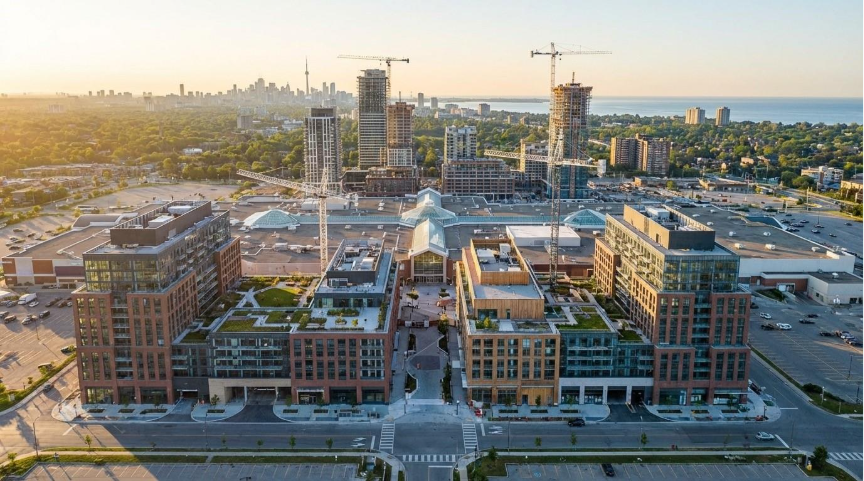
"We have spent decades building out in every direction, and now we are sitting on enormous tracts of underutilized commercial land in the most desirable, serviced parts of our cities," says Hosseinzadeh Sadeghi. "Adaptive reuse isn't a workaround - it is one of the most pragmatic and responsible paths forward for housing supply in Canada."
A National Opportunity Built on Vacant Square Footage
The numbers are striking. Canada lost hundreds of department stores and anchor tenants over the past decade, accelerated by the seismic shift toward e-commerce and further disrupted by the COVID-19 pandemic. Retail vacancy rates in many suburban markets remain elevated, and industry analysts estimate that millions of square feet of formerly productive commercial space sits dormant or dramatically underperforming from coast to coast.
Malls once anchored by Sears, Target, and Hudson's Bay are now half-empty monuments to a retail era that has passed. But these properties carry something extremely valuable: they sit on large, fully serviced lots with existing road access, utilities, transit proximity, and zoning designations that can often be amended to allow higher-density residential or mixed-use development.
"When I look at a struggling suburban mall, I see fully serviced land in an established neighbourhood," says Hosseinzadeh Sadeghi. "That is incredibly rare in any major Canadian city today. The infrastructure is already there - water, sewer, roads, power. The community is already there. What's missing is vision and political will to rezone and redevelop."
The Economics of Conversion
Adaptive reuse - converting existing structures or redeveloping underutilized commercial sites - is gaining traction with developers, municipal planners, and institutional investors alike. Unlike office-to-residential conversion, which often faces structural and mechanical challenges, large-format retail and surface parking lots offer relatively flexible canvases for reinvention.
The economics vary widely. Some conversions involve gutting and retrofitting existing mall structures into residential lofts, co-living spaces, or community hubs. Others involve full demolition of aging retail boxes to unlock the land beneath for purpose-built mid-rise or high-rise residential towers. In both cases, the savings on land servicing and site preparation can be significant compared to greenfield development.
Cities such as Calgary, Edmonton, and Ottawa have already seen adaptive reuse projects emerge from former big-box retail sites. Calgary's "City Centres" policy actively encourages the conversion of underperforming strip malls and regional malls into dense, walkable, mixed-income communities - and the city's Housing Accelerator Fund commitments have reinforced this direction.
"What Calgary has shown is that when the political framework is aligned - when municipalities are willing to rezone quickly and incentivize adaptive reuse - the private sector responds," says Hosseinzadeh Sadeghi. "The federal Housing Accelerator Fund was a step in the right direction. We need more of that alignment between all levels of government."
Zoning Reform as the Unlocking Mechanism
The single greatest barrier to retail-to-residential conversion is often not structural or financial - it is zoning. Commercial land has traditionally been designated for commercial use, and rezoning it to allow residential development requires political engagement, community consultation, and navigating complex municipal approval processes.
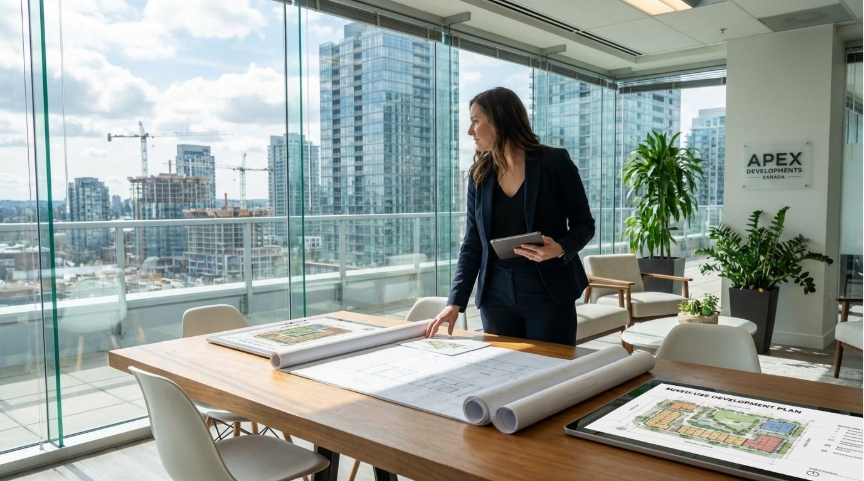
Hosseinzadeh Sadeghi is an advocate for streamlining this pathway. "We cannot afford, as a country, to leave viable development sites locked in outdated zoning categories while families are living in substandard housing or paying half their income in rent," she says. "Every abandoned parking lot next to a subway station is a policy failure. It doesn't have to be."
Several provinces are moving in this direction. Ontario's recent legislative updates around major transit station areas, and British Columbia's sweeping upzoning legislation, signal a growing recognition that commercial-to-residential conversions must be enabled at scale. Hosseinzadeh Sadeghi believes the next frontier is proactive, municipality-wide commercial land audits - systematic reviews of underperforming retail zones to identify sites ready for residential intensification.
Mixed-Use as the Gold Standard
The most successful adaptive reuse projects don't simply trade one use for another - they layer them. A former mall site might become a community with ground-floor retail, grocery, and services; mid-floors of purpose-built rental apartments; upper floors of market condominiums; a central green space or community park; and integrated childcare or healthcare facilities.
"Mixed-use is not a buzzword - it is what communities actually need," says Hosseinzadeh Sadeghi. "When we design for a single use, we create fragile environments. When we design for 24-hour life - where people can live, shop, work, and socialize within walking distance - we create resilience. And we create value."
Sky Property Group's approach to intensification projects emphasizes this layered model, recognizing that economic viability and community benefit are not mutually exclusive goals.
Sustainability and the Carbon Case
Beyond the housing rationale, adaptive reuse carries a powerful environmental argument. New construction generates significant embodied carbon - the emissions locked into building materials from extraction, manufacturing, and transportation. Reusing existing structures, or redeveloping previously disturbed land rather than greenfield sites, dramatically reduces a project's embodied carbon footprint.
"From a sustainability standpoint, the most environmentally responsible building is often the one that already exists," says Hosseinzadeh Sadeghi. "When we can reuse, retrofit, or redevelop on already-disturbed land, we are making a climate decision as much as a housing decision."
Canada's green building sector is increasingly incorporating lifecycle carbon analysis into project assessments, and adaptive reuse scores well on these metrics - a factor that is becoming increasingly important to institutional investors with ESG mandates.
A Call for Coordinated Action
Hosseinzadeh Sadeghi is direct about what is needed to unlock Canada's adaptive reuse potential at scale: coordination. Between federal housing policy and municipal zoning. Between developers and community groups. Between public financing tools and private capital.
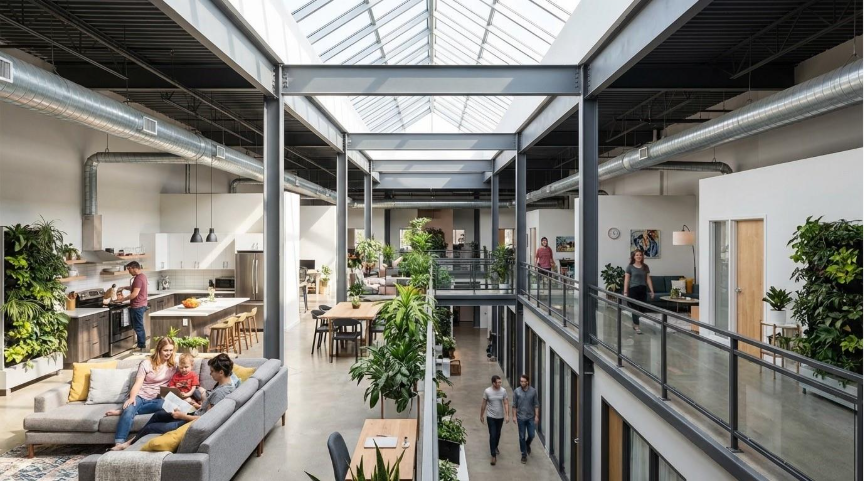
"The sites exist. The demand exists. The capital exists," she says. "What we need is alignment - and the courage to move quickly. Canada's housing crisis is not waiting for a perfect plan. We have to act with the tools we have, on the land we have, right now."
For Ladan Hosseinzadeh Sadeghi and Sky Property Group Inc., the opportunity embedded in Canada's struggling retail landscape is not a last resort - it is a first priority.
About Sky Property Group Inc.
Sky Property Group Inc. is a Canadian real estate development company focused on land assembly, high-density residential development, and urban intensification across the Greater Toronto Area and other major Canadian markets. Led by President & CEO Ladan Hosseinzadeh Sadeghi, the company is committed to innovative, community-centred development that addresses Canada's housing supply challenges.
Media Contact:
Ladan Hosseinzadeh Sadeghi
ladanhosseinzadehsadeghi@gmail.com
SOURCE: Sky Property Group Inc.
View the original press release on ACCESS Newswire:
https://www.accessnewswire.com/newsroom/en/real-estate/from-vacant-storefronts-to-new-homes-how-canadas-dying-malls-are-becoming-the-answer-to-1147934
