

EQS-News: Benzinga
/ Key word(s): Energy
By Meg Flippin, Benzinga DETROIT, MICHIGAN - March 16, 2026 (NEWMEDIAWIRE) - The marine solar panel market is projected to reach $5 billion by 2035, growing at a CAGR of 13.1% over 2025-2035, and Ascent Solar Technologies Inc. (NASDAQ: ASTI) could be one to watch. As the developer of featherweight, flexible and durable CIGS thin-film photovoltaic (PV), not only are its marine-ready solar panels durable and saltwater-resistant, the company reports they are also cost-effective. Ascent counts several big names, from NASA's Marshall Space Flight Center to the Georgia Institute of Technology, as partners and is increasingly expanding into marine applications. 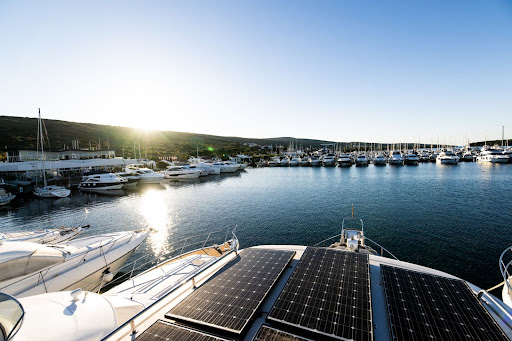 Powering Water Vessels With An Edge Ascent Solar's CIGS solar cells are finding interest in the marine industry because they are thin-film PV cells that weigh very little and are flexible. Since they perform well in low light, they are becoming an increasingly popular choice for space exploration, drones and surface and underwater vehicles (both military and commercial). What Ascent Solar says gives it an edge over competitors is its ability to deliver solar arrays in six to eight weeks, much faster than rivals that Ascent says have lead times of nine to 12 months. The company is betting that its manufacturing prowess will be a big advantage for OEM boatbuilders and integrators needing responsive supply chains. It doesn't hurt that Ascent Solar already has a history in the marine market. The company has delivered modules for testing in saltwater and for underwater monitoring applications, demonstrating the potential of remote systems under extreme conditions. This is critical for ocean monitoring, offshore platforms and long-range vessels. Their performance in low light and extreme temperatures also fits unpredictable marine environments. The company also believes its patented Monolithic Integration (MI) technology gives it an edge. This tech allows panels to continue generating power even if they are partially damaged or punctured. This is critical for solar-powered boats in the deep ocean; if a traditional solar panel is damaged by a wave or heavy winds, all of its cells typically fail. Mooring The Customers With its expertise, it is no surprise that Ascent Solar is becoming more active in the maritime market. An ocean monitoring company is currently testing the functionality and durability of Ascent's PVs in aquatic terrestrial applications to enable persistent equipment operation. Meanwhile, Georgia Tech is integrating solar arrays directly into the wings of unmanned aerial vehicles (UAVs) designed for ocean monitoring. These solar-powered seaplanes are being developed for persistent, long-range maritime surveillance. Ascent Solar sees its panels as a solution for persistent ocean buoys, sensors, autonomous underwater vehicle (AUV) surface charging and electric boat hulls. Beyond traditional surface PVs, the company's tech has drawn interest from developers of autonomous vehicles, a niche but rapidly expanding area within the broader marine solar market, reports the company. By combining rapid manufacturing with extreme durability, Ascent Solar is positioning itself to be at the helm of the next generation of green ships and applications. To learn more about Ascent, click here. Featured image from Shutterstock. This content was originally published on Benzinga. Read further disclosures here. This post contains sponsored content. This content is for informational purposes only and is not intended to be investing advice. View the original release on www.newmediawire.com News Source: Benzinga 16.03.2026 CET/CEST Dissemination of a Corporate News, transmitted by EQS News - a service of EQS Group. |
| Language: | English |
| Company: | Benzinga |
| United States | |
| EQS News ID: | 2291980 |
| End of News | EQS News Service |
2291980 16.03.2026 CET/CEST