
TORONTO, ON / ACCESS Newswire / March 23, 2026 / As spring arrives, Canada's real estate market is showing signs of renewed momentum after two years of recalibration. With interest rates trending lower, housing supply still critically constrained, and a federal election cycle adding policy uncertainty, market participants from first-time homebuyers to institutional developers are recalibrating their strategies. Ladan Hosseinzadeh Sadeghi, President & CEO of Sky Property Group Inc., one of the GTA's most active real estate development firms, offers her read on where the market stands and where it's headed.

A Market in Transition
Canada's housing market enters spring 2026 in a notably different posture than a year ago. The Bank of Canada's rate-cutting cycle, which began in mid-2024, has brought the overnight rate down considerably from its peak of five percent, easing mortgage affordability for millions of Canadians who had been priced out or sitting on the sidelines. Variable-rate mortgage holders have seen relief, and fixed-rate products have followed, with five-year terms now available well below the peaks of 2023.
The result is a cautious but perceptible resurgence of buyer activity - particularly among first-time purchasers and move-up buyers who had delayed decisions during the high-rate environment.
"What we're seeing this spring is a market that has found its floor," says Ladan Hosseinzadeh Sadeghi, President & CEO of Sky Property Group Inc. "There's pent-up demand that built for two years. As rates stabilize, buyers who were waiting - and there are a lot of them - are re-entering. The question for developers and sellers alike is whether supply can respond fast enough."

Supply Remains the Central Challenge
Despite policy commitments at every level of government, Canada's housing supply deficit remains severe. The Canada Mortgage and Housing Corporation estimates that the country needs to build upwards of 3.5 million additional homes by 2030 to restore affordability - a target that construction timelines and labour constraints make extraordinarily difficult to reach.
In the Greater Toronto Area specifically, new home sales in the condominium segment have faced headwinds as pre-sale buyers encounter elevated carrying costs on existing purchase contracts, and some projects have faced delays or cancellations. However, the purpose-built rental sector continues to attract institutional capital, driven by persistent rental demand and provincial regulatory frameworks that have improved the investment case for rental construction.
"Every city in Canada - Toronto, Vancouver, Calgary, Ottawa - is dealing with the same fundamental equation: not enough homes for the people who need them," she says. "That's a challenge from a policy standpoint, but it's also a signal for serious developers. The underlying demand isn't going away. If you build thoughtfully, in the right locations, with the right product mix, the fundamentals are sound."
The GTA Spring Market: Nuanced by Segment
The Greater Toronto Area spring market is unlikely to be uniform. Experts expect significant variation by property type, geography, and price point.
Detached and semi-detached homes in established neighbourhoods are expected to see competitive activity, particularly in the $800,000 to $1.4 million range, where rate relief has most meaningfully expanded buyer purchasing power. Multiple-offer scenarios are returning in select neighbourhoods, though not with the frenzied intensity of 2021.
The pre-construction condo market remains complex. While lower rates help, many buyers who signed pre-construction contracts at 2021-2022 price levels are still navigating elevated carrying costs and, in some cases, assignment sales. Developers are responding with creative incentive structures - extended deposit programs, rate buydowns, and phased pricing - to re-stimulate pre-sale activity.
Purpose-built rental projects continue to attract financing and institutional interest, with purpose-built rental starts at near-record levels in several major cities. For developers with the balance sheets to navigate multi-year timelines, rental development remains a compelling long-term play.
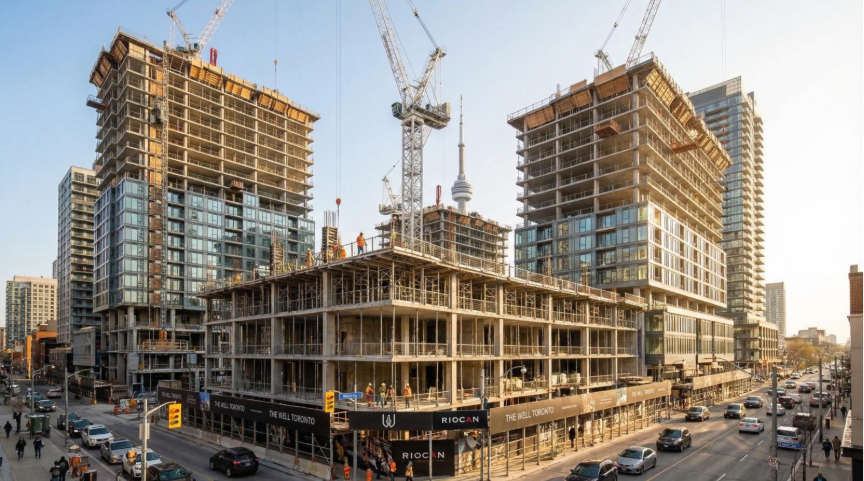
"I advise anyone looking at the GTA market right now to resist the temptation to generalize," says Ladan Hosseinzadeh Sadeghi of Sky Property Group. "This is not a monolithic market. The dynamics in Scarborough are different from Mississauga, which are different from North York. Product type, local zoning, proximity to employment nodes, transit access - all of these variables matter enormously. Smart buyers and smart developers do their homework at the neighbourhood level."
Policy Winds: Federal Election and Housing
Canada is navigating a federal election cycle in 2026, and housing policy is firmly on the ballot. All major parties have advanced proposals ranging from GST rebates on new construction to expanded First Home Savings Account limits, accelerated infrastructure spending, and zoning reform incentives tied to federal transfers to municipalities.
"Every election brings housing promises. What the industry needs isn't more announcements - it's faster approvals, predictable development charges, and zoning reform that actually reduces the timeline from concept to construction," she says. "At Sky Property Group, we measure success in shovels in the ground. That requires policy certainty, not just policy rhetoric."
She points to several provinces - including Ontario's ongoing efforts to streamline municipal approvals - as positive signals, while cautioning that implementation at the local level remains inconsistent.
Opportunities for Investors and Developers
Despite near-term uncertainty, Ladan Hosseinzadeh Sadeghi sees clear pathways for disciplined investors and developers in 2026.
Land assembly and rezoning plays remain attractive in cities with strong employment fundamentals, where zoning reform is opening up new as-of-right density. Assembling underutilized parcels in transit-proximate, employment-rich corridors continues to generate long-term value even in constrained market conditions.
Mixed-use and mixed-income projects are gaining traction with municipalities that are offering density bonuses and reduced development charges in exchange for affordable housing components. These deals require sophisticated structuring but can unlock projects that wouldn't otherwise pencil out.
Rental-to-ownership conversion pathways - where developers build rental housing with the option to convert to condominium ownership in the future - are an emerging model that allows projects to launch in a challenging pre-sale environment while preserving long-term optionality.
"The developers who will define the next decade in Canadian real estate are the ones who can work with complexity - complex sites, complex policy environments, complex financing," says Ladan Hosseinzadeh Sadeghi. "That's where experience and relationships matter. This is not a market for the faint of heart, but for those willing to do the hard work, the opportunity is substantial."
Looking Ahead
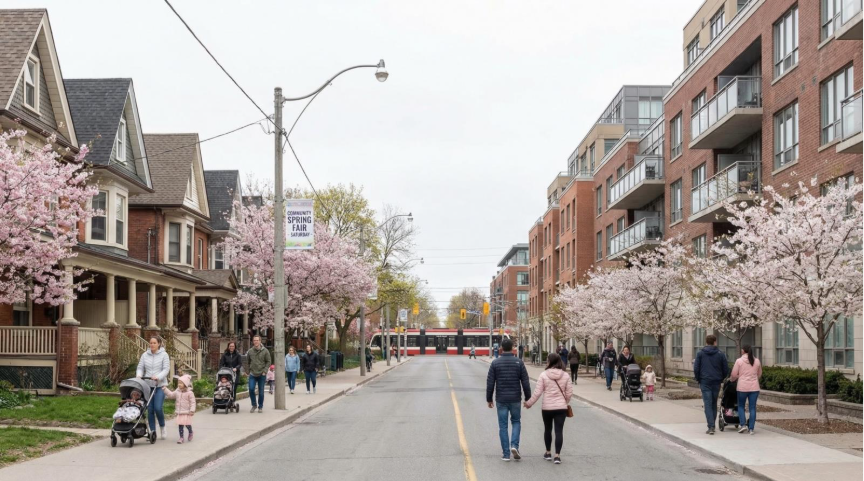
As spring progresses, market watchers will be monitoring several key indicators: resale transaction volumes in major cities, new project launch activity, construction start numbers, and any shifts in Bank of Canada policy language. The consensus among economists points to a stable-to-modestly-improving rate environment through the remainder of 2026 - a backdrop that should support continued gradual market recovery.
For Ladan Hosseinzadeh Sadeghi and Sky Property Group, the focus remains on executing long-term urban intensification projects that address Canada's housing shortfall while generating durable returns.
"We're builders. Our job is to look past the quarterly noise and see where the city needs to go in ten, twenty years," she says. "Canada needs more housing. Full stop. And we intend to be part of delivering it."
About Sky Property Group Inc.
Sky Property Group Inc. is a Toronto-based real estate development and property management company specializing in land assembly, high-density residential development, and urban intensification across the Greater Toronto Area. Led by President & CEO Ladan Hosseinzadeh Sadeghi, Sky Property Group is committed to creating lasting value in Canada's most dynamic urban markets.
Media Contact:
Ladan Hosseinzadeh Sadeghi
ladanhosseinzadehsadeghi@gmail.com
SOURCE: Sky Property Group Inc.
View the original press release on ACCESS Newswire:
https://www.accessnewswire.com/newsroom/en/real-estate/canadas-spring-2026-real-estate-market-what-buyers-sellers-and-developers-need-to-know-1150671
