Anzeige
Mehr »
Dienstag, 24.03.2026 - Börsentäglich über 12.000 News
Drohnenkrieg eskaliert - und diese Aktie greift nach zwei Mega-Märkten
Anzeige

Indizes

Kurs

%
News
24 h / 7 T
Aufrufe
7 Tage

Aktien

Kurs

%
News
24 h / 7 T
Aufrufe
7 Tage

Xetra-Orderbuch

Fonds

Kurs

%

Devisen

Kurs

%

Rohstoffe

Kurs

%

Themen

Kurs

%

Erweiterte Suche

WKN: 890808 | ISIN: GB0004866223 | Ticker-Symbol: 01K
München
24.03.26 | 08:00
23,200 Euro
-4,13 % -1,000
Branche
Bau/Infrastruktur
Aktienmarkt
FTSE-250
1-Jahres-Chart
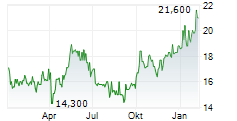
KELLER GROUP PLC Chart 1 Jahr
5-Tage-Chart
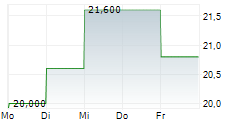
KELLER GROUP PLC 5-Tage-Chart
RealtimeGeldBriefZeit
22,60023,40012:55
PR Newswire
125 Leser
Artikel bewerten:
(0)

Keller Group Plc - Annual Financial Report

Keller Group Plc - Annual Financial Report

PR Newswire

LONDON, United Kingdom, March 24

24 March 2026

Keller Group plc

Annual Report and Accounts for the year ended 31 December 2025

Keller Group plc ("Keller", the "Company") announces that the Annual Report and Accounts for the year ended 31 December 2025 ("Annual Report 2025") is available to view on the Investors section of the Company's website at Investor centre | Keller Group plc .

In compliance with UK Listing Rule 6.4.3R, a copy of the Annual Report 2025 has been submitted to the National Storage Mechanism via the FCA's Electronic Submission System and will shortly be available for inspection at https://data.fca.org.uk/#/nsm/nationalstoragemechanism .

In accordance with DGTR 6.3.5R, this announcement contains information in the Appendix about the principal risks and uncertainties, the Directors' responsibility statement and note 29 to the accounts on related party transactions. This information has been extracted in full unedited text from the Annual Report 2025. This material should be read in conjunction with and is not a substitute for reading the full Annual Report 2025. References to page numbers and notes in the Appendix refer to those in the Annual Report 2025. A condensed set of financial statements was appended to the Keller's preliminary results announcement issued on 3 March 2026.

For further information, please contact:

Keller Group plc www.keller.com

Silvana Glibota-Vigo, Group Head of Secretariat 020 7616 7575

Notes to editors:

Keller is the world's largest geotechnical specialist contractor providing a wide portfolio of advanced foundation and ground improvement techniques used across the entire construction sector. With around 10,000 staff and operations across five continents, Keller tackles an unrivalled 5,500 projects every year, generating annual revenue of c£3bn.

LEI number: 549300QO4MBL43UHSN10

Appendix

Principal risks and uncertainties

We list on the following pages the principal risks and uncertainties as determined by the Board that may affect the Group and highlight the mitigating actions that are being taken. The content of the table, however, is not intended to be an exhaustive list of all the risks and uncertainties that may arise.

What we review when assessing our principal and key risks:

Risk ownership Each risk has a named owner. In addition, each principal risk is sponsored by a member of the Executive Committee, who drives progress. Risk velocity Measuring how quickly the risk reaches its impact assessment in the event the risk crystallises.
Likelihood and impact Managed through a globally applied five-by-five scoring matrix. Mitigating actions Further controls and mitigating activities required to further mitigate likelihood or impact of the risk.
Net risk After mitigating controls are taken into account. Strategic levers Capturing the impact on the Group's strategic levers and interdependencies between principal risks.
Risk appetite Defined at a risk category level and split into five levels. Emerging risks Any relevant emerging risks where the principal risk is impacted captured under medium and long-term assessed risks.

All principal risks are detailed in a standardised format. This ensures an effective and consistent review, understanding, monitoring and reporting throughout the Group, both in the terminology and the assessment itself. The top-down process includes a rigorous review by both the Executive Committee and the Board twice a year. The bottom-up process includes at least quarterly reviews facilitated by the Group Head of Risk and Assurance at a business unit level across the Group. In addition, deep dive reviews are conducted as required with results fed into respective reviews.

Financial risk

1. Inability to finance our business
Risk owner - Chief Financial Officer

Link to strategy:
2, 3

Timeframe:
MT LT

Link to viability:
Yes
Reduced facility headroom

Description and impact
Failure to sufficiently and effectively manage the financial strength of the Group could lead it to:
  • Fail to meet required tests that allow it to continue to use the going concern basis in preparing its financial statements.
  • Fail to meet financial covenant tests, potentially leading to a default event.
  • Have a lack of available funds, restricting investment in growth opportunities, whether through acquisition or innovation.
  • Be unable to meet dividend payment requirements.
Causes
  • Failure to accurately forecast material exposures and/or manage the financial resources of the Group.
Mitigation and internal controls
  • Centralised Treasury function that is responsible for managing key financial risks, including liquidity and credit capacity.
  • Mixture of long-term committed debt with varying maturity dates which comprise a £400m revolving credit facility maturing in 2031 and a US private placement debt of $300m, with $120m maturing in 2030 and $180m maturing in 2033.
  • The Group maintains significant undrawn facilities within a high-quality RCF bank syndicate, which underpins the liquidity requirements of the Group.
  • Strong free cash flow profile - flexibility on capital expenditure and ability to reduce dividends.
  • Embedded procedures to monitor the effective management of cash and debt, including weekly cash reports and regular cash flow forecasting to ensure compliance with borrowing limits and lender covenants.
  • Culture focused on actively managing our working capital and monitoring external factors that may affect funding availability.
Movement since 2024
Constant risk
Seven-year £400m RCF secured (initial five years with two one-year extensions). The first RCF one-year extension request was submitted to the RCF agent. Acceptance of the extension has been given, extending the RCF maturity to June 2030. This, along with continued strong operational performance in 2025, demonstrates a clear ability to manage both existing and future risks.

Market risk

2. A rapid downturn in our markets
Risk owner - Chief Financial Officer

Link to strategy:
1, 3

Timeframe:
MT LT

Link to viability:
Yes
Revenue decline

Description and impact
Inability to maintain a sustainable level of financial performance throughout the construction industry market cycle, which grows more than many other industries during periods of economic expansion and falls harder than many other industries when the economy contracts. Any significant, sustained reduction in the level of customer activity could adversely affect the Group's strategy, reducing revenue and profitability in the short and medium term, and negatively impact the longer-term viability of the Group.

Causes
  • Customers postponing or reducing investment in ongoing and new projects at short notice.
  • Impact of increasing inflation, especially in steel, cement and energy.
  • Political instability leading to disruption in supply chains impacting both availability and price.
Mitigation and internal controls
  • The diverse markets in which the Group operates, both in terms of geography and market segment, provide protection to individual geographic or segment slowdowns.
  • Leveraging the global scale of the Group, talent and resources can be redeployed to other parts of the company during individual market slowdowns.
  • Having strong local businesses with in-depth knowledge of the local markets enables early detection and response to market trends.
  • The diverse customer base, with no single customer accounting for more than 4% of Group revenue, reduces the potential impact of individual customer failure caused by an economic downturn.
Movement since 2024
Constant Risk
The Group continues to maintain a very strong order book across all divisions at near record levels. Inflation and interest rate risk is now beginning to abate in Keller's key markets. Geopolitical uncertainty continues both due to the conflicts in Ukraine and Gaza, plus the impacts of US tariff policy.

Strategic risks

3. Losing our market share
Risk owner - Chief Financial Officer

Link to strategy:
1, 3

Timeframe:
ST MT

Link to viability:
Yes
Revenue decline

Description and impact
Inability to achieve sustainable growth, whether through organic growth acquisition, new products, new geographies or industry-specific solutions, may:

  • Jeopardise our position as the preferred international geotechnical specialist contractor.
  • Lead to inefficiencies and increased operating costs, which in turn could impact our ability to deliver balanced profitable growth, which is a key component of our strategy.
  • Failure to deliver on our key strategic objective may result in the loss of confidence and trust of our key stakeholders including investors, financial institutions and customers.
Causes
  • Increased competitor activity especially in tight or contracting markets.
  • Failure to adjust to changing customer demands or fully understand and meet their requirements.
  • Inability to identify changes in market demands, including changes to promote sustainability.
Mitigation and internal controls
  • An annual business strategy planning cycle from which we identify growth opportunities and actions to address market developments, which are monitored at local, divisional and Group level.
  • Continued analysis of existing and target markets to ensure opportunities that they offer are understood.
  • Business development and opportunities pipeline which is sector agile to growth segments of the construction market.
  • A geographically diverse local branch network which facilitates customer relationships and helps secure repeat work.
  • Continually seeking to differentiate our offering through service quality, value for money and innovation.
  • Defined Group M&A Standard to ensure appropriate due diligence of target companies including operational and cultural differences, potential synergies and carefully managed integration plans.
Movement since 2024
Constant risk
We continued to see strong performance across Keller supported by the diverse product range to maintain and grow our market share.
4. Ethical misconduct and non-compliance with regulations
Risk owner - General Counsel and Company Secretary

Link to strategy:
2

Timeframe:
ST

Link to viability:
Yes
One-off costs

Description and impact
Keller operates in many different jurisdictions and is subject to various laws, regulations and other legal requirements. Failure to comply with those laws or regulations or the Code of Business Conduct could leave the Group exposed to:
  • Instances of bribery and corruption.
  • Fraud and deception.
  • Human rights abuses, such as modern slavery, child labour abuses and human trafficking.
  • Unfair competition practices.
  • Unethical treatment within our supply chain.
  • Personal data breaches.
This could also apply to M&A activity in relation to past deeds of acquired companies. These failures could result in regulatory investigations and legal proceedings, leading to fines and penalties, reputational damage and business losses.
Causes Failure to comply with laws, regulations or the Code of Business Conduct could stem from:
  • Failure to establish a robust corporate culture.
  • Failure to identify or adequately address compliance risks, including new laws and regulations.
  • Failure to embed the Group's values and behaviours across the entire organisation.
  • Failure to have clear compliance policies and procedures.
  • Failure to have a robust training and monitoring programme in place.
  • Inadequate due diligence in M&A process.
  • Deliberate non-compliance.
Mitigation and internal controls
  • A Code of Business Conduct that sets out minimum expectations for all colleagues in respect of ethics, integrity and legal requirements, that is updated regularly and is backed by a training programme to ensure that it is fully embedded across the Group.
  • Compliance policies and procedures which underpin the Code of Business Conduct.
  • Ethics and Compliance Officers in every business unit who support the ethics and compliance culture and ensure best practice is communicated and embedded into local business practices.
  • Regular risk reviews across the Group to ensure compliance risks are identified and addressed.
  • Ethics and compliance updates to the Audit and Risk Committee semi-annually.
  • A Group M&A Standard that sets out the approach and process to be followed for any M&A activity.
  • An independent third-party whistleblowing helpline that is actively promoted. Complaints are independently investigated by the Compliance and Internal Audit teams and appropriate action taken where necessary.
  • A Compliance Committee with representation from the divisions and functions.
Movement since 2024
Constant Risk
We continue to review and refresh our compliance policies and training programme. We have updated our procedures to reflect the introduction of the UK 'failure to prevent fraud' offence in September 2025. The Compliance Committee was formed in Q4 2025 to oversee, support and advance Keller's ethics and compliance programme.
5. Inability to maintain our technological product advantage
Risk owner - Chief Construction Officer

Link to strategy:
1, 2, 3

Timeframe:
MT LT

Link to viability:
No

Description and impact
Keller has a history of innovation that has given us a technological advantage which is recognised by our clients and competitors. Failure to maintain this advantage through the continued technological advancements in our equipment, products and solutions may:
  • Impact our position in the market.
  • Result in us not being selected for key complex, high-value projects that support the Group strategy.
  • Result in the loss of reputation for delivering the best engineered solutions.
Causes
  • Failure to maintain investment in innovation and digitisation.
  • Increased competitor investment in innovative solutions.
  • Failure to continue to invest in our people.
Mitigation and internal controls
  • Innovation initiatives developed at both Group and divisional level to ensure a structured approach to innovation is in place across the Group.
  • Innovation in low-carbon materials (cement, concrete, cement-free binders), by carrying out field trials and collaborating with cement suppliers and other companies innovating in this space.
  • Digitisation initiatives focusing on strategy of facilitating equipment and operational data capture.
  • We take a leadership role in the geotechnical industry, with many of our team playing key roles in professional associations and industry activities around the world.
  • Global product teams set standards, provide guidance and disseminate best practice across the Group.
  • Continued investment in both external and internal equipment manufacture.
Movement since 2024
Constant risk
6. Climate change
Risk owner - Chief Construction Officer

Link to strategy:
1, 2, 3

Timeframe:
ST MT LT

Link to viability:
Yes
One-off costs

Description and impact
Climate change is a global threat and failure to manage and mitigate it could lead to:
  • An inability to achieve Keller's commitment to deliver solutions in an environmentally conscious manner, which may in turn have a negative impact on our reputation, affect employee morale and lead to a loss of confidence from our customers, suppliers and investors.
  • Product offerings and equipment used becoming obsolete because they are no longer compliant with environmental standards.
  • Remediation of non-compliant work at our own expense to maintain compliance.
Causes
  • Failure to update product and equipment offerings in line with both legislation and customer demand.
Mitigation and internal controls
  • Sustainability Steering Committee that is responsible for integrating sustainability targets and measures into the Group business plan to successfully drive changes important to the company.
  • Scope 1 and 2 carbon emissions verified by accredited external third party (Carbon Intelligence).
  • Carbon calculator tool used to identify/improve carbon efficiency.
  • Processes to meet TCFD requirements embedded into business-as-usual activities.
  • Cross-functional working group created to understand and develop processes and procedures to meet the Corporate Sustainability Reporting Directive (CSRD) legislation.
Movement since 2024
Constant risk
We continue to win project opportunities related to climate resilience. This is tempered by the introduction of more legislation relating to climate impact, eg CSRD in Europe. We continue to focus on delivering against our sustainability targets and meeting TCFD reporting requirements.

Operational risks

7. Ineffective management of our projects
Risk owner - Chief Construction Officer

Link to strategy:
1,2

Timeframe:
ST

Link to viability:
Yes
Contract
margin decline

Description and impact
Inability to successfully deliver projects in line with the agreed customer requirements (while maintaining satisfactory and appropriate contractual terms), site and loading conditions and local constraints (eg neighbouring buildings). In addition, an inadequate design of a customer product and/or solution or failure to effectively manage suppliers may lead to:
  • Cost overruns, contractual disputes and a failure to meet quality standards, damaging our reputation with the customer and giving rise to potential regulatory action and legal liability, ultimately impacting financial performance.
  • Delays to executing projects waiting for materials and ongoing business disruption, along with additional costs to find alternative suppliers.
  • Exposing the Group to long-term obligations including legal action and additional costs to remedy solution failure.
Causes
  • Misinterpretation of client requirements or miscommunication of requirements by the client may lead to a poorly designed solution and consequently failure.
  • Failure to understand and engage with the customer on a balanced approach to allocation or sharing of risk in the contract.
  • Failure to identify and manage risks in our projects to ensure that they are delivered on time and to budget, eg due to unforeseen ground and site conditions, weather-related delays, unavailability of key materials, workforce shortages or equipment breakdowns.
  • Lack of comprehensive understanding of contract obligations.
  • Inadequate resources (people, physical assets and materials).
Mitigation and internal controls
  • Ensuring we understand all of our risks throughout the Project Performance Management process and applying rigorous policies and processes to manage and monitor risks and contract performance.
  • The Group has professional commercial/contracts personnel and lawyers engaged when negotiating contracts.
  • Ensuring we have high-quality people delivering projects. Keller's Project Management Academy and Field Leadership Academy are designed to create project managers with a consistent skill set across the entire organisation. The academies cover a broad range of topics including contract management, planning, risk assessment, change management, decision-making and finance.
  • Continuing to enhance our technological and operational capabilities through investment in our product teams, project managers and our engineering capabilities.
  • High-quality safety standards for operations (eg platform, cage handling), equipment standards and fleet renewal.
  • The Project Lifecycle Management (PLM) Standard aims to drive a consistent approach to project delivery with robust controls at every project phase. This is currently being updated and will be renamed Project Performance Management (PPM). Alongside the updated standard will be an app to support the efficient and effective execution of projects.
  • The Group has developed long-term partnerships with key suppliers, working closely with them to understand their operations, but is not over-reliant on any single one, with an extensive network of approved suppliers in place across the organisation to support its strategic ambitions.
  • A Supply Chain Code of Business Conduct that sets out minimum expectations for all suppliers in respect of ethics, integrity and regulatory requirements, that is updated annually.
Movement since 2024
Constant Risk
Project execution in 2025 continued to maintain the improvement trend witnessed throughout 2024. The new Project Performance Management process was successfully trialled in three branches in North America and will put in place better controls to ensure continued effective execution of projects across Keller. Following the successful trial, full rollout across Keller will commence in Q1 2026.
8. Causing a serious injury or fatality to an employee or a member of the public
Risk owner - Chief HSEQ Officer

Link to strategy:
2

Timeframe:
ST

Link to viability:
Yes
One-off costs

Description and impact
Failure to maintain high standards of health and safety, and an increase in serious injuries or fatalities leading to:
  • An erosion of trust of employees and potential clients.
  • Damage to staff morale, an increase in employee turnover rates
    and a decrease in productivity.
  • Threat of potential criminal prosecutions, fines, disbarring from
    future contract bidding and reputational damage.
Causes
  • Inadequate risk identification, assessment and management.
  • Lack of clear leadership driving the safety culture.
  • Lack of employee competency.
  • Conscious decision taken by employee to shortcut approved process to benefit production.
  • Poorly designed processes that do not eliminate or mitigate risk.
  • Lack of focus on the wellbeing and mental health of employees and JV partners.
Mitigation and internal controls
  • Board-led commitment to drive health and safety programmes and performance with a vision of zero harm.
  • An emphasis on safety leadership to ensure both HSEQ professionals and operational leaders drive implementation and sustainment of our safety standards through ongoing site presence, using safety tours, safety audits, safety action groups and mandatory employee training.
  • Ongoing improvement of existing HSEQ systems to identify and control known and emerging HSEQ risks, which conform to internal standards.
  • Incident Management Standard and incident management software driving a robust and consistent management process across the organisation that ensures the cause of the incident is identified and actions are put in place to prevent recurrence.
Movement since 2024
Constant Risk
9. Not having the right skills to deliver
Risk owner - Chief People Officer

Link to strategy:
1, 2, 3

Timeframe:
ST MT LT

Link to viability:
No

Description and impact
Failure to attract, develop and retain the right people could negatively impact our:
  • Capability to win and execute work safely and efficiently.
  • Ability to stay ahead of our competition.
  • Reputation and the confidence of our key stakeholders.
Causes
  • Inability to recruit and retain strong performers.
  • Lack of a diverse workforce.
  • Failure to maintain and promote the Keller culture.
  • Overheating of market causing significant increase in demand or competition for people.
  • Lack of visibility of long-term pipeline for career progression resulting in existing employees leaving the business.
  • Post COVID-19 recovery driving increase in attrition or people leaving sector.
  • Pressure from wage inflation and increased offers from competition.
Mitigation and internal controls
  • Continuing to invest in our people and organisation in line with the four pillars of the Keller People agenda as noted below.
  • Ensuring that the 'Right Organisation' is in place with people having clear accountabilities; each organisational unit is properly configured with a matrix of line management, functional support and product expertise.
  • As an industry leader, that Keller is made up of 'Great People' that are well trained, motivated and have opportunities to develop to their full potential. Project managers and field employees receive comprehensive training programmes which cover a broad range of topics including contract management, planning, risk assessment, change management, decision - making and finance.
  • A strong focus on the 'Exceptional Performance' of employees in delivering commercial outcomes safely for Keller based upon project successes for our customers. Business leaders are incentivised to deliver their annual financial and safety commitments to the Group.
  • The 'Keller Way' provides guidance to the company's employees and leaders to comply with local laws and work within Keller's values and Code of Business Conduct.
Movement since 2024
Constant Risk There are still some pockets of pressure on competition for skilled personnel in some parts of Keller. However, generally, job markets are beginning to show signs of a slowdown, which will hopefully ease this issue. The focus remains on retaining staff with the right skills to deliver.
10. Information Technology, cyber security and assurance
Risk owner - Chief Information Officer

Link to strategy:
1, 2, 3

Timeframe:
ST

Link to viability:
No

Description and impact
Failure, degradation or error in IT systems or cyber security incidents could result in:
  • Loss of intellectual property and competitive advantage.
  • Loss of personal data.
  • Operational impact restricting the ability to carry out business-critical activities.
  • Potential fines and penalties.
  • Reputational damage leading to loss of market and customer confidence.
  • Failure to meet client IT or security requirements to win or maintain contracts.
Causes
  • Failure to maintain appropriate threat prevention, identification and resolution mechanisms either technically or through processes.
  • Poor internal governance.
  • Failure to embed preventative culture.
  • Lack of or inadequate training and awareness leading to mistakes and errors.
  • Inconsistent approach to data security, especially with JV partners and external third parties.
  • Cyber attacks.
  • Failure to obtain or maintain external security certifications that are required by clients.
Mitigation and internal controls
  • The Group has a cyber security and information assurance team and is utilising zero-trust layered technology.
  • The Group has created an Information Security Management System framework, referencing industry standards to ensure appropriate governance, control and risk management and then onward management for compliance, maturity and development of service.
  • Introduction of technical capabilities and services to further enable prevention, detection, prediction and response services.
  • Multi-factor authentication for all users prevents unauthorised access to Keller's networks and applications and further controls limit access to only Keller-approved devices.
  • Advanced threat protection on all IT equipment delivers comprehensive, ongoing and real-time protection against viruses, malware and spyware.
  • Data protection framework to ensure compliance with the General Data Protection Regulation (GDPR) and other standards of data protection.
  • Proactive threat-hunting throughout the environment.
Movement since 2024
Constant Risk

Responsibility statement of the Directors in respect of the Annual Report and the financial statements

We confirm that to the best of our knowledge:

  • the financial statements, prepared in accordance with the applicable set of accounting standards, give a true and fair view of the assets, liabilities, financial position and profit or loss of the company and the undertakings included in the consolidation as a whole; and
  • the Strategic report and the Directors' report, including content contained by reference, includes a fair review of the development and performance of the business and the position and performance of the company and the undertakings included in the consolidation taken as a whole, together with a description of the principal risks and uncertainties that they?face.

The Board confirms that the Annual Report and the financial statements, taken as a whole, are fair, balanced and understandable and provide the information necessary for shareholders to assess the Group's position and performance, business model and strategy.

29 Related party transactions

Transactions between the parent, its subsidiaries and joint operations, which are related parties, have been eliminated on consolidation. Other related party transactions are disclosed below:

Compensation of key management personnel

The remuneration of the Board and Executive Committee, who are the key management personnel, comprised:

2025
£m
2024
£m
Short-term employee benefits 8.7 8.5
Post-employment benefits 0.3 0.3
Termination payments - -
9.0 8.8

Other related party transactions

As at 31 December 2025, there was a net balance of £nil (2024: £nil) owed by the joint venture. These amounts are unsecured, have no fixed date of repayment and are repayable on demand.

© 2026 PR Newswire
Energiepreisschock - Diese 3 Werte könnten langfristig abräumen!
Die Eskalation im Iran-Konflikt hat die Energiepreise mit voller Wucht nach oben getrieben. Was zunächst nach einer kurzfristigen Reaktion aussah, entwickelt sich zunehmend zu einem strukturellen Problem: Die Straße von Hormus ist blockiert, wichtige LNG- und Ölanlagen stehen still oder werden gezielt angegriffen. Eine schnelle Entspannung ist nicht in Sicht – im Gegenteil, die Lage spitzt sich weiter zu.

Für die Weltwirtschaft bedeutet dies wachsende Risiken. Steigende Energiepreise erhöhen den Inflationsdruck, gefährden Zinssenkungen und bringen die ohnehin hoch bewerteten Aktienmärkte ins Wanken. Doch wo Risiken entstehen, ergeben sich auch Chancen.

Denn von einem dauerhaft höheren Energiepreisniveau profitieren nicht nur Öl- und Gasunternehmen. Auch Versorger, erneuerbare Energien sowie ausgewählte Rohstoff- und Agrarwerte rücken in den Fokus. In diesem Umfeld könnten gezielt ausgewählte Unternehmen überdurchschnittlich profitieren – unabhängig davon, ob die Krise anhält oder nicht.

In unserem aktuellen Spezialreport stellen wir drei Aktien vor, die genau dieses Profil erfüllen: Krisenprofiteure mit solidem Geschäftsmodell, attraktiver Bewertung und langfristigem Potenzial.

Jetzt den kostenlosen Report sichern – und Ihr Depot auf den Energiepreisschock vorbereiten!
Werbehinweise: Die Billigung des Basisprospekts durch die BaFin ist nicht als ihre Befürwortung der angebotenen Wertpapiere zu verstehen. Wir empfehlen Interessenten und potenziellen Anlegern den Basisprospekt und die Endgültigen Bedingungen zu lesen, bevor sie eine Anlageentscheidung treffen, um sich möglichst umfassend zu informieren, insbesondere über die potenziellen Risiken und Chancen des Wertpapiers. Sie sind im Begriff, ein Produkt zu erwerben, das nicht einfach ist und schwer zu verstehen sein kann.